The Real Reason Your Frenchie’s Breath Smells So Bad
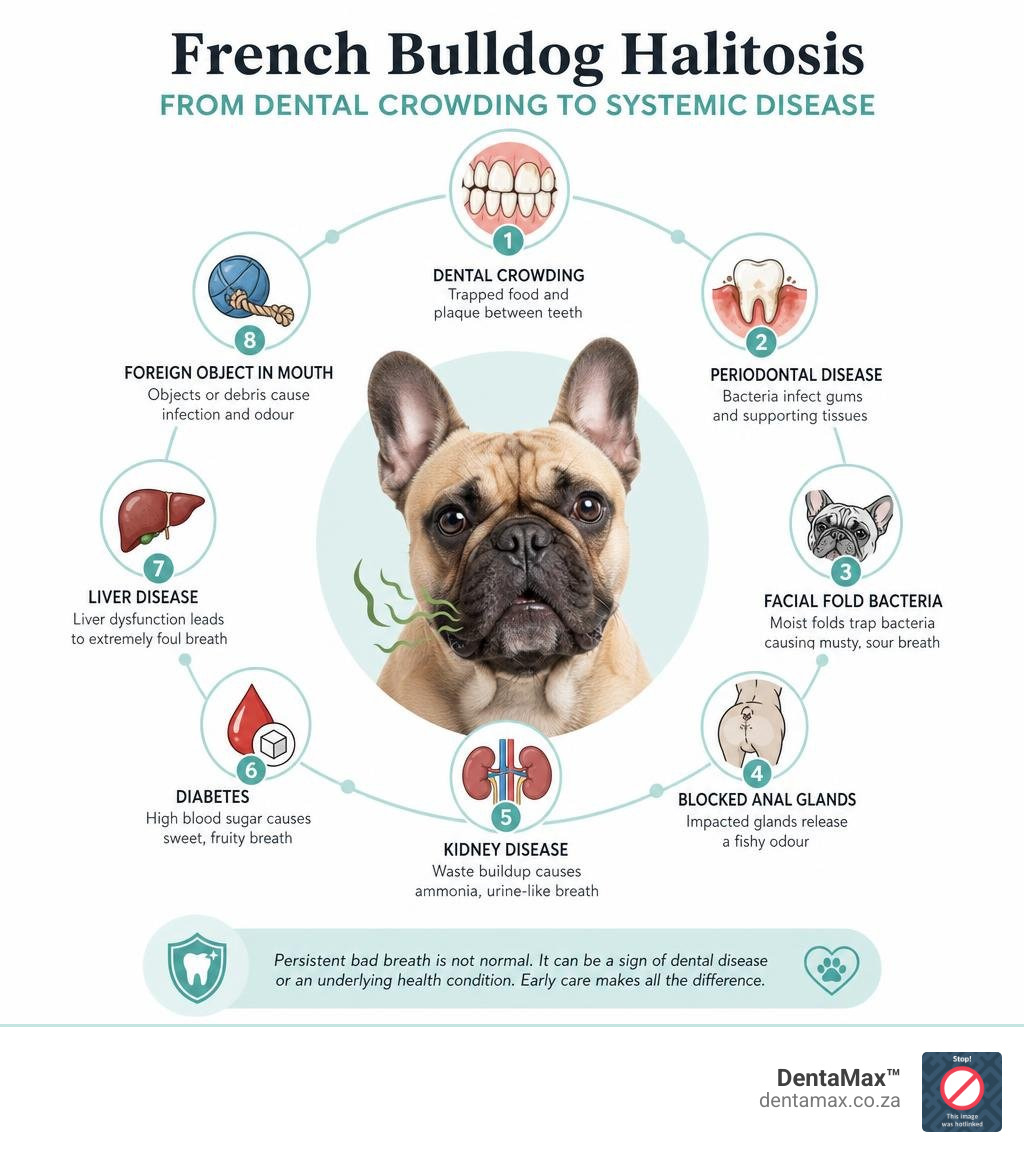
French bulldog halitosis is one of the most common complaints among Frenchie owners in South Africa, and it is almost never just “dog breath.”
Quick answer: Why does your French Bulldog have bad breath?
| Cause | What it smells like | How common |
|---|---|---|
| Plaque and tartar buildup | Stale, rotten | Very common |
| Periodontal disease | Foul, putrid | Very common |
| Facial fold bacteria | Musty, sour | Common in Frenchies |
| Blocked anal glands | Fishy | Moderately common |
| Kidney disease | Ammonia, urine-like | Less common |
| Diabetes | Sweet, fruity | Less common |
| Liver disease | Extremely foul | Less common |
| Foreign object in mouth | Variable | Less common |
French Bulldogs are not just prone to bad breath because they are small dogs. Their flat faces, crowded teeth and breathing patterns create conditions that make dental disease almost inevitable. Over 80% of bulldogs have dental disease at some stage of their lives, making it the number one medical condition in the breed.
The problem goes deeper than aesthetics. Persistent bad breath in a Frenchie is usually a signal that something is wrong, whether that is bacteria multiplying between crowded teeth, inflamed gums, or in some cases, a systemic condition affecting the kidneys, liver or pancreas.
Bad breath in dogs is never normal, even if it is common.
I am Sharon Milani, co-founder of NutriFlex® and the developer of DentaMax™, a 100% pure organic Ascophyllum nodosum dental powder formulated specifically to support systemic plaque reduction in dogs. My work in evidence-based pet nutrition, including research into french bulldog halitosis and oral health supplementation, has given me a detailed understanding of why brachycephalic breeds face unique dental challenges and what South African pet owners can do about it. In the sections below, I will walk you through the root causes, the warning signs and the most effective preventative strategies available.
Quick french bulldog halitosis terms:
Understanding French Bulldog Halitosis and Brachycephalic Anatomy
To understand why french bulldog halitosis is such a persistent issue, we must look at the physical structure of the breed. French Bulldogs are brachycephalic, meaning they have shortened skulls and flat faces. While this gives them their signature adorable look, it comes with significant anatomical compromises.
A standard dog skull houses 42 permanent teeth spread comfortably along a long jawbone. In a French Bulldog, those same 42 teeth are crammed into a jaw that is up to 30% shorter. This extreme dental crowding is the primary reason why small and brachycephalic dogs suffer from severe oral health issues. You can read more about why this occurs in our article on why small dogs have worse teeth.
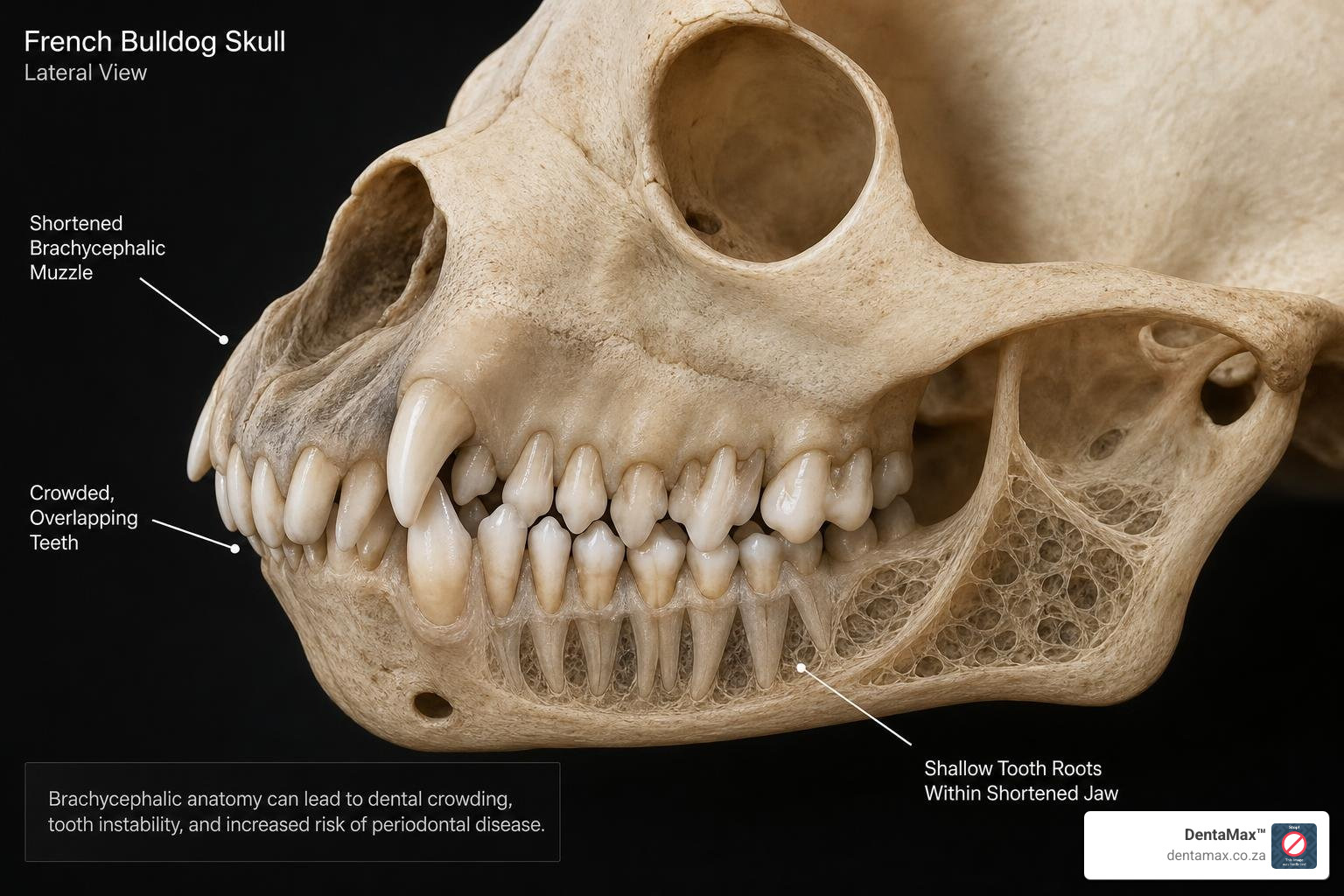
Because the teeth are rotated, overlapping and tightly packed together, they create countless tiny crevices. These gaps act as physical traps for food particles, hair and debris. Standard chewing does not clean these areas; instead, it packs food deeper into the tight spaces between the teeth.
Compounding this crowded anatomy is the issue of mouth breathing. Due to brachycephalic airway syndrome, which includes narrowed nostrils and an elongated soft palate, French Bulldogs frequently breathe through their mouths. This constant airflow dries out the oral cavity, reducing saliva flow by up to 65%. Saliva is a natural defence mechanism that washes away food debris and contains enzymes that limit bacterial growth. A dry mouth is a breeding ground for anaerobic, odour-producing bacteria.
Furthermore, French Bulldogs are prone to aerophagia, which is the excessive swallowing of air. Because of their airway anatomy, they gulp air when eating and drinking, which can disrupt normal digestion and contribute to gastrointestinal gas. To explore how their unique skull structure impacts their overall dental health, read our guide on French Bulldog dental anatomy.
How Dental Disease and Systemic Health Issues Develop
The transition from a clean mouth to severe french bulldog halitosis begins with plaque. Plaque is a soft, sticky biofilm composed of active bacteria and salivary glycoproteins that forms on the teeth within hours of eating. If this biofilm is not mechanically disrupted or systemically managed, it reacts with calcium and other minerals in the saliva. Within 24 to 48 hours, plaque mineralises into a hard, yellow-brown substance known as tartar or calculus.
Once tartar forms, it cannot be brushed away at home. Tartar provides a rough, porous surface that allows even more plaque bacteria to adhere and multiply. As this bacterial colony expands, it migrates beneath the gumline, triggering an inflammatory immune response known as gingivitis. This stage is marked by red, swollen and sometimes bleeding gums.
If left untreated, gingivitis progresses to periodontitis. At this stage, the bacteria destroy the supporting bone and tissue structures holding the teeth in place, leading to loose teeth, painful abscesses and tooth loss. For a detailed breakdown of this destructive process, see our guide on how dental disease develops in dogs.
[Plaque Biofilm] ---> [Mineralisation (24-48 hrs)] ---> [Tartar/Calculus] ---> [Gingivitis] ---> [Periodontitis/Tooth Loss]
A unique issue in French Bulldogs is subgingival hair impaction. Because of their short, coarse coats and tendency to lick themselves due to skin allergies, these stiff hairs easily become lodged in the tight spaces between their teeth and gums. These hairs migrate beneath the gumline, carrying bacteria deep into the periodontal pocket, which can cause severe, painful abscesses and a highly offensive odour. This phenomenon was highlighted in a Bulldog dental disease study which examined how breed-specific factors contribute to chronic oral infections.
While oral bacteria are the primary source of bad breath, certain systemic diseases can also cause distinct odours. When a Frenchie’s breath smells unusual, it can be a diagnostic clue for an underlying health issue:
| Breath Odour Type | Potential Systemic Cause | Biological Mechanism |
|---|---|---|
| Ammonia or urine-like | Kidney disease | The kidneys fail to filter waste products, leading to a buildup of urea in the bloodstream, which is excreted through saliva as ammonia. |
| Sweet or fruity | Diabetes mellitus | The body cannot utilise glucose for energy and begins breaking down fats, producing ketones that are exhaled as a sweet, chemical odour. |
| Extremely foul or musty | Liver disease | The liver is unable to filter toxins, allowing volatile sulfur compounds to build up and escape through the lungs. |
| Sour or yeasty | Gastrointestinal dysbiosis | Slow digestion, acid reflux and food fermentation in a sensitive stomach can send foul-smelling gases up the oesophagus. |
These systemic conditions require urgent veterinary diagnosis. Oral bacteria can also enter the bloodstream through inflamed, bleeding gums, traveling directly to the heart, kidneys and liver, where they can cause chronic organ damage and potentially shorten your dog’s lifespan.
Preventative Care and Treatment for French Bulldog Halitosis
Managing french bulldog halitosis requires a dual approach: professional veterinary intervention to address existing damage and consistent daily care at home to prevent new plaque from forming.
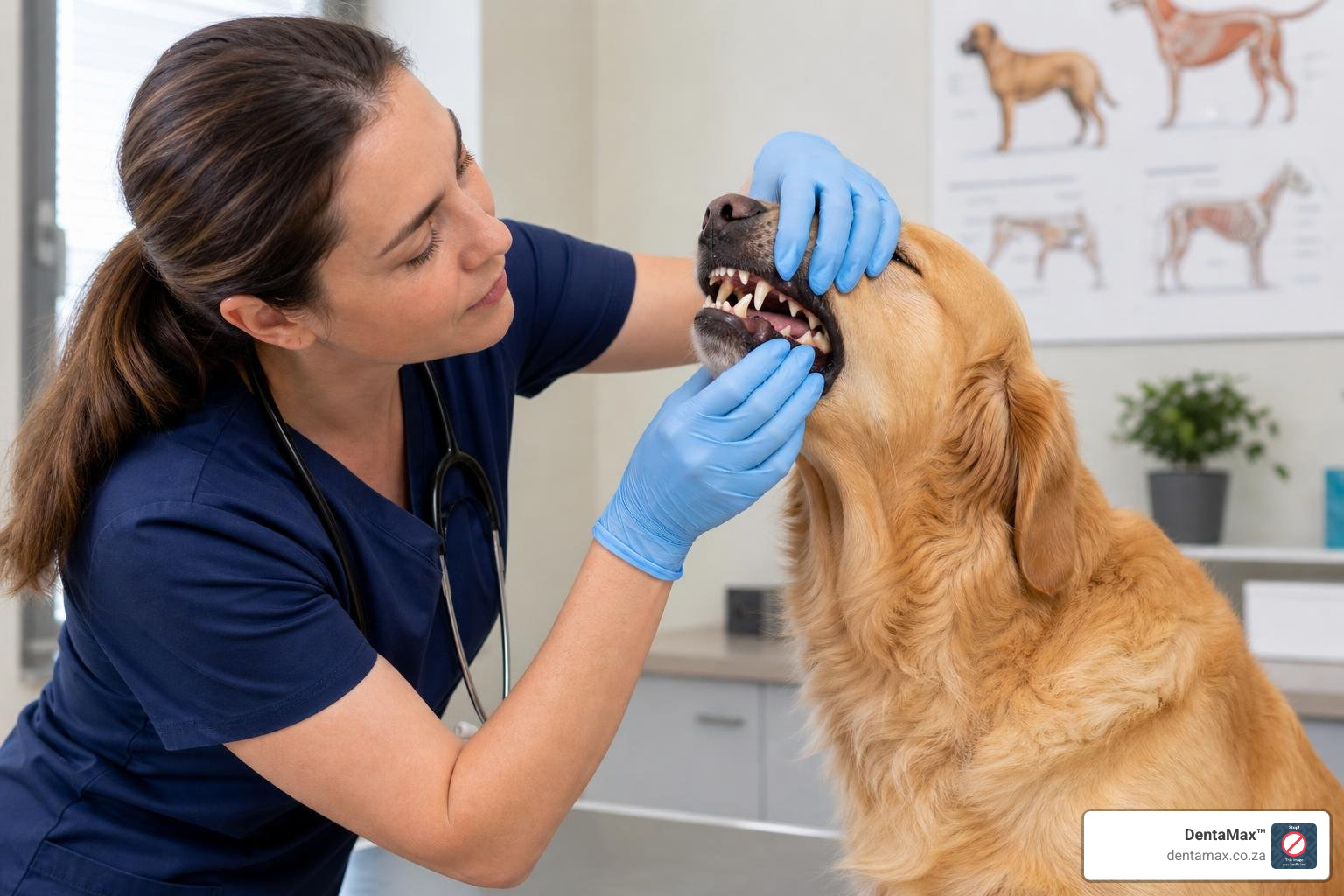
If your French Bulldog already has visible yellow-brown tartar, red gums or a strong, foul breath odour, the first step must be a professional veterinary dental assessment and treatment. This procedure, often referred to as a COHAT (Comprehensive Oral Health Assessment and Treatment), must be performed under general anaesthesia.
Some pet owners seek out “anaesthesia-free” cosmetic teeth scraping, but veterinary dental authorities strongly advise against this. Scraping only removes the visible tartar above the gumline for cosmetic purposes. It does not address the 60% of dental disease that hides beneath the gumline, and the scraping process leaves micro-scratches on the enamel that actually accelerate future plaque buildup. Furthermore, attempting to scale a conscious dog’s teeth is highly stressful and carries a risk of injuring the delicate oral tissues.
In South Africa, a professional veterinary dental cleaning under anaesthesia typically costs between R3,500 and R8,000, depending on whether extractions, digital dental X-rays or advanced pain management are required. While this is a significant expense, investing in preventative care is far more cost-effective than managing emergency extractions and systemic health complications later on.
Managing French Bulldog Halitosis at Home
Once your dog’s teeth are professionally cleaned, you must establish a daily home care routine to maintain their oral health.
The gold standard of mechanical plaque removal is daily toothbrushing. Because French Bulldogs have very small mouths and crowded teeth, a standard human toothbrush is too bulky. Instead, use a small, soft-bristled finger brush or a micro-soft toothbrush designed for small breeds.
Always use a dog-safe, enzymatic toothpaste. Never use human toothpaste, as it contains foaming agents like sodium lauryl sulfate that can cause stomach upset, and sweeteners like xylitol, which is highly toxic to dogs. Focus your brushing on the outer surfaces of the teeth, particularly along the gumline where plaque accumulates.
Alongside brushing, daily facial fold hygiene is essential. Because French Bulldogs have deep skin creases around their nose and jaw, drool, food particles and moisture easily become trapped in these folds. This creates a warm, damp environment where yeast and bacteria thrive, producing a sour, musty odour that is easily mistaken for bad breath. Clean these folds daily with a damp, fragrance-free pet wipe and dry them thoroughly to prevent fold dermatitis. For natural approaches to managing bad breath, you can read our guide on natural remedies to turn your dog’s breath from foul to fresh.
Addressing French Bulldog Halitosis with Systemic Supplements
For many French Bulldog owners, daily brushing is a major challenge. Frenchies can be stubborn, and their tight jaw structure makes accessing the back molars difficult. This is where systemic dental supplements offer a highly effective, scientifically backed alternative.
The most researched ingredient for systemic plaque control is Ascophyllum nodosum, a specific species of organic kelp harvested from the cold waters of the North Atlantic. Unlike mechanical cleaning methods that work only on contact, Ascophyllum nodosum works systemically through the bloodstream.
[Ingested Ascophyllum nodosum] ---> [Absorption in Gut] ---> [Salivary Glands] ---> [Excretion into Saliva] ---> [Biofilm Disruption]
When your dog ingests this organic seaweed, its active compounds are absorbed in the gut and enter the bloodstream. These compounds are then excreted naturally through the salivary glands back into the oral cavity. Once present in the saliva, they alter the chemical composition of the mouth, disrupting the sticky bacterial biofilm and preventing new plaque from adhering to the teeth.
Over a period of three to eight weeks, this systemic action softens existing tartar, making it easier to remove during normal chewing or light brushing. Because it works via the saliva, it reaches every part of the mouth, including the tightest crevices between crowded teeth where a toothbrush cannot go.
When selecting an Ascophyllum nodosum supplement in South Africa, it is important to choose a high-quality, pure organic product. Seaweed naturally contains iodine, which is essential for thyroid function but must be carefully monitored. A premium supplement should offer transparent sourcing and clear dosing instructions based on your dog’s weight. DentaMax™ is formulated to meet these standards, providing a safe, natural and highly effective way to support systemic plaque reduction and eliminate french bulldog halitosis at the source. To learn more about these systemic options, check out our guide on how to treat dog bad breath with systemic supplements.
Frequently Asked Questions About Frenchie Breath
Why does my French Bulldog’s breath smell like fish?
A distinct fishy smell on your Frenchie’s breath is rarely caused by their diet, unless they have recently eaten fish-based food or you are giving them fish oil supplements. The most common cause of a fishy odour is actually blocked or infected anal glands.
Dogs have two small fluid-filled sacs located on either side of their anus. These glands normally express a small amount of smelly fluid during bowel movements. If your dog’s stools are soft, these glands may fail to empty, causing them to become full, itchy or infected. To relieve this discomfort, your Frenchie will lick their rear end, transferring the highly offensive, fishy-smelling fluid directly to their mouth and tongue. If your dog is scooting across the floor or licking their rear excessively, they likely need their anal glands manually expressed by a vet. For more information on this issue, read our article on why your dog’s breath smells like a tuna can.
When should I take my French Bulldog to the vet for bad breath?
You should schedule a veterinary consultation if your Frenchie’s bad breath is persistent and does not improve with improved oral hygiene. You should seek immediate veterinary care if you notice any of the following warning signs:
- Red, swollen, inflamed or bleeding gums
- Brown or yellow tartar crusting on the teeth
- Difficulty chewing, dropping food, or eating on only one side of the mouth
- Pawing at the mouth or showing sensitivity when their face is touched
- Drooling excessively
- A sudden change in breath odour, such as an ammonia, sweet, or highly putrid smell
- Loss of appetite or lethargy
These symptoms indicate active dental pain, infection or an underlying systemic health issue that requires a professional diagnosis. To learn how to spot these warning signs early, refer to our guide on spotting canine halitosis symptoms.
Can I use human toothpaste or baking soda to clean my Frenchie’s teeth?
No, you should never use human toothpaste or baking soda to clean your dog’s teeth. Human toothpaste contains ingredients that are highly toxic to dogs, such as xylitol (a sweetener that causes rapid, life-threatening drops in blood sugar) and fluoride, which can cause severe poisoning if swallowed. It also contains foaming agents that can irritate their stomach.
Baking soda should also be avoided. It has a high sodium content that can disrupt your dog’s electrolyte balance if swallowed, which is particularly dangerous for dogs with underlying heart or kidney conditions. Always use a specially formulated, dog-safe enzymatic toothpaste.
Conclusion
French bulldog halitosis is far more than a minor cosmetic issue; it is a clear indicator of active oral bacteria, dental crowding, or potential systemic health challenges. Because of their unique brachycephalic anatomy, French Bulldogs require proactive, consistent oral care throughout their lives to prevent painful periodontal disease and protect their long-term health.
By combining professional veterinary care with a dedicated daily routine at home, including mechanical brushing, facial fold hygiene and systemic supplements like Ascophyllum nodosum, you can keep your Frenchie’s mouth healthy and their breath fresh. For more practical advice on maintaining your pet’s oral health, explore our comprehensive dog bad breath guide.