Why So Many South African Dogs Have Tartar Problems (And What You Can Do About It)
How to soften dog tartar safely is one of the most practical things you can do for your dog’s long-term health. Here is a quick overview of the most effective methods:
Quick Answer: How to Soften Dog Tartar at Home
| Method | How It Works | Best For |
|---|---|---|
| Ascophyllum nodosum dental powder | Works through saliva to disrupt plaque adhesion and soften deposits systemically | Dogs that resist brushing |
| Daily brushing with enzymatic toothpaste | Mechanically removes soft plaque before it hardens | Dogs that tolerate a toothbrush |
| Raw vegetable chews (carrot, apple) | Mechanical abrasion on back molars during chewing | Dogs that enjoy crunching |
| Dental chews (VOHC-accepted) | Combines mechanical cleaning with active plaque-reducing ingredients | Most dogs |
| Water additives | Reduces oral bacteria passively through drinking | Low-effort daily support |
Important: Once tartar has fully mineralised and hardened onto the tooth surface, only a vet can remove it safely using professional scaling tools. Home methods work best on early-stage or softened deposits and are most effective as daily prevention.
Those yellow-brown deposits on your dog’s back teeth are not just cosmetic. Plaque begins forming within hours of your dog eating, and without daily disruption it mineralises into hard tartar within as little as three to five days. Once that happens, the rough surface attracts more bacteria, pushes the gumline back and, over time, contributes to gum disease, tooth loss and systemic health problems affecting the heart, kidneys and liver.
Around 8 in 10 dogs will experience symptoms of periodontal disease at some point in their lives. In South Africa, where daily tooth brushing is not a common part of most pet care routines, tartar build-up is one of the most frequently overlooked health concerns in dogs.
The good news is that mild to moderate tartar can often be softened and managed at home, particularly when caught early and addressed consistently.
I am Sharon Milani, co-founder of NutriFlex® and developer of DentaMax™, a 100 percent pure organic Ascophyllum nodosum dental powder formulated specifically to support systemic plaque and tartar reduction in dogs and cats. My work in evidence-based pet nutrition has focused specifically on how to soften dog tartar through daily supplementation that works via the salivary pathway, reaching surfaces that brushing often cannot. In the sections below, I will walk you through exactly what tartar is, which home methods are safe and effective and when professional veterinary care is essential.
How to soften dog tartar vocab explained:
What Dog Tartar Is and Why It Should Not Be Ignored
Dog tartar, also called calculus, is hardened dental plaque. Plaque is a soft bacterial biofilm that sticks to the tooth surface after eating. If it is not removed, minerals in saliva bind with that biofilm and turn it into hard, rough deposits along the gumline.
You will often see tartar as yellow, tan or brown crusting, especially on the upper back teeth. It may look like a small stain at first, but it is more like limescale in a kettle than a food mark. Once hardened, it gives bacteria a rough surface to cling to.
That is why understanding plaque vs tartar in dogs matters. Plaque can usually be disrupted at home. Hardened tartar is much harder to shift safely.
How Plaque Turns Into Hard Tartar
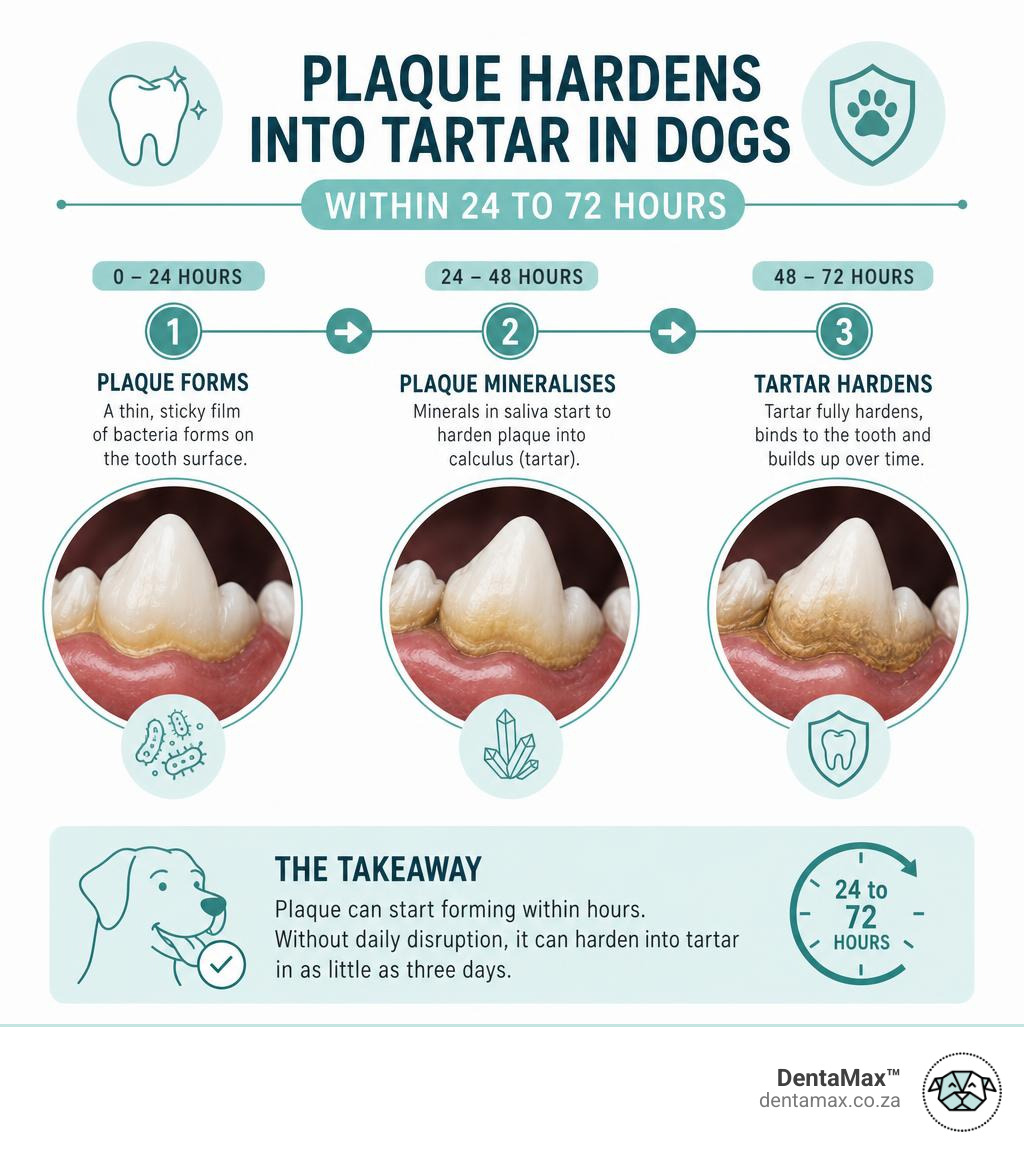
Plaque formation begins quickly. Food particles, saliva and oral bacteria collect on the enamel and form a sticky film. In many dogs, plaque can be visible within about 24 hours after eating.
If it is left alone, calcium salts and other minerals in saliva start the mineralisation process. Research and veterinary guidance commonly place this hardening window between 24 hours and 72 hours, with tartar build-up often becoming established within three to five days.
The process looks like this:
- Your dog eats.
- Bacteria feed on food residue.
- A sticky plaque biofilm forms.
- Saliva minerals harden the plaque.
- Tartar bonds to the enamel and gumline.
- The rough surface traps more plaque.
This is why occasional brushing is not enough for many dogs. The prevention window is short. We explain the process in more detail here: how plaque turns to tartar.
Why Tartar Becomes a Health Risk
Tartar is not just a dirty tooth problem. It is a gum health problem.
As tartar accumulates at the gumline, it irritates the tissue and encourages bacterial growth. Early gum inflammation is called gingivitis. You may notice red gums, bleeding when chewing, bad breath or reluctance to eat hard food.
If the problem progresses, bacteria move below the gumline. This can lead to periodontal disease, where the tissues supporting the teeth start to break down. Dogs may develop:
- Persistent bad breath
- Bleeding gums
- Gum recession
- Loose teeth
- Oral pain
- Tooth root infection
- Jawbone loss
- Abscesses
- Difficulty chewing
Dental bacteria can also enter the bloodstream. Untreated dental disease has been linked with stress on the heart, kidneys and liver. Dogs without regular dental care have been reported to have a higher risk of infective endocarditis, a serious heart valve infection.
This is why we treat tartar as a whole-health issue, not just a cosmetic one. You can read more about how tartar damages dog teeth.
Which Dogs Are Most Prone to Tartar Build-Up
Some dogs develop tartar faster than others. In our South African pet community, we often see heavier build-up in:
- Small breeds such as Yorkies, Maltese, Chihuahuas and Miniature Schnauzers
- Brachycephalic dogs such as Pugs, Bulldogs and French Bulldogs
- Senior dogs
- Dogs with crowded or rotated teeth
- Dogs eating mostly soft food
- Dogs that do little chewing
- Dogs with dry mouth or reduced saliva flow
- Dogs that have never had a brushing routine
- Dogs with genetic susceptibility to dental disease
Small dogs are especially vulnerable because their teeth are packed tightly into a smaller jaw. Less space means more plaque traps. Their cute faces are not the problem. The dental architecture is.

How to Soften Dog Tartar Safely at Home
The safest way to think about home care is this: we are not trying to chip tartar off. We are trying to soften early deposits, disrupt plaque and prevent the next layer from hardening.
Home care can help with mild deposits and plaque control, but it has limits. Thick brown crusting, painful gums or tartar below the gumline needs veterinary care.
Do not use:
- Metal scrapers
- Sharp dental tools
- Human toothpaste
- Vinegar
- Lemon juice
- Baking soda
- Pliers or household tools
- Cooked bones
- Antlers or very hard chews
These can damage enamel, burn oral tissue, fracture teeth or cause choking. For further safety guidance, see this dog tartar home safety guidance.
How to Soften Dog Tartar With Brushing
Brushing remains the gold standard for removing soft plaque before it turns into tartar. It also helps soften the edges of early tartar by repeatedly disturbing the bacterial film around it.
Use:
- A dog toothbrush or finger brush
- Dog-safe enzymatic toothpaste
- Short sessions of 30 to 60 seconds
- Gentle pressure
- Rewards after each session
Hold the brush at about a 45 degree angle towards the gumline. Focus on the outside surfaces of the upper back teeth, because that is where tartar commonly starts.
Never use human toothpaste. Many human toothpastes contain fluoride, foaming agents or xylitol. Xylitol is dangerous for dogs and can cause severe poisoning.
A simple training plan:
- Let your dog lick a small amount of dog toothpaste.
- Touch the lips gently for a few seconds.
- Rub the gums with your finger.
- Introduce a finger brush.
- Brush one side for a few seconds.
- Build up gradually.
Brushing should not feel like a wrestling match in the lounge. If both of you are sweating, scale it back.

How to Soften Dog Tartar Without Scraping or Damaging Enamel
Light deposits may become easier to manage when you combine daily plaque disruption with safe mechanical abrasion. This does not mean scraping.
Safer options include:
- Rubbing the gumline with a soft cloth
- Using dental wipes for dogs
- Gentle gum massage
- Offering safe chewing textures
- Using daily plaque support through food
Scraping at home is risky because tartar can extend below the gumline. Even if you remove the visible crust, bacteria may remain under the gums. Scratches in enamel also create new plaque traps.
Veterinary scaling is different. Vets use professional equipment designed to clean above and below the gumline, followed by polishing to smooth the enamel.
How to Soften Dog Tartar If Your Dog Hates Brushing
If your dog sees a toothbrush and suddenly remembers an urgent appointment under the bed, start with low-contact care.
For brushing-resistant dogs, we suggest a layered routine:
- Daily DentaMax™ dental powder mixed into food
- Safe crunchy foods several times per week
- Dental chews if your dog chews properly
- Monthly lip checks at home
- Annual veterinary dental checks
DentaMax™ supports plaque and tartar reduction systemically through Ascophyllum nodosum. Because it is eaten, it does not require mouth handling. This makes it useful for dogs that are anxious, senior or simply not interested in your dental ambitions.
Natural and Vet Aligned Methods That Help Reduce Plaque and Tartar Build-Up
Natural does not automatically mean safe or effective. We prefer methods that are biologically plausible, practical and aligned with veterinary dental principles.
| Method | Main Action | Strength | Limitation |
|---|---|---|---|
| Brushing | Removes plaque mechanically | Best direct plaque removal | Many dogs resist it |
| DentaMax™ dental powder | Supports systemic plaque control via saliva | Low-contact daily support | Needs consistent use |
| Raw carrot or apple slices | Provides chewing abrasion | Simple and affordable | Not enough alone |
| Dental wipes | Wipes plaque from visible surfaces | Good for beginners | Limited reach |
| Water additives | Helps reduce oral bacteria | Easy to use | Should not replace brushing or vet care |
| Coconut oil | May improve palatability | Can help some dogs accept brushing | Does not dissolve tartar |
For a broader evidence-based overview, see natural tartar build-up reducers that actually work.
Ascophyllum Nodosum for Systemic Plaque Support
Ascophyllum nodosum is a brown seaweed harvested from cold North Atlantic waters. In canine oral health, it is valued because it works differently from brushing or chews.
Instead of scrubbing the tooth surface, it is consumed daily. Its active compounds are absorbed and then released through saliva. This salivary pathway helps influence the mouth environment, supporting reduced plaque adhesion and making tartar build-up easier to manage over time.
DentaMax™ is focused on this systemic dental support mechanism. It is designed for daily use in dogs and cats and is particularly helpful for dogs that resist brushing.
Important safety notes:
- Use only pet-specific products.
- Follow the product’s weight-based feeding directions.
- Speak to your vet first if your dog has thyroid disease.
- Speak to your vet first if your dog has significant kidney disease.
- Avoid stacking multiple seaweed products unless total iodine intake is known.
Iodine transparency matters because seaweed naturally contains iodine. This is not a problem for most healthy dogs when used correctly, but dogs with thyroid concerns need veterinary guidance.
Safe Crunchy Foods for Natural Mechanical Cleaning
Crunchy foods can help by creating gentle abrasion, especially on the back molars. They do not replace brushing or professional dental care, but they can support a routine.
Good options include:
- Raw carrot sticks sized for your dog
- Apple slices with pips and core removed
- Firm cucumber pieces
- Supervised chewing on appropriate dental chews
Always match the size to your dog. A Labrador and a Yorkie should not be given the same chew size. Supervise chewing and remove pieces that become small enough to swallow whole.
Avoid:
- Cooked bones
- Antlers
- Hooves
- Very hard bones
- Hard nylon toys that cannot be dented with a fingernail
A useful rule: if the chew is hard enough to crack a tile, it may be hard enough to crack a tooth.
Why Daily Systemic Plaque Support Matters
The plaque hardening window is short. If plaque can mineralise within 24 to 72 hours, then a once-a-week dental effort is often too late.
Daily systemic plaque support helps because it works with your dog’s saliva every day. This can be especially practical for:
- Dogs that dislike brushing
- Busy households
- Senior dogs with sensitive mouths
- Small breeds with crowded teeth
- Dogs already prone to bad breath
Daily DentaMax™ use supports fresher breath, helps reduce new plaque adhesion and complements brushing where brushing is possible. It is not a substitute for veterinary scaling when tartar is advanced, but it can reduce the speed at which new build-up forms after a professional clean.
Coconut Oil and Other Natural Remedies: What They Can and Cannot Do
Coconut oil is popular because it is palatable and contains lauric acid, which has mild antibacterial properties. It may help some dogs tolerate brushing because it makes the brush taste better.
What coconut oil can do:
- Improve acceptance of brushing
- Provide mild oral antibacterial support
- Act as a brushing lubricant
What it cannot do:
- Dissolve hardened tartar
- Remove subgingival calculus
- Treat periodontal disease
- Replace dog toothpaste
Use caution with calorie intake. Coconut oil is fat-dense and may not suit dogs prone to pancreatitis, obesity or digestive upset.
We also recommend caution with other internet remedies:
- Aloe products can vary in safety and purity.
- Essential oils can be toxic to dogs.
- Colloidal silver is not recommended for routine dental care.
- Saltwater rinses are difficult to use safely in dogs and may be swallowed.
- Lemon juice and vinegar can irritate the mouth and damage enamel.
If a remedy claims to “melt tartar overnight”, treat it with suspicion. Teeth are not oven trays.
When Professional Dog Tartar Removal Is Needed
Home care is for plaque control, early tartar management and prevention. Professional care is needed when tartar is thick, painful or below the gumline.
Book a veterinary dental check if you notice:
- Heavy brown crusting
- Red or bleeding gums
- Gum recession
- Drooling
- Pawing at the mouth
- Chewing on one side
- Dropping food
- Refusing hard food
- Loose teeth
- Facial swelling
- Pus or abscesses
- Bad breath that persists despite home care
Annual dental checks are wise for most dogs. Small breeds, senior dogs and dogs with a history of dental disease may need checks every 6 to 12 months.
For an overview of veterinary removal, see this veterinary tartar removal overview.
What Vets Do During a Dental Cleaning
A proper veterinary dental cleaning is much more than removing visible tartar.
It may include:
- Full oral examination
- Pre-anaesthetic blood tests
- Anaesthetic monitoring
- Dental X-rays where indicated
- Ultrasonic scaling above and below the gumline
- Hand scaling in difficult areas
- Polishing to smooth enamel
- Assessment of loose or infected teeth
- Extractions when teeth cannot be saved
- Pain relief and post-care instructions
Cleaning below the gumline is essential because periodontal disease hides where you cannot see it. This is also where most serious damage begins.
Senior dogs can often still have dental procedures safely, but they need proper screening and monitoring. Your vet will assess heart health, kidney markers, liver markers and anaesthetic risk before recommending a plan.
How Much Professional Tartar Removal May Cost in South Africa
Costs vary by clinic, city, dog size and disease severity. In South Africa, a straightforward dental scale and polish may often fall somewhere around R1,500 to R6,000 or more. More complex procedures can cost more if they include:
- Blood tests
- Dental X-rays
- Extended anaesthetic time
- Tooth extractions
- Antibiotics where clinically needed
- Pain medication
- Follow-up visits
Cape Town, Johannesburg, Durban and smaller surrounding areas may differ in pricing. The most reliable approach is to ask your vet for an itemised estimate.
Prevention is usually cheaper than treatment. Daily plaque control may feel like a small chore, but it is far easier than managing extractions, pain and repeat infections later.
Why Anaesthesia-Free Cleaning Is Not a Full Solution
Anaesthesia-free cleaning may remove some visible tartar, but it is not a substitute for veterinary dentistry.
The problems are:
- It cannot clean properly below the gumline.
- It may miss periodontal pockets.
- It can create false reassurance.
- It may stress the dog.
- Sudden movement can cause injury.
- The tooth surface may not be polished afterwards.
A large portion of tooth support sits below the gumline. If that area is not assessed and cleaned, the real disease process may continue unseen.
Frequently Asked Questions
Can Dog Tartar Be Completely Removed at Home?
No, not once it has fully hardened into calculus.
You can remove soft plaque at home and you may soften or reduce mild early deposits with consistent care. However, hardened tartar that is bonded to enamel, especially below the gumline, needs professional scaling.
Trying to chip it off at home can scratch enamel, injure gums and leave the most dangerous bacteria behind.
How Long Does It Take to See Results?
With daily care, many owners notice fresher breath first. Visible improvements in plaque and mild tartar may take 3 to 8 weeks.
Results depend on:
- Starting tartar severity
- Breed
- Age
- Diet
- Chewing behaviour
- Consistency
- Whether brushing is included
- Existing gum disease
If gums are bleeding, teeth are loose or your dog seems painful, do not wait 8 weeks. Book a vet visit.
How Can I Prevent Tartar From Forming Again?
Prevention works best when it is daily, simple and realistic. The goal is to interrupt plaque before it mineralises.
A practical routine:
Daily
- Use DentaMax™ with Ascophyllum nodosum as systemic plaque support.
- Brush with dog-safe toothpaste if your dog allows it.
- Provide clean drinking water.
- Check for sudden bad breath or chewing changes.
Several times per week
- Offer safe raw vegetable chewing options.
- Use dental chews that suit your dog’s size and chewing style.
- Use dental wipes if brushing is not yet possible.
Monthly
- Lift the lip and inspect the upper back teeth.
- Look for yellow-brown deposits, red gums or gum recession.
- Take a photo so you can track changes.
Yearly
- Book a veterinary dental examination.
- Discuss professional cleaning if tartar is visible or gums are inflamed.
- Ask whether your dog needs more frequent checks based on breed or age.
For more background, see why dogs get plaque build-up.
Conclusion
Learning how to soften dog tartar starts with knowing the difference between plaque control and tartar removal. Soft plaque can be disrupted at home. Early tartar may be softened and managed with consistent care. Hard, mineralised calculus, especially below the gumline, needs a vet.
The best routine is usually layered:
- Brush daily where tolerated.
- Use DentaMax™ daily for systemic plaque support.
- Add safe chewing textures.
- Avoid harsh home scraping.
- Check the mouth regularly.
- Book veterinary care when tartar is advanced.
For South African dog owners, the most effective dental plan is the one you can maintain every day. A small daily habit can protect your dog’s breath, gums, teeth and long-term health.
To learn more about systemic plaque support for dogs and cats, explore dog and cat dental powder in South Africa.