Your Dog’s Teeth Are in Trouble (And Most Owners Don’t Know It)
Fewer than 3% of dog owners brush their dog’s teeth every day. Yet daily dental care is one of the most important preventative health habits for dogs. The result is predictable: plaque builds up, hardens into tartar and drives the progression of periodontal disease, which is the most common health condition diagnosed in adult dogs.
Dental powders have emerged as a practical, brushing-free alternative. Sprinkle a measured amount onto your dog’s food once daily and the active ingredients work systemically, through digestion and saliva to disrupt plaque biofilm and help reduce bacterial adhesion on tooth surfaces. When evaluating these products, pet owners should look for clinical validation from organisations such as the Veterinary Oral Health Council (VOHC), which sets the global standard for pet oral health products.
But not all products are equal. Ingredient choice, clinical evidence and regulatory standing vary significantly across the market.
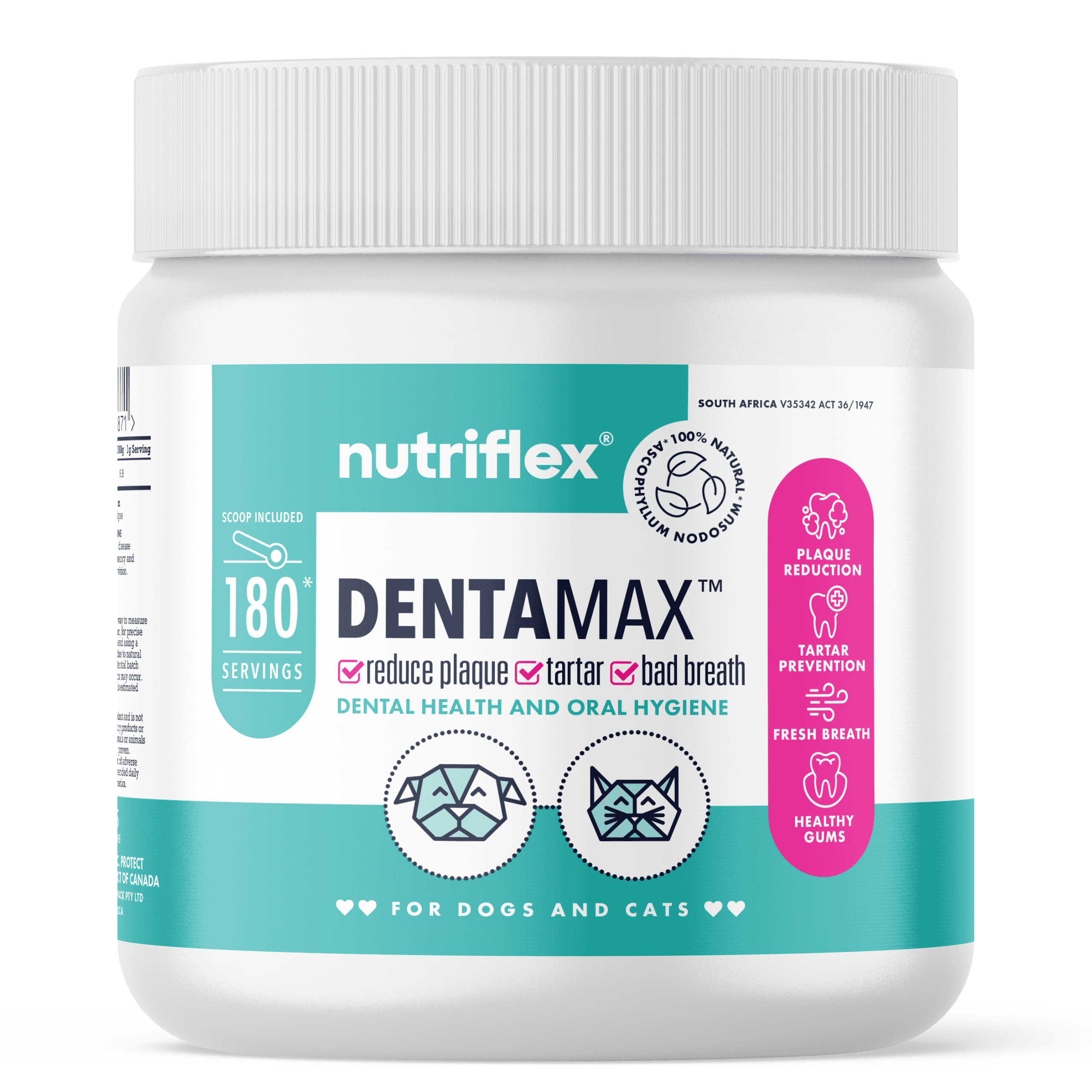
I am Sharon Milani, co-founder of NutriFlex® and the developer of DentaMax™, a 100% pure organic Ascophyllum nodosum dental powder produced in a certified FSA-accredited facility in Cape Town and my work evaluating the best dog dental powder formulations is grounded in over a decade of evidence-based pet supplement development and South African regulatory compliance. Read on for an honest, research-backed comparison to help you choose the right option for your dog.
Understanding How Dog Dental Cleaning Powder Works
To understand why the best dog dental powder is so effective, we must first look at the biology of the canine mouth. Unlike human dental care which relies almost entirely on the mechanical friction of brushing, dog dental powders work systemically.
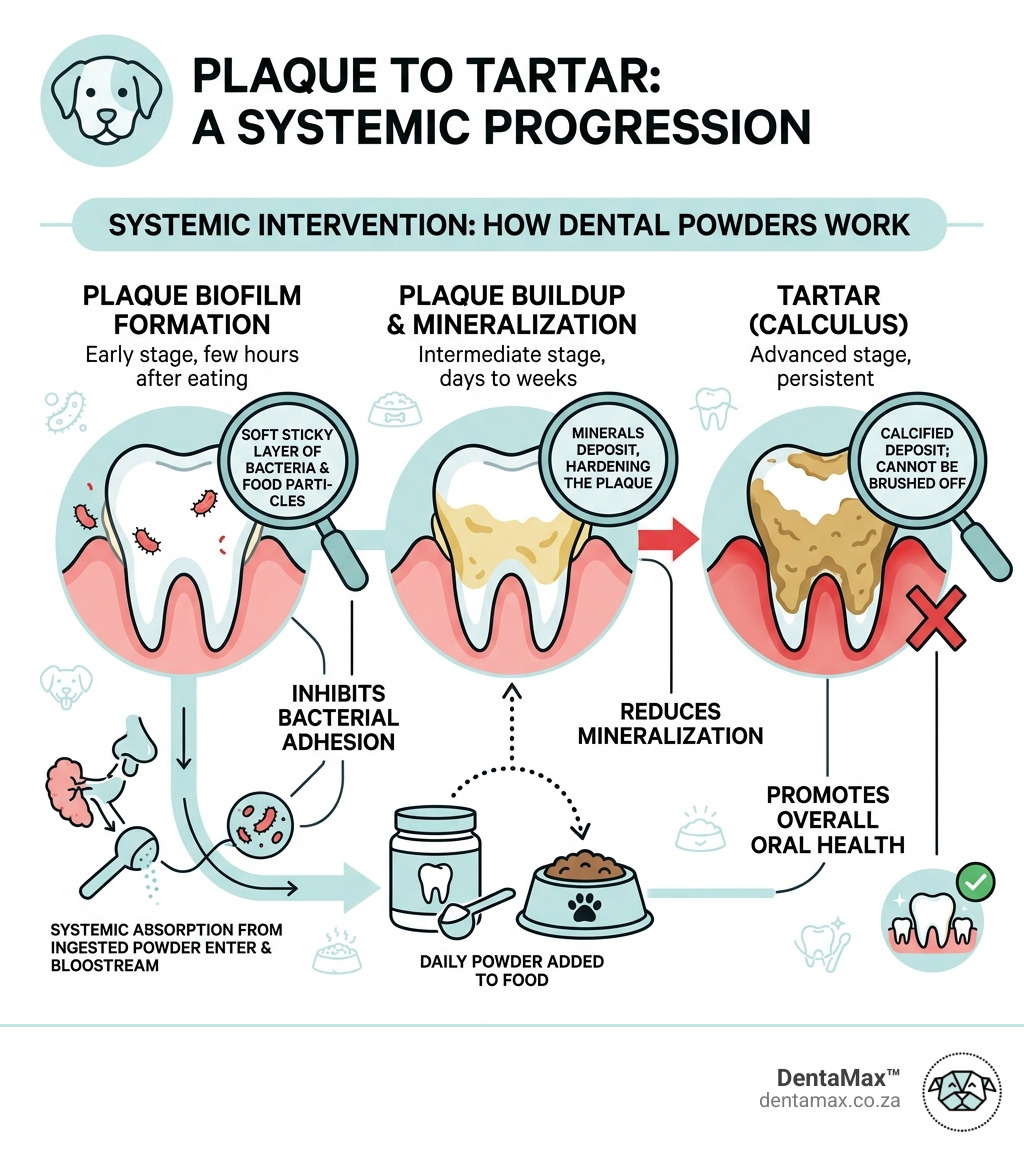
When you sprinkle a high quality dental powder onto your dog’s kibble or wet food, the active ingredients are ingested and absorbed into the bloodstream. From there, these compounds are secreted back into the mouth through the salivary glands. This process alters the chemical composition of the saliva, creating an environment where plaque find it difficult to stick to the teeth.
In our educational guide on What is Dental Powder for Dogs and Cats, we explain that these powders target the biofilm. Plaque is a sticky film of bacteria that forms on the teeth within hours of eating. If not disrupted, it reacts with minerals in the saliva to form tartar (calculus), which is a hard, cement-like substance that can only be removed by a veterinarian under general anaesthesia.
The systemic approach is particularly useful for addressing volatile sulphur compounds (VSCs). These are the metabolic byproducts of bacteria feeding on protein particles in the mouth. VSCs are the primary cause of “dog breath”. By reducing the bacterial load and preventing the formation of thick biofilms, the best dog dental powder can reduce VSC levels by up to 40% in as little as 28 days.
Furthermore, How Does Dentamax Work involves a unique “softening” effect. For dogs that already have some tartar buildup, the altered saliva works to soften these deposits over time, making them easier to remove through chewing or occasional brushing.

Science-Backed Ingredients for Effective Plaque Control
When searching for the best dog dental powder, the ingredient list is your most important tool. Many commercial products use fillers or artificial flavourings, but the most effective formulations rely on a handful of clinically studied ingredients.
Key ingredients often found in top rated powders include:
- Probiotics and Postbiotics: These help balance the oral microbiome, ensuring that “good” bacteria outnumber the bacteria that cause decay and gum disease.
- Sodium Hexametaphosphate (SHMP): A common dental agent that binds to calcium in the saliva, preventing it from mineralising plaque into hard tartar.
- Enzymes: Ingredients like glucose oxidase or amylase help break down food particles and bacterial cell walls.
- Natural Botanicals: Green tea extract, rosemary and parsley are often included for their antioxidant properties and immediate breath freshening effects.
However, the undisputed gold standard for systemic plaque control is a specific type of seaweed. You can read more about these components in our guide to Natural Plaque Control Ingredients Dogs Cats.
Why Ascophyllum Nodosum is the Best Dog Dental Powder Base
Ascophyllum nodosum is a unique species of brown seaweed harvested from the cold, clean waters of the North Atlantic. It is not your average kelp. This specific seaweed contains bioactive compounds that have been scientifically proven to reduce plaque and tartar in dogs and cats.
The Science of Ascophyllum Nodosum reveals that it works through a salivary excretion pathway. Once digested, its components enter the saliva and break down the bacterial biofilm that allows plaque to adhere to the tooth surface. Clinical trials have shown that consistent use of Ascophyllum nodosum can lead to a significant reduction in existing tartar and prevent new plaque from forming.
For South African pet owners, using a Best Kelp Powder for Dogs AZ Guide is essential because it highlights the importance of sourcing. Organic, wild-harvested seaweed ensures the product is free from heavy metals and pollutants. Because it is a natural source of minerals, it also supports overall health beyond just the teeth.
Choosing the Best Dog Dental Powder for Small and Large Breeds
Your dog’s size and breed play a significant role in their dental health needs. Small breeds, such as Yorkies, Chihuahuas and Pugs, are notoriously prone to dental disease. This is often due to “crowding,” where the same number of teeth found in a large dog are packed into a much smaller mouth, creating tiny crevices where bacteria thrive.
When selecting a Dog-Cat Dental Powder South Africa, consider the following:
- Small Breeds: Require a powder that is highly concentrated. Because they eat less food, the powder must deliver a therapeutic dose in a very small serving size.
- Large Breeds: For bigger dogs, cost-effectiveness is key. Look for larger tubs (250g to 500g) to ensure you aren’t constantly repurchasing small containers.
- Senior Dogs: Older pets often have existing gum sensitivity. A powder that works systemically is much kinder than forcing a toothbrush into a sore mouth.
Comparing Dental Powder Approaches for South African Pets
In the South African market, pet owners have several options ranging from imported brands to locally manufactured solutions. The best dog dental powder for your pet depends on whether you are looking for a purely natural approach or a multi-ingredient “bio-hacking” formula.
| Mechanism | Main Ingredients | Pros | Cons |
|---|---|---|---|
| Systemic Seaweed | Ascophyllum nodosum | VOHC approved, targets root cause, 100% natural | Takes 3 to 8 weeks for visible results |
| Probiotic/Microbiome | Lactobacillus, Bacillus | Excellent for chronic bad breath, supports digestion | Does not physically remove hard tartar |
| Enzymatic | Amylase, Protease | Breaks down food debris quickly | Effectiveness varies by saliva pH |
| Chemical Tartar Control | Sodium Hexametaphosphate | Rapidly prevents tartar hardening | Some owners prefer to avoid synthetic additives |
When evaluating these, the Veterinary Oral Health Council (VOHC) seal is a vital indicator. Products with this seal have undergone rigorous clinical testing to prove they actually reduce plaque or tartar by at least 20%. Our review of the Best Dental Powder for Dogs 2026 Our Top Picks for Pearly Whites focuses heavily on these validated options.
Benefits and Limitations of Systemic Dental Care
It is important to manage expectations. While the best dog dental powder is a powerful tool, it is not a “magic wand” that replaces all other forms of care.
The Benefits:
- Ease of Use: It takes five seconds to sprinkle powder on food, making it ideal for the 97% of owners who struggle with brushing.
- Stress-Free: No more wrestling with your dog or causing gum trauma with a toothbrush.
- Full Mouth Coverage: Unlike a brush, which might miss the back molars, saliva reaches every surface of every tooth.
- Cost-Effective: Preventive care with a powder (averaging R5 to R10 per day) is significantly cheaper than a R5000 veterinary dental cleaning under anaesthesia.
The Limitations: In the debate of Dog Toothpaste vs Dental Powder, the main drawback of powder is the lack of mechanical action. Brushing physically scrubs away debris. Similarly, when comparing Dental Chews vs Dental Powder, chews provide an abrasive texture that can help rub off softened plaque.
Systemic powders also cannot treat “subgingival” issues. This refers to bacteria and infection hidden deep under the gum line. If your dog already has loose teeth or bleeding gums, they need a professional veterinary assessment before starting a powder routine.
Safety Considerations and Proper Dosage for Canine Oral Supplements
While natural, dog dental powders are potent supplements. The primary safety concern involves iodine. Seaweed, particularly Ascophyllum nodosum, is naturally high in iodine. While iodine is an essential nutrient, excessive amounts can interfere with thyroid function.
If your dog has a known thyroid condition or is on thyroid medication, you must consult your vet before using a seaweed-based powder. Our detailed safety report on Ascophyllum Nodosum Dogs provides more depth on this topic.
Dosage Guidelines: Always follow the manufacturer’s weight-based instructions. Generally, dosages are calculated in milligrams per kilogram of body weight.
- Small dogs (under 10kg): Typically 250mg to 500mg daily.
- Medium dogs (10kg to 25kg): 500mg to 1g daily.
- Large dogs (over 25kg): 1.5g to 2g daily.
For puppies, most vets recommend waiting until they are at least 12 to 24 weeks old and have their adult teeth before starting a dental supplement.
Frequently Asked Questions about Dog Dental Powders
Do dog dental powders actually work without brushing?
Yes, they do, but they work differently. While brushing removes plaque mechanically, powders work systemically to change the saliva chemistry. This prevents plaque from sticking and softens existing tartar. For the best results, many South African vets recommend using the powder daily and trying to brush at least once or twice a week.
How long does it take to see results from dental powder?
Plaque reduction and breath improvement usually happen within 2 to 4 weeks. However, visible changes to hard tartar buildup typically take longer, usually between 8 and 12 weeks of consistent daily use. Consistency is the most important factor; skipping days will significantly slow down the process.
Are there any side effects to using seaweed based powders?
The most common side effect is a minor change in stool consistency if the powder is introduced too quickly. Start with a half-dose for the first week to let your dog’s digestive system adjust. The main contraindication is thyroid disease due to the iodine content in kelp and seaweed.
Conclusion
Maintaining your dog’s oral health is a lifelong commitment that directly impacts their longevity and quality of life. Left unchecked, dental bacteria can enter the bloodstream and cause damage to the heart, liver and kidneys.
By choosing the best dog dental powder, such as DentaMax™ or other high quality Ascophyllum nodosum formulations, you are taking a proactive step toward systemic health. These powders offer a scientifically validated, low stress way to fight plaque and tartar from the inside out.
Whether you are in Cape Town, Johannesburg or Durban, the goal remains the same: a cleaner mouth and a healthier pet. Explore our full range of resources on Dog-Cat Dental Powder South Africa to build the perfect preventative routine for your furry companion. While powders are a game changer, regular checkups with your South African veterinarian remain the cornerstone of comprehensive pet care.