What is Ascophyllum nodosum?
Ascophyllum nodosum is a brown seaweed found along the cold North Atlantic coastline. It grows slowly in intertidal zones, exposed to both seawater and air, resulting in a high concentration of bioactive compounds.
In contrast to generic kelp, Ascophyllum nodosum is chemically distinct. Its unique structure and environmental stressors result in the production of polysaccharides, minerals, and antioxidants with measurable biological effects upon ingestion.
Quick Answer: What does Ascophyllum nodosum do?
Ascophyllum nodosum works systemically. After ingestion, its compounds are absorbed into the bloodstream and subsequently secreted into saliva, where they interfere with plaque-forming bacteria, reduce biofilm adhesion and slow tartar formation over time.
Where It Grows and Why It Matters
This seaweed thrives in harsh, tidal environments along:
- Norway
- Iceland
- Scotland
- Ireland
- Eastern Canada
Constant exposure to UV radiation, along with fluctuations in oxygen and salinity, forces it to produce protective compounds. Those same compounds are what drive its functional benefits in animals.
Any absence of environmental stressors results in a lack of bioactive compound production.
Therefore, the origin and harvesting conditions of Ascophyllum nodosum are critical determinants of its bioactive content.
The Chemical Architecture: What’s Inside It
1. Polysaccharides (Primary Actives)
- Fucoidan → antimicrobial, anti-adhesive effects
- Laminarin → immune modulation
- Alginate → binding and metabolic interaction
These compounds function primarily as signalling molecules rather than as nutrients.
2. Polyphenols (Phlorotannins)
- Strong antioxidants
- Interfere with bacterial enzymes
- Reduce oxidative stress in tissues
3. Mineral Complex
- High in iodine, calcium, magnesium and potassium
- Delivered in a naturally chelated form (higher bioavailability than synthetic salts)
Mechanism: How It Actually Works
Step 1 — Ingestion
Seaweed is consumed as a powder or an extract.
Step 2 — Absorption
Bioactive compounds pass through the digestive tract and enter circulation.
Step 3 — Salivary Secretion
Key compounds are secreted into saliva.
Step 4 — Oral Interaction
This is where the effect happens:
- Alters bacterial adhesion
- Disrupts plaque biofilm formation
- Reduces acid-producing bacteria
- Softens existing mineral deposits over time
This process does not constitute mechanical cleaning.
Instead, it functions as a biodisruptor, interfering directly with the biological processes that allow plaque to form, adhere and mature.
How does Ascophyllum nodosum reduce plaque?
Ascophyllum nodosum reduces plaque by altering saliva chemistry after ingestion. Its bioactive compounds interfere with bacterial adhesion and biofilm formation, making it harder for plaque to stick to teeth and develop into tartar.
Plaque Is a Biofilm, Not Dirt
Plaque is frequently misunderstood by pet owners.
It is not “food residue”.
It is a structured microbial colony.
Biofilm properties:
- Self-protective matrix
- Resistant to water and casual abrasion
- Rapid regeneration (within hours)
Consequently, brushing alone often fails to control plaque because it is not done consistently or thoroughly enough to disrupt biofilm regrowth.
Why brushing alone is not enough for dogs
Brushing removes surface plaque but does not consistently disrupt the bacterial biofilm responsible for regrowth. Without controlling the underlying bacteria, plaque reforms within hours, leading to tartar accumulation.
Tartar Formation: The Hardening Process
Plaque + saliva minerals → calcification → tartar
Once hardened:
- Cannot be brushed off
- Requires scaling (often under anaesthesia)
Ascophyllum nodosum acts at an earlier stage in the plaque and tartar formation process:
- Reduces plaque formation
- Slows mineralisation
- Can soften existing deposits over time
Clinical Evidence and Observed Outcomes
In a randomised, double-blind, placebo-controlled trial (Gawor et al., 2018), daily Ascophyllum nodosum supplementation showed:
- Plaque reduction of up to 32%
- Tartar reduction of up to 35% within 30 days
- Gingival bleeding reduction of up to 67% by day 90
- Measurable improvement in halitosis
Typical timeframe: 6–8 weeks of daily use.
This timeframe corresponds with the biological cycle of plaque formation and maturation.
How long does Ascophyllum nodosum take to work?
Most studies show visible reductions in plaque, tartar and bad breath within 6 to 8 weeks of daily use, as the compound gradually disrupts plaque formation and mineralisation.
Why Systemic Dental Care Exists
Mechanical care = external
Systemic care = internal
Mechanical methods:
- Brushing
- Chews
- Dental toys
Systemic method:
- Ingest → absorb → act via saliva
A primary limitation of mechanical dental care is owner compliance.
Most owners do not brush daily.
Where a Dental Powder Fits
Dental powders address both behavioural and biological challenges associated with oral care.
It:
- Requires no brushing
- Works through normal feeding
- Applies consistent daily exposure
This is where systemic approaches outperform idealised routines.
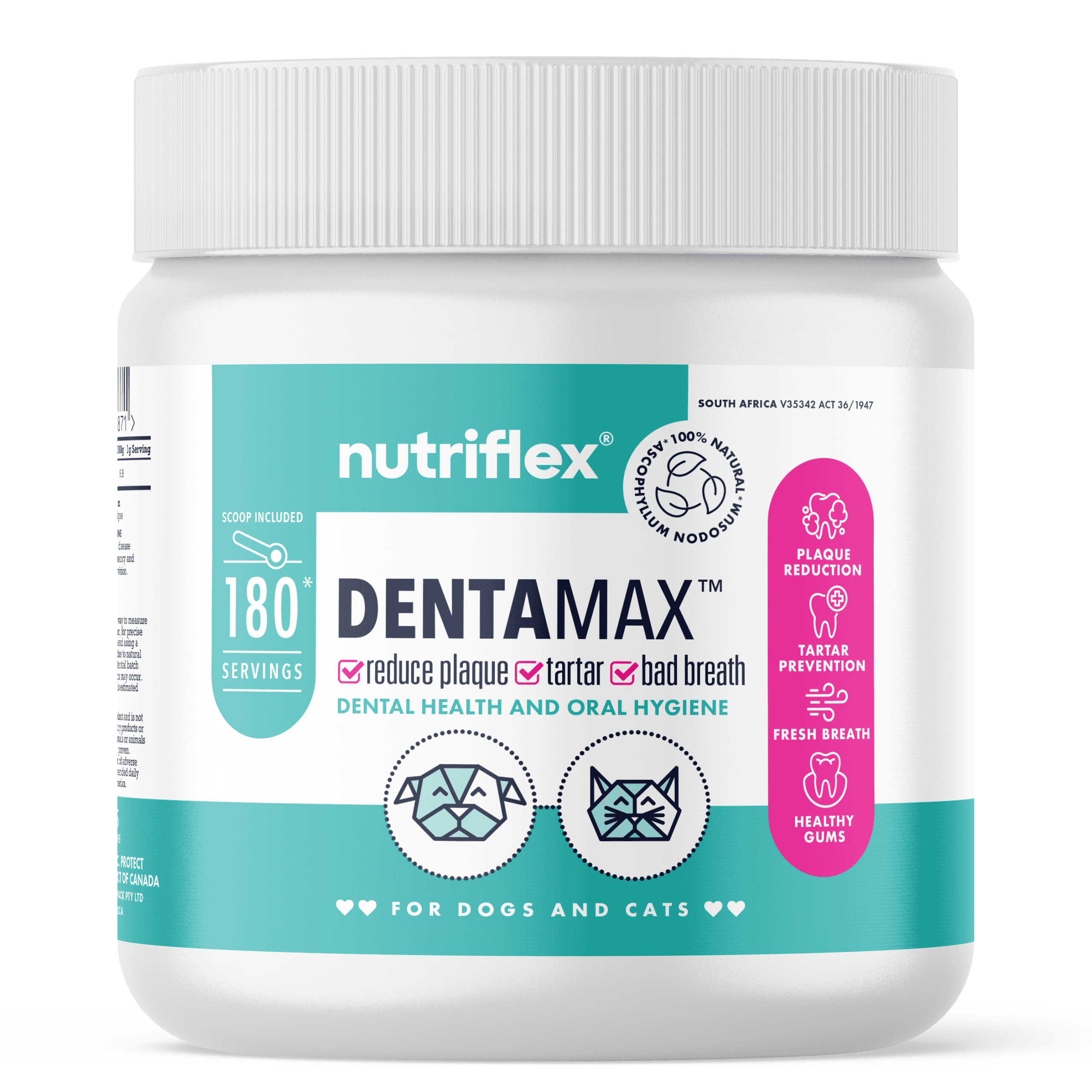
Where DentaMax™ Fits In
DentaMax™ uses Ascophyllum nodosum as its functional base.
Positioning:
- Daily food topper
- Targets plaque bacteria before hardening
- Supports ongoing oral balance rather than reactive treatment
It does not replace brushing.
It compensates for the fact that most owners don’t do it consistently.
In practice:
- Daily powder → systemic control
- Occasional brushing → mechanical disruption
This combination addresses the gap between ideal and actual oral care practices.
Variability: Not All Seaweed Is Equal
Critical factors:
- Species (must be Ascophyllum nodosum)
- Harvest location
- Processing method
- Standardisation of actives
Cheap inputs:
- Diluted actives
- Inconsistent outcomes
Many products fail to meet efficacy standards due to inadequate active compound content or inconsistent processing.
Safety and Constraints
Iodine Consideration
High iodine content means:
- Dose matters
- Long-term safety depends on controlled inclusion
Contaminant Risk
Marine sources must be screened for:
- Heavy metals
- Environmental pollutants
Sourcing from reputable suppliers is essential to ensure product safety.
What Ascophyllum nodosum Does NOT Do
- It does not instantly remove tartar
- It does not replace professional cleaning in severe cases
- It does not work without consistent daily use
Its effects are both preventative and cumulative.
Future Direction: Microbiome-Level Control
The primary focus of future research is not limited to cleaning teeth.
It is controlling:
- Oral microbiome composition
- Biofilm signalling pathways
- Systemic inflammatory links
Ascophyllum nodosum operates at the intersection of these emerging areas.
Bottom Line
Dental disease is a systems problem:
- Behavioural (owners don’t brush)
- Biological (biofilm complexity)
- Time-based (plaque hardens)
Mechanical solutions alone assume ideal behaviour.
Systemic solutions assume reality.
Ascophyllum nodosum is effective because it functions within the biological system.