The Hidden Filler Most Pet Parents Miss on Supplement Labels.
Most pet parents read the active ingredient(s) on a supplement label. Almost nobody reads past it. That’s where maltodextrin lives and that’s the problem.
It appears frequently in soft-chews, probiotics and powdered supplements on the South African shelf. It’s a quiet bulking agent in many oral probiotics, joint chews, calming powders and dental products. The brand promise is health. The reality, in too many cases, is a daily dose of a refined corn-derived sugar that spikes blood glucose harder than table sugar (sucrose), threatens gut-barrier integrity and microbial balance, especially where exposure is repeated over time.
This is why maltodextrin doesn’t belong in pet supplements and the concern is supported by published research.
Below is what the science actually says, why the ingredient is so common despite the evidence and how to recognise its inclusion on a label.
What Maltodextrin Actually Is (and Why Pet Brands Use It)
Maltodextrin is a partially hydrolysed starch. In simple terms, manufacturers take a starchy crop (almost always corn, sometimes wheat, rice, potato or tapioca), break it down with enzymes and dry the resulting glucose chains into a tasteless white powder. It dissolves easily, binds soft chews together and acts as a cheap carrier for actives such as probiotics or vitamins.
That’s the appeal. Maltodextrin is functional, not nutritional. It serves the manufacturer, not the pet.
It contains no fibre, no vitamins, no minerals. It exists to add bulk, hold a soft chew together, or stabilise a probiotic strain in storage. There are filler-free dental supplements that prove it isn’t necessary, but most brands still default to it because it’s the cheapest binder and bulking agent available.
How to spot maltodextrin on a label
Maltodextrin doesn’t always appear by name. On packaging, it can show up as “modified food starch”, “glucose polymers”, “dextrins” or “syrup solids”, or simply hide inside an undeclared “carrier” or “natural flavouring”. Carriers are not always obvious to South African consumers, especially when they appear under broader terms such as carrier, flavouring, starch derivative or processing aid.
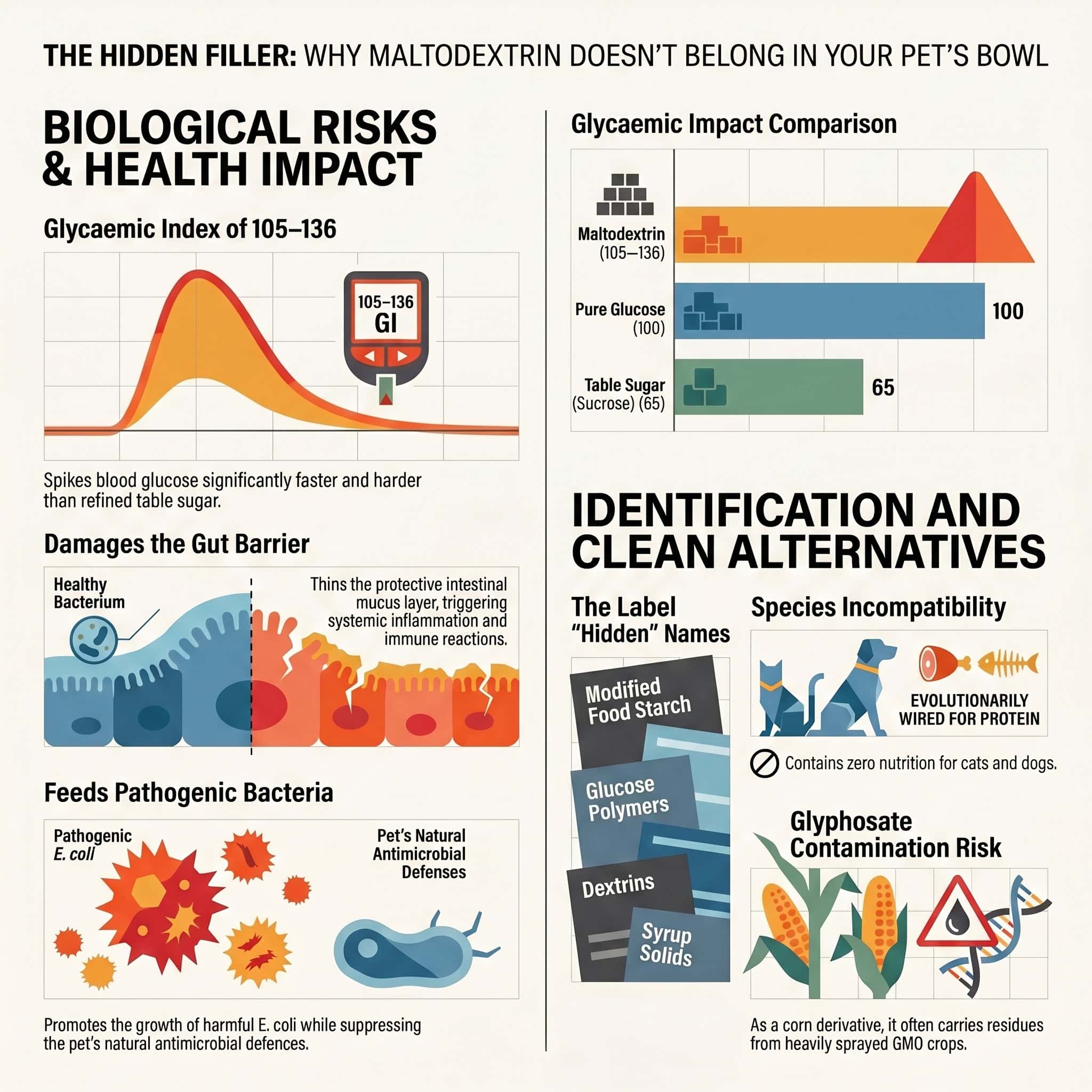
The peer-reviewed case against maltodextrin in pet supplements. It spikes blood glucose harder than table sugar, thins the gut mucus barrier and feeds pathogenic bacteria
It Spikes Blood Sugar Higher Than Sugar
Maltodextrin has a glycaemic index of roughly 105 to 136, depending on the source. Glucose sits at 100. Table sugar (sucrose) sits at around 65. In other words, the “complex carbohydrate” hidden in your pet’s supplement raises blood glucose faster and more aggressively than refined sugar. Background on the regulatory framing of digestible maltodextrins is summarised in this open-access review.
That fact alone reframes the conversation.
For a healthy young dog, an occasional sugar spike isn’t catastrophic. The body buffers it. The concern lies in repetition. A daily supplement, taken every day for years, is an exposure pattern, not a single event.
Why this matters for diabetic, senior and overweight pets
Roughly half of the pets in South Africa are now overweight. Insulin resistance, a history of pancreatitis and diabetes aren’t edge cases. They’re routine. A supplement marketed for joint health, dental health or immunity that quietly delivers a high-glycaemic carb every day works against the very pets most likely to need it.
For pets already diagnosed, the maths is worse. Veterinary guidance on supporting diabetic dogs is to keep the glycaemic load low and predictable. A maltodextrin-bound chew makes that harder. The active ingredient may help. The carrier is undermining it.
The Peer-Reviewed Concern: Maltodextrin and the Gut Barrier
This is the strongest strike against maltodextrin and the one most pet brands are still ignoring.
A 2022 study published in Frontiers in Immunology showed that maltodextrin consumption in mice depleted goblet cells (the cells that produce protective mucus), thinned the intestinal mucus barrier and accelerated colitis. Critically, when researchers exposed primary intestinal epithelial cells directly to maltodextrin in the lab, they saw the same effect. So the harm isn’t second-hand through the microbiome. Direct effects on epithelial mucus production were observed in lab models.
A separate 2018 paper in Cellular and Molecular Gastroenterology and Hepatology traced the mechanism. Maltodextrin triggers endoplasmic reticulum stress in gut cells, thereby downregulating mucus production and worsening intestinal inflammation.
The mucus layer matters. It’s the physical barrier separating gut bacteria from the rest of the body. When it thins, microbes get closer to the epithelium. The immune system reacts. Inflammation rises. Over time, in susceptible animals, that’s a pathway to chronic gut issues and broader inflammation.
Why a damaged gut affects dental and overall health
Roughly 70-80% of an animal’s immune activity resides in the gut. The connection between gut health and oral health isn’t abstract. The bacteria in the mouth are influenced by the same systemic immune environment regulating the gut. Dental disease isn’t only a local problem. As the literature on how oral bacteria affect overall health makes clear, plaque bacteria can enter the bloodstream and contribute to inflammation in the heart, kidneys and joints.
A daily supplement that thins the gut barrier and increases systemic inflammation works at odds with the dental and joint outcomes that those same supplements promise. It’s a contradiction sitting in the binder.
It Feeds the Bacteria You Are Trying to Crowd Out
Here’s where the story gets sharper, especially when it comes to probiotics.
A 2012 study in PLOS ONE showed that maltodextrin enhances the adhesion of adherent-invasive E. coli, the strain most strongly linked to inflammatory bowel disease. A follow-up paper (PMC, 2015) demonstrated that maltodextrin also suppresses the host’s intestinal antimicrobial defence, making it harder for the body to clear pathogens like Salmonella.
Now consider that many oral probiotics for pets contain up to 30% maltodextrin as a carrier. The active strain is meant to crowd out unwanted bacteria. The carrier is helping unwanted bacteria stick. The two ingredients in the same chew are pulling in opposite directions.
This is one of the strangest ingredient pairings in the entire pet supplement category and it’s hiding inside products marketed as “gut health” and “immunity support”. The contradiction is sharpest in daily dental powders; is a direct example of an active ingredient being undermined by its own formula.
The GMO and Glyphosate Problem
Most globally traded maltodextrin is corn-derived. Most of the corn traded globally is genetically modified and sprayed with glyphosate as a pre-harvest desiccant. That residue follows the corn into its derivatives.
A 2018 study in Science of the Total Environment tested 18 commercial pet feeds and found glyphosate in every single one, at concentrations 4 to 12 times higher per kilogram of body weight than typical human exposure. Glyphosate concentration tracked plant-derived ingredients. Corn additives, including maltodextrin, were named drivers.
Because maltodextrin is often derived from commodity crops such as corn, it may come from supply chains where herbicide exposure is a legitimate clean-label concern. That does not prove every maltodextrin-containing supplement carries glyphosate residue, but it does raise a fair formulation question: why use a commodity crop-derived carrier when it adds no active benefit?
Empty Calories in Animals Built for Protein
Cats are obligate carnivores. The natural prey of feral cats provides 2 to 12% of their calories from carbohydrates. Commercial dry cat food ranges from 34 to 48%. Adding maltodextrin to a feline supplement layers more refined carbs onto a species evolutionarily wired to run on protein and fat. A useful summary is published in Cats and Carbohydrates: The Carnivore Fantasy?, which examines how poorly the modern feline diet aligns with the cat’s metabolism.
Dogs are more carb-tolerant than cats, but still don’t produce salivary amylase. They evolved on a diet dominated by protein and fat, with starch as a minor input. As research on carnivore glucose metabolism shows, daily consumption of refined carbohydrates is a poor fit for either species.
The point isn’t that pets can’t tolerate any carbs. The point is that maltodextrin contains zero nutritional value. It’s mass without nutrition. In a daily supplement, every ingredient should earn its place.
Frequently Asked Questions
Is maltodextrin in dental chews and dental powders, too?
Yes. It’s particularly common in soft dental chews. Many soft dental chews are bound with starch fillers and maltodextrin is the most common one. Even some dental powders use it as a base or flow agent.
The contradiction is obvious. A dental product that bathes the mouth in a high-glycaemic sugar undermines its own purpose. Plaque bacteria thrive on sugar. The very ingredient meant to make the chew chewable is feeding the biofilm the chew is supposed to disrupt.
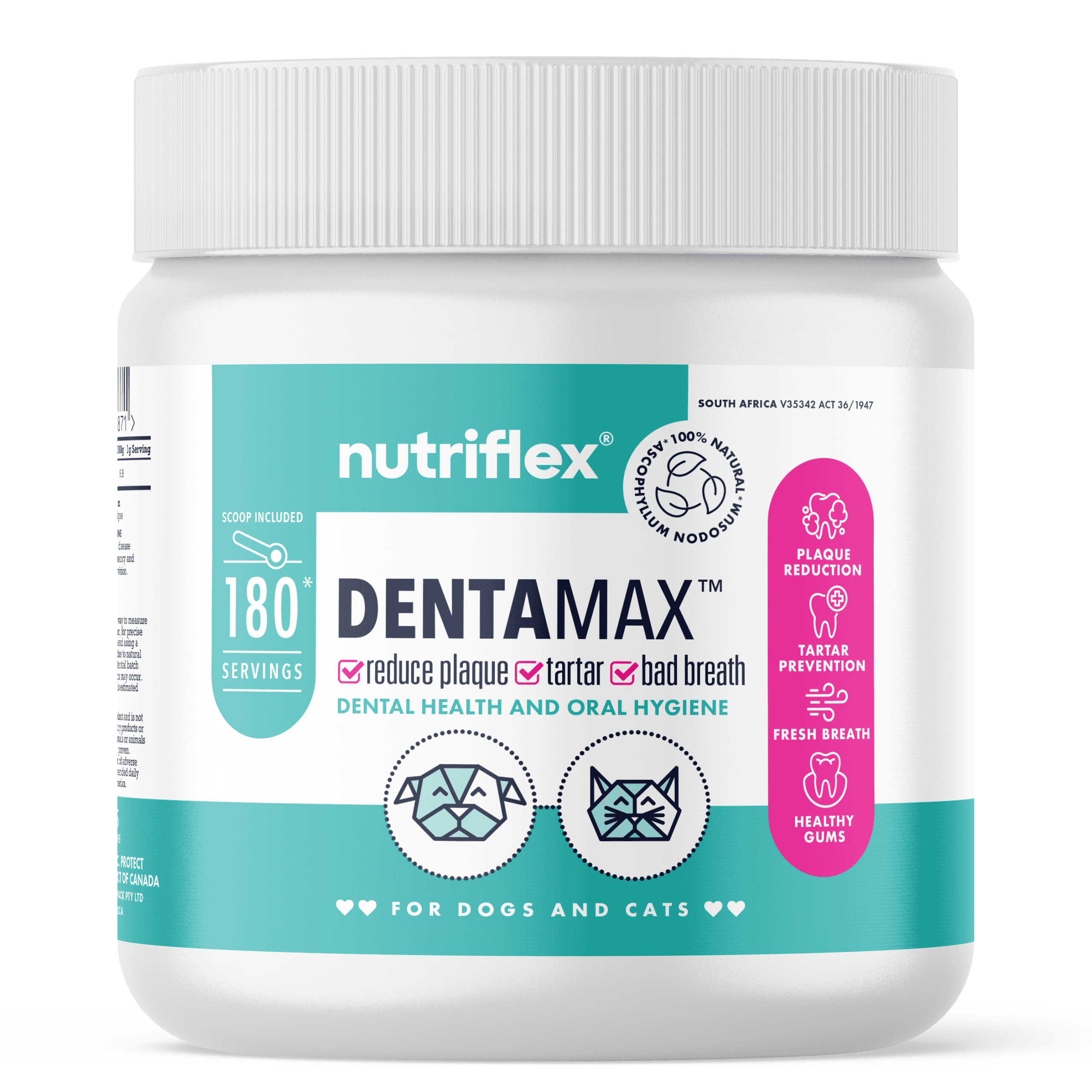
DentaMax™ takes the opposite approach. One ingredient. 100% organic Ascophyllum nodosum. No maltodextrin. No starch fillers. No proprietary blend disguising what’s really in the bowl.
Is maltodextrin safe for diabetic pets?
For diabetic, prediabetic or insulin-resistant pets, maltodextrin is an ingredient to discuss with your vet because it is a rapidly digestible carbohydrate with a high glycaemic response. With a glycaemic index above that of sugar, maltodextrin can trigger the kind of rapid glucose spike that diabetic management protocols specifically aim to avoid. If your dog or cat is diabetic, prediabetic or insulin-resistant, every ingredient in their daily routine should be screened for glycaemic load. Maltodextrin deserves extra caution in these pets.
Why do “natural” pet supplements still contain maltodextrin?
Three reasons. It’s cheap. It binds soft chews and stabilises probiotics in ways alternative ingredients struggle to match at scale. And the carrier loophole means manufacturers don’t always have to declare it in detail.
“Natural” isn’t a regulated term in pet supplement marketing. A brand can describe its hero ingredient as natural while the formulation around it is industrial. The label tells you what the brand wants you to focus on. The full ingredient list, including carriers, tells you what’s actually in the bowl.
How do I know if my pet’s supplement contains maltodextrin?
Read the full ingredient list, not just the active panel. Look for “maltodextrin”, “modified food starch”, “glucose polymers”, “dextrins”, “syrup solids” or unspecified “carriers”. If a probiotic chew lists 1 billion CFUs of a strain but no carrier, contact the manufacturer and ask what’s holding the chew together. A reputable brand will tell you. If the answer is evasive, you have your answer.
The simplest filter: if it’s a soft chewable supplement and the ingredient list runs longer than 5 items, maltodextrin or a close cousin is almost certainly in there.
The Bottom Line
Every day counts when a supplement goes into your pet’s bowl daily for years.
Maltodextrin is a manufacturing convenience, not an active pet-health ingredient. It adds refined carbohydrate, raises glycaemic load, and has raised legitimate gut-barrier concerns in published experimental research. It adds bulk without nutrition. In a pet supplement, sold on the promise of promise is health, that’s a direct contradiction.
Daily supplements deserve a higher standard. If an ingredient is going into your pet’s bowl every day for years, the benefit should be clear, the format should be appropriate, and the carrier shouldn’t be working against the active ingredient. Read the full label. Ask about carriers. Look for single-ingredient formulations where possible.
For more on what to look for in pet supplements (and what to avoid), explore the ingredient analysis library or visit nutriflex.co.za to see how DentaMax™ is formulated.