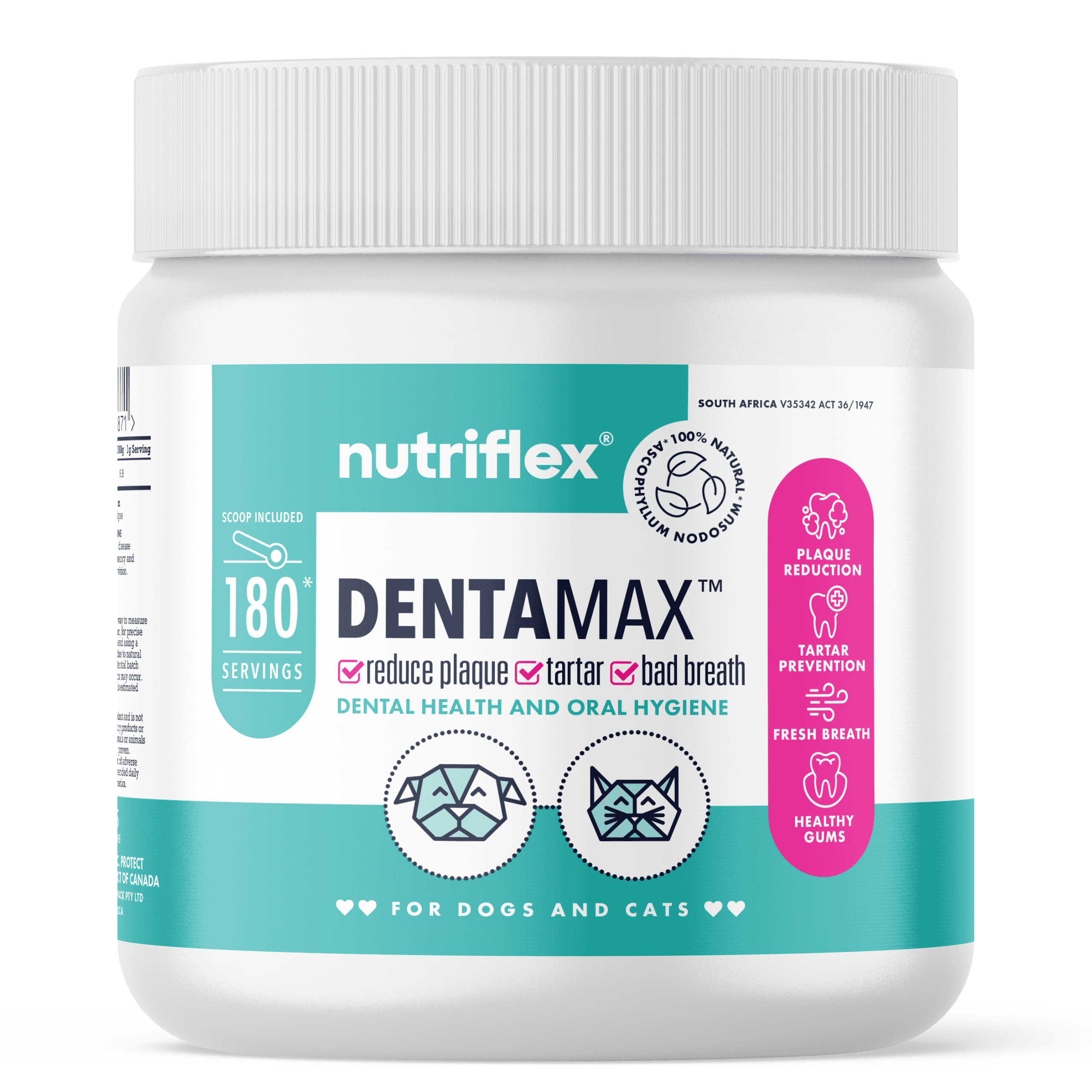
This review is based on the Vets2Pets Dental Powder pack and label in our hands. Vets2Pets has since announced a formulation update and says both versions remain in circulation while the changeover works through, so the tub you buy may be either one. Check the ingredient panel on the pack you’re holding against what’s below.
Ascophyllum nodosum works. That isn’t in dispute and it’s the ingredient both of these products are built on. The question this review asks is a narrower one: what else is in the scoop, how much of it is there and what is it doing.
Quick Comparison: Vets2Pets vs DentaMax™
| Vets2Pets | DentaMax™ | |
|---|---|---|
| Core ingredient | Multi-ingredient blend with Ascophyllum nodosum | 100% Ascophyllum nodosum (organic, dental-grade) |
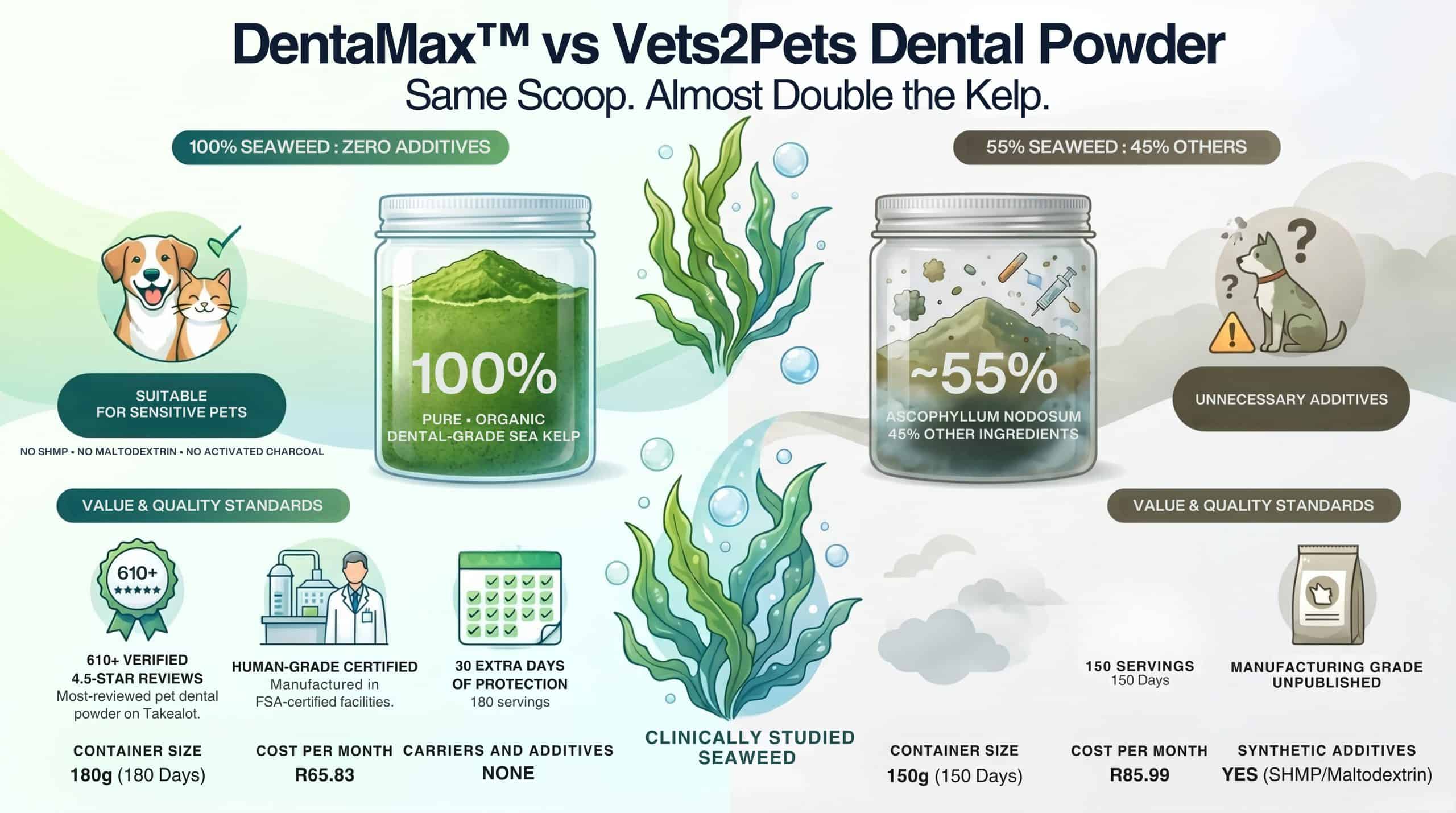
| Ascophyllum nodosum per 1g scoop | ~55% | 100% |
| Synthetic phosphate | Yes (SHMP) | None |
| Activated charcoal | Yes | None |
| Metabolised like Sugar | Yes (Maltodextrin) | No starch or carbohydrate carriers |
| Suitable for CKD pets | Vets commonly advise avoiding added phosphorus (SHMP) | Yes* |
| Suitable for diabetic dogs | Use with caution | Yes* |
| Container size | 150g / 150 days | 180g / 180 days |
| Price (ZAR) | R430 | R395 |
| Takealot reviews | 41 | 589+ |
| Act 36 registered | Yes | Yes |
| Manufacturing standard | Not published | Human-grade FSA-certified Finished Product |
| Where to buy | Takealot / Vets2Pets | Takealot / NutriFlex® / Absolute Pets / Petshop Science / Pet Storey / Crazy Pets / Selected Vet Practices & Independent Retailers |
DentaMax™ has earned 4.5 stars from 589+ verified buyers on Takealot and counting, making it the most reviewed pet dental powder in its category in South Africa.
What Is Vets2Pets Dental Powder?
Vets2Pets Dental Powder is a daily supplement designed to support oral hygiene in dogs and cats. It is mixed into food once a day to help manage plaque and tartar buildup without brushing.
The full Vets2Pets ingredient list runs:
- Ascophyllum nodosum
- Sodium hexametaphosphate (SHMP)
- Parsley leaf extract
- Rosemary extract
- Parsley leaf extract
- Activated charcoal
- Postbiotics
- Inulin
- Maltodextrin
- Yeast extract (chicken flavour)
- Silicon dioxide
The primary active ingredient, Ascophyllum nodosum, is declared as 1,650mg of the 3g scoop (~55%). The remaining 45% consists of SHMP, activated charcoal, flavouring, carriers and processing agents.
Does Vets2Pets Dental Powder Work?
The short answer is: Ascophyllum nodosum in the formula does have clinical support for plaque and tartar reduction. The question is whether the supporting ingredients help, hinder, or simply dilute that effect.
What works: Ascophyllum nodosum is the most studied natural ingredient for systemic plaque control in pets. When consumed daily, compounds from this brown seaweed interact with saliva to influence plaque biofilm formation across the whole mouth, not just where food physically contacts the teeth. The same species underpins ProDen PlaqueOff®, which holds VOHC (Veterinary Oral Health Council) acceptance.
What is questionable: The inclusion of SHMP, activated charcoal and maltodextrin introduces trade-offs worth understanding before committing to daily use. These are covered in detail below.
Vets2Pets Ingredient Breakdown
Vets2Pets Dental Powder contains nine ingredients. Three of them, maltodextrin, activated charcoal and sodium hexametaphosphate raise questions worth understanding before committing to daily use.
1. Ascophyllum nodosum
The evidence-backed core ingredient. Studied for its ability to reduce plaque biofilm and slow tartar formation through a systemic, saliva-based mechanism. At 55% of the serving, it is present in a functional quantity, though less concentrated than a single-ingredient product.
The clinical evidence behind this ingredient is well established. A double-blind, randomised, placebo-controlled trial by Gawor et al. (2018), published in , tested 60 dogs over 90 days and found that daily Ascophyllum nodosum supplementation reduced plaque index scores significantly compared to placebo, with volatile sulfur compounds (the primary cause of bad breath) dropping by 46% by day 90. A 2023 review by the same authors, published in the , confirmed that powder form delivers the strongest results, ahead of treats and dry food formulations.
2. Sodium Hexametaphosphate (SHMP)
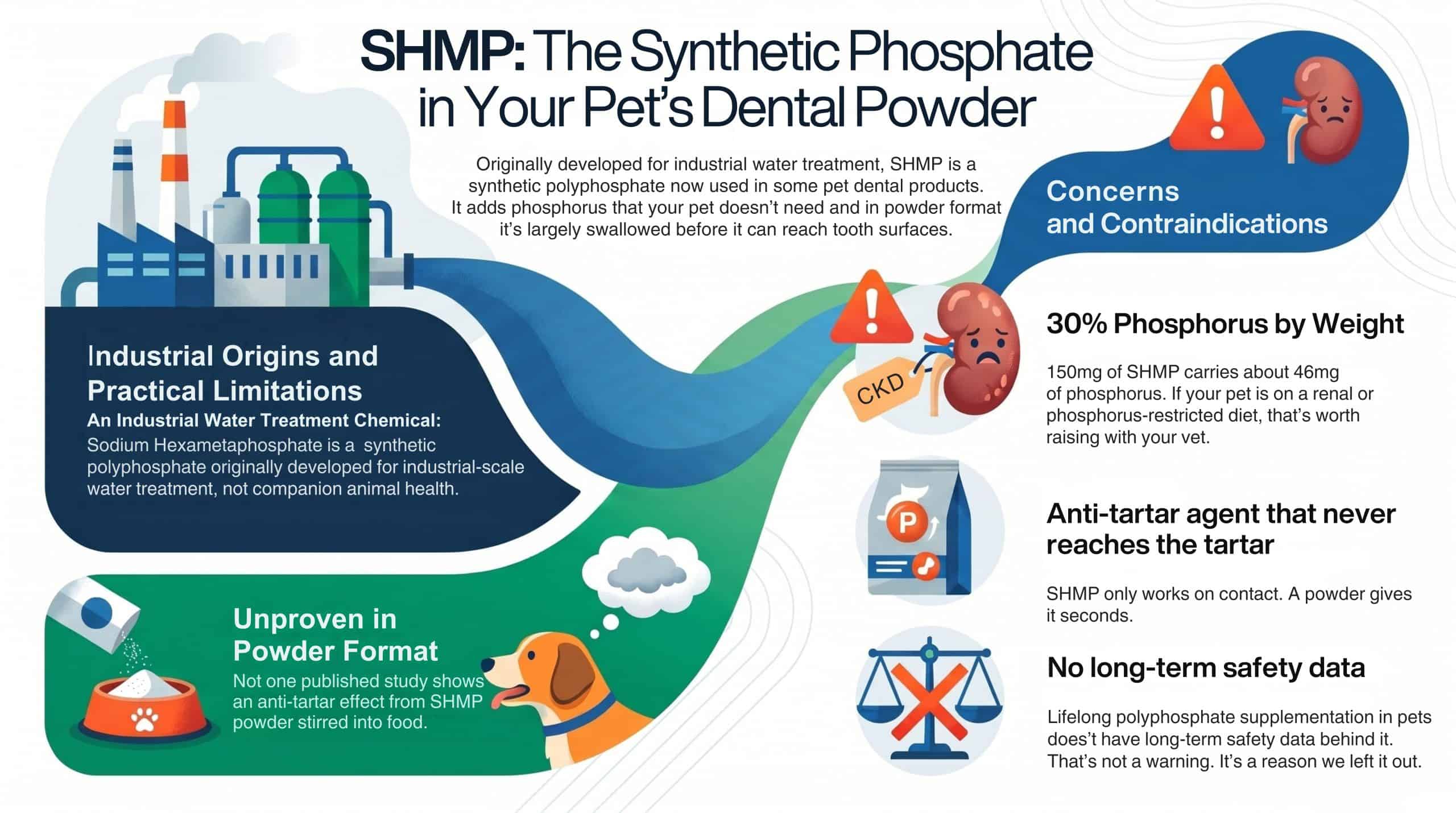
A synthetic polyphosphate originally developed for industrial water treatment. In dental kibble, coating on something the pet chews, where it meets the tooth surface directly and stays there while chewing happens.
We haven’t found published evidence for the same effect from loose SHMP stirred into a bowl of food and swallowed in seconds. That’s the gap. It isn’t a claim that SHMP does nothing. It’s a claim that the evidence comes from a delivery format this product doesn’t use and it isn’t sound to assume results
from coated kibble carry over to a powder that’s gone in ten seconds.
3. Activated Charcoal
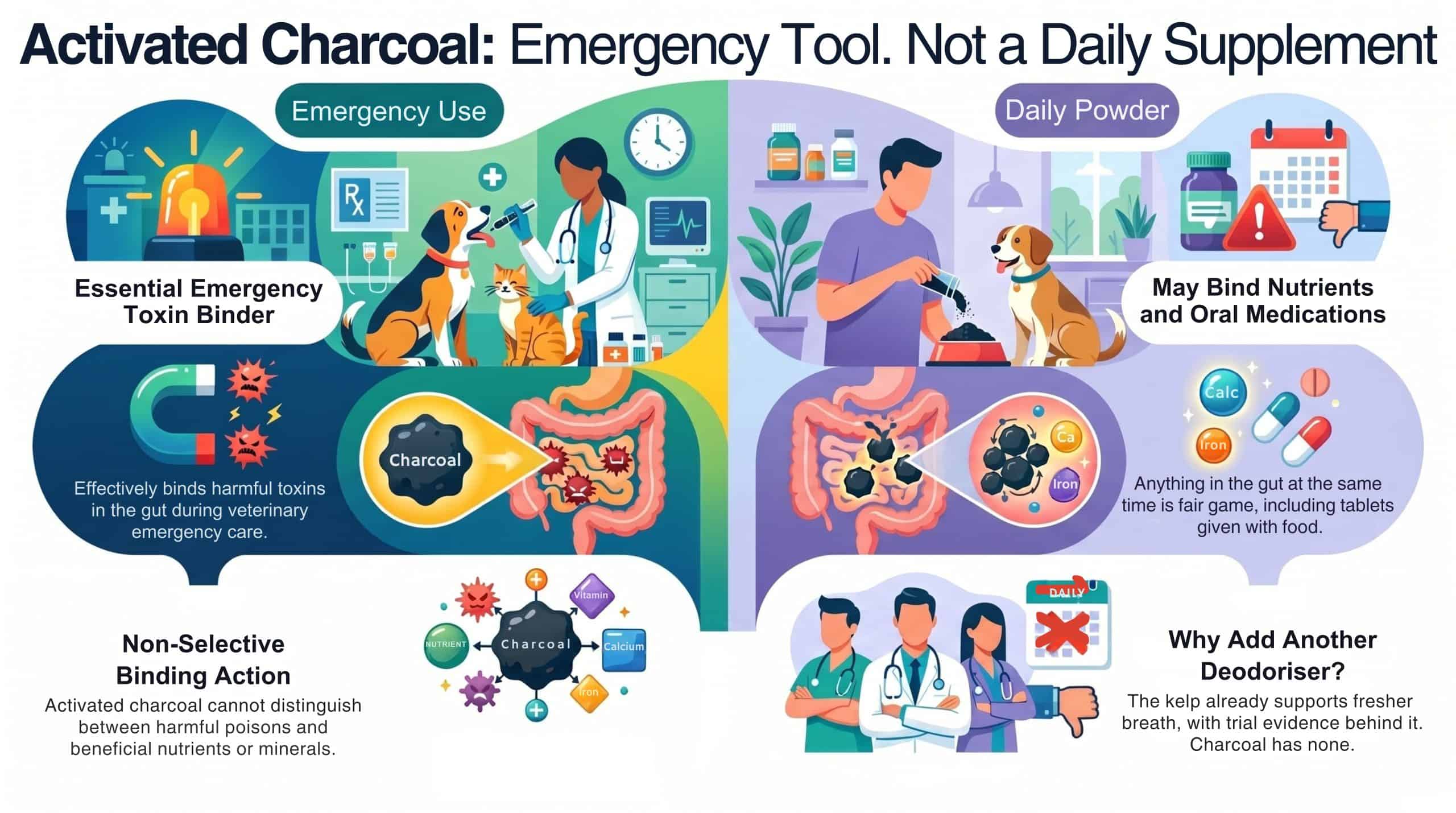
Useful in veterinary emergency care because it binds toxins in the gut. That same non-selective binding action is worth understanding in a daily supplement, because activated charcoal cannot distinguish between harmful and beneficial substances. Anything in the gut at the same time is bound the same way, including minerals and tablets given with food. It is not considered appropriate for routine daily supplementation by most veterinarians.
Here it’s included as a breath deodoriser. We’ve found no published canine study showing that activated charcoal reduces oral volatile sulphur compounds or measurably changes how a dog’s breath smells, at any dose used in a daily supplement.
The Ascophyllum nodosum already in the formula does have that evidence. The trial cited earlier recorded volatile sulphur compounds 35% to 46% lower between days 60 and 90. So the question isn’t only whether the charcoal works. It’s why another deodoriser was added to a formula whose core ingredient is the one with the breath data behind it.
4. Maltodextrin
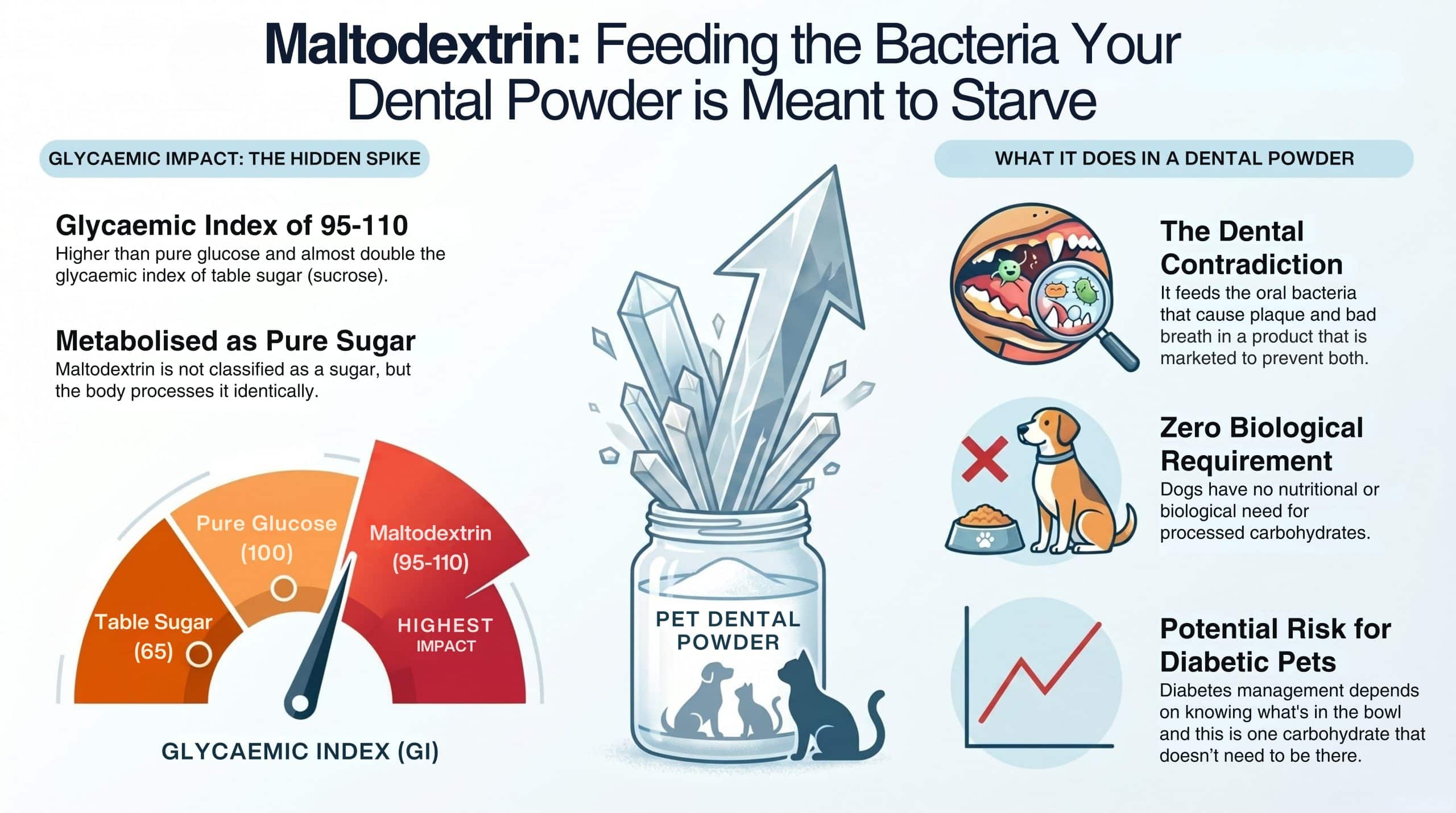
Maltodextrin is a processed carbohydrate derived from starch, used as a carrier and flow agent. Despite not being classified as a sugar, it has a glycaemic index of 95–110, higher even than pure glucose (100) and almost twice that of table sugar (65) and is metabolised as sugar. Dogs have no biological need for it. In a dental powder, a fermentable carbohydrate feeds the oral bacteria that cause plaque and bad breath, directly undermining the product’s purpose. For dogs and cats managing diabetes or blood sugar sensitivity, a rapidly digested carbohydrate has no place in a daily supplement and the label doesn’t say how much is in there. Check with your vet before adding it to a managed diet.
For a detailed breakdown of , read our full ingredient analysis.
5. Parsley and 6. Rosemary
Parsley and rosemary contribute to flavour and temporary breath masking but have no proven effect on plaque, tartar or the bacteria that cause them. At a 1g serving size, parsley leaf extract is present at well under 0.1g, too small a quantity to deliver any meaningful breath benefit. It freshens the label more than it freshens the breath.
7. Inulin
Inulin is a prebiotic fibre with no established role in dental health. In the gut, prebiotics support beneficial bacteria, a legitimate health function. However in the mouth, fermentable fibres feed oral bacteria and can contribute to acid production, which is the opposite of what a dental product should do. In this formula it most likely serves as a low-cost bulking agent.
8. Yeast extract (chicken flavouring) and 9. Silicon dioxide
Yeast extract is added to make the blend more palatable and anti-caking agent that keeps the powder from clumping in the tub. Neither contributes to your pet’s dental health.
Who Should and Shouldn’t Use Vets2Pets Dental Powder
Suitable for:
- Healthy adult dogs and cats with no underlying conditions
- Owners wanting a multi-ingredient dental supplement with added flavouring
Use with caution or avoid:
- Pets with chronic kidney disease (CKD) — SHMP adds uneccessary phosphorus load
- Diabetic dogs — maltodextrin can trigger glucose spikes
- Pets on daily oral medication — activated charcoal may reduce the absorption of essential nutrients and oral medications
- Pets with sensitive digestion or mineral-balance issues
Why Plaque Prevention Matters
Plaque is a sticky bacterial film that forms on teeth shortly after eating. Left uncontrolled, minerals in saliva harden it into tartar. Over time, this leads to bad breath, gum inflammation, periodontal disease and tooth loss. Dental powders work by influencing the oral environment through saliva, a systemic mechanism that reaches surfaces brushing and chewing often miss.
How DentaMax™ Compares
For pet parents, that creates some very practical differences:
- Concentration: Every gram of DentaMax™ is Ascophyllum nodosum. No portion of the serving is taken up by additional carriers, flavouring agents or binding agents.
- No added phosphate: DentaMax™ contains no SHMP, particularly relevant for owners trying to minimise unnecessary phosphorus sources.
- No maltodextrin: Maltodextrin is a rapidly digestible carbohydrate that can raise blood glucose. DentaMax™ contains none, particularly relevant for diabetic pets, where avoiding unnecessary carbohydrate carriers can help keep dietary glucose management simpler.
- No activated charcoal: Nothing added specifically for its adsorbent properties, which can matter when oral medication is being given.
- More product for less: 180g versus 150g. 30 g more for R35 less at current prices of R395 versus R430.
- Human-grade production: Manufactured in an FSA-certified human-food facility and registered in South Africa under Act 36 of 1947.
DentaMax™ uses the same seaweed species that underpins internationally recognised plaque-control supplements, including ProDen PlaqueOff®. Why pay for a diluted dental powder when you can give 100% of the ingredient doing the work?
| Vets2Pets | DentaMax™ | |
|---|---|---|
| Pack size | 150g | 180g |
| Daily dose (~15kg dog) | 1g | 1g |
| Days’ supply | 150 days | 180 days |
| Price | R430 | R395 |
| Cost per month | R86.10 | R65.70 |
View DentaMax™ Dental Powder →
Verdict
Vets2Pets Dental Powder is a functional dental supplement for healthy adult pets with no underlying conditions. The Ascophyllum nodosum it contains is the right core ingredient and will contribute to plaque management when used consistently.
The trade-offs are real but conditional: SHMP and activated charcoal are not concerns for every dog, but they do matter for pets with kidney disease, diabetes or those on daily medication. Owners of pets in those categories should choose a single-ingredient alternative.
For owners who want maximum concentration of the active ingredient without the additives, DentaMax™ is the cleaner formulation, 100% Ascophyllum nodosum, same daily dose, 30 more days per container.
Frequently Asked Questions
What is Vets2Pets dental powder used for?
Vets2Pets dental powder is a daily oral supplement for dogs and cats. It is mixed into food to help reduce plaque and tartar buildup and freshen breath.
What ingredients are in Vets2Pets dental powder?
The formula contains Ascophyllum nodosum, sodium hexametaphosphate (SHMP), activated charcoal, parsley leaf extract, rosemary extract, inulin, maltodextrin, yeast extract (chicken flavour) and silicon dioxide.
How long does Vets2Pets dental powder last?
Each 150g container contains approximately 150 daily servings at the recommended 1g dose for cats and small dogs.
Content based on publicly available information at the time of writing. Ingredient assessments reflect published literature and general veterinary guidance. Consult your vet before changing your pet’s supplement routine, particularly if your pet has a diagnosed health condition.