Why Puppy Bad Breath Happens and What You Can Do About It
Bad breath puppies treatment is simpler than most pet owners expect, and the right approach depends on what is causing the smell in the first place.
Quick answers for common puppy bad breath situations:
| Cause | What to Do |
|---|---|
| Teething (3 to 6 months) | Gentle brushing, frozen chew toys, monitor for bleeding |
| Plaque and tartar buildup | Daily brushing with pet-safe toothpaste, VOHC-approved dental chews |
| Dietary indiscretion (eating poop or rubbish) | Remove access, add enzyme supplement, consult your vet |
| Ammonia or sweet-fruity smell | See your vet promptly, may indicate kidney or metabolic disease |
| Persistent foul odour | Professional veterinary dental examination |
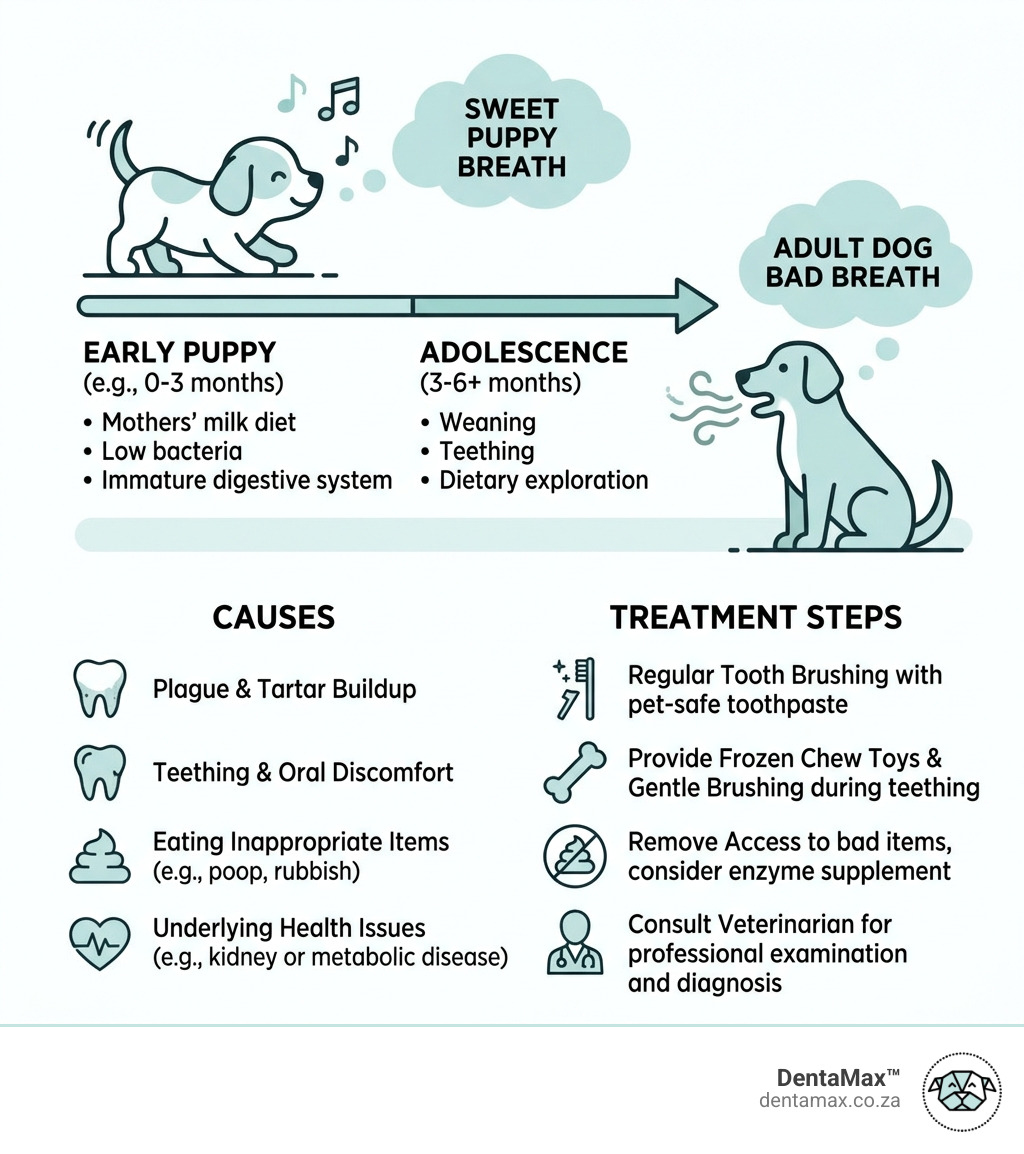
Most puppies start life with sweet, milky breath. That familiar smell comes from mother’s milk, a clean mouth with low bacteria and an immature digestive system. But as puppies wean, teethe and start exploring the world with their mouths, that sweetness fades fast.
The shift is not always a sign of illness. But it is always worth paying attention to.
Some smells are temporary and easy to manage at home. Others signal something more serious going on beneath the surface. This guide walks you through the full picture, from common developmental causes to effective home care and when to involve your vet.
I am Sharon Milani, Co-Founder and Director of NutriFlex® and the developer of DentaMax™, a 100 per cent pure organic Ascophyllum nodosum dental powder formulated specifically for systemic plaque and tartar reduction in dogs and cats. My work in evidence-based pet nutrition and preventative oral health means bad breath puppies treatment is something I approach from both a scientific and practical standpoint. In the sections below, I will take you through everything you need to know to protect your puppy’s oral health from day one.
Understanding the Causes of Puppy Halitosis
When we talk about bad breath puppies treatment, we must first understand that halitosis is rarely a disease on its own. Instead, it is a symptom of an underlying issue. In puppies, the causes can range from simple curiosity to more complex biological changes.
One of the primary culprits is the formation of plaque biofilm. Almost immediately after a puppy eats, bacteria in the mouth combine with saliva and food particles to form a sticky film on the teeth. If this film is not removed through mechanical cleaning or systemic support, it begins to harden. Within just a few days, this plaque mineralises into tartar (calculus), which provides a porous surface for even more bacteria to thrive. You can learn more about this process in our guide on Why Plaque Causes Bad Breath.

Beyond simple hygiene, puppies are notorious for dietary indiscretion. Their mouths are their primary tools for exploration. This often leads to the ingestion of “stinky stuff” such as decomposing leaves, rubbish or even dead insects. A particularly common and distressing habit for South African pet owners is coprophagia, the act of eating faeces. Whether it is their own, another dog’s or cat litter, this habit leads to a distinct and unpleasant odour.
Sometimes, the cause is physical. Puppies can easily get foreign bodies lodged in their mouths. Sticks, shards of bone or even pieces of plastic from destroyed toys can get stuck between teeth or under the gumline. These objects cause irritation, infection and a foul smell as they begin to decay or cause local tissue necrosis.
Is Bad Breath Normal in Puppies?
It is a common myth that “dog breath” is just something pet owners have to live with. While a puppy’s breath will never smell like roses, it should not be offensive.
During the first few weeks of life, “milk breath” is perfectly normal. It is a light, slightly sweet scent. As the puppy moves through weaning and starts consuming solid food, the bacterial flora in the mouth changes. This is when a more “adult” scent may develop, but it should still be relatively neutral.
| Smell Profile | Potential Meaning | Action Required |
|---|---|---|
| Sweet/Milky | Normal puppy breath (pre-weaning) | None |
| Mildly “Doggy” | Normal adult transition | Start routine brushing |
| Metallic/Penny-like | Teething or minor gum bleeding | Monitor gums, provide soft chews |
| Rotten Eggs/Sulphur | Bacterial overgrowth or plaque | Professional cleaning or systemic support |
| Fecal/Sewage | Coprophagia or severe GI upset | Behavioural training and vet check |
| Ammonia/Urine | Potential kidney issues | Immediate veterinary consultation |
If your puppy’s breath is consistently foul, it is a signal that the oral microbiome is out of balance. This is the ideal time to start a bad breath puppies treatment plan to prevent long-term periodontal disease, which affects up to 90 per cent of dogs over the age of three.
The Role of Teething in Bad Breath Puppies Treatment
Between the ages of four and seven months, your puppy will go through a significant developmental milestone: teething. During this time, the 28 deciduous (baby) teeth fall out to make room for 42 permanent adult teeth.
This phase is a major contributor to temporary halitosis. As the baby teeth loosen, the gums become inflamed and tender. This inflammation creates small pockets where bacteria can hide. Furthermore, as the roots of the baby teeth are reabsorbed by the body, there is often minor bleeding. This blood gives the breath a distinct metallic or “musty” smell.
Owners should also watch for retained baby teeth. This happens when an adult tooth erupts but the baby tooth fails to fall out. This creates a “crowding” effect where food and hair easily become trapped, leading to rapid bacterial growth and a localised stench. If you notice two teeth occupying the same spot, it is a sign that your puppy needs a professional exam. For more on the causes of these odors, see What Causes Bad Breath in Puppies? – PetPlace.
Identifying Serious Health Risks Beyond the Mouth
While most cases of stinky breath in young dogs are related to the mouth, we must remain vigilant for systemic issues. If your bad breath puppies treatment at home is not working, the problem might be internal.
Systemic diseases can alter the chemical composition of a puppy’s breath. For instance, if a puppy’s breath smells like ammonia or urine, it could indicate that the kidneys are not properly filtering waste products from the blood. This is a serious condition that requires immediate veterinary attention.
Liver disease can manifest as a musty or “dead animal” smell, often accompanied by jaundice (yellowing of the eyes or gums) and vomiting. Although rare in very young puppies, diabetes can cause “acetone breath,” which smells sweet or fruity, similar to nail polish remover.
Gastrointestinal (GI) upset is another common factor. If a puppy has a “swampy” smell coming from their mouth, it might actually be coming from the stomach. Indigestion, gas or the ingestion of toxins can cause odours to rise from the digestive tract. You can read more about these serious signs in our article on Why Your Dogs Breath Smells Like A Swamp And Their Gums Bleed.
Effective Bad Breath Puppies Treatment and Home Care
The good news is that most cases of puppy halitosis can be managed with a consistent home care routine. The goal is to disrupt the plaque biofilm before it can harden into tartar.
Mechanical cleaning remains the “gold standard” of oral hygiene. By physically scrubbing the teeth, you remove the bacteria and food debris that cause smells. However, it is vital to use only pet-safe products. Human toothpaste often contains xylitol, an artificial sweetener that is highly toxic to dogs, or fluoride, which can be harmful if swallowed in large quantities.
Instead, opt for enzymatic toothpastes designed for dogs. These contain enzymes that help break down plaque chemically even after you have finished brushing. For a deeper dive into home methods, check out How To Fix Your Dogs Bad Breath At Home and our general overview on Dog Bad Breath.
Safely Brushing Your Puppy’s Teeth
Starting a brushing routine early is the best way to ensure your dog accepts it as they grow older. The key is positive reinforcement.
- Introduce the taste: Let your puppy lick a small amount of dog-safe toothpaste off your finger.
- Use a finger brush: For small puppy mouths, a silicone finger brush is often less intimidating than a full-sized toothbrush.
- Focus on the gumline: This is where plaque accumulates. Gently rub in circular motions.
- Keep it short: Aim for 30 seconds per side. You do not need to brush the inside surfaces of the teeth initially, as the tongue does a fair job of cleaning those areas.
- Reward: Always follow up with praise or a healthy treat to create a positive association.
We recommend brushing at least three times per week, though daily is ideal for the best results. If you are struggling with the process, consult Why Does My Puppy’s Breath Stink? How to Improve It · Kinship for more behavioral tips.
Natural Remedies for Bad Breath Puppies Treatment
If your puppy is particularly resistant to brushing, there are several natural additions to their diet that can help freshen their breath.
- Fresh Herbs: Adding half a teaspoon of finely chopped fresh mint, parsley or coriander to their food can provide a temporary scent boost and offer some antimicrobial benefits.
- Coconut Oil: Known for its antiviral and antibacterial properties, a small amount of coconut oil (about 1/4 teaspoon for small puppies) can help reduce oral bacteria.
- Apple Cider Vinegar: Adding a tiny splash to their water bowl can help balance the pH of the mouth, though some puppies may dislike the taste.
- Crunchy Vegetables: Slices of carrot or apple act as natural abrasive cleaners, helping to scrape away plaque as the puppy chews.
For more ideas on holistic approaches, visit Natural Remedies To Turn Your Dogs Breath From Foul To Fresh.
The Science of Systemic Plaque Reduction with Seaweed
At DentaMax™, we focus on a approach to oral health: systemic plaque reduction. While brushing cleans the surface of the tooth, systemic supplements work from the inside out.
The star of this approach is Ascophyllum nodosum, a specific species of North Atlantic kelp. When ingested, the active compounds in the seaweed are absorbed into the bloodstream and eventually excreted through the saliva.
Once in the saliva, these compounds work to disrupt the biofilm of the plaque. They prevent the bacteria from sticking to the tooth surface and soften existing tartar deposits, making them easier to remove through normal chewing or brushing. This is particularly effective for South African pet owners who may have busy schedules and cannot always commit to daily brushing.
When choosing an Ascophyllum nodosum supplement, iodine transparency is crucial. Seaweed is naturally high in iodine, which is essential for thyroid health but must be carefully managed. DentaMax™ provides structured educational content on the role of wild-harvested seaweed in supporting dental health while ensuring safety standards are met. You can find out more about these basics in our article on Stop The Stink With These Dog Breath Powder Basics.
When to Consult a South African Veterinarian
Sometimes, home remedies and supplements are not enough. If your puppy has persistent, “gag-inducing” breath despite your best efforts, it is time to see a professional.
A veterinarian in Cape Town, Johannesburg or Durban will perform a thorough oral examination. They will check for retained baby teeth, signs of gingivitis (red, swollen gums) and any hidden foreign objects. In some cases, they may recommend a professional dental cleaning.
Unlike human dental cleanings, pet cleanings usually require general anaesthesia. This allows the vet to perform sub-gingival scaling (cleaning below the gumline) and take dental X-rays to check the health of the tooth roots. This is the only way to truly “cure” advanced halitosis caused by periodontal disease. Explore the Professional Ways To Cure Your Dogs Halitosis for a better understanding of what happens at the clinic.
Red Flags to Watch For:
- Bleeding gums that do not resolve after the teething phase.
- Excessive drooling or pawing at the mouth.
- Reluctance to eat or dropping food while chewing.
- Visible yellow or brown buildup on the teeth.
- Breath that smells like ammonia, fruit or faeces.
Frequently Asked Questions about Puppy Bad Breath
Why does my puppy’s breath smell like fish?
A fishy smell in puppies can often be traced back to two things: their diet or their anal glands. If the puppy has recently eaten fish-based kibble or treats, the scent can linger. However, if the smell is persistent and accompanied by the puppy “scooting” their bottom on the carpet, it may indicate that their anal glands are full or impacted. Puppies often lick these glands, transferring the fishy-smelling fluid to their mouth. Occasionally, teething bacteria can also produce a fishy-metallic odour.
Can I use human toothpaste for my puppy’s bad breath?
No, you should never use human toothpaste for any dog. Most human toothpastes contain foaming agents like sodium lauryl sulphate, which can upset a puppy’s stomach. More importantly, many brands contain xylitol, which is life-threatening for dogs. Always use a veterinarian-approved pet toothpaste.
How often should I treat my puppy’s bad breath at home?
Oral care should be a daily habit. While you might only brush three times a week, you can use systemic supplements like DentaMax™ daily in their food. This provides a constant “defence” against plaque formation. Regular check-ups with your vet every six months during the first year are also recommended to ensure their adult teeth are coming in correctly.
Conclusion
Managing bad breath puppies treatment is about more than just avoiding a smelly greeting; it is about setting the foundation for a lifetime of health. By understanding the causes—from the natural process of teething to the dangers of plaque biofilm—you can take proactive steps to keep your puppy’s mouth clean.
Whether you choose the mechanical route of brushing, the natural route of herbs and coconut oil or the scientifically-backed systemic route of Ascophyllum nodosum supplementation, consistency is key. At DentaMax™, we believe that an educated pet owner is a puppy’s best friend.
By combining routine home care with professional veterinary advice, you can ensure that your puppy’s kisses remain as sweet as the day you brought them home. For a final look at achieving a long-term solution, read our guide on the Dog Bad Breath Cure.