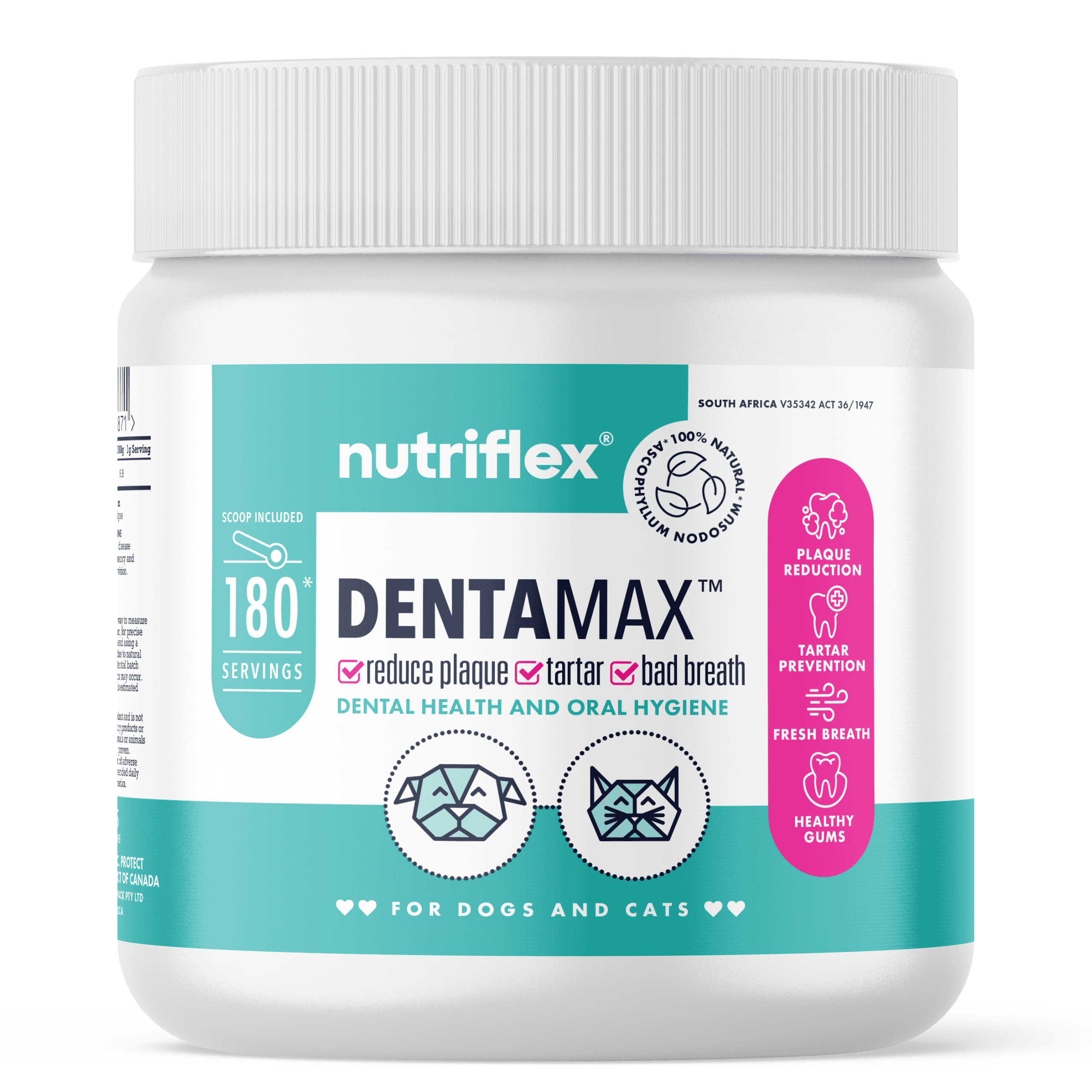
The Natural Answer to Your Dog’s Dental Problems
Seaweed powder for dogs teeth is a clinically supported, brushing-free supplement that works systemically through your dog’s digestive system to reduce plaque and tartar buildup at the source.
Quick answer for dog owners looking for a natural dental solution:
| What you want | What seaweed powder does |
|---|---|
| Fresher breath | Noticeable improvement within 2 to 3 weeks |
| Less plaque and tartar | Visible reduction within 8 to 15 weeks |
| No brushing required | Daily food topper, no restraint needed |
| Safe and natural | 100% Ascophyllum nodosum, no harsh chemicals |
| Works on all tooth surfaces | Including below the gumline, via saliva |
The most effective type is Ascophyllum nodosum, a brown seaweed wild-harvested from the North Atlantic. Clinical research assessed under Veterinary Oral Health Council standards confirms it delivers the strongest preventive action in powder form, outperforming dental chews and seaweed-enriched dry food.
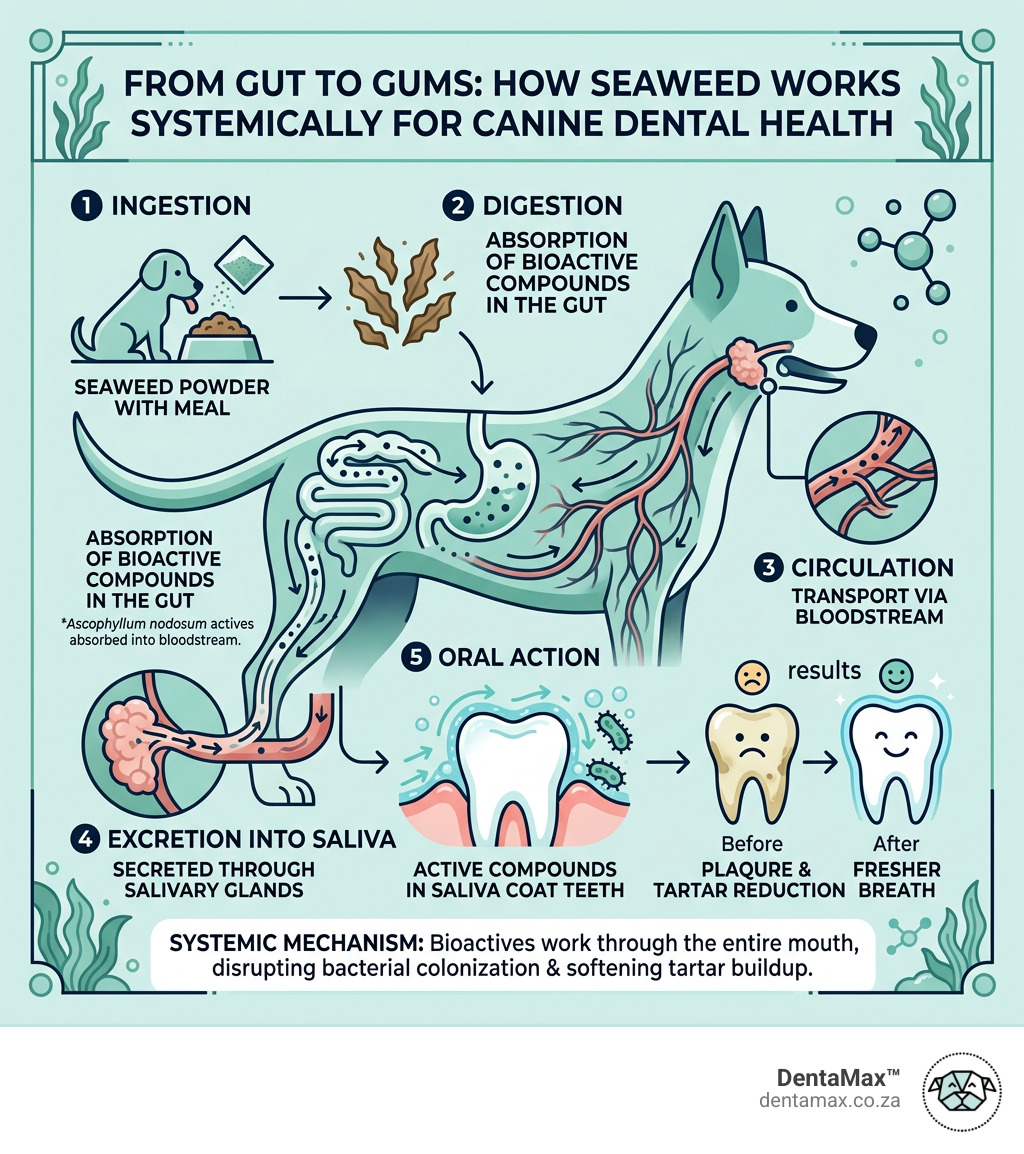
The mechanism is straightforward. Bioactive compounds in the seaweed are absorbed through the gut and excreted into saliva, where they form a protective barrier on tooth surfaces that disrupts bacterial colonisation and slows tartar mineralisation. You simply sprinkle it onto your dog’s food once daily.
For South African pet owners managing bad breath, visible tartar or early gum disease, this approach offers a practical, evidence-aligned alternative to costly veterinary dental procedures.
I’m Sharon Milani, Co-Founder and Director of NutriFlex® and the developer of DentaMax™, a 100% pure organic Ascophyllum nodosum dental powder formulated specifically for the South African market. My work in systemic plaque reduction and seaweed powder for dogs teeth is grounded in published research and guided by veterinary and nutritional expertise.
How Ascophyllum Nodosum Transforms Canine Oral Health
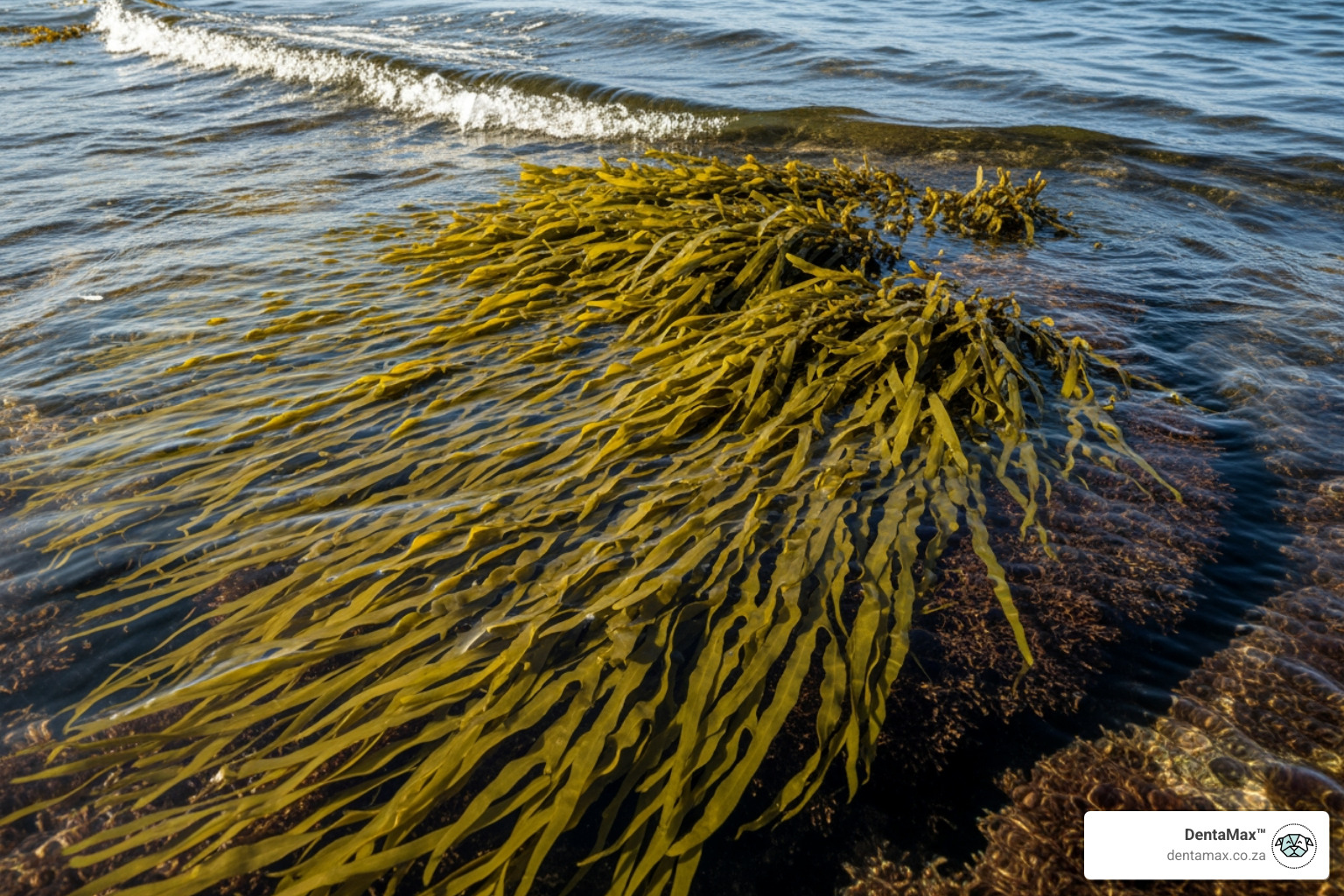
When we talk about seaweed powder for dogs teeth, we are specifically referring to the species Ascophyllum nodosum. This is not generic kelp. Harvested from the cold nutrient rich waters of the North Atlantic, this specific seaweed contains a range of bioactive compounds including polyphenols and polysaccharides that have been studied for their interaction with oral bacteria and plaque biofilm.
Unlike traditional dental products that rely on mechanical scraping, Ascophyllum nodosum works through a systemic pathway. Once your dog ingests the powder, the active ingredients are absorbed via the digestive tract. From there, they are secreted back into the mouth through the salivary glands. This means the supportive compounds are present in the saliva, reaching tooth surfaces including areas that a toothbrush or chew may not reach.
This altered saliva composition supports three key actions:
- Biofilm disruption: Helps reduce plaque adherence to tooth enamel.
- Bacterial load support: Helps maintain a healthier oral bacterial balance associated with fresher breath and gum comfort.
- Tartar support: May help soften existing mineralised deposits which can make them easier to reduce through normal chewing or brushing.
Scientific research into the Ascophyllum genus highlights its role in supporting Oral Health through changes in saliva chemistry.
Broader nutritional value
While the primary purpose is oral hygiene support, seaweed also provides naturally occurring vitamins, minerals and amino acids. Some owners report secondary benefits such as improved skin and coat condition which may reflect the overall nutrient contribution of seaweed.
Cats can also use seaweed dental powders where the product is formulated for both species but the primary focus for South African households is consistent daily use for dogs.
The Clinical Evidence for Seaweed Supplementation
We don’t just rely on anecdotes; the efficacy of Ascophyllum nodosum is backed by rigorous clinical standards. Several products containing this specific seaweed have been assessed according to Veterinary Oral Health Council (VOHC) standards, which are the gold standard for pet dental claims.
The data suggests that the delivery format matters immensely. Clinical trials have shown that the strongest preventive action against plaque and calculus accumulation is achieved when the seaweed is administered as a concentrated powder. While dental bites and seaweed-infused dry foods show some benefit, they are significantly less effective than the pure powder form.
Metabolomic data suggests that the seaweed actually changes the chemical composition of the dog’s saliva. This is a game-changer because it means the supplement is working even while your dog is napping on the sofa. You can find more in-depth info about Ascophyllum Nodosum for Dogs and how these systemic pathways function on our dedicated research pages.
Visible Results and Timeline
Patience is a virtue, especially when it comes to natural health. Because seaweed powder for dogs teeth works systemically, it does not provide an “instant” fix like a professional scale and polish. However, the results are progressive and sustainable.
- 2 to 3 Weeks: Most pet owners report a significant improvement in breath freshness. The “stinky dog breath” that usually clears the room begins to neutralise as the bacterial load in the mouth decreases.
- 8 to 15 Weeks: This is the window where the magic happens for tartar. Clinical observations and before-and-after images show that significant tartar reduction typically becomes visible during this period. The hard, brown calculus begins to soften and may even flake off during play or when eating dry kibble.
Research on Dogs confirms that daily consistency is the key. Skipping days interrupts the salivary concentration of the bioactive compounds, which can reset the progress.
Dosage Guidelines and Safety for South African Pet Owners
Administering seaweed powder for dogs teeth is incredibly easy, but getting the dosage right is vital for safety and efficacy. In South Africa, where we deal with a wide variety of breeds from the tiny Toy Pom to the massive Boerboel, weight-based dosing is the only accurate method.
Optimal Dosage of seaweed powder for dogs teeth
The standard recommended dosage for optimal dental results is roughly 2g per 10kg of body weight daily. Most high-quality supplements will provide a small measuring device to help you get this right.
- Small Dogs (up to 10kg): 1g to 2g daily (approx. 0.5 to 1 scoop).
- Medium Dogs (11kg to 25kg): 2g to 4g daily (approx. 1 to 2 scoops).
- Large Dogs (over 25kg): 4g to 6g daily (approx. 2 to 3 scoops).
For picky eaters, we recommend starting with a very small “pinch” and gradually increasing to the full dose over a week. Mixing it with a little wet food, plain yoghurt or sugar-free peanut butter usually does the trick. Once the teeth are clean and the breath is fresh, some owners move to a “maintenance dose” which is half the therapeutic amount, though daily use is generally recommended for life to prevent new plaque from mineralising.
Iodine Content and Thyroid Considerations
While seaweed is a natural superfood, it is naturally high in iodine. This is generally beneficial for healthy dogs as iodine supports thyroid function and metabolic health. However, for dogs with pre-existing thyroid conditions, such as hyperthyroidism or hypothyroidism, caution is required.
If your dog is on thyroid medication or has a diagnosed metabolic disorder, you must consult your veterinarian before introducing any seaweed-based supplement. For the vast majority of healthy South African dogs, the iodine content in a standard dose of Ascophyllum nodosum is perfectly safe and contributes to overall vitality. We pride ourselves on iodine transparency, ensuring that pet owners have the facts needed to make informed decisions.
Comparing seaweed powder for dogs teeth to Brushing and Chews
Let’s be honest: very few dogs enjoy having a toothbrush shoved into their mouths, and even fewer owners have the time or patience to do it daily. While brushing is the “gold standard” for mechanical plaque removal, its real-world compliance is incredibly low.
When we compare seaweed powder for dogs teeth to other methods, the differences are clear:
- Systemic vs Mechanical: Brushing only cleans where the bristles touch. Seaweed powder works via saliva to clean every surface, including under the gumline and the back molars.
- Stress Levels: Brushing can be a traumatic experience for both the pet and the owner. Sprinkling powder on food is a “no-stress” solution that dogs actually enjoy due to the slightly salty, umami flavour.
- Cost: A professional veterinary dental cleaning in South Africa, which requires general anaesthesia, can easily cost R4000 or more. Regular use of a seaweed supplement can significantly extend the time between professional cleanings or, in many cases, eliminate the need for them entirely for dogs with mild to moderate tartar.
- Dental Chews: Many commercial dental chews are loaded with starches, sugars and calories. They often only provide a few seconds of mechanical scrubbing before being swallowed. Seaweed powder provides 24/7 protection through the saliva without adding unnecessary calories or “junk” ingredients to the diet.
Periodontal disease is a silent killer in pets, linked to heart, liver and kidney issues as bacteria from the mouth enter the bloodstream. By choosing a systemic solution, we are addressing the root cause of the problem rather than just masking the symptoms.
Frequently Asked Questions about Seaweed Dental Care
How quickly can I expect to see fresher breath in my dog?
Most South African pet owners notice a marked improvement in breath odour within 14 to 21 days of daily use. This is because the seaweed begins to shift the oral microbiome and reduce the volatile sulphur compounds produced by bad bacteria.
Is seaweed powder safe for dogs with heart disease or kidney issues?
Generally, yes. Ascophyllum nodosum is a natural whole-food supplement. However, because it contains trace minerals and natural sodium, we always recommend that owners of dogs with chronic heart or kidney conditions consult their vet to ensure the supplement fits within their specific restricted diet.
Can I use seaweed powder for my cat as well as my dog?
Absolutely. Cats suffer from dental issues just as much as dogs do (often more severely in the form of resorptive lesions). Seaweed powder is safe for feline use, and the dosage is typically very small (around 0.5g to 1g daily). It is an excellent way to maintain a cat’s oral health without the struggle of feline tooth brushing.
Conclusion
At DentaMax™, we believe that pet health starts with education and evidence-based solutions. As a South African educational authority, our goal is to empower pet owners in Cape Town, Johannesburg and beyond with the science of systemic dental health.
Choosing seaweed powder for dogs teeth is more than just a convenience; it is a commitment to your pet’s long-term wellness. By harnessing the power of North Atlantic Ascophyllum nodosum, we can disrupt the cycle of plaque and tartar formation naturally and effectively.
If you are ready to ditch the toothbrush battles and save on expensive vet bills, consider the systemic approach. For more info about dog and cat dental powder in South Africa, explore our library of resources on plaque biofilm formation and the fascinating world of marine-based nutrition. Your dog’s smile—and your nose—will thank you.