Your Dog’s Dental Health Starts Here
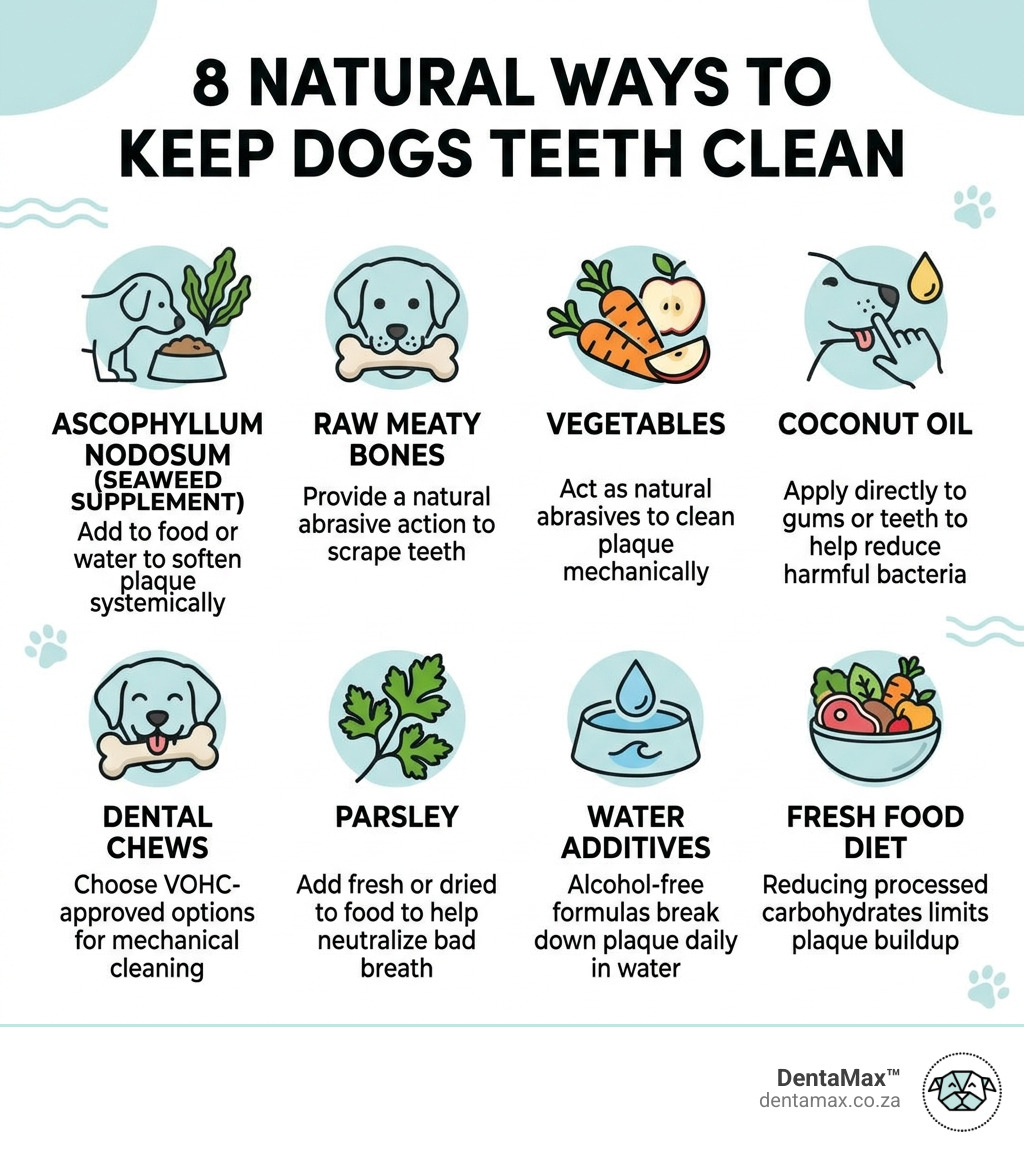
Natural ways to keep dogs teeth clean are simpler than most owners realise. Here is a quick overview of the most effective options:
- Ascophyllum nodosum (seaweed supplement) – added to food or water daily, it works systemically to soften plaque and reduce tartar
- Raw meaty bones and vegetables – carrots and apple slices act as natural abrasives to scrape plaque mechanically
- Coconut oil – applied directly to the gums or teeth to help reduce harmful bacteria
- Dental chews – look for VOHC-approved options that provide mechanical cleaning through chewing
- Parsley – added to food a few times a week to help neutralise bad breath
- Water additives – alcohol-free and xylitol-free formulas that help break down plaque daily
- Fresh food diet – reducing processed carbohydrates helps limit the conditions that accelerate plaque build-up
Nearly 80% of dogs over the age of three are affected by periodontal disease. That is not a minor statistic. It means the majority of dogs are living with some degree of dental pain, inflammation or infection, often without their owners realising it.
Dogs are good at hiding discomfort. Many will keep eating despite sore gums or loose teeth, which makes early detection difficult. By the time bad breath becomes obvious, the underlying disease may already be well established.
The good news is that consistent home care, using natural methods, can make a real difference. You do not need to win a daily battle with a toothbrush to protect your dog’s mouth.
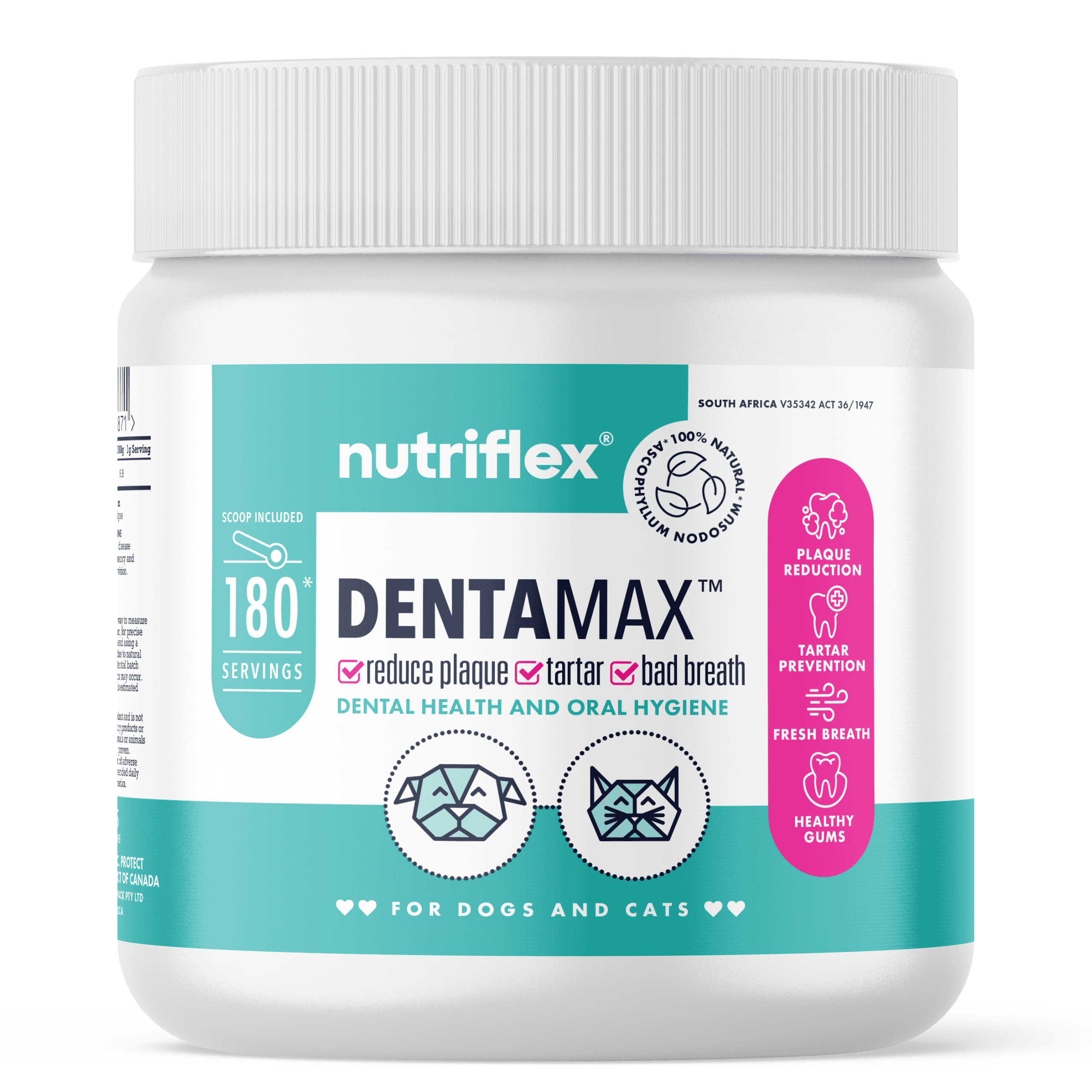
I’m Sharon Milani, Co-Founder of NutriFlex® and the developer of DentaMax™, a 100% pure organic Ascophyllum nodosum dental powder formulated specifically for systemic plaque reduction in dogs and cats. My work in evidence-based pet nutrition and oral health has given me a deep understanding of natural ways to keep dogs teeth clean that are both safe and backed by published research. In the sections below, I will walk you through the most practical and effective options available to South African dog owners today.
Why Dental Health is Vital for South African Dogs
In South Africa, we love our dogs as family members, whether they are roaming a garden in Durban or joining us for a walk on a Cape Town beach. However, we often overlook what is happening inside their mouths. The statistic that over 80% of dogs show signs of dental disease by age three is a wake-up call for all pet parents.
Dental health is not just about avoiding “doggy breath.” It is about systemic wellness. When plaque biofilm is allowed to flourish, it eventually hardens into tartar (calculus). This tartar provides a porous surface where even more bacteria can thrive. These bacteria do not stay in the mouth; they can enter the bloodstream through inflamed gums and travel to vital organs.
Chronic dental disease puts immense pressure on the heart, kidneys and liver. Research suggests that the bacteria in a dog’s mouth can multiply in less than 24 hours. This rapid growth means that if we are not proactive, a small amount of plaque can quickly lead to painful gingivitis and eventually periodontal disease.
Small breeds like Chihuahuas, Yorkies and Dachshunds are particularly at risk. Because of their smaller jaws, their teeth are often crowded together. This crowding creates tiny crevices where food and bacteria get trapped, making it nearly impossible for them to keep their teeth clean through chewing alone. For these breeds, finding natural ways to keep dogs teeth clean is not just a preference; it is a necessity for a pain-free life.
Scientific research on canine dental disease highlights that once periodontal disease reaches advanced stages, it is irreversible. This is why prevention is the gold standard of care.
Natural Ways to Keep Dogs Teeth Clean Without Brushing
Let’s be honest, many dogs view a toothbrush as an instrument of torture. If your dog disappears the moment you reach for the dental kit, you are not alone. Fortunately, we can achieve significant results by focusing on two main pathways: systemic plaque reduction and mechanical abrasion.
Mechanical cleaning involves using textures to scrape plaque off the surface of the teeth. Systemic cleaning involves changing the chemistry of the dog’s saliva to prevent plaque from sticking in the first place. By combining these methods, we create a comprehensive defence against tartar.
To understand the science behind these processes, you can find more info about how Dentamax works on our educational platform.
Systemic Plaque Control with Ascophyllum Nodosum
One of the most exciting developments in natural pet health is the use of Ascophyllum nodosum. This is a specific type of kelp harvested from the cold, clean waters of the North Atlantic. Unlike many supplements that work topically, this seaweed works systemically.
When a dog ingests Ascophyllum nodosum, the active compounds are absorbed into the bloodstream and then excreted through the salivary glands. This changes the composition of the saliva, making it less hospitable to the bacteria that form plaque. Most importantly, it helps to soften existing tartar, making it easier to remove through normal chewing or light brushing.
At DentaMax™, we focus on the clinical efficacy of this ingredient. It is important for South African pet owners to look for iodine transparency in their supplements, as kelp is naturally high in iodine. A high-quality organic powder ensures your dog gets the dental benefits without exceeding safe nutritional limits. This method is particularly effective because it requires zero struggle; you simply sprinkle the measured dose onto their food.
For those interested in the underlying biology, there is more info about Ascophyllum Nodosum for dogs available that details the internal absorption pathways and biofilm disruption mechanisms.
Mechanical Cleaning with Raw Meaty Bones and Vegetables
While systemic support works from the inside out, mechanical cleaning works from the outside in. Raw meaty bones are often called “nature’s toothbrush” for a good reason. The action of gnawing on a bone helps to scrape plaque away from the gum line.
However, safety is paramount. We must never feed cooked bones, as they become brittle and can splinter, causing life-threatening internal injuries. Weight-bearing bones from large animals (like cow leg bones) can also be too hard and may lead to fractured teeth. Instead, choose size-appropriate raw bones and always supervise the chewing session.
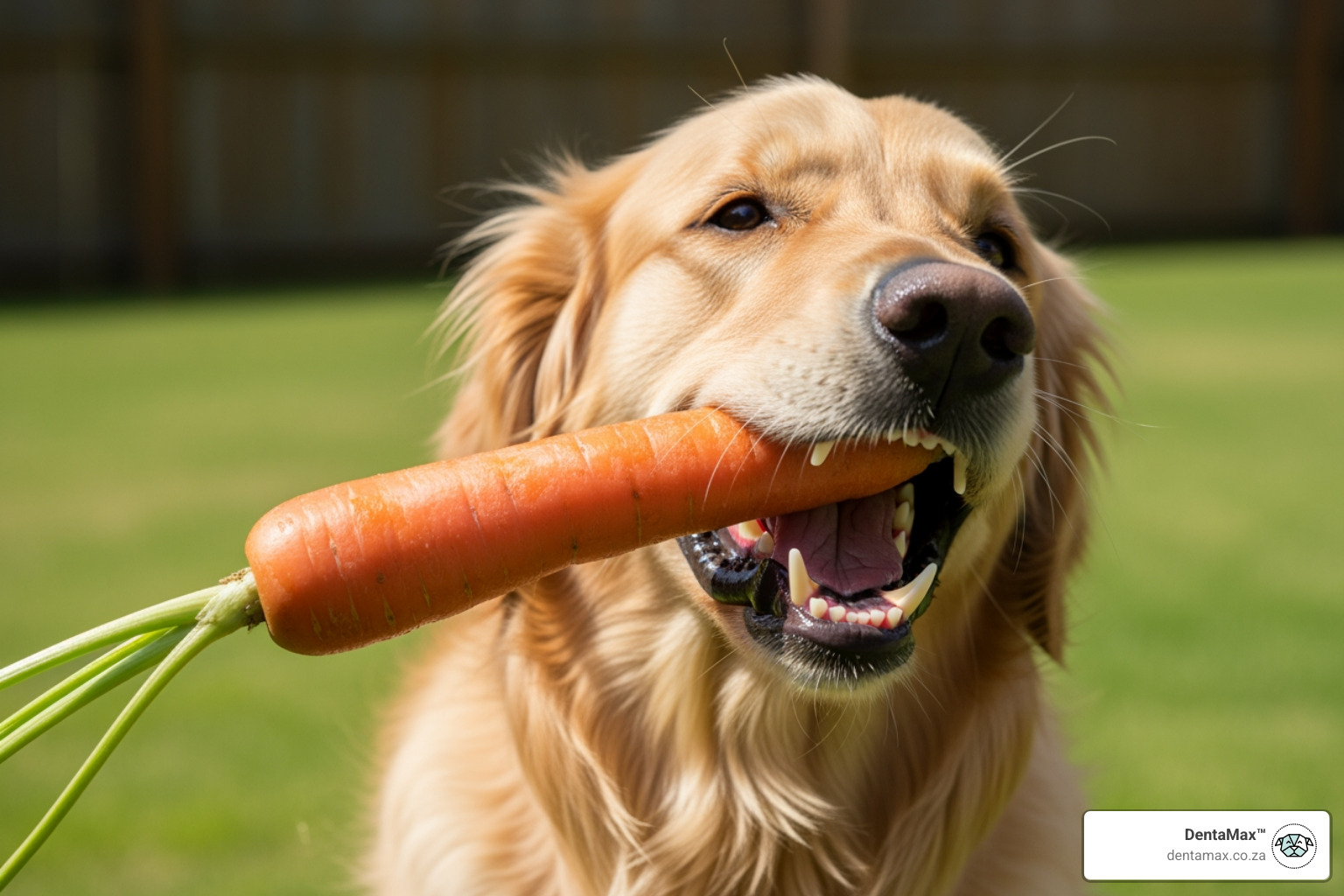
If you prefer a lower-risk mechanical cleaner, vegetables are a fantastic alternative. Raw carrots and apple slices (with seeds and core removed) are crunchy and fibrous. As your dog bites into them, the cellulose fibres act as a mild abrasive. Scientific research on carrots for dogs confirms they are a safe, low-calorie treat that supports oral health.
We recommend the “20-minute rule”: allowing your dog to engage in appropriate chewing for at least 20 minutes a day. This duration is usually enough to trigger the release of beneficial salivary enzymes and provide adequate mechanical cleaning.
Safe Ingredients for Homemade Dental Support
You likely already have some of the best tools for natural ways to keep dogs teeth clean in your kitchen pantry. Ingredients like coconut oil, parsley and cinnamon are not just flavour enhancers; they have specific properties that support oral hygiene.
Parsley is a well-known breath freshener. It contains antioxidants and chlorophyll that help neutralise the volatile sulphur compounds responsible for bad breath. Adding a small amount of freshly chopped flat-leaf parsley to your dog’s meal a few times a week can make those morning “kisses” much more bearable. You can read more about the scientific research on parsley and its cleansing properties to see why it is a staple in natural pet care.
Cinnamon extract also shows promise in inhibiting the growth of oral bacteria. When used in very small, diluted amounts, it can help slow down the formation of plaque.
| Ingredient | Primary Benefit | Best Use Case |
|---|---|---|
| Coconut Oil | Antibacterial and antifungal | Topical gum massage or added to food |
| Cinnamon | Plaque inhibition | Tiny pinch in homemade treats or food |
| Parsley | Odour neutralisation | Freshly chopped and mixed with meals |
Natural Ways to Keep Dogs Teeth Clean Using Coconut Oil
Coconut oil is a powerhouse of medium-chain triglycerides, specifically lauric acid. Lauric acid has natural antibacterial, antiviral and antifungal properties. In the context of dental health, it helps to reduce the population of Streptococcus mutans, the primary bacteria associated with tooth decay and gum inflammation.
Most dogs find the taste of coconut oil highly palatable. You can use it as a “toothpaste” by applying a small amount to a finger brush or a piece of gauze and gently massaging it onto their gums. It helps to soothe inflammation and provides a protective barrier against bacteria.
Scientific research on coconut oil for dogs suggests that it can also support a healthy coat and skin, making it a multi-purpose addition to your dog’s wellness routine. Start with a small amount (about 5 millilitres per 10 kilograms of body weight) to ensure it does not cause any digestive upset.
Natural Ways to Keep Dogs Teeth Clean for Resistant Pups
If your dog is resistant to any form of mouth handling, you have to be clever. One of our favourite “hacks” is squeezing dog-safe toothpaste or coconut oil onto their favourite textured rubber chew toy. As the dog licks and chews the toy, they are effectively brushing their own teeth.
The goal is to make dental care a positive experience. Use high-value rewards and keep sessions very short (under 30 seconds) in the beginning. You can even start by just letting them lick the toothpaste off your finger.
Scientific research on toothpaste hacks shows that consistency is far more important than intensity. Brushing three times a week is often enough to keep plaque at bay if you are also using other methods like dental powders and chews. If your dog is truly resistant, don’t force it. Stress can lead to a negative association with you and the grooming process. Focus on water additives and systemic supplements instead.
The Role of Diet and Routine in Oral Hygiene
What you put in the bowl is just as important as what you do with the brush. Many commercial dog foods are high in processed carbohydrates and starches. These sugars stick to the teeth and provide the perfect fuel for plaque-producing bacteria.
There is a common myth that kibble cleans teeth because it is crunchy. In reality, most kibble is shattered by the tips of the teeth and swallowed, providing almost no cleaning action at the gum line where it is needed most. Some fresh food advocates argue that a diet of whole, raw foods leads to better dental health because it lacks the starchy fillers found in ultra-processed diets.
Establishing a daily habit is the key to success. In South Africa, where we deal with various environmental factors and parasites, adding a dental check to your weekly grooming routine is a smart move.
For those looking for a simple, daily solution, you can find more info about dog dental powder and how it fits into a South African feeding guide. Whether you feed raw, cooked or high-quality kibble, a systemic supplement can bridge the gap in your dog’s oral care.
Scientific research on brushing frequency suggests that while daily is best, 2 to 3 times a week is the “sweet spot” for maintaining health without causing undue stress to the pet or owner.
When to Consult a South African Veterinarian
While natural ways to keep dogs teeth clean are incredibly effective for prevention, they cannot replace professional veterinary care when a problem is already established. If your dog has thick, brown tartar (calculus) on their teeth, no amount of carrots or seaweed will make it disappear. That hardened mineralisation must be removed by a veterinarian using professional scaling equipment.
You should book an appointment with your vet if you notice any of the following red flags:
- Persistent, foul bad breath that doesn’t improve with cleaning
- Red, swollen or bleeding gums
- Difficulty chewing or dropping food
- Excessive drooling or pawing at the face
- Visible loose or missing teeth
- Facial swelling under the eye (often a sign of a tooth root abscess)
In South Africa, a professional dental cleaning under general anaesthesia can cost anywhere from R300 to R700 for the basic procedure, though this can increase significantly if extractions or X-rays are required. While anaesthesia can be a concern for owners, it is the only way to safely clean beneath the gum line where the real damage happens.
Understanding more info about systemic dental science can help you have a more informed conversation with your vet about preventative care and long-term maintenance.
Frequently Asked Questions about Natural Dog Dental Care
Can I use human toothpaste on my dog?
Absolutely not. Human toothpaste often contains Xylitol, an artificial sweetener that is extremely toxic to dogs and can cause rapid liver failure and life-threatening drops in blood sugar. Human toothpaste also contains fluoride and foaming agents (like Sodium Lauryl Sulphate) that are meant to be spat out, not swallowed. If a dog swallows these, it can lead to severe stomach upset. Always use a toothpaste specifically formulated for dogs.
Are raw bones safe for cleaning teeth?
Raw bones can be safe and effective, but they come with risks. Avoid “weight-bearing” bones like cow femurs, as these are harder than dog enamel and can cause teeth to fracture. Never feed cooked bones of any kind. Always choose a bone that is large enough so that the dog cannot swallow it whole, and take it away once it has been gnawed down to a dangerous size. Supervision is mandatory.
How often should I use natural cleaning methods?
Consistency is the most important factor. Plaque begins to mineralise into tartar within 24 to 48 hours. Therefore, you should aim for some form of dental care every day. This could be as simple as adding a systemic powder to their breakfast and giving them a raw carrot in the evening.
Conclusion
Maintaining your dog’s oral health does not have to be a chore. By integrating natural ways to keep dogs teeth clean—such as using Ascophyllum nodosum supplements, offering crunchy vegetables and using safe ingredients like coconut oil—you can significantly reduce the risk of periodontal disease.
A clean mouth is a gateway to a longer, healthier life. By starting these routines today, you are protecting your dog’s heart, liver and kidneys from the silent threat of dental bacteria. For more evidence-based guides and educational resources, you can explore more info about dog and cat dental care on our site. Your dog’s smile is worth the effort.