Does Coconut Oil Actually Help Your Dog’s Teeth?
Coconut oil dog teeth care is a popular home remedy, but here is what you actually need to know before trying it:
| Question | Quick Answer |
|---|---|
| Does coconut oil help dog breath? | It may reduce some oral bacteria, but it does not treat the underlying cause of bad breath |
| Can it remove tartar? | No. Hardened tartar requires professional veterinary removal |
| Is it safe for dogs? | In small amounts, generally yes. Large amounts risk digestive upset and pancreatitis |
| Is it better than brushing? | No. Regular brushing remains the most effective home dental care method |
| Best use? | As an occasional complement to brushing, not a replacement |
Your dog’s bad breath is not just unpleasant. It is usually a sign of bacterial plaque building up on the teeth. Left unchecked, plaque mineralises into tartar, which can progress to gum disease and systemic health issues affecting the heart and kidneys.
Coconut oil has genuine antimicrobial properties. Its lauric acid content does disrupt certain oral bacteria. But the claims circulating online often go far beyond what the evidence supports, particularly for South African dog owners managing small breeds like Chihuahuas who are already at higher risk of dental disease.
This guide cuts through the noise and gives you a clear, evidence-aligned picture of what coconut oil can and cannot do for your dog’s oral health, and what actually works long-term.
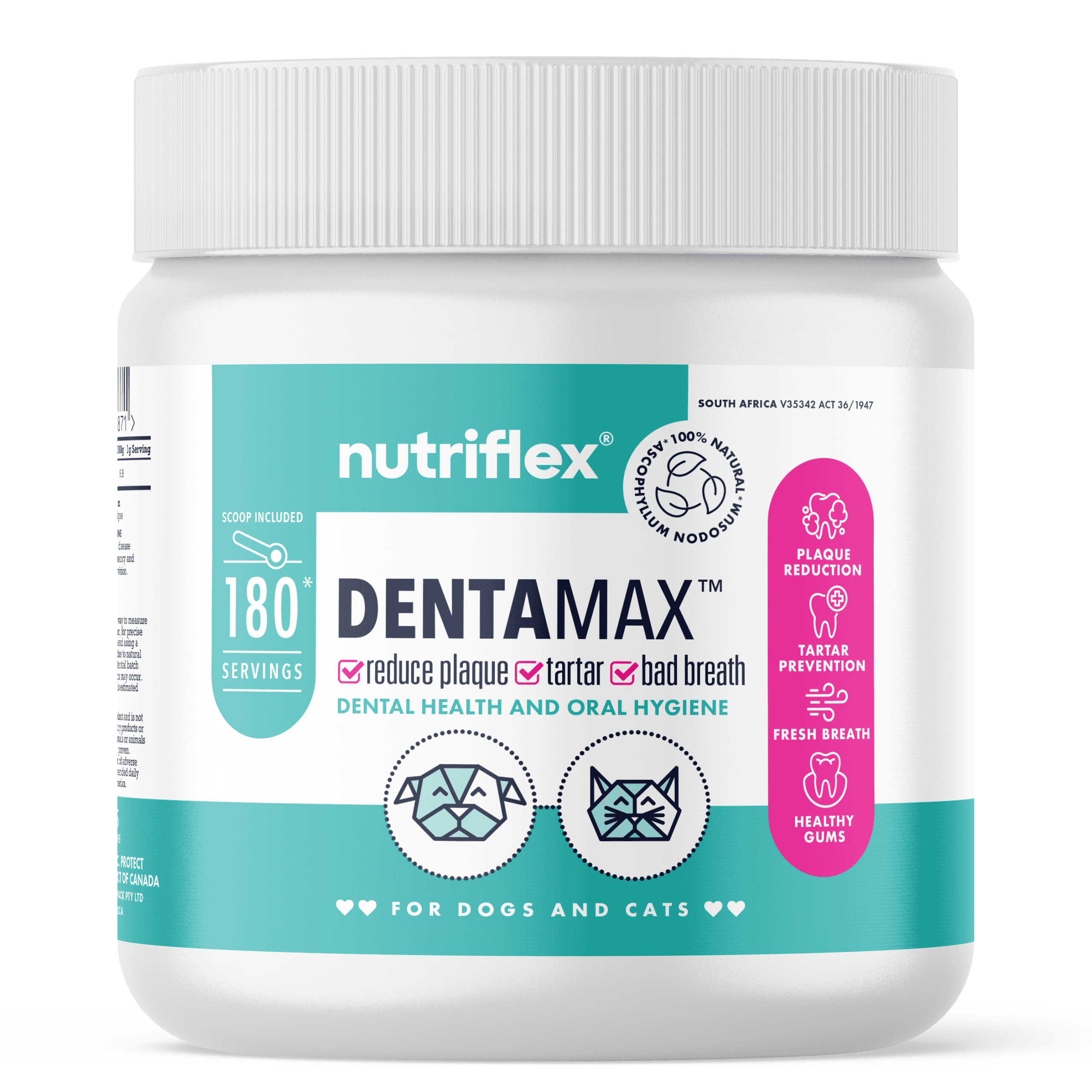
I’m Sharon Milani, Co-Founder of NutriFlex® and developer of DentaMax™, a 100% pure organic Ascophyllum nodosum dental powder, and my work in evidence-based pet nutrition includes in-depth research into coconut oil dog teeth remedies and their limitations compared to systemic plaque reduction solutions. Understanding where natural home remedies fit within a complete oral care strategy is central to what we do at DentaMax™.
The Science of Coconut Oil Dog Teeth Care
To understand why people reach for the jar of coconut oil when their dog’s breath turns foul, we have to look at the chemistry of the oil itself. Coconut oil is unique because it is composed of approximately 62% medium-chain triglycerides (MCTs). The star of the show is lauric acid, which makes up almost 50% of the fatty acid content in virgin coconut oil.
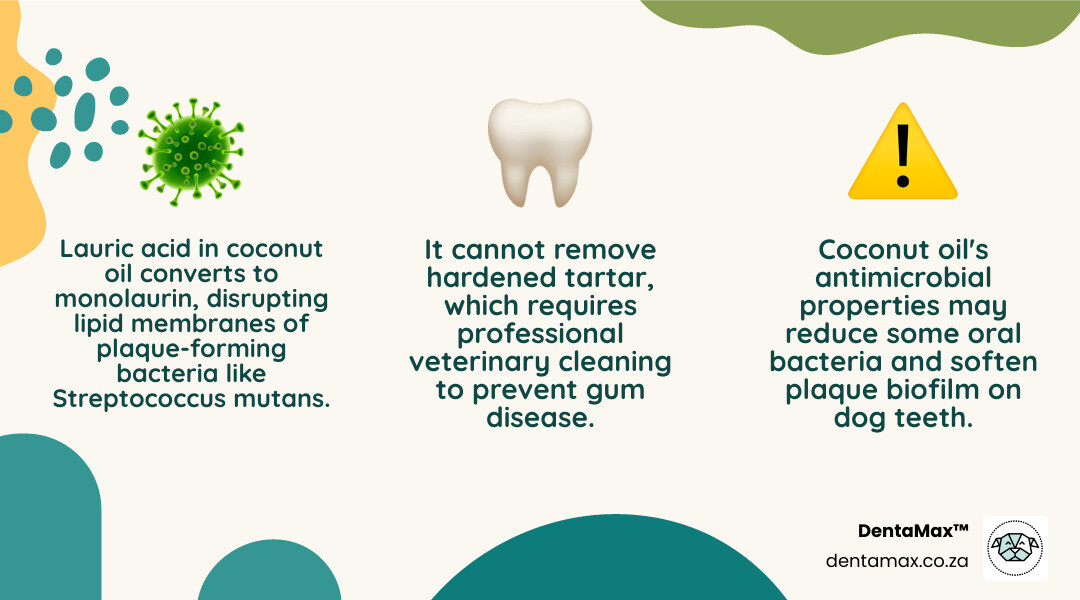
When a dog consumes or has their teeth rubbed with coconut oil, lauric acid is converted into a monoglyceride called monolaurin. In laboratory settings, monolaurin has shown the ability to disrupt the lipid membranes of various pathogens, including bacteria like Streptococcus mutans. This specific bacterium is a primary contributor to plaque formation and tooth decay in many species.
By attacking these bacteria, coconut oil dog teeth applications can theoretically slow down the rate at which a sticky biofilm (plaque) forms on the enamel. Beyond lauric acid, other MCTs like capric and caprylic acid provide minor antifungal and antibacterial support. This is why some owners notice a slight improvement in “doggy breath” after use. However, it is important to remember that while it may kill some surface bacteria, it does not address the deep-seated infections or the physical buildup of minerals.
For a deeper dive into the biological markers of oral wellness, you can explore our resources on dog dental health to see how these fatty acids interact with the oral microbiome.
Brushing with Coconut Oil Dog Teeth Paste
If you decide to use coconut oil as part of your routine, the most effective way is to use it as a lubricant for mechanical brushing. Simply letting a dog lick oil off a spoon provides very little dental benefit because the oil does not stay in contact with the teeth long enough to disrupt the biofilm.
We recommend using organic virgin coconut oil because it is cold-pressed, meaning the delicate MCTs have not been damaged by high heat. To create a DIY “toothpaste,” you can use a small amount of solid coconut oil on a soft-bristled toothbrush or even a piece of clean gauze wrapped around your finger.
The goal is to use the oil to make the brushing experience more palatable for the dog while the bristles do the hard work of physically scrubbing away the plaque. Focus on the outer surfaces of the teeth and the gum line at a 45-degree angle. Gentle circular motions help massage the gums, which can improve local blood flow and support tissue health.

Is Coconut Oil Dog Teeth Cleaning Effective for Tartar?
There is a common misconception in the South African pet community that rubbing coconut oil on a dog’s teeth will “melt away” tartar. We must be very clear: this is scientifically impossible.
Plaque is a soft, sticky film that can be wiped away. However, if plaque is not removed within 24 to 48 hours, the minerals in your dog’s saliva (like calcium and phosphorus) begin to harden it. This process is called mineralisation, and the resulting substance is tartar (or calculus). Tartar is as hard as concrete and is porous, providing the perfect “apartment block” for more bacteria to hide in.
While coconut oil dog teeth treatments can help disrupt the bacteria that form plaque, they have no chemical ability to dissolve mineralised tartar. Once tartar has formed, especially under the gum line, only professional veterinary scaling under anaesthesia can safely remove it. Relying on oil to fix a tartar problem often leads to a delay in necessary medical care, allowing periodontal disease to progress. For those looking for supplemental help, learning how to remove tartar from dog teeth naturally involves a combination of systemic support and physical cleaning, rather than a single “magic” ingredient.
Risks and Side Effects for Small Breeds
While coconut oil is often marketed as a harmless “superfood,” it carries significant risks, particularly for small breeds common in South African households, such as Chihuahuas, Yorkies and Dachshunds.
The most pressing concern is the high fat content. One tablespoon (15ml) of coconut oil contains approximately 120 calories and 14 grams of saturated fat. For a 4.1kg Chihuahua, a single tablespoon is a massive caloric load that can easily lead to obesity if given regularly. More dangerously, such a high-fat “hit” can trigger acute pancreatitis.
Pancreatitis is a painful and potentially life-threatening inflammation of the pancreas. Small breeds are genetically more predisposed to this condition. Symptoms include:
- Severe vomiting
- Diarrhoea
- Abdominal pain (the dog may “hunch” their back)
- Lethargy and loss of appetite
Even in dogs that do not develop pancreatitis, the sudden introduction of oil often causes gastrointestinal upset, resulting in greasy stools or urgency. If you choose to use coconut oil, you must start with a tiny amount (no more than 1/4 teaspoon for a small dog) and monitor them closely.
Vet Recommended Methods for Dog Bad Breath
If your dog’s breath could “knock over a horse,” it is time to look at vet-recommended protocols. Bad breath is usually a symptom of volatile sulphur compounds produced by bacteria living in the mouth.
Veterinarians in South Africa generally recommend a “gold standard” approach that starts with daily brushing. Using an enzymatic toothpaste specifically designed for dogs is far superior to coconut oil. These toothpastes contain enzymes like glucose oxidase which chemically break down the food particles that bacteria feed on.
When brushing is not possible, mechanical cleaning through high-quality dental chews or toys can help. However, these are secondary to the physical action of a brush. If the breath remains foul despite home care, it often indicates an infection or decay that requires a professional examination. You can read more about the specific causes and treatments for dog bad breath on our dedicated authority page.
Brushing and the Role of Mechanical Cleaning
The primary goal of any dental routine is the prevention of tartar. Mechanical cleaning works by creating friction against the tooth surface. This is why “crunchy” kibble alone is rarely enough; the dog usually shatters the kibble before it can scrape the gum line where the most damage occurs.
When comparing various dental care methods, we see that products with the Veterinary Oral Health Council (VOHC) seal are the most reliable. These products have undergone clinical trials to prove they actually reduce plaque or tartar by at least 10% to 20%. Coconut oil does not hold a VOHC seal because its efficacy as a standalone dental cleaner has not been proven in rigorous canine trials.
Systemic Alternatives and Ascophyllum Nodosum
At DentaMax™, we focus on the science of systemic plaque reduction. While coconut oil dog teeth care is a topical approach, systemic solutions work from the inside out. The most researched ingredient in this field is Ascophyllum nodosum, a specific species of kelp harvested from the cold North Atlantic waters.
Unlike coconut oil, which you must physically rub onto the teeth, Ascophyllum nodosum is ingested as a powder mixed into food. Once digested, its active compounds are absorbed into the bloodstream and eventually excreted through the saliva. This changes the chemical composition of the saliva, making it harder for plaque bacteria to stick to the teeth and preventing the mineralisation of plaque into tartar.
This “biofilm disruption” happens 24 hours a day, even in the hard-to-reach areas between teeth where a brush might miss. This is particularly useful for South African pet owners whose dogs might be “brush-shy” or aggressive when their mouths are touched.
| Feature | Coconut Oil | Ascophyllum Nodosum (DentaMax™) |
|---|---|---|
| Primary Action | Topical / Antimicrobial | Systemic / Biofilm Disruption |
| Ease of Use | Requires brushing/rubbing | Simply sprinkle on food |
| Tartar Impact | None on hardened tartar | Softens existing tartar over 3-8 weeks |
| Caloric Risk | High (120 cal per 15ml) | Negligible |
| Scientific Evidence | Anecdotal for canine teeth | Multiple published clinical trials |
To understand how this seaweed works at a molecular level, see our guide on what is dental powder for dogs and cats.
When to Seek Professional Veterinary Dental Care
Home remedies like coconut oil dog teeth rubbing are preventative, not curative. There comes a point where “natural” is no longer enough and professional intervention is required.
In South Africa, professional veterinary dental cleanings typically cost between R2,500 and R7,000, depending on whether extractions or X-rays are needed. While many owners fear anaesthesia, it is the only way to perform a “deep clean” under the gum line (subgingival) where the most destructive bacteria live. Anesthesia-free cleanings are purely cosmetic and do nothing to treat underlying disease.
You should book a vet appointment immediately if you notice:
- Red, swollen or bleeding gums (Gingivitis)
- Loose or missing teeth
- Difficulty eating or dropping food
- Excessive drooling or pawing at the mouth
- A permanent “yellow-brown” crust on the teeth
Understanding the stages of decay can help you catch issues early. Check our resource on how to remove plaque from dogs teeth to learn the difference between a minor cleaning and a major dental surgery.
Frequently Asked Questions about Coconut Oil
Is a tablespoon of coconut oil safe for a 4.1kg Chihuahua?
No. For a dog weighing only 4.1kg, a full tablespoon of coconut oil is far too much. It represents a significant portion of their daily calorie allowance and poses a high risk for acute pancreatitis and severe diarrhoea. If you must use it, limit the amount to a “pea-sized” dab (roughly 1/8 to 1/4 of a teaspoon) used only for brushing.
Can coconut oil remove hardened tartar from dog teeth?
No. As discussed, coconut oil lacks the chemical properties to break down the mineral bonds of tartar. It may help reduce the bacteria that contribute to new plaque, but existing tartar requires professional mechanical scaling by a veterinarian.
Does coconut oil provide benefits beyond oral health?
Coconut oil is often used topically to moisturise dry skin or cracked paw pads. Some owners use it as a source of MCTs for a quick energy boost, but these benefits must always be weighed against the risk of weight gain and pancreatic inflammation. For most dogs, there are safer, lower-calorie ways to support skin and coat health, such as Omega-3 fish oils.
Conclusion
At DentaMax™, we believe in empowering South African pet owners with evidence-based education. While coconut oil dog teeth care can be a pleasant, aromatic addition to a brushing routine, it is not a “miracle cure” for dental disease. It cannot remove tartar, and its high fat content makes it a risky choice for smaller breeds prone to pancreatitis.
For those looking for a truly effective, low-risk way to manage oral health, systemic supplementation with Ascophyllum nodosum offers a scientifically backed alternative that works around the clock. By focusing on biofilm disruption and salivary chemistry, you can support your dog’s health from the inside out.
If you are struggling with a pet whose breath is less than fresh, explore our comprehensive guide on the dog bad breath cure to find a solution that works for your family. A healthy mouth is the gateway to a longer, happier life for your furry companion.