Why the Zinc Gluconate Absorption Rate Matters for Your Pet’s Health
Zinc gluconate absorption rate is a key factor when choosing a zinc supplement for your dog. Here is a quick comparison so you can decide fast:
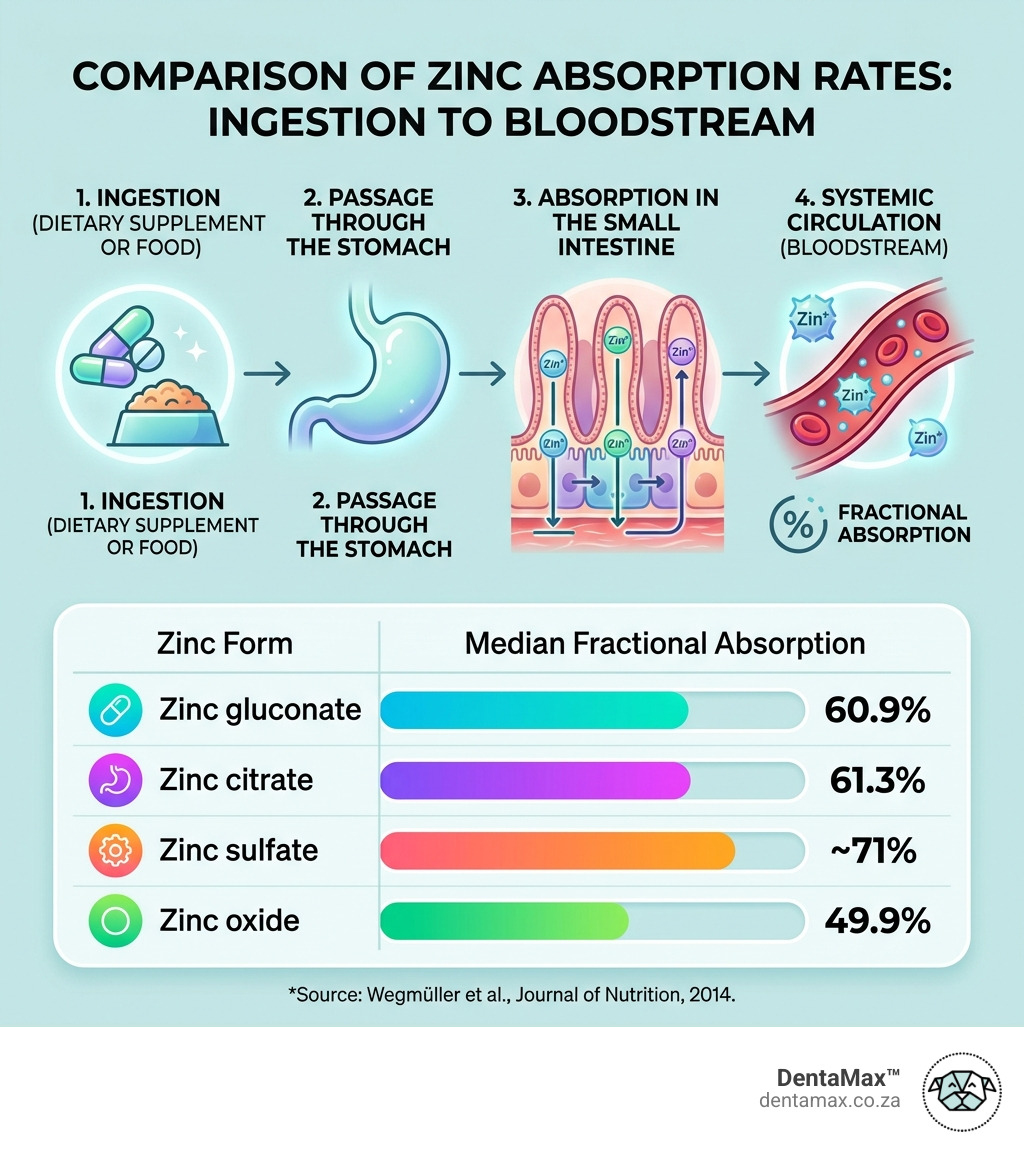
| Zinc Form | Median Fractional Absorption | Notes |
|---|---|---|
| Zinc gluconate | 60.9% | Water-soluble, well tolerated |
| Zinc citrate | 61.3% | Statistically equivalent to gluconate |
| Zinc sulfate | ~71% | Higher GI side effects, metallic taste |
| Zinc oxide | 49.9% | Lowest absorption, gastric pH dependent |
Source: Wegmüller et al., Journal of Nutrition, 2014
Zinc is the second most abundant trace mineral in the body. It supports immune function, skin repair and over 300 enzyme processes. Yet roughly 17 to 20% of the global population is at risk of zinc deficiency, and similar nutritional gaps are increasingly recognised in companion animals.
Not all zinc supplements deliver the same results. The form of zinc you choose determines how much actually reaches the bloodstream and gets used by the body. Zinc gluconate consistently performs well in clinical research, with nearly 61% of a supplemental dose being absorbed when taken without food. That is a meaningful number when you are trying to support your dog’s systemic health every day.
This guide breaks down the clinical evidence, compares the most common zinc forms and explains what the research means for pet owners making supplement decisions in South Africa.
I’m Sharon Milani, Co-Founder of NutriFlex® and the developer of DentaMax™, a systemic oral health supplement grounded in evidence-based ingredient formulation. My work in preventative pet nutrition, including research into trace mineral bioavailability and the zinc gluconate absorption rate, informs how I evaluate ingredients for safe, effective daily supplementation. Understanding absorption efficiency is central to building formulations that actually deliver results for dogs and cats.
Understanding the Zinc Gluconate Absorption Rate in Humans and Pets

When we talk about the zinc gluconate absorption rate, we are specifically looking at fractional absorption. This is the percentage of the mineral that successfully moves from the digestive tract into the systemic circulation. In healthy adults, the median fractional absorption for zinc gluconate is approximately 60.9%. This figure comes from high-precision studies using double-isotope tracers, which are considered the gold standard for measuring mineral uptake.
Zinc gluconate is an organic salt. It is created by combining zinc with gluconic acid, a substance naturally found in fruit and honey. This combination makes the zinc highly water-soluble. Solubility is a massive deal in supplements because if a mineral cannot dissolve, the body cannot easily transport it across the intestinal wall.
According to research on the Absorption and metabolism of oral zinc gluconate in humans, the process primarily happens in the small intestine, specifically the duodenum and jejunum. Our pets rely on specialized proteins called ZIP4 transporters to pull zinc into the cells of the intestinal lining (enterocytes). From there, another transporter called ZnT1 moves it into the blood.
One reason the zinc gluconate absorption rate is so reliable is that the body has a very sophisticated homeostatic regulation system. If a dog is deficient in zinc, their body can actually increase the efficiency of these transporters, sometimes absorbing up to 90% of available zinc. Conversely, if they have plenty of zinc stored, the absorption rate naturally drops to prevent toxicity. Zinc gluconate contains about 14% elemental zinc by weight, providing a steady, manageable dose that works with these natural biological gates rather than trying to force its way through.
Comparing Zinc Gluconate to Other Common Zinc Forms
Choosing the right supplement often feels like a chemistry experiment. In South Africa, you will likely see four main types of zinc on the shelves: gluconate, citrate, sulfate and oxide.
A landmark study by Wegmüller et al. found that Zinc Absorption by Young Adults from Supplemental Zinc Citrate Is Comparable with That from Zinc Gluconate. In their trial, zinc citrate showed a 61.3% absorption rate compared to 60.9% for gluconate. Statistically, they are identical twins in terms of efficiency.
However, sensory properties matter, especially for picky eaters. Zinc sulfate, while having a high absorption rate (around 71%), often has a very strong metallic, bitter and astringent taste. In human clinical settings, this frequently leads to nausea or stomach upset. Zinc gluconate is much milder, which is why it is the preferred choice for syrups and lozenges.
From a cost-effectiveness perspective, the R per milligram analysis is interesting. Zinc oxide is the cheapest to manufacture, but as we will see, it is often a “get what you pay for” situation. Zinc gluconate sits in a mid-range price point but offers far superior bioavailability, making it a better investment for long-term pet health.
Why the Zinc Gluconate Absorption Rate Outperforms Zinc Oxide
If you look at the back of a cheap bag of dog food or a budget multivitamin, you will often find zinc oxide. On paper, it looks great because it is 80% elemental zinc. However, the fractional absorption rate is only about 49.9%.
The “bioavailability gap” here is caused by solubility. Zinc oxide is essentially insoluble in water. It requires a very acidic environment in the stomach to break down into a form the intestines can recognize. This leads to the “non-absorber phenomenon,” where some individuals (including dogs) with higher gastric pH levels absorb almost zero zinc from the oxide form. If your dog has a sensitive stomach or is on certain medications that affect stomach acid, zinc oxide might pass right through them without doing a bit of good.
Zinc Gluconate Absorption Rate vs Zinc Picolinate and Glycinate
In the premium tier of supplements, you will find chelated minerals like zinc glycinate (or bisglycinate) and zinc picolinate. Chelation involves binding the mineral to an amino acid.
Evidence from the Comparative Absorption and Bioavailability of Various Chemical Forms of Zinc in Humans suggests that these chelated forms can sometimes outperform gluconate in specific scenarios. For instance, zinc glycinate has been shown to raise plasma zinc levels more significantly over a long-term six-week period.
While the zinc gluconate absorption rate is excellent for general supplementation and acute needs (like treating a cold or diarrhea), glycinates are often used when a deep, systemic deficiency needs to be corrected over several months. They are highly stable and less likely to be blocked by other minerals in the gut.
Factors Influencing Bioavailability and Systemic Uptake
It is not just about what you give, but how and when you give it. Several factors can either turbocharge or tank the zinc gluconate absorption rate.
- The Fasting State: Zinc is best absorbed on an empty stomach. When taken with a meal, the peak concentration of zinc in the blood (Cmax) can drop by about 31%.
- Phytates (The Zinc Blockers): If your dog’s diet is very high in cereal grains, legumes or seeds, they are consuming phytic acid. This “anti-nutrient” binds to zinc in the gut, forming an insoluble complex that the body cannot absorb. In fact, phytates explain more than 80% of the variance in zinc absorption.
- Iron Interactions: High doses of iron (above 25mg) can compete with zinc for the same “doors” into the bloodstream. If you are supplementing both, it is best to space them out.
- The Mucus Layer: According to A Guide to Human Zinc Absorption: General Overview and Recent Advances of In Vitro Intestinal Models, the gastrointestinal mucus layer actually helps zinc absorption. It acts as a buffer, preventing the zinc from forming unhelpful chemical bonds before it reaches the enterocytes.
In South Africa, many traditional maize-based diets are high in phytates. For pet owners in areas like Johannesburg or Durban using these diets, choosing a high-absorption form like zinc gluconate is even more critical to overcome these dietary hurdles.
The Role of Zinc in Systemic Pet Oral Health
At DentaMax™, we focus heavily on systemic dental science. Most people think dental care is just about brushing, but what happens inside the body is just as important. Zinc plays a fascinating role in the mouth through salivary excretion pathways.
When a dog ingests zinc, a portion of it is actually secreted back into the mouth through the saliva. Here, it acts as a mild antibacterial agent and helps disrupt the formation of the plaque biofilm. Even more impressively, zinc is highly effective at neutralizing Volatile Sulfur Compounds (VSCs). These are the gasses produced by bacteria that cause that dreaded “dog breath.”
There is a powerful synergy between zinc and Ascophyllum nodosum (North Atlantic kelp). While the kelp works systemically to soften existing tartar and prevent new plaque from sticking, zinc helps manage the bacterial load and soothe gum inflammation. By supporting the zinc gluconate absorption rate, we ensure there is enough of this mineral circulating to reach the salivary glands and provide that “internal mouthwash” effect.
Frequently Asked Questions about Zinc Absorption
Is zinc gluconate safe for daily use in South African dogs?
Yes, provided the dosage is appropriate for the dog’s weight. In humans, the tolerable upper intake level is 40mg per day, but dogs have different requirements. It is vital to avoid excessive doses, as too much zinc can interfere with copper absorption, leading to a secondary copper deficiency. We always recommend consulting a vet in Cape Town, Muizenberg or wherever you are located before starting a high-dose regimen.
How does food affect the zinc gluconate absorption rate?
Food generally slows things down. Taking zinc with a meal increases the “lag time” (how long it takes to start absorbing) by about 180%. While the total amount absorbed is only moderately reduced, for the fastest results, giving the supplement at least two hours after a meal is optimal. Interestingly, animal proteins can actually help absorption by forming soluble complexes with zinc, partially offsetting the negative effects of phytates.
Can zinc supplements reduce bad breath in pets?
Absolutely. Zinc gluconate is widely used in oral health products because it binds to the sulfur-producing bacteria in the mouth. Unlike some other minerals, the stability constants of zinc gluconate allow it to remain active in the oral environment long enough to make a difference in breath quality. This is part of a systemic approach to dental care that works from the inside out.
Conclusion
Understanding the zinc gluconate absorption rate is about more than just numbers; it is about ensuring your pet actually gets the nutrients you are paying for. With a 60.9% fractional absorption rate, zinc gluconate offers a scientifically backed, well-tolerated and cost-effective way to support everything from skin health to fresh breath.
At DentaMax™, we believe that evidence-based education is the foundation of better pet health in South Africa. Whether you are in the Western Cape or Gauteng, choosing supplements with high bioavailability is the first step toward a healthier, happier dog. For more detailed insights into how specific ingredients work within the body, visit our category for ingredient analysis.