Most Dog Owners Are Losing the Toothbrush Battle: Here Is What Actually Works
If you have been searching through dog dental powder reviews, you are likely dealing with one or more of these: bad breath, visible tartar buildup or a dog that refuses to let you anywhere near its mouth with a toothbrush.
Evidence-based reviews suggest that the most effective dental powders share a common foundation: specific bioactive seaweed.
The short answer: Dental powders that contain Ascophyllum nodosum (brown seaweed) have the strongest evidence behind them. They work systemically through digestion and saliva rather than by scrubbing teeth. Roughly 4 in 5 dog owners report measurable improvement in breath and plaque with consistent daily use.
A few things are worth knowing before you read further:
- Results are gradual: expect breath changes in 2 to 4 weeks and visible tartar reduction in 4 to 8 weeks
- Fewer than 3% of dog owners brush their dog’s teeth daily, making a food-based powder a realistic daily habit
- Not all powders are created equal: VOHC approval and ingredient transparency matter
- Dental powder supports oral health but does not replace professional veterinary cleaning for advanced tartar or periodontal disease
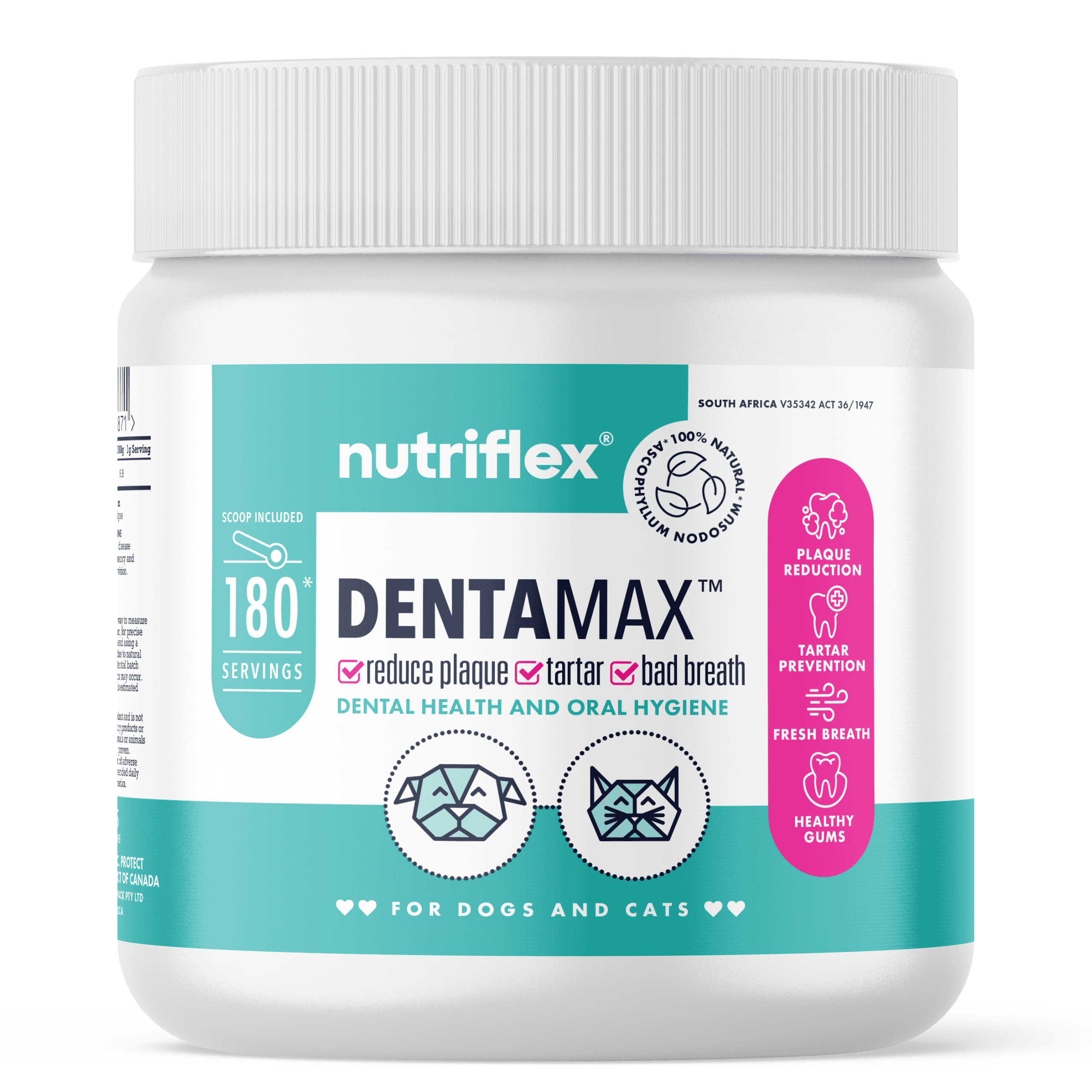
I am Sharon Milani, co-founder of NutriFlex® and developer of DentaMax™, a 100% pure organic Ascophyllum nodosum dental powder formulated for dogs and cats in South Africa. My work in evidence-based pet nutrition and systemic plaque reduction research informs how I approach dog dental powder reviews in this guide. Read on for a complete breakdown of how these products work, what the clinical data shows and how to choose the right option for your dog.
Understanding Dog Dental Powder and How it Works
When we talk about dental care, most of us picture a toothbrush. However, for many South African pet owners, the “toothbrushing battle” is a daily struggle that often leads to total abandonment of oral hygiene. This is where dental powders offer an alternative. Unlike toothpaste, which requires mechanical friction to work, high-quality dental powders work through systemic absorption.
When your dog consumes a powder containing specific bioactive ingredients, those compounds are absorbed into the bloodstream through the digestive tract. From there, they are secreted back into the mouth via the salivary glands. This process continuously bathes the teeth and gums in saliva that has been “bio-activated” to disrupt the formation of plaque.
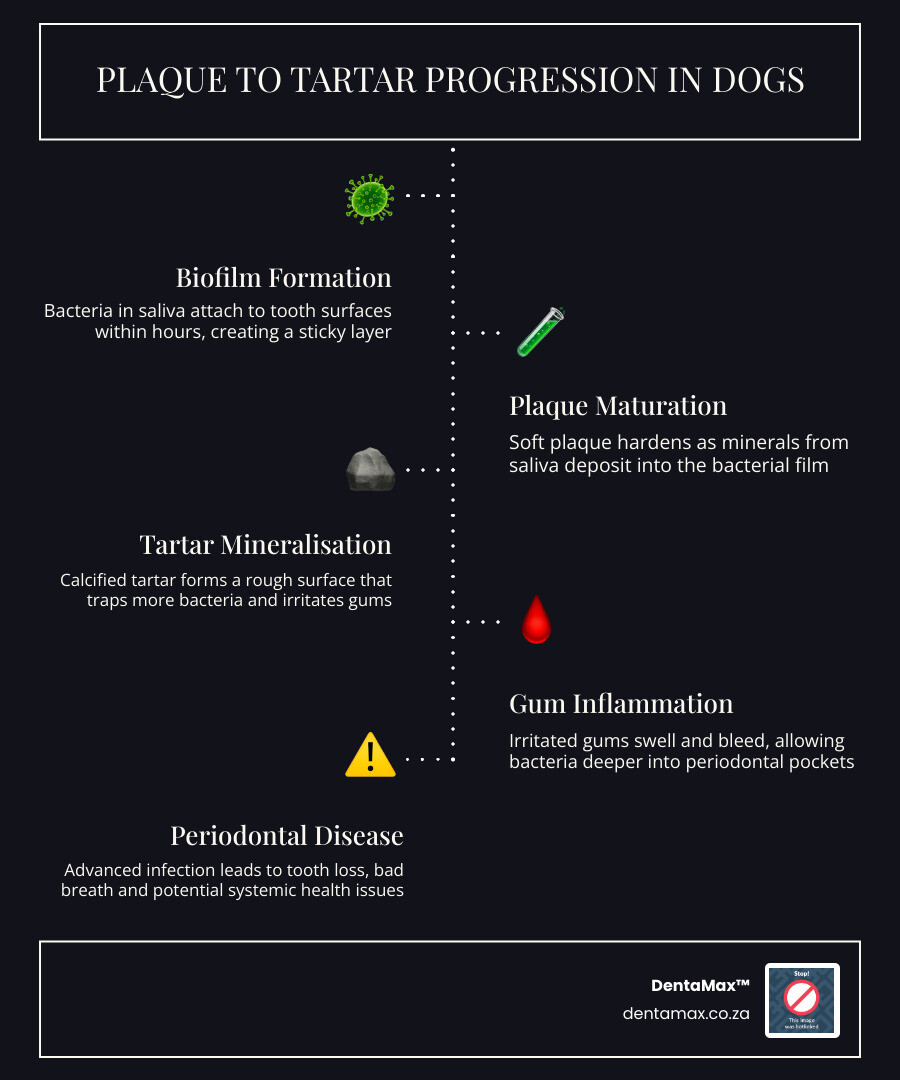
This systemic approach is particularly effective because it targets the entire oral cavity, including hard-to-reach areas under the gumline where periodontal disease begins. By altering the chemical composition of the saliva, these powders help prevent bacteria from adhering to the tooth surface. This is known as biofilm disruption. If the bacteria cannot stick, they cannot form plaque, and if plaque does not form, it cannot mineralise into rock-hard tartar.
For busy owners, this represents a significant shift in care. Instead of a five-minute wrestling match with a toothbrush, you simply sprinkle a measured dose (usually between 500mg and 2g depending on dog size) onto their daily meal. For more insights on why this method is gaining popularity, you can explore our guide on the Best No Brushing Dog Dental Products for Busy Owners. To dive deeper into the biology, see our section on Scientific Research on Systemic Plaque Reduction.
The Role of Ascophyllum Nodosum in Dog Dental Powder Reviews
If you spend any time reading dog dental powder reviews, one ingredient appears more than any other: Ascophyllum nodosum. This is a specific species of North Atlantic brown algae, often referred to as kelp. But not all kelp is created equal.
The Ascophyllum nodosum used in premium dental supplements is harvested from the cold, clean waters of the North Atlantic. It contains unique polyphenols and complex polysaccharides that have been scientifically shown to reduce the ability of oral bacteria to stick to the enamel. Think of it as a “non-stick coating” for your dog’s teeth that works from the inside out.
In our experience at DentaMax™, using 100% pure organic seaweed ensures that the dog receives the full spectrum of these beneficial compounds without fillers or artificial flavourings. For a detailed breakdown of why this specific seaweed is the gold standard, refer to The Ultimate Guide to Best Dog Dental Powder South Africa.
Evaluating Dog Dental Powder Reviews: What the Science Says
One of the most frequent questions we receive is: “Does this actually work, or is it just marketing?” To answer this, we look to the Veterinary Oral Health Council (VOHC). The VOHC is an independent panel of veterinary dental experts that awards a “Seal of Acceptance” only to products that provide rigorous scientific evidence of their effectiveness in reducing plaque or tartar.
Clinical studies on Ascophyllum nodosum have shown impressive results. For instance, research indicates that consistent use can lead to a 32% reduction in plaque and a 35% reduction in tartar within just 30 days. Perhaps most importantly for owners living with “stinky breath,” studies have shown a 67% reduction in gingival bleeding and a 40% drop in volatile sulfur compounds (the gases that cause bad breath) within 28 days.
When browsing dog dental powder reviews, it is helpful to distinguish between brands that have invested in clinical validation and those that rely solely on anecdotal testimonials.
| Feature | VOHC Approved Powders | Non-Approved Powders |
|---|---|---|
| Clinical Testing | Independent, double-blind trials | Often brand-funded or anecdotal |
| Plaque Reduction | Proven 15% to 30%+ reduction | Claims vary widely |
| Safety Data | Reviewed by veterinary experts | Relies on ingredient safety |
| Consistency | Standardised active ingredients | Variable quality and fillers |
For a more comprehensive look at the data, see our resource on Effective Dental Powder for Dogs: Clinical Evidence.
Real World Results and Effectiveness Timelines
While the science is solid, real-world results depend heavily on consistency. Based on our analysis of thousands of dog dental powder reviews, the timeline for improvement typically follows a predictable pattern:
- Days 1 to 14: Most owners notice a significant reduction in bad breath. This is because the powder begins to neutralise the bacteria responsible for foul-smelling gases.
- Weeks 3 to 4: Existing tartar often begins to soften. Owners might notice that tartar looks “chalky” or starts to flake off during chewing.
- Weeks 8 to 12: This is the window where visible changes in tooth whiteness and gum health become most apparent.
Statistics show that about 80% to 88% of dogs show measurable improvement within 90 days. However, roughly 12% to 15% of dogs may be “non-responders” who see little to no change, often due to underlying health issues or extreme existing tartar. For more on what to expect in the coming year, check out Best Dental Powder for Dogs 2026 Our Top Picks for Pearly Whites.
Key Ingredients and Safety Considerations for South African Pets
When choosing a powder, the ingredient list is your best friend. Beyond the primary seaweed, you may see ingredients like:
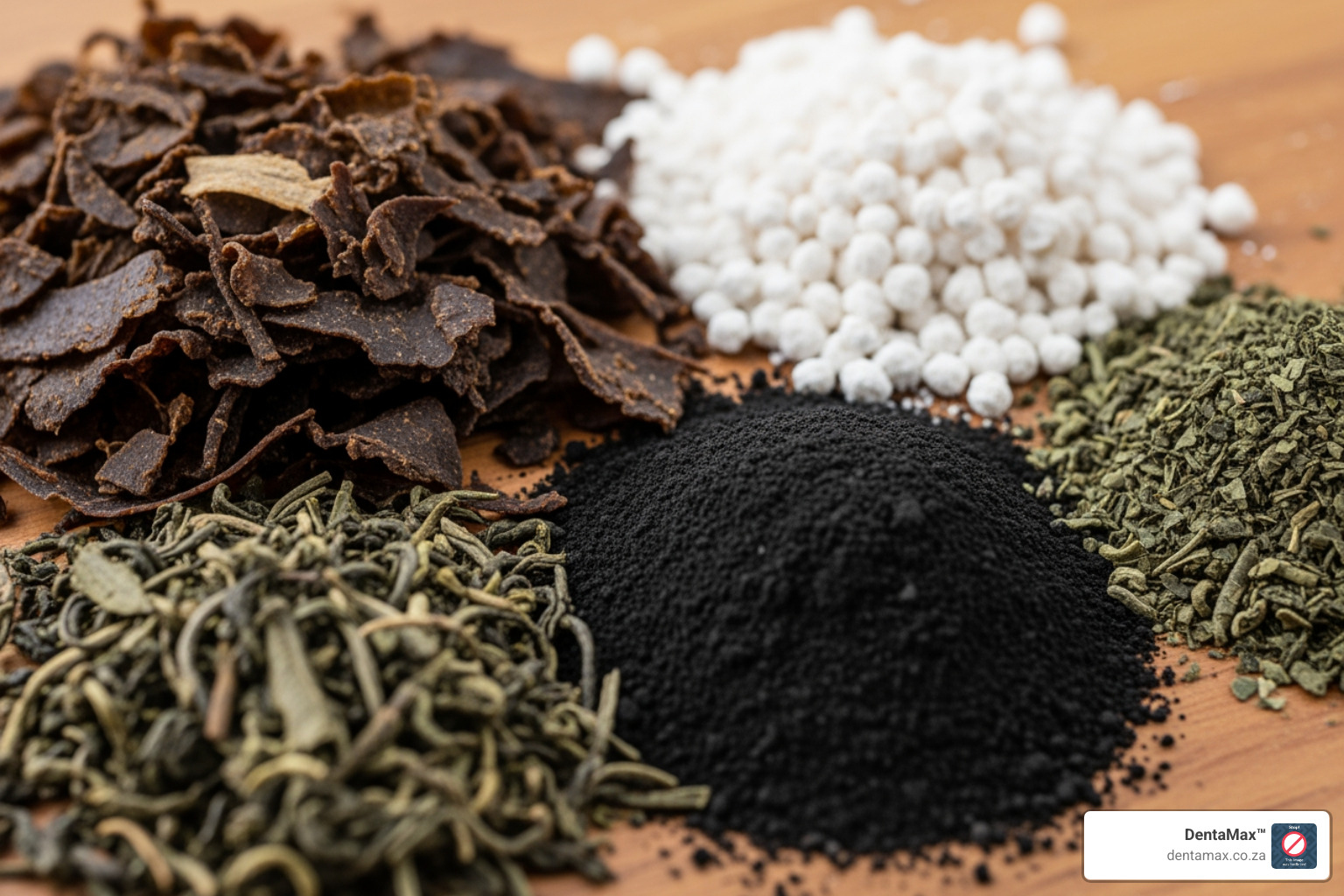
- Sodium Hexametaphosphate (SHMP): This is a sequestering agent that binds to calcium in the saliva, preventing it from mineralising plaque into tartar.
- Probiotics/Postbiotics: These help rebalance the oral microbiome, crowding out harmful bacteria with beneficial strains.
- Green Tea and Rosemary Extract: Natural antioxidants that support gum health and provide mild antimicrobial benefits.
- Activated Charcoal: Used in some formulas to absorb toxins and mechanically whiten teeth, though it can be messy.
A Note on Safety: Because Ascophyllum nodosum is naturally rich in iodine, it is important to be mindful if your dog has a pre-existing thyroid condition, such as hyperthyroidism. While rare in dogs compared to cats, we always recommend consulting your veterinarian before starting any seaweed-based supplement if thyroid health is a concern.
For South African pet owners, ensuring the product is free from unnecessary fillers like maltodextrin or grain-based carriers is vital for dogs with allergies. You can find a full safety breakdown in our DentaMax™ Dental Powder Review and Safety Profile.
Comparing Dental Powders to Traditional Brushing and Professional Cleaning
We must be honest: daily toothbrushing remains the “gold standard” of pet dental care. The mechanical action of a brush is the most effective way to remove fresh plaque. However, the reality is that many dogs simply will not tolerate it.
Professional veterinary cleaning is also essential. A vet can clean under the gumline and perform X-rays to check for tooth root abscesses that no powder can fix. In South Africa, a professional cleaning under general anaesthesia typically costs between R600 and R2000, depending on the complexity and the location (with clinics in Cape Town and Johannesburg often at the higher end).
Dental powder should be viewed as a maintenance and prevention tool. It is most effective when used:
- After a professional cleaning to keep the teeth pristine.
- For senior dogs where anaesthesia for cleaning poses a high risk.
- For small breeds (like Yorkies or Chihuahuas) that are genetically predisposed to rapid tartar buildup.
By investing in a daily dental powder, you are likely to extend the time between expensive professional cleanings. For a comparison of all available options, see our guide on Best Dog Dental Products.
Choosing the Right Product Based on Dog Dental Powder Reviews
When you are ready to purchase, consider these factors:
- Dog Size: Small breeds have crowded teeth, making them high-risk for decay. Look for powders with accurate dosing for tiny mouths (sometimes as little as 250mg).
- Palatability: Most seaweed powders have a mild, salty taste that dogs enjoy. If you have a picky eater, look for a powder that uses a natural flavouring like chicken liver.
- Formulation: If your dog has a sensitive stomach, start with a half-dose for the first week. About 10% of dogs may experience mild digestive upset when first introducing seaweed.
For more tailored advice, read How to Choose the Best Dental Powder for Your Pet.
Frequently Asked Questions
How long does it take to see results from dental powder?
Most owners report fresher breath within 7 to 21 days. For visible reduction in tartar and plaque, you should allow at least 8 to 12 weeks of consistent daily use. If you stop using the product, the benefits will typically disappear within a few weeks as the saliva returns to its original state.
Can dental powder replace professional veterinary cleaning?
No. Dental powder is a preventative measure. It can soften existing tartar and prevent new plaque from forming, but it cannot remove heavy, calcified tartar or treat deep-seated periodontal disease. Think of it as “daily maintenance” rather than a “surgical cure.”
Is seaweed-based dental powder safe for dogs with thyroid issues?
Seaweed is naturally high in iodine. While this is beneficial for most dogs, those with diagnosed thyroid conditions should only use these products under the direct supervision of a veterinarian. For healthy dogs, the iodine levels in a standard daily dose are well within safe limits.
Conclusion
At DentaMax™, our mission is to provide South African pet owners with evidence-based solutions for oral health. We believe that keeping your dog’s mouth healthy should not be a daily battle of wills. By choosing a high-quality dental powder backed by systemic science, you are taking a proactive step toward preventing periodontal disease and ensuring your dog enjoys a pain-free, fresh-smelling life.
Whether you are in Cape Town, Durban or Johannesburg, the key to success is consistency. Start today, stick with it for 90 days and let the results speak for themselves.
Ready to transform your dog’s dental routine? Discover the power of organic Ascophyllum nodosum with Dog Dental Powder For Plaque Tartar & Bad Breath | DentaMax™ or explore our full range of educational resources on our Pillar Page.