Sodium hexametaphosphate (SHMP) is commonly included in certain dog dental products and marketed for “tartar control.”
But understanding whether SHMP delivers meaningful benefit and understanding potential risks depends on how it works and how it is delivered, especially in powdered dental supplements.
What Is Sodium Hexametaphosphate (SHMP)?
Sodium hexametaphosphate, also known as sodium HMP or E452i, is a manufactured chemical derived from phosphoric acid, used primarily in water treatment plants and industrial applications to bind minerals, control corrosion and prevent scale buildup in pipes or to keep certain metals suspended or dissolved in water. [1].
Negatives of SHMP for animal use:
- Synthetic mineral-binding sequestrant
- Corrosive and concentration-dependent irritant
- May irritate eyes, skin, airways and digestive tract
- Animal toxicology studies have shown kidney strain and mineral-balance concerns
- May disrupt calcium and phosphorus balance
- Prolonged exposure has been linked to bone decalcification
- Excess intake is associated with cardiovascular problems
However, its ability to bind minerals, including calcium, is the reason SHMP is also used in some animal dental products.
Tartar, also known as calculus, forms when calcium in saliva mineralises plaque on the tooth surface.
- Plaque = bacterial biofilm
- Tartar = hardened, mineralised plaque
In theory, SHMP works by binding calcium before it can mineralise plaque into tartar. But it does not interfere with the initial formation of plaque itself. In other words, it targets only the hardening stage that turns soft plaque into tartar. It does not address the bacterial biofilm that drives dental disease in the first place.
SHMP is a synthetic calcium-binding sequestrant; its ability to bind calcium is entirely surface-dependent. It only works when it remains in direct contact with the teeth long enough to bind calcium. In a powder, that simply does not happen because it’s swallowed too quickly to have meaningful contact.
Because of the corrosive nature of sodium hexametaphosphate, it is only considered safe where formulations are specifically designed to avoid irritation, either by keeping concentrations low or by ensuring dilution during use.

How SHMP Works
If you are comfortable using a harsh chemical additive in your pet’s daily dental routine, SHMP works through direct contact with the tooth surface. For SHMP to slow tartar mineralisation effectively, three conditions must be met:
- It must be present in sufficient concentration
- It must remain in physical contact with plaque on the tooth surface
- It must interact before mineralisation occurs
SHMP does not reduce or prevent plaque formation. It only attempts to slow the hardening of existing plaque into tartar.
This distinction is critical. If plaque continues to accumulate, inflammation and oral odour can still develop, even if tartar hardening slows.
If you want to understand the difference between surface ingredients and ingredients that work from within, you can read more about how systemic dental powders work for plaque and tartar control.
To understand whether a dental supplement ingredient actually makes sense, you need to look at how it works in the body, not just the marketing claims. When ingredients are analysed individually, it becomes easier to determine whether they genuinely influence plaque biofilm formation or simply provide a surface-level or cosmetic effect.
If you want a deeper breakdown of commonly used compounds found in dental powders, including how they function and what evidence supports them, explore our detailed ingredient analysis guides.
Where SHMP Is Most Effective
SHMP performs best when applied directly to the tooth surface, for example:
- As a coating on chews or dry kibble
- In products designed to maintain extended contact with teeth
Chewing can increase contact time, giving SHMP a more consistent opportunity to bind calcium before mineralisation occurs. Even so, SHMP mainly slows tartar formation, not plaque formation, which is at the root of dental disease. Plaque is the bacterial source of long-term dental disease. Tartar is a consequence. Targeting plaque before it mineralises remains critical.
Limitations of SHMP in Powdered Supplements
If you add SHMP to your pet’s food as a powder, it faces a big challenge: it just doesn’t get enough time to work.
- It barely gets a chance to touch your pet’s teeth
- Saliva quickly washes it away
- It loses the surface contact it needs to be effective
SHMP needs to sit on the teeth for a while to do its job. But in a powder that’s mixed into food and swallowed fast, that simply doesn’t happen. The result is little to no meaningful return from the compound. When an additive has known irritation and toxicology concerns, it is hard to justify adding it to a powdered supplement if the intended dental benefit is unlikely to be delivered.
Plaque vs Tartar
Plaque forms as a bacterial biofilm on the tooth. Tartar is the result of plaque mineralising with calcium.
SHMP may slow tartar hardening, but does not prevent plaque buildup, allowing gum irritation and bad breath to persist if plaque is not removed. Ingredients that influence the oral environment through saliva prevent plaque accumulation earlier in the process. That difference affects long-term prevention.
Other surface-dependent additives, such as activated charcoal in dog dental powders, have similar disadvantages in powdered form.
Why DentaMax™ Does Not Include SHMP
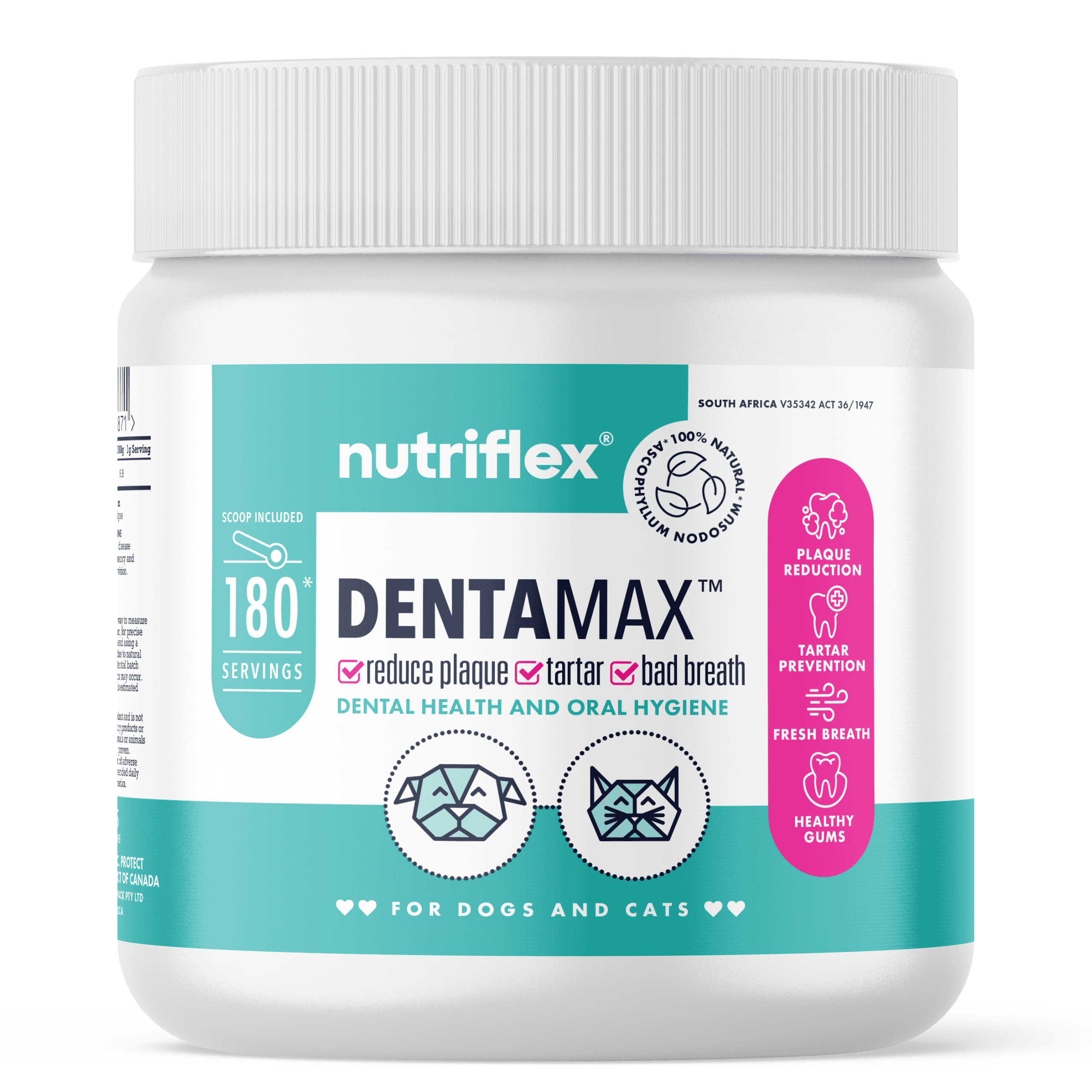
DentaMax™ is formulated with a single clinically studied ingredient: Ascophyllum nodosum.
It is taken daily with food and works from within the body. After digestion, its bioactive compounds circulate and influence the oral environment through saliva. The nutritional benefits of kelp for pets are becoming increasingly recognised among pet owners. Packed with vitamins and minerals, kelp has the ability to enhance skin health, support digestion and boost immunity in pets. Incorporating this superfood into their diet can lead to noticeable improvements in overall vitality and well-being.
The aim is simple:
- Support control of plaque formation
- Help limit tartar buildup
- Improve bad breath linked to plaque and gum irritation
- Provide consistent daily oral support
Sodium hexametaphosphate, or SHMP, is not a health-first ingredient. It is a harsh synthetic phosphate additive. And, like many phosphate additives, it’s treated as if widespread use equals safety.
In animal studies, sodium hexametaphosphate has been linked to adverse effects [2] such as growth inhibition, kidney changes, calcium being pulled from bones and irritation of body tissues. Researchers also reported evidence of strain in the liver, muscles and glands involved in mineral balance. In rabbits, it was even described as a severe skin irritant, while weaker solutions still caused mild irritation. That is not the kind of profile most pet parents would feel comfortable with in a daily supplement for their dogs and cats.
This is important. When an ingredient has a history of toxicological concerns, it should meet a high bar to justify inclusion in a daily pet product. SHMP falls short of that standard.
Even its supporters admit SHMP works only with direct, prolonged tooth contact, a benefit lost in powdered supplements that are quickly swallowed.
That brings us to a straightforward question. Why include a synthetic calcium-binding phosphate with recognised potential biological downsides in a daily dental powder when the product format already limits its supposed benefit? We would not. That is why DentaMax™ excludes it.
Not because it sounds chemical. Because it fails a basic formulation test. If an ingredient has meaningful harm potential, its functional upside must be strong, necessary and format-appropriate. SHMP is none of those things in an instantly swallowed dental powder.
SHMP Has a Harm Profile. That Should End the Debate.
A lot of brands hide behind a familiar trick: “approved”, “allowed”, “commonly used”.
But these labels do not mean health-promoting. They do not guarantee safety. And they certainly do not make SHMP suitable for daily use in pets.
Even food-additive authorities do not treat phosphate exposure as trivial. JECFA set a group maximum tolerable daily intake for phosphorus from phosphates rather than treating these compounds as harmless at any level and sodium hexametaphosphate falls within that group.
The broader phosphate category has also drawn direct kidney-related concern. EFSA stated that its acceptable daily intake framework for phosphates does not apply to people with moderate to severe kidney impairment and warned that regular users of food supplements could exceed levels associated with a risk to kidney function.
That is in humans. Now apply basic logic to pets.
If a class of additives already carries kidney and mineral-balance concerns, why would a health-first pet brand voluntarily add one of those compounds to a daily dental formula unless the benefit is both clear and indispensable? It should not.
Why SHMP Does Not Belong in a Powdered Dental Product
Some dental powder brands try to justify SHMP by citing studies on chews, biscuits, or coated kibble, even though those formats work very differently from a powder.
But that’s not what you’re giving your pet here.
A chew or coated kibble can at least claim to be in direct contact with the tooth surface during chewing. A powder sprinkled on food, though, gets mixed in, swallowed and washed away almost immediately, so it barely has time to do anything for your pet’s mouth.
This means SHMP dental powder is not health-focused and loses effectiveness due to limited tooth contact. For pet parents who want the best for their fur family members, this is simply not good enough.
You’re not getting an ingredient that prioritises your pet’s health. You are not getting something that’s truly safe for daily use. And you’re not even getting the full dental benefit the ingredient claims to offer.
That is a compromise we refuse to make. Our commitment is clear: we prioritise your pet’s health and safety above all else, ensuring you never have to settle for less than the very best for your fur family.
Our Standard Is Simple
We do not believe pet dental products should be built on ingredients that create more doubt than confidence.
A premium daily dental powder should use ingredients that are:
- safe for long-term use
- aligned with the product format
- justifiable beyond marketing
- compatible with a health-first philosophy
SHMP fails that standard. It’s an industrial synthetic phosphate additive with documented toxicological concerns. Its inclusion in dental powder relies on a mechanism that only attempts to slow tartar formation, with no direct effect on plaque buildup. Its use in dental powder is based on a mechanism that is stronger in chew-based formats than in swallowed powders. And its daily use asks pet owners to accept unnecessary exposure for questionable gain.
That is why we leave it out. Instead, DentaMax™ gives your pet a full daily dose of organic, clinically studied Ascophyllum nodosum while preserving the seaweed’s natural integrity. We do not add harsh synthetic mineral binders like SHMP, because they only work when they stay on the teeth for a long time and that does not happen with a powder.
For more on the active ingredient itself, see Ascophyllum nodosum for dogs and its clinically studied plaque-control benefits.
Is SHMP Unsafe?
SHMP is commonly used in food formulations and is not inherently dangerous when used appropriately. The issue is not whether it is approved for use. The real issue is whether it makes sense in a daily powder that does not stay on the teeth long enough to work as intended. That constraint is often overlooked.
Potential Health Risks of SHMP
- Digestive irritation – higher exposure can irritate the gut, leading to stomach upset, vomiting, or diarrhoea.
- Kidney stress – repeated intake may place added strain on the kidneys and has been associated with calcium-phosphate deposition in kidney tissue.
- Mineral disruption – SHMP can interfere with normal calcium and phosphorus balance, potentially lowering serum calcium and disrupting normal mineral regulation.
- Bone effects – prolonged exposure has been linked to bone decalcification, the opposite of what a health-first ingredient should be doing.
- Cardiovascular effects – excessive intake has been associated with lowered blood pressure and a slowed pulse.
- Irritation risk – in concentrated form, SHMP may irritate the mouth, throat, eyes and other sensitive tissues.
What Animals Should Not Use SHMP?
SHMP is not suitable for pets with kidney issues or disrupted calcium-phosphorus balance because it adds inorganic phosphate. Sodium hexametaphosphate is a sodium polyphosphate which introduces the very kind of mineral burden that is inappropriate in animals already struggling to regulate phosphorus properly.
- Kidney disease or reduced kidney function: SHMP adds phosphorus in a form that is generally more rapidly and efficiently absorbed than phosphorus naturally present in whole foods, which is not the kind of exposure kidney-compromised pets should be getting.
- Calcium or phosphorus regulation disorders: pets with metabolic conditions affecting mineral balance are poor candidates for phosphate-based additives unless a veterinarian has specifically approved their use. Added inorganic phosphates can push the hormonal control system that manages calcium and phosphorus harder, putting unwanted strain on the very mechanisms renal diets are trying to stabilise, with potential downstream consequences for bone and soft-tissue mineral balance.
- Digestive sensitivity or long-term daily exposure concerns: Higher or prolonged exposure to sodium hexametaphosphate has been linked to stomach upset, vomiting and osmotic diarrhoea in dogs with sensitivities or irritable bowel syndrome (IBS).
The problem is simple: once a synthetic phosphate carries kidney, mineral-balance, digestive and potentially wider systemic health concerns, it stops being a sensible daily-use ingredient for a premium pet dental product.
The Bottom Line
As devoted pet parents, we all want to do right by our dogs and cats, because they’re family. That’s why it’s so important to look past big claims and understand what’s really in your pet’s daily routine.
Sodium hexametaphosphate (SHMP) is an industrial-grade cleaning agent, sometimes used in dental products to slow tartar by binding calcium at the tooth surface. But here’s what matters: it only works if it actually stays on your pet’s teeth. In a powder added to food, SHMP barely touches the teeth before it’s swallowed and gone.
So, what does that mean for your pet?
- SHMP’s tooth contact is extremely brief
- It’s diluted and swallowed almost instantly
- It doesn’t get absorbed to help from within
- It doesn’t change saliva or fight the cause of dental disease (plaque)
- It leaves the real problem, plaque, untouched
And it’s not only about what SHMP can’t do. There’s growing research showing that regular, long-term exposure to SHMP can actually do harm.
Animal studies link SHMP to possible adverse effects, including growth inhibition, kidney strain, bone calcium loss, digestive issues, and tissue irritation. Its broader class of phosphate additives has additionally raised concerns about kidney and cardiovascular health in both animals and humans, especially with regular, daily use. Experts are increasingly wary of phosphate additives like SHMP, especially for pets with sensitive kidneys or mineral balance issues.
That’s why DentaMax™ leaves SHMP out. Instead, we use Ascophyllum nodosum, an organic seaweed that works systemically via saliva to support your pets’ oral health without exposing them to unnecessary risks tied to questionable additives. Because when it comes to your family, there’s no room for compromise.
For a broader comparison of locally available dental powders, see our guide to dog & cat dental powder in South Africa.
Reference:
[1] United States Environmental Protection Agency (EPA). Sodium Salts of Polyphosphate Supply Chain Profile.
[2] Lanigan RS. Final report on the safety assessment of Sodium Metaphosphate, Sodium Trimetaphosphate, and Sodium Hexametaphosphate. https://pubmed.ncbi.nlm.nih.gov/11766135/.