If your dog’s breath could clear a room, you’re not alone. Bad breath is one of the most common complaints from dog owners, and the good news is you don’t need to spend a fortune to deal with it. Here are five low-cost ways to tackle it, with honest notes on what actually works and what’s mostly folklore.
-
Add Fresh Parsley to Your Dog’s Meals
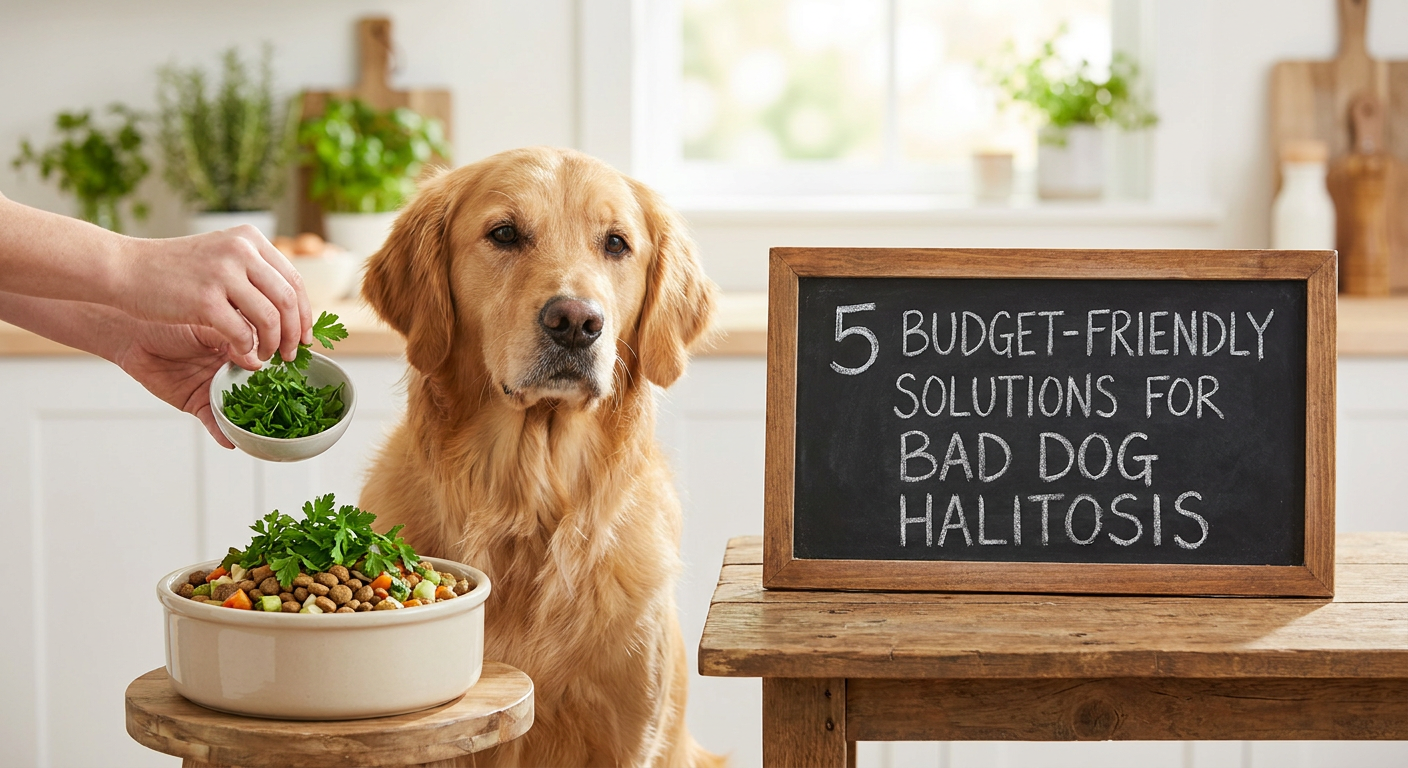
Parsley is one of the cheapest natural ways to freshen your dog’s breath, but it’s worth knowing what it actually does. The chlorophyll and aromatic oils in parsley mask odours in the mouth and gut for a short window. They don’t kill the bacteria causing the smell and they don’t shift the plaque sitting on the teeth. Think of parsley as a cosmetic top-up, not a treatment.
Fresh works better than dried. Drying degrades the chlorophyll and evaporates most of the volatile oils, so dried parsley is roughly a third to half as effective by weight. Use fresh where you can.
To use it, finely chop a small amount of curly or flat-leaf parsley and sprinkle it over your dog’s food, or mix it into homemade treats. A single bunch from any supermarket costs very little and stretches across multiple meals.
One important safety note: only use curly or flat-leaf parsley. Spring parsley (Cymopterus) is toxic to dogs. Start with a pinch to make sure your dog tolerates it, and avoid large quantities, especially in pregnant dogs or dogs with kidney issues.
You’ll notice fresher breath within a few days. Just remember it’s masking the smell, not fixing the cause. If the bad breath is persistent or getting worse, the issue is almost always plaque and bacteria below the gumline and that needs a proper daily dental routine to resolve.
-
Use Coconut Oil as a Daily Supplement
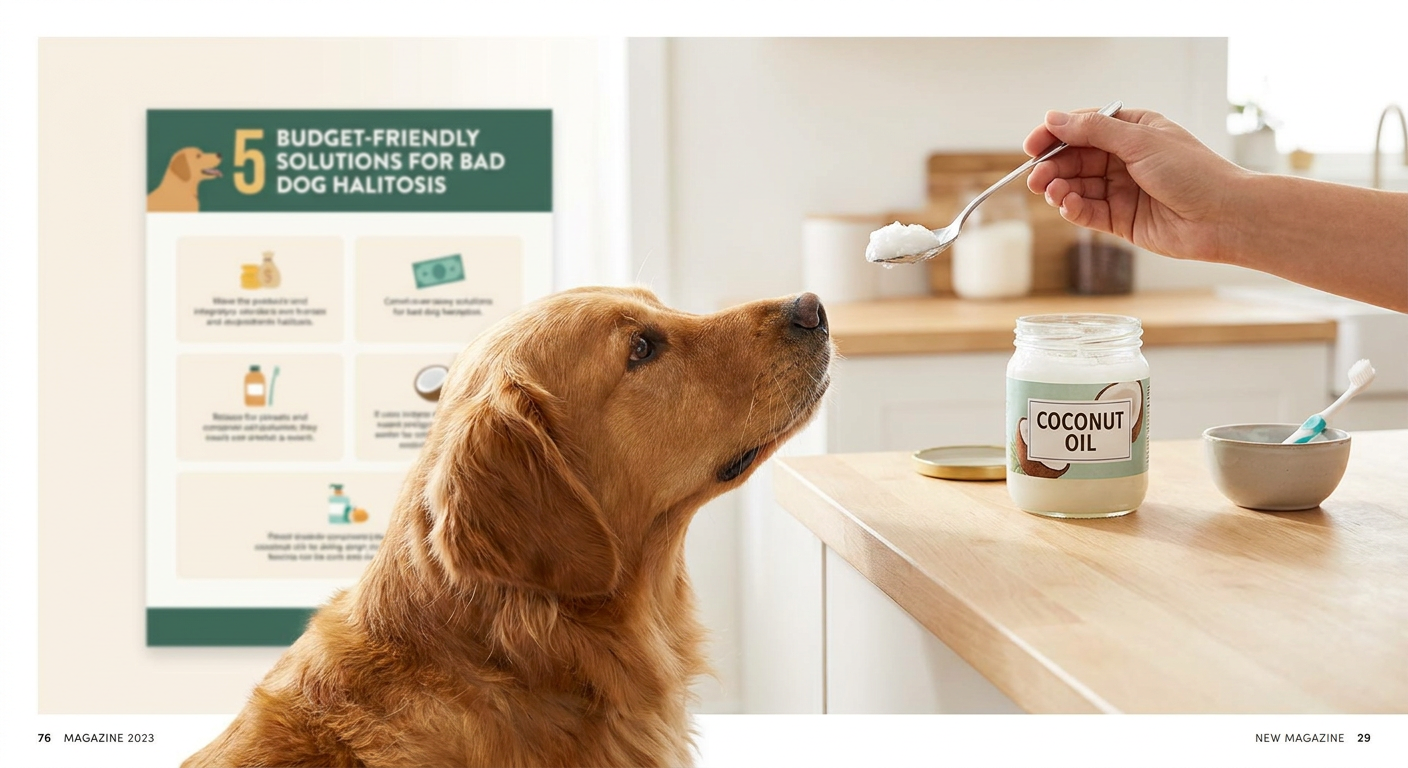
Coconut oil is a popular budget option for dog breath, though the science is thinner than most blogs suggest. Lauric acid in coconut oil has shown antibacterial activity in lab studies, but there’s no strong clinical evidence that feeding it actually reduces oral bacteria or freshens breath in dogs. Once swallowed, its impact on the mouth is limited.
That said, dogs love the taste, and a small amount as an occasional treat is unlikely to do harm in healthy dogs. If you want to try it, start tiny: a quarter teaspoon for small dogs, up to a teaspoon for large breeds, no more than a few times a week.
One important caveat. Coconut oil is roughly 90% saturated fat, so daily use adds significant calories and fat load. Avoid it entirely if your dog is overweight, has had pancreatitis, or is a breed prone to it (Schnauzers, Yorkies, Cocker Spaniels and Miniature Poodles are higher risk). For those dogs, the risk outweighs any breath benefit.
A jar lasts months and costs very little, so it’s cheap to test. Just keep expectations realistic: coconut oil is a mild, occasional support at best, not a fix for bad breath. The real cause is almost always plaque and oral bacteria, and that needs a proper daily dental routine to address.
-
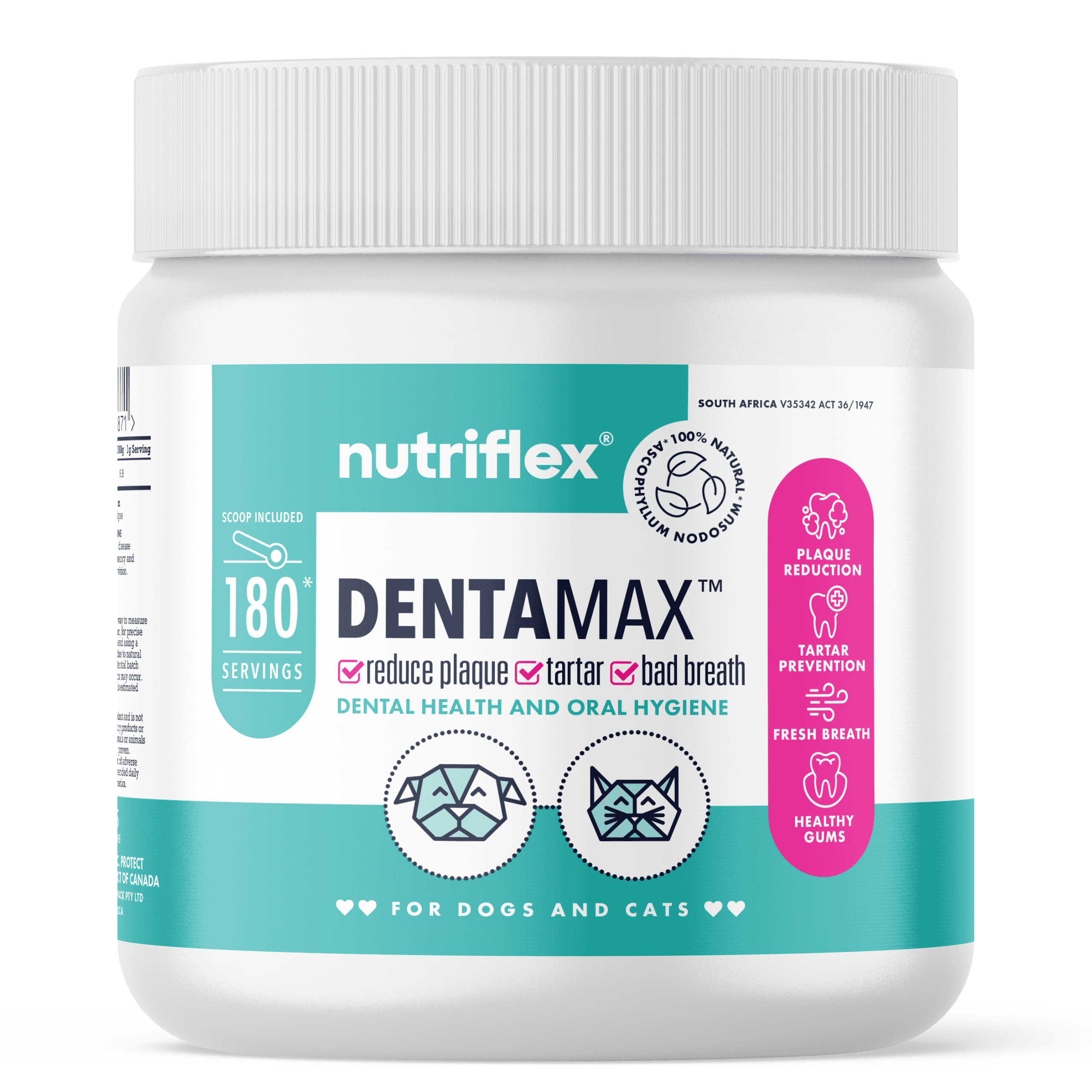
Try NutriFlex® DentaMax™ for Long-Term Value
Home remedies mask the smell. They don’t treat the cause. If you want to actually shift the plaque and bacteria driving the bad breath, a daily dental supplement does more for your money over time than any pantry remedy.
NutriFlex DentaMax is a single-ingredient organic Ascophyllum nodosum powder, human-grade-certified, with over 500 reviews on Takealot. You sprinkle it on food once a day. No brushing, no fuss. It works systemically via the saliva to soften plaque and reduce the bacteria that cause odour.
The cost works out to a few rand per day for most dogs, which is less than a single dental chew and a fraction of what a vet scale-and-polish costs. One container lasts for months, depending on dog size. For owners who’ve cycled through cheap chews and water additives that don’t work, it’s the practical middle ground between home remedies and professional cleanings.
Stocked at Absolute Pets, Petshop Science, Pet Storey, Crazy Pets and on Takealot.
-
Make DIY Dental Chews from Carrots and Apples
You’ll see a lot of pet blogs call carrots and apples “natural toothbrushes.” The truth is, the dental benefit is minimal. Veterinary research has not shown that crunchy fruit and veg meaningfully reduce plaque or tartar.
What they are good for is a low-calorie, low-cost treat that some dogs enjoy chewing. The chewing action stimulates saliva, which does help rinse the mouth slightly. That’s a small benefit, not a fix.
Cut them into appropriate sizes for your dog (whole carrots and apple chunks are a choking risk, especially for small breeds), remove apple seeds and cores and don’t overdo it. Both contain natural sugars, so they’re occasional treats, not daily staples.
-
Maintain a Simple Water Bowl Cleaning Routine
This one is genuinely free and genuinely overlooked. Bacteria and biofilm build up in water bowls within hours, and every time your dog drinks, that goes straight into their mouth.
Wash the bowl with hot, soapy water once a day and rinse thoroughly. If you notice a slimy film between washes, that’s biofilm, and it’s a meaningful contributor to bad breath.
A small upgrade worth making: switch from plastic to stainless steel or ceramic. Plastic develops micro-scratches that harbour bacteria, no matter how often you wash it. Stainless steel bowls cost very little and last for years.
Most “cheap fixes” for dog breath only mask the smell. The actual cause, in nearly every case, is plaque and bacteria below the gumline. Fresh parsley, coconut oil and crunchy treats can help around the edges, but they don’t treat the problem. A daily dental routine does.