Why Plaque Control Without Brushing Matters for Your Dog
Plaque control without brushing is possible for dogs, and there are several evidence-based methods that can help reduce plaque and tartar buildup without daily toothbrushing.
Quick overview of no-brush plaque control options for dogs:
| Method | How It Works | Effectiveness |
|---|---|---|
| Ascophyllum nodosum supplement | Works systemically through saliva to prevent bacterial adhesion | Results in 3-8 weeks with daily use |
| Dental chews and treats | Mechanical abrasion during chewing | Reduces surface plaque on accessible tooth areas |
| Crunchy fibrous foods | Natural abrasion and saliva stimulation | Mild supportive effect |
| Water additives | Antimicrobial rinse effect | Adjunct support only |
| Professional cleaning | Removes hardened tartar | Required once calculus has formed |
Most dog owners know they should brush their dog’s teeth. Very few actually do it consistently. Whether it is a wriggling dog, a time-poor schedule or simply the stress it causes both owner and pet, daily brushing remains one of the least followed recommendations in canine oral care.
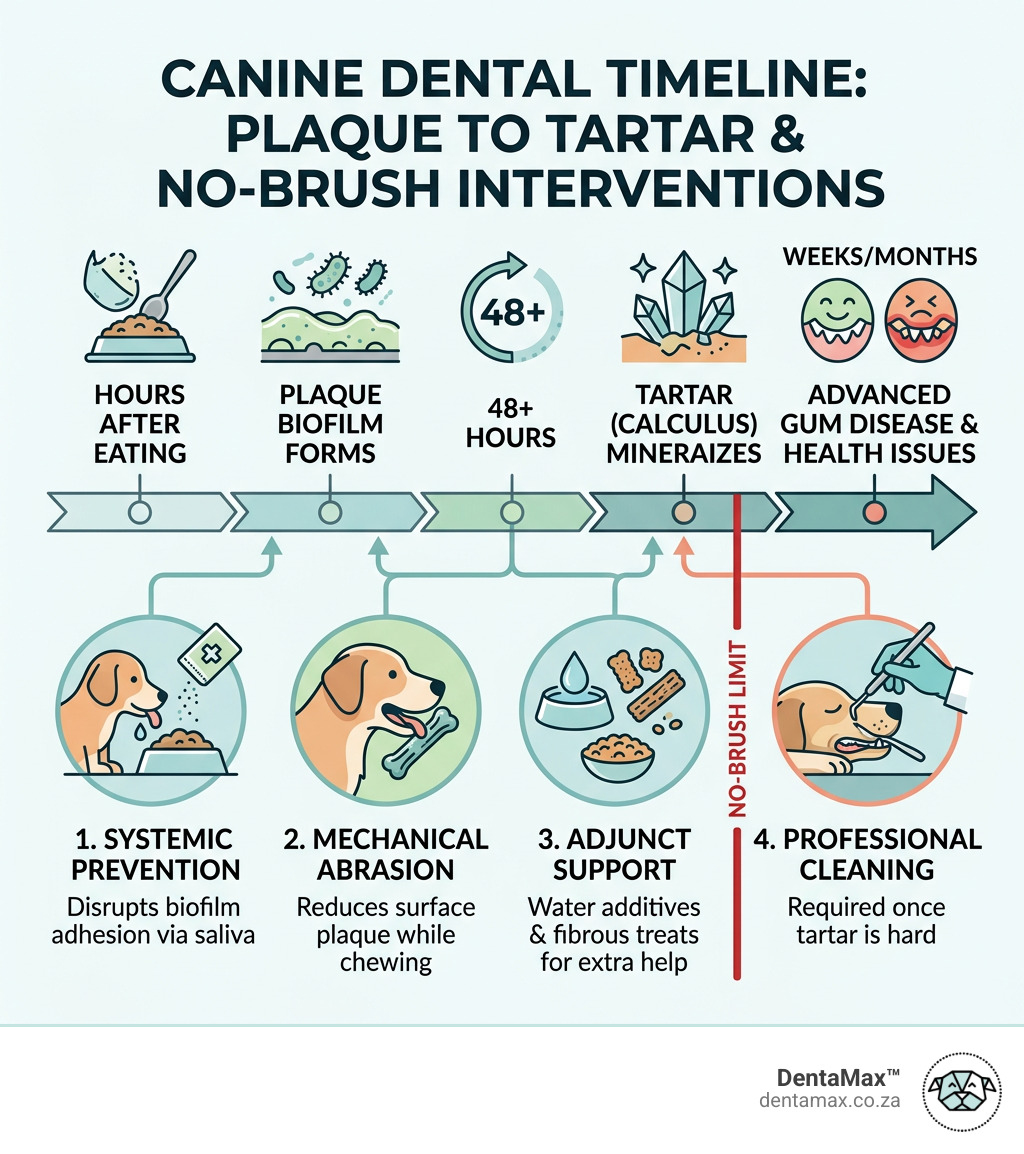
The problem is that plaque does not wait. It begins forming on tooth surfaces within hours of a meal and starts mineralising into hard tartar within as little as 48 hours. Once tartar forms, no home remedy can remove it. Only a professional veterinary clean can do that.
This is why finding practical, evidence-aligned alternatives to brushing is not just convenient but genuinely important for your dog’s long-term oral and systemic health.
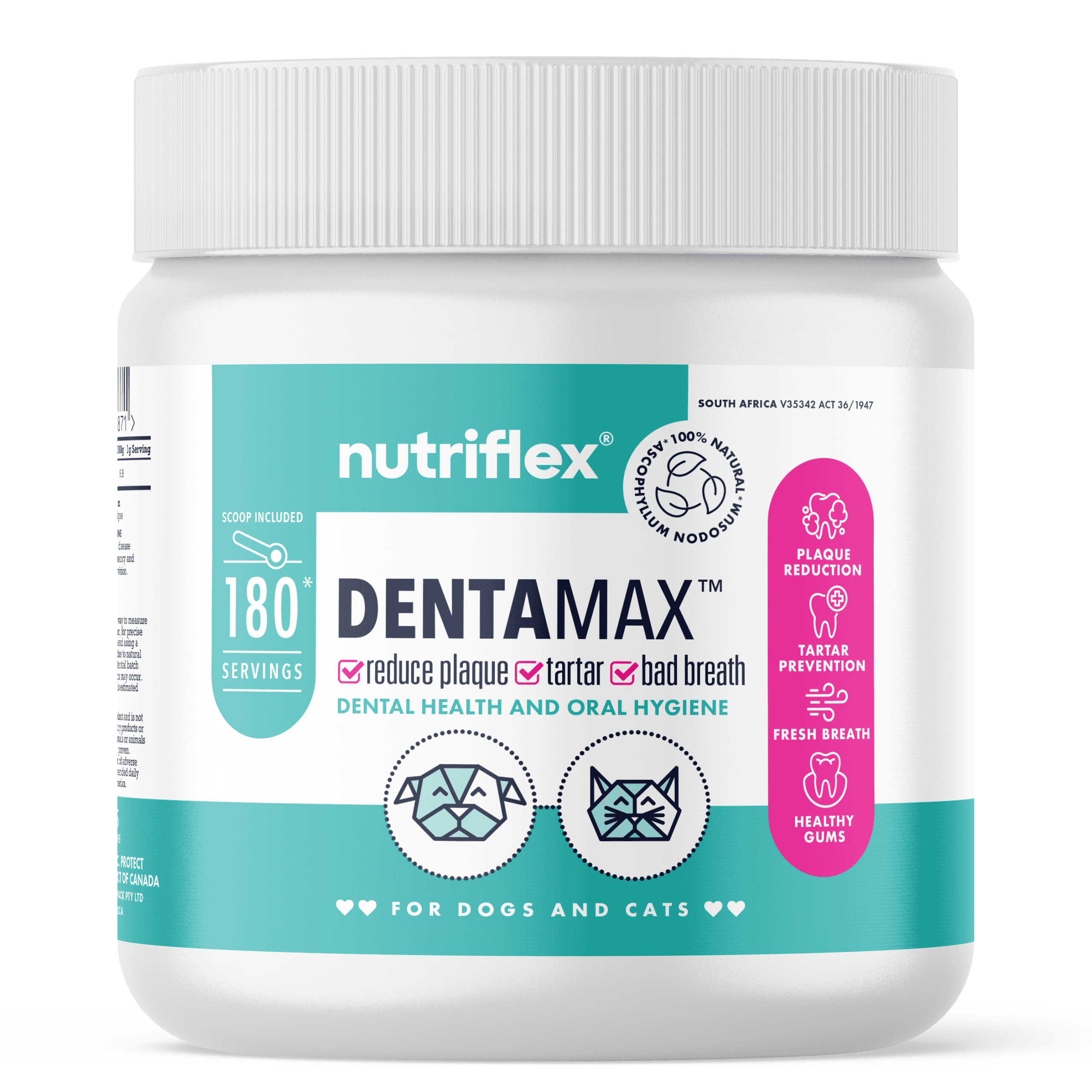
I’m Sharon Milani, Co-Founder of NutriFlex® and the developer of DentaMax™, a 100% pure organic Ascophyllum nodosum dental powder formulated specifically for dogs and cats in South Africa. My work over the past decade has focused on systemic plaque control without brushing, and I have spent years studying the published research on how seaweed-based supplementation disrupts plaque biofilm through the salivary pathway. In the sections below, I will walk you through the most practical and evidence-supported no-brush options available to South African pet owners.
Plaque control without brushing vocab to learn:
Understanding Plaque Control Without Brushing in Dogs
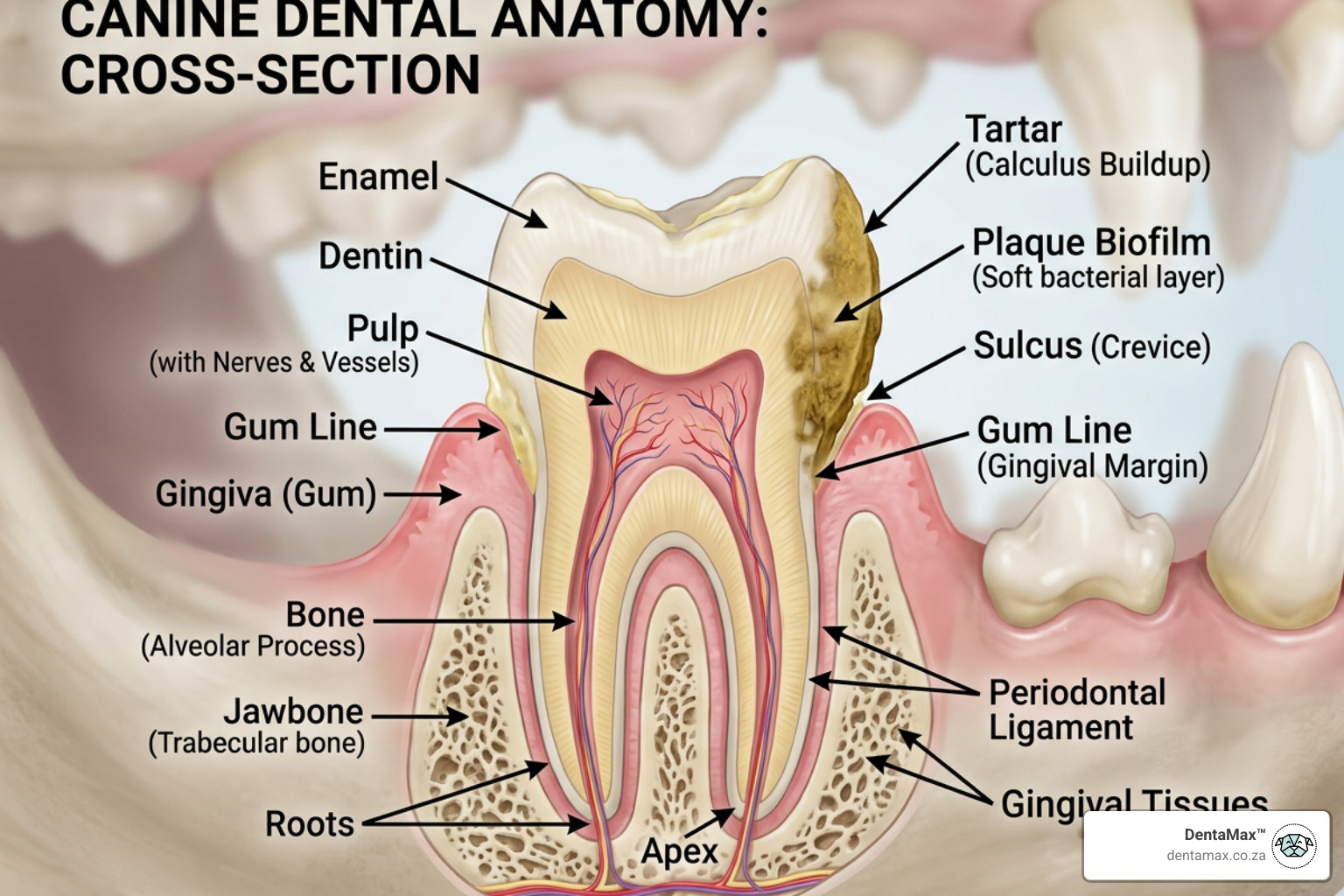
To effectively manage oral hygiene without a brush, we must first understand the enemy. Dental plaque is a soft, sticky biofilm that constantly forms on your dog’s teeth. It is composed of a complex matrix of bacteria, food particles and saliva. If you have ever noticed your dog’s teeth feeling fuzzy or appearing dull, you are likely looking at a significant accumulation of plaque.
In canine health, what is plaque in dogs is more than just a cosmetic concern. Bacteria within this biofilm feed on sugars and carbohydrates from food, producing acids that attack the tooth enamel and irritate the gums. This leads to gingival inflammation, which is the first stage of periodontal disease.
Research indicates that biofilm-protected bacteria are up to 1000 times more resistant to antimicrobial agents than free-floating bacteria. This makes the mechanical or chemical disruption of this matrix essential. When we talk about plaque control without brushing, we are looking for ways to either chemically soften this biofilm or systemically change the oral environment so the “bacterial superglue” cannot stick as easily.
The consequences of failing to control this biofilm are severe. According to a 2023 study published in Applied Biochemistry and Biotechnology, periodontitis is an oral disease with systemic consequences. The inflammation does not stay in the mouth; it can enter the bloodstream and impact vital organs.
Why Plaque Control Without Brushing is Essential for Canine Health
We often think of dental care as being about fresh breath or white teeth, but for our dogs in South Africa, it is a matter of systemic longevity. Chronic oral inflammation is a known risk factor for heart disease, kidney dysfunction and liver issues. When the gums are inflamed, they become a gateway for bacteria to travel throughout the body.
Furthermore, a dog bad breath cure is often the primary motivation for owners seeking no-brush solutions. Halitosis is rarely just about what the dog ate; it is usually the scent of metabolic byproducts from bacteria thriving in the plaque biofilm. By implementing effective plaque control without brushing, we address the root cause of the odour rather than just masking it with minty scents.
The 48-Hour Mineralisation Window
Time is the most critical factor in no-brush dental care. Plaque is a soft substance that can be disrupted relatively easily. However, once it reacts with the minerals found in canine saliva, such as calcium and phosphorus, it begins to mineralise.
This process of turning soft plaque into hard tartar (calculus) can begin in as little as 48 hours. Once tartar has formed, it creates a rough surface that attracts even more plaque, accelerating the cycle of decay. Because tartar is porous and hard, it cannot be removed by supplements, chews or brushing. This highlights why daily plaque control without brushing is so vital; we must disrupt the biofilm before it has the chance to harden.
Evidence-Based Alternatives to the Toothbrush
While the manual toothbrush is often cited as the gold standard in human dentistry, the reality for pet owners is quite different. In South Africa, many of us struggle with pets that find the sensation of a brush invasive or stressful. Fortunately, science has provided several alternatives that fall into two main categories: mechanical and systemic.
Our category: plaque and tartar education resources highlight that while mechanical methods like dental chews provide surface-level cleaning, systemic methods offer a more comprehensive approach by changing the chemistry of the saliva itself.
| Feature | Brushing | Systemic Supplement (Seaweed) | Dental Chews |
|---|---|---|---|
| Ease of Use | Difficult | Very Easy | Easy |
| Surface Coverage | Only where the brush reaches | All tooth surfaces and gumline | Mostly chewing surfaces |
| Stress Level | High for most dogs | Zero | Low/Enjoyable |
| Frequency | Daily required | Daily required | Occasional to Daily |
The Role of Systemic Plaque Control Without Brushing
The most exciting development in no-brush hygiene is the use of systemic supplements. Unlike a brush that only cleans where it touches, a systemic supplement is ingested, absorbed into the bloodstream and then excreted through the salivary glands.
This means the active compounds are present in the saliva 24 hours a day, constantly bathing the teeth and gums. This continuous presence helps to prevent new plaque from adhering and works to soften existing tartar over time. If you are wondering how does DentaMax work, it relies on this salivary pathway to disrupt the biofilm matrix from the inside out.
Limitations of Traditional Brushing for South African Pet Owners
We must be realistic about the challenges of brushing. For many owners in Johannesburg or Cape Town, the daily struggle of pinning down a 40kg Boerboel to brush its molars is simply not feasible. Dexterity issues, both in the owner and the pet’s willingness to cooperate, often lead to incomplete cleaning.
Furthermore, statistics show that even in human populations, compliance with ideal dental routines is low. In some rural areas of the world, only 51% of the population uses a toothbrush regularly, relying instead on traditional methods like finger cleaning. In the veterinary world, the compliance rate for daily brushing is estimated to be even lower, often less than 2%. This makes plaque control without brushing the only viable long-term strategy for the majority of South African pets.
The Science of Ascophyllum Nodosum for Biofilm Disruption
The cornerstone of effective systemic plaque control without brushing is a specific species of seaweed known as Ascophyllum nodosum. Harvested from the cold, clean waters of the North Atlantic, this kelp contains unique compounds that have been clinically shown to reduce plaque and tartar.
When we look at dog and cat dental powder guides, the focus is often on the quality of the ingredient. Not all seaweed is created equal. The Ascophyllum nodosum used in DentaMax™ is selected for its high concentration of polyphenols and specific polysaccharides that interfere with bacterial adhesion.
A 2018 review on natural products for oral hygiene suggests that traditional medicine and natural products are becoming increasingly relevant in modern oral care. For dogs, this seaweed provides a natural, chemical-free way to manage oral health that aligns with their biological needs.
Achieving Optimal Plaque Control Without Brushing Using Seaweed
Using a seaweed-based powder like DentaMax™ is a long-term strategy. It is not an overnight fix, but rather a cumulative process. Most owners see a noticeable difference in their dog’s breath within 2 to 3 weeks, while the visible reduction of plaque and the softening of tartar typically take between 3 and 8 weeks of continuous use.
Learning how to fix your dog’s bad breath at home often starts with this simple daily addition to their food. Because it works systemically, it reaches the “hidden” areas of the mouth, such as the back molars and under the gumline, where brushes and chews often fail to penetrate.
Mechanism of Action via Saliva
The science behind this is fascinating. Once the Ascophyllum nodosum is digested, its active components enter the systemic circulation. These compounds are then secreted by the salivary glands back into the oral cavity.
This creates an environment where:
- Bacterial Adhesion is Inhibited: The “sticky” nature of the plaque bacteria is reduced, making it harder for them to cling to the pellicle (the thin film on the tooth surface).
- Biofilm Softening: Existing tartar, which is normally rock-hard, becomes more porous and softer. This allows the natural abrasive action of eating or playing with toys to rub the tartar away more easily.
- Enzyme Activity: The seaweed may influence the enzyme balance in the saliva, favouring an environment that is less conducive to plaque formation.
Dietary and Lifestyle Strategies for Cleaner Teeth
While systemic supplements do the heavy lifting, we can support plaque control without brushing through dietary choices. The modern canine diet, often consisting of soft kibble or tinned food, provides very little mechanical cleaning action. In fact, soft foods can often contribute to plaque accumulation by sticking to the teeth.
Our guide on why there is no brush no problem for your dogs pearly whites emphasises the importance of incorporating textures that encourage chewing and saliva production.
Natural Plaque Scrubbers
Nature provides several “toothbrushes” in the form of whole foods. While these should not be the sole method of cleaning, they are excellent adjuncts:
- Carrots: Raw, crunchy carrots act as a mild abrasive and stimulate the flow of saliva, which has natural antimicrobial properties.
- Apples: Slices of apple (without seeds) can help scrub the surface of the teeth.
- Fibrous Vegetables: Celery or green beans provide a fibrous texture that can help disrupt the soft plaque biofilm during the chewing process.
- Hydration: Ensuring your dog has constant access to fresh water is vital. Water helps rinse away food debris and keeps the oral mucosa hydrated, which is essential for healthy saliva production.
Frequently Asked Questions about No-Brush Dental Care
Can I remove hard tartar at home without a vet?
Technically, no-brush products like DentaMax™ can soften tartar over several weeks, making it possible for some of it to break off during chewing. However, if your dog has heavy, brown calculus or signs of gum recession, a professional veterinary cleaning is necessary. Once the vet has “reset” the mouth to a clean state, no-brush methods are incredibly effective at preventing the tartar from returning. We do not recommend using metal scrapers at home, as you can easily damage the tooth enamel or injure the gums.
How long does it take for no-brush products to work?
Consistency is key. For systemic seaweed supplements, you should expect to see results in 3 to 8 weeks. Breath usually improves first, followed by a visible reduction in the “fuzziness” of the teeth. If you stop using the product, the protective effect in the saliva will disappear within a few days, and plaque will begin to accumulate at its normal rate again.
Is seaweed safe for all dogs and cats?
Ascophyllum nodosum is a natural, safe ingredient for the vast majority of pets. However, because kelp is naturally rich in iodine, it may not be suitable for dogs or cats with pre-existing thyroid conditions (such as hyperthyroidism). Always consult with your veterinarian if your pet is on thyroid medication or has a history of endocrine issues. For healthy pets, the iodine content is a beneficial trace mineral that supports overall metabolic health.
Conclusion
Maintaining your dog’s oral health does not have to be a daily battle. By understanding the science of the plaque biofilm and the power of systemic intervention, we can achieve effective plaque control without brushing.
Whether you are a “lazy” pet parent or simply one who prioritises a stress-free relationship with your dog, the lazy pet parent guide to plaque prevention products shows that modern science has your back. By combining a high-quality systemic supplement like DentaMax™ with smart dietary choices and regular veterinary check-ups, you can keep those pearly whites shining and your dog’s heart healthy.
For more tailored advice, explore our best no brushing dog dental products for busy owners or find more info about dog and cat dental powder South Africa to start your pet’s journey to a cleaner, healthier mouth today. Your dog’s smile—and their systemic health—will thank you.