Kelp gets sold as if it’s one thing. It isn’t.
What’s on the packet might be Ascophyllum nodosum from cold Atlantic waters. It might be a Pacific Laminaria. It might be a blend nobody’s quite specified. Each one behaves differently in your dog’s body, and the gap between bulk agricultural seaweed and a tested, dental-grade ingredient is wider than most pet parents realise.
This guide cuts through that. We’ll cover the 6 benefits the science actually supports for kelp for dogs (with Ascophyllum nodosum doing most of the work), explain what separates dental-grade product from feed-grade product, and show you what matters on a label you’re putting in your dog’s bowl every day.
If you’ve been told kelp is good for your dog and you want to know what that actually means in practice, this is the version that takes the question seriously.
Kelp for Dogs Is Not One Thing
“Kelp” is a loose label. It covers a long list of large brown seaweeds (Laminaria, Macrocystis, Saccharina, Ecklonia) plus close relatives like Ascophyllum nodosum, technically a rockweed but commonly grouped with kelp in the supplement aisle. Different species. Different waters. Different bioactive profiles.
Ascophyllum nodosum vs generic “kelp”
Ascophyllum nodosum grows in cold, tidal North Atlantic waters off Canada, Iceland, Ireland and Norway. It is the species behind almost every clinical study on seaweed and oral health in pets, including the work most cited by veterinary dental products. Most generic kelp powders are bulk agricultural ingredients sold to farms for animal feed or used as soil conditioners. They are not screened to the same standards because they’re not meant for the same job.
Why species and grade matter
Two products, both labelled “kelp”, can have very different levels of iodine, polyphenols and contaminants. According to the CEVA, the French algae research and technical centre, iodine in raw Ascophyllum nodosum ranges from roughly 357 to 1,772 ppm across samples. Polyphenol content varies by more than 29-fold. If your dog gets a scoop daily, that variability matters.
6 Real Benefits of Ascophyllum Nodosum for Dogs
1. Plaque, tartar and breath control
This is the most-studied use, by a wide margin. In a randomised controlled clinical trial published in PubMed, dogs given daily Ascophyllum nodosum showed lower calculus, plaque and gingivitis scores than those given a placebo. A later double-blind 90-day study[2] reported about 40% less plaque deposition and 20% less calculus buildup in dogs receiving the ingredient daily compared with a control group.
The mechanism is systemic, not mechanical. Once ingested, active compounds are absorbed into the bloodstream and carried into saliva. As saliva coats the teeth throughout the day, those compounds help interfere with the plaque biofilm before it has time to mineralise. A saliva metabolomics study found measurable shifts in salivary compounds linked to plaque pathways within 30 days of daily use. For a deeper look at the chemistry, see our article on the science behind Ascophyllum nodosum.
2. Natural iodine for thyroid balance
The thyroid runs on iodine. It uses it to make T3 and T4, the hormones that regulate your dog’s metabolism, body temperature, heart rate and coat condition.
Ascophyllum nodosum is one of the most iodine-rich natural sources available. The iodine is bound to the seaweed matrix, which moderates release through digestion. That’s part of why dental-grade products specify an iodine level and stay within it, rather than leaving the daily dose to chance. Dogs on prescription thyroid medication, or with diagnosed hyper- or hypothyroidism, should only use any kelp product under veterinary guidance.
3. Skin, coat and shedding support
Coat condition is downstream of thyroid function. When iodine is adequate, the hormonal signals that drive hair growth cycles and skin lipid production run more smoothly.
Ascophyllum nodosum also delivers zinc, manganese, biotin and vitamin E, all involved in skin repair, follicle health and antioxidant defence at the skin barrier. The polysaccharides (fucoidans in particular) have anti-inflammatory activity in lab and animal models, which may help calm low-grade skin irritation over time. With consistent daily use, many pet parents notice softer coats and less seasonal shedding within 6 to 12 weeks.
4. Joint and inflammatory support
In animal studies, fucoidans and phlorotannins from Ascophyllum nodosum have shown anti-inflammatory effects on markers such as IL-6 and TNF-alpha. That is not a pain reliever, and it does not replace veterinary joint care. It is directionally useful, especially alongside established joint nutrients like green-lipped mussel or omega-3 fatty acids.
The trace minerals in the seaweed (manganese, copper, zinc) are cofactors for cartilage and connective tissue maintenance. For older dogs or breeds prone to early joint wear, kelp is a reasonable supporting ingredient, not a primary intervention.
5. Gut health through marine fibres
Around 44g of every 100g of Ascophyllum nodosum is dietary fibre. The interesting fractions (alginates, laminarins and fucoidans) are largely indigestible by your dog’s own enzymes but fermentable by gut bacteria.
In practice, that means they behave as prebiotics. They feed beneficial bacteria in the colon, support short-chain fatty acid production, and can help regulate stool consistency over time. If your dog has chronic loose stools or known dietary sensitivities, introduce kelp slowly and watch for tolerance, as you would with any new fibre source.
6. Antioxidant support from phlorotannins
Phlorotannins are polyphenols unique to brown seaweeds. Ascophyllum nodosum carries among the highest phlorotannin concentrations of any commonly studied species.
In lab studies, phlorotannins from Ascophyllum nodosum exhibit strong antioxidant activity and measurable inhibition of digestive enzymes linked to blood sugar control. A broader review of seaweed-derived extracts confirmed antioxidant and antibacterial properties across multiple species. For a healthy young dog, this is not life-changing. For an older dog, an overweight dog, or one carrying low-grade inflammation, the antioxidant load is a quiet support layer over time.
Dental-Grade vs Feed-Grade Kelp: What Actually Changes
This is where most pet parents get caught out. “Organic” and “natural” tell you almost nothing about whether a kelp powder is suitable for daily use in a household pet.
Sourcing and traceability
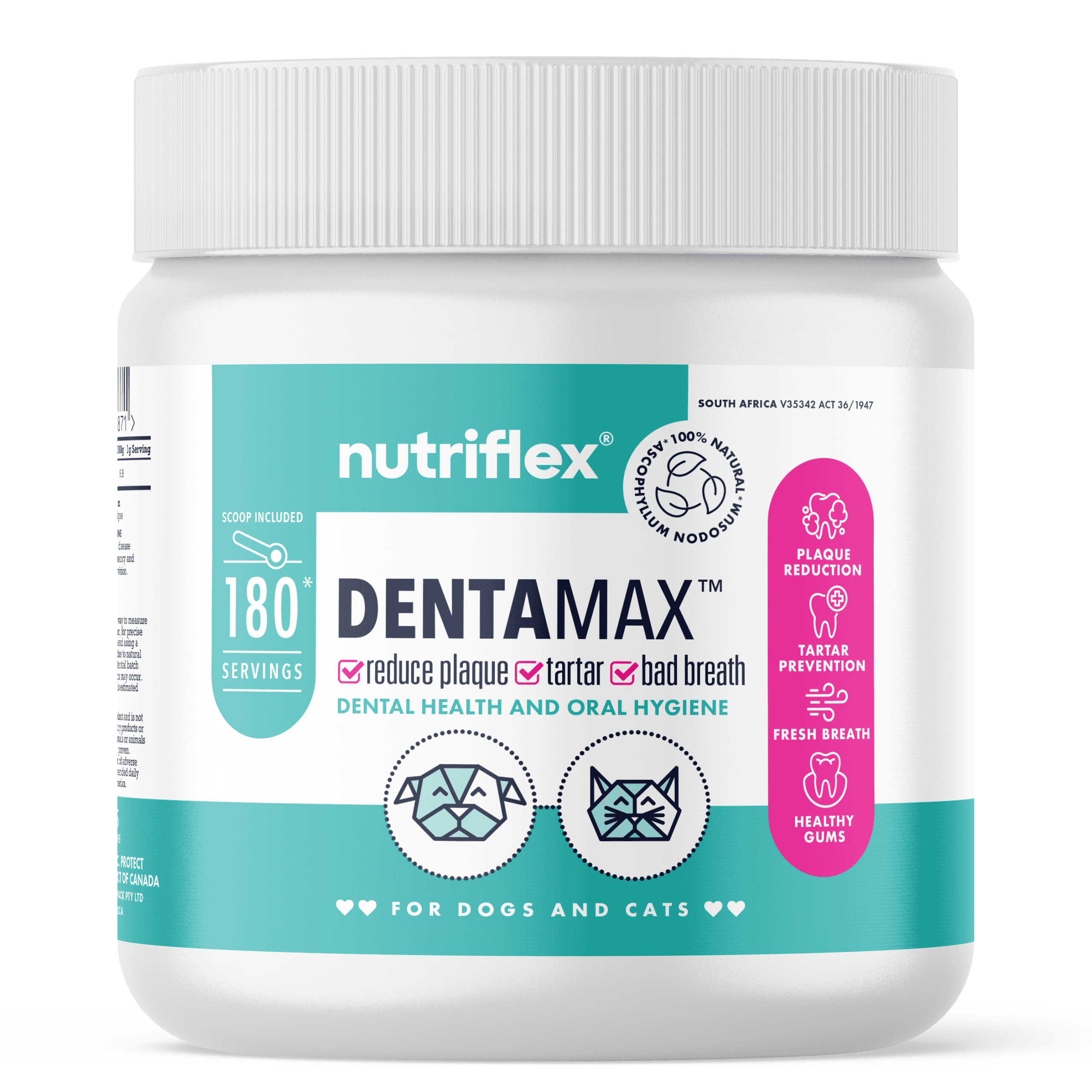
Dental-grade Ascophyllum nodosum is single-species, single-origin and traceable to a specific harvest area and lot. The DentaMax™ supply is wildcrafted from cold North Atlantic waters in line with sustainable harvesting practices. Each batch is certified organic and non-GMO, and arrives with a specific batch number and full certificate of analysis. Feed-grade seaweed often blends harvest sources, lacks consistent species composition and isn’t held to those standards.
Heavy metal and contaminant testing
This is the most important difference for any ingredient your dog or cat eats every day.
Not all kelp is equal. DentaMax™ uses certified organic, certified human-grade Ascophyllum nodosum, selected for daily pet dental care. According to CEVA, the French algae research and technical centre, Ascophyllum nodosum reference data, iodine can range from roughly 357 to 1,772 ppm, while polyphenol content can vary almost 29-fold. That matters when an ingredient is used every day.
DentaMax™ dental-grade kelp is backed by a clean, verified safety profile: inorganic arsenic tested at only 0.1 ppm, twenty times below the 2 ppm specification, while lead, cadmium and mercury tested well below recognised international safety limits. Its microbial profile is exceptional, with total aerobic plate count below 10 cfu/g, Salmonella negative, Staphylococcus aureus absent and E. coli below detection. When microbial counts are extremely low and key pathogens are absent, the result is a cleaner, safer ingredient profile. This is not generic kelp. It is certified organic, certified human-grade, dental-grade seaweed selected by NutriFlex® for safe daily use in dogs and cats.
Standardised active compounds
Iodine control is where formulation discipline shows. Ascophyllum nodosum is naturally iodine-rich, but raw seaweed is not naturally consistent. For a daily-use supplement, that matters. DentaMax™ kelp is selected against a defined iodine specification, rather than treated as a generic bulk seaweed powder. That helps keep each daily serving more predictable from batch to batch, avoiding the wide natural swings that can occur when kelp is not properly standardised. For more on this, see how marine algae interact with plaque bacteria.
Is Kelp Safe for Dogs Every Day?
Yes, when the product is dental-grade, single-ingredient and dosed based on your pet’s weight.
Most dogs do fine on kelp every day. The exceptions worth flagging: dogs with diagnosed thyroid issues (either underactive or overactive), dogs already on thyroid medication and in some cases, pregnant or nursing dogs. If your dog fits any of those, run it past your vet before starting. For healthy dogs, daily use is well tolerated. For more on when kelp suits a dog and when to hold off, see the safety profile of Ascophyllum nodosum in dogs.
How Much Kelp Should a Dog Have Daily?
The product you use sets the dose, not the seaweed itself. A dental-grade powder gives you a measured daily amount based on weight, with iodine and polyphenol content per scoop already calculated and standardised.
With a generic bulk kelp powder, dose-by-weight is much harder to land safely, because the iodine level isn’t fixed. Stick to the manufacturer’s daily scoop. Don’t free-pour. Don’t stack kelp on top of an already kelp-containing dental product.
Can Cats Have Ascophyllum Nodosum Too?
Yes. Ascophyllum nodosum is suitable for cats at a smaller scoop adjusted to body weight. It works through saliva in cats the same way it does in dogs.
Cats are slightly more sensitive to iodine than dogs, so the dose calculation matters more, which is another reason to choose a product standardised for daily use rather than scooping bulk powder. Cats with diagnosed hyperthyroidism should not use kelp without veterinary guidance.
When You’ll See the Difference
Dental changes usually appear between week 4 and week 8 with consistent daily use. You’ll often notice breath first, plaque texture next, then a gradual reduction in tartar build-up.
Coat changes lag behind, typically 6 to 12 weeks, because hair grows on its own clock. Gut and joint effects are subtler and slower. You’re more likely to feel them than measure them, in things like steadier stools or an older dog moving more easily. None of this is overnight. Daily oral and metabolic support doesn’t work that way.
The Short Version
Kelp for dogs is one of those topics where the broad answer (“it’s good for them”) hides almost all of the useful detail. The species matters. The grade matters. The harvest, the testing and the consistency matter more than the front-of-pack claims.
Ascophyllum nodosum is the species that earns its place in a daily routine. Sourced properly and standardised for daily use, it supports dental health first, then quietly contributes to thyroid balance, coat condition, joints, gut and antioxidant defence over time.
For pet owners who want a dental-first powder, DentaMax™ is made with certified organic, certified human-grade Canadian Ascophyllum nodosum from the cold North Atlantic coast. Each batch is traceable, strictly tested and selected for its clean safety profile, controlled iodine level and naturally high levels of dental-relevant compounds, including phlorotannin polyphenols, fucoidans and marine polysaccharides.
DentaMax dental powder is available through nutriflex.co.za and selected retailers across South Africa.