Understanding Tartar on Dog Teeth
Tartar on dog teeth is one of the most common yet overlooked health issues in pets. Many dog owners notice brown or yellow deposits along the gumline and assume it is simply cosmetic. In reality, tartar is a hardened bacterial structure that can eventually lead to gum disease, tooth loss and systemic health problems.
Understanding how tartar forms is the first step toward controlling it naturally.
What Exactly Is Tartar?
Tartar, also known as dental calculus, is hardened plaque that has mineralised on the surface of a tooth.
The process starts with plaque. Plaque is a soft, sticky bacterial biofilm that begins forming on teeth within hours after eating. When plaque remains undisturbed, minerals from saliva gradually harden it into tartar.
Once this mineralisation occurs, the deposit becomes firmly attached to the tooth surface.
At this stage it cannot simply be brushed away.
The Difference Between Plaque and Tartar
Understanding the distinction is critical.
Plaque
-
Soft bacterial film
-
Forms within hours
-
Can be removed with brushing or abrasion
Tartar
-
Hardened mineral deposit
-
Forms when plaque remains untreated
-
Cannot easily be removed without scaling
Natural dental strategies focus primarily on controlling plaque, because preventing plaque accumulation stops tartar from forming in the first place.
Why Tartar Forms So Easily in Dogs
Dogs are highly prone to tartar buildup for several biological reasons.
First, their mouths contain large populations of oral bacteria. These bacteria combine with saliva proteins and food debris to form plaque biofilm.
Second, canine saliva contains minerals that rapidly calcify plaque deposits.
Third, many modern dogs eat soft diets or processed foods that do not provide natural mechanical cleaning.
Within as little as 48–72 hours, untreated plaque can begin mineralising into tartar.
Why Tartar Is a Serious Health Issue
Tartar does more than discolor teeth.
The rough surface acts like a bacterial reservoir. As the deposit grows along the gumline, bacteria begin invading gum tissue, triggering inflammation.
This process leads to periodontal disease.
Consequences may include:
-
Bleeding gums
-
Chronic bad breath
-
Gum recession
-
Loose teeth
-
Tooth loss
-
Bacterial spread through the bloodstream
For this reason, dental health plays an important role in a dog’s overall wellbeing.
Why Small Dogs Often Have Worse Tartar
Small breeds frequently experience more severe dental disease than larger dogs.
Their mouths are smaller, yet they have the same number of teeth. This leads to crowding, which creates tight spaces where plaque accumulates.
Breeds commonly affected include:
-
Yorkshire Terriers
-
Dachshunds
-
Toy Poodles
-
Maltese
-
Chihuahuas
Because plaque accumulates faster in crowded mouths, tartar formation accelerates.
Can Tartar Be Removed Naturally?
Here is the honest answer.
Once tartar has fully hardened, natural methods usually cannot completely remove thick deposits. Professional scaling may be required in severe cases.
However, natural strategies can still play a powerful role by:
-
Slowing tartar formation
-
Reducing plaque buildup
-
Improving gum health
-
Preventing recurrence after cleaning
The goal is not a miracle cure overnight. The goal is daily plaque control.
Brushing Your Dog’s Teeth
Brushing remains the most direct way to remove plaque.
A soft toothbrush physically disrupts the bacterial film before it can mineralise.
Best practices include:
-
Use a dog-safe toothpaste
-
Brush gently along the gumline
-
Aim for daily brushing if possible
Unfortunately, many dogs resist brushing, which is why additional strategies are often used.
Natural Chewing Behaviour
Chewing naturally helps scrape plaque from teeth.
In the wild, chewing on bones, tendons and connective tissue provides mechanical abrasion against tooth surfaces.
This effect can reduce plaque buildup, although it rarely removes hardened tartar.
Safe chewing options may include:
-
Raw meaty bones (appropriate size)
-
Natural chew items
-
Tough connective tissue treats
Hard objects such as cooked bones or antlers can fracture teeth and should be avoided.
Diet and Its Role in Dental Health
Diet has a direct influence on plaque accumulation.
Sticky carbohydrates can fuel bacterial growth in the mouth. These residues adhere to teeth and feed plaque bacteria.
Highly processed foods may also lack natural chewing resistance.
Contrary to common marketing claims, most standard dry kibble does not clean teeth effectively. Kibble typically shatters when bitten, providing minimal tooth contact.
Dental health is influenced far more by daily plaque control habits than by food texture alone.
Supporting the Oral Microbiome
The mouth contains a complex ecosystem of bacteria known as the oral microbiome.
Healthy mouths maintain a balance between beneficial and harmful microorganisms.
Aggressive antiseptic chemicals can disrupt this ecosystem. While they may temporarily reduce bacteria, they can also disturb the natural microbial balance of the mouth.
Gentler approaches that support microbial balance are often preferred for long-term dental care.
Natural Dental Powders for Dogs
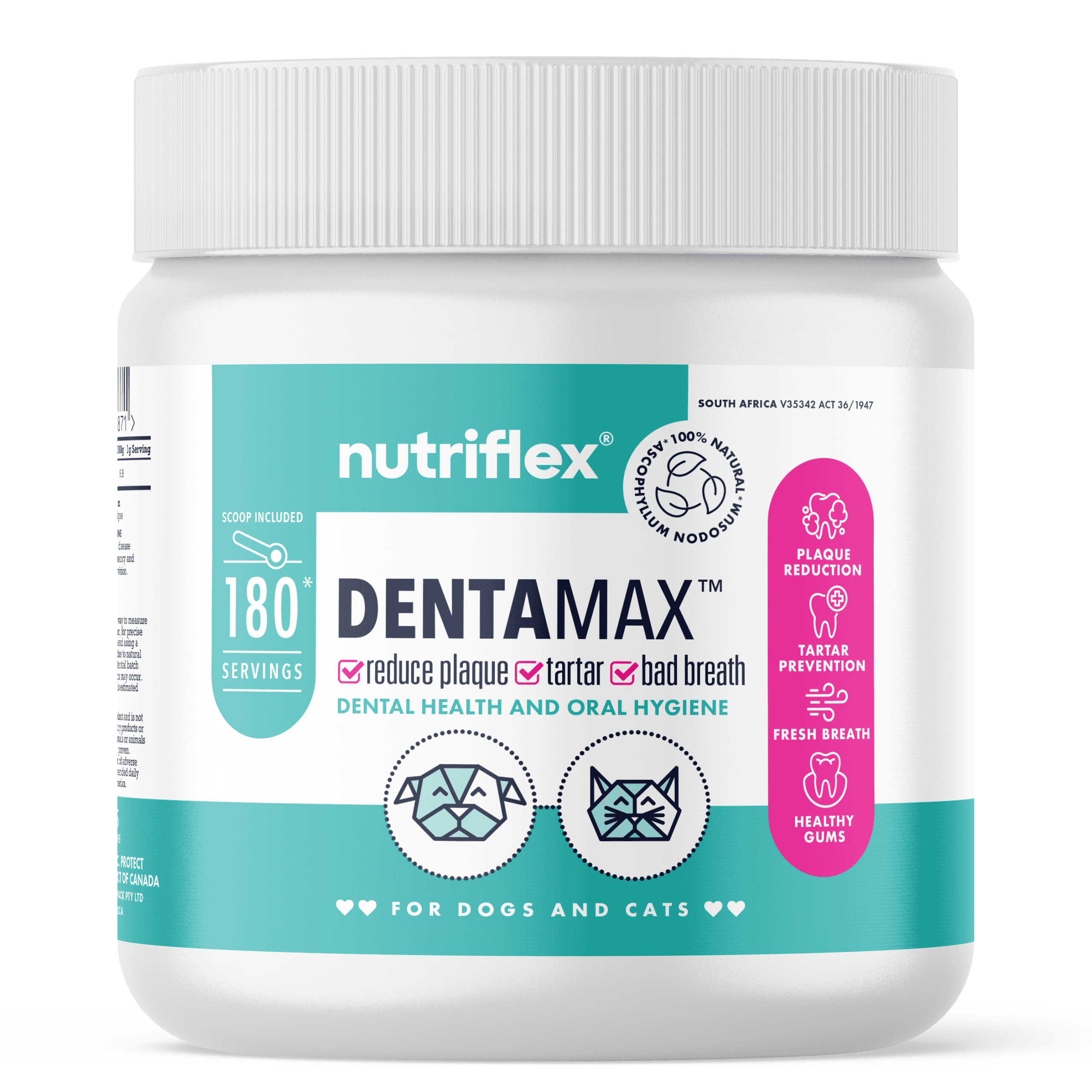
One natural approach gaining popularity is the use of dental powders added to food.
These products typically contain ingredients designed to influence plaque formation through nutritional pathways.
Certain marine algae, particularly Ascophyllum nodosum, have been studied for their ability to influence plaque and tartar accumulation when consumed daily.
Instead of scraping teeth mechanically, these ingredients work systemically through saliva.
Daily supplementation may help:
-
Slow plaque formation
-
Reduce tartar accumulation over time
-
Improve breath
-
Support gum health
Because plaque forms continuously, consistent daily use is essential.
Why Consistency Matters
Dental care is not a once-off event.
Plaque begins forming again within hours after cleaning.
This is why the most successful dental routines combine several strategies:
-
Mechanical cleaning
-
Nutritional support
-
Consistent daily habits
Small daily interventions produce far better results than occasional aggressive cleaning.
Signs That Tartar Is Improving
Owners may notice gradual improvements such as:
-
Less visible plaque
-
Fresher breath
-
Reduced gum redness
-
Slower tartar buildup
These changes often occur gradually over weeks rather than days.
When Professional Dental Cleaning Is Necessary
Severe tartar may require veterinary scaling.
Signs that professional cleaning may be needed include:
-
Thick brown deposits
-
Bleeding gums
-
Loose teeth
-
Persistent bad breath
Veterinary dental procedures typically involve ultrasonic scaling under anaesthesia to safely remove hardened tartar.
Natural strategies remain valuable afterwards to prevent the rapid return of plaque.
Preventing Tartar in the Future
The most effective dental care strategy is prevention.
Daily plaque control dramatically reduces the likelihood of tartar formation.
Key habits include:
-
Regular brushing
-
Safe chewing opportunities
-
Consistent dental supplementation
-
Routine oral checks
Preventing plaque accumulation is far easier than removing hardened tartar.
Final Thoughts
Tartar on dog teeth is extremely common, but it is not inevitable.
Understanding how plaque forms and mineralises allows owners to take practical steps to control the process naturally.
While severe tartar may sometimes require veterinary treatment, consistent daily dental care can dramatically slow its progression.
Simple routines that combine mechanical cleaning, nutritional support and ingredient-driven oral care can help dogs maintain healthier teeth and gums throughout their lives.