Dental disease is one of the most common health problems affecting dogs. By the age of three, most dogs already show signs of periodontal disease. The problem often starts quietly, with a thin layer of plaque forming on the teeth.
Without prevention, this plaque hardens into tartar, irritates the gums, and eventually leads to infection, tooth loss, and pain.
The good news is that dental disease is largely preventable. With the right daily habits and early intervention, most dogs can maintain healthy teeth and gums throughout their lives. One effective way to support your dog’s oral hygiene is by exploring natural remedies for dog dental health. These solutions not only promote healthier teeth but can also be more gentle and enjoyable for your pet. Incorporating regular dental chews or herbal rinses can make a significant difference in your dog’s overall dental care routine.
This guide explains how dental disease develops and the practical steps dog owners can take to prevent it.
What Is Dental Disease in Dogs?
Dental disease in dogs refers to infections and inflammation affecting the teeth and surrounding tissues. The most common form is periodontal disease.
This condition develops when bacteria accumulate on the teeth and along the gumline.
Over time, the infection damages:
-
The gums
-
The ligaments supporting the teeth
-
The jawbone surrounding the teeth
If untreated, the tooth may eventually loosen and fall out.
How Dental Disease Develops
Dental disease does not appear suddenly. It develops through a predictable process.
Step 1: Plaque Formation
After a dog eats, bacteria naturally present in the mouth combine with food particles and saliva. This mixture forms a sticky biofilm called plaque that coats the teeth.
Step 2: Tartar Formation
If plaque is not removed, minerals in saliva harden it into tartar (also called calculus). Unlike plaque, tartar cannot be removed by simple brushing or chewing.
Step 3: Gum Inflammation
Tartar irritates the gums and allows bacteria to accumulate beneath the gumline. This causes gingivitis, which leads to redness, swelling and bleeding gums.
Step 4: Periodontal Disease
As infection progresses, the tissues supporting the teeth begin to break down. This stage can result in severe pain, tooth loss and systemic health risks.
Why Preventing Dental Disease Matters
Dental disease is not only about bad breath or dirty teeth. The condition can affect a dog’s entire body.
Chronic oral infections may allow bacteria to enter the bloodstream. These bacteria can affect major organs such as the heart, liver and kidneys.
Dogs suffering from dental disease may also experience:
-
Chronic pain
-
Difficulty eating
-
Behavioural changes
-
Reduced quality of life
Prevention protects both oral and overall health.
Early Signs of Dental Disease
Dental disease often develops slowly, which makes early signs easy to miss.
Common warning signs include:
-
Persistent bad breath
-
Yellow or brown tartar on teeth
-
Red or swollen gums
-
Sensitivity when chewing
-
Drooling more than usual
Early detection makes prevention much easier.
Which Dogs Are Most at Risk?
Certain dogs are more prone to dental disease than others.
Small Breeds
Small dogs often have crowded teeth, which allows plaque to accumulate more easily.
Older Dogs
Plaque builds up gradually over time, so older dogs tend to have more advanced dental problems.
Dogs Without Regular Oral Care
Dogs that never receive dental care are far more likely to develop periodontal disease.
How To Prevent Dental Disease in Dogs
Preventing dental disease focuses on controlling plaque before it hardens into tartar.
The most effective prevention strategies combine several approaches.
Brush Your Dog’s Teeth Regularly
Tooth brushing is the most direct way to remove plaque.
Using a dog-specific toothbrush and toothpaste helps remove bacteria from the surface of the teeth and along the gumline.
Ideally, dogs’ teeth should be brushed daily. Even brushing several times per week can significantly reduce plaque buildup.
However, brushing is not always easy. Many dogs resist having their mouths handled, and many owners struggle to maintain a consistent routine.
For this reason, additional preventive strategies are often needed.
Control Plaque Bacteria
Plaque is essentially a bacterial biofilm. Preventing dental disease means disrupting this bacterial layer before it hardens into tartar.
Some dental supplements help control the bacteria responsible for plaque formation. By reducing the activity of these bacteria, plaque accumulation can slow down.
This approach targets the root cause of dental disease rather than only treating visible tartar.
Use Dental Powders That Target Plaque
Dental powders are increasingly used as part of preventive oral care for dogs.
These powders are typically mixed into a dog’s daily food and work through the saliva. Certain natural marine ingredients help interfere with the bacteria responsible for plaque formation.
By altering the oral environment, these ingredients make it more difficult for plaque to attach to the teeth.
For dogs that resist brushing, this type of daily supplement can provide consistent plaque control.
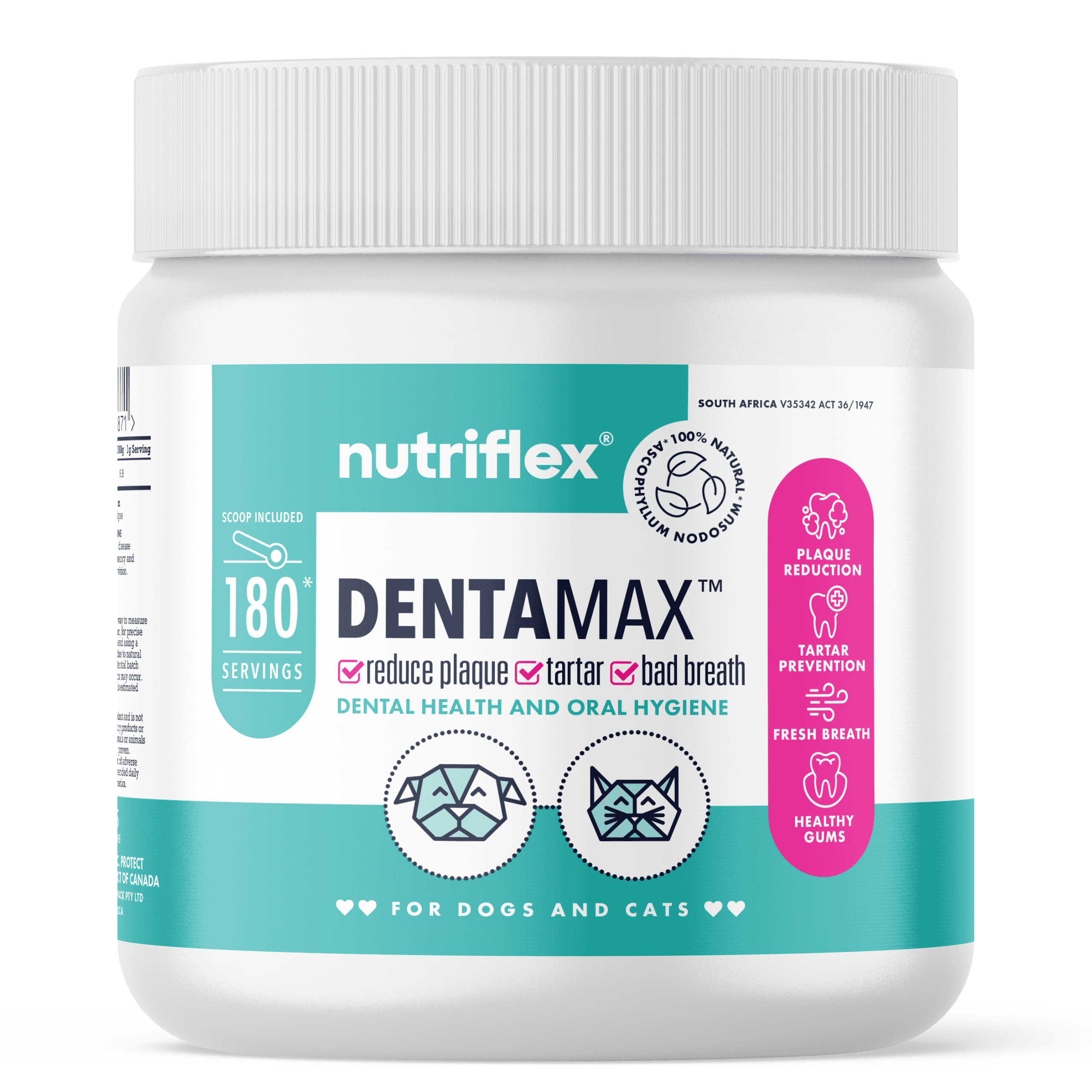
DentaMax dental powder is one example designed specifically to support this process. When added to a dog’s daily meal, it works through saliva to help reduce plaque buildup and support healthier gums over time.
This type of preventative support can complement other oral care strategies.
Encourage Safe Chewing
Chewing can provide a mild mechanical cleaning effect on the teeth.
Certain natural chew items may help scrape soft plaque from the tooth surface while dogs chew.
However, chewing alone is not sufficient to prevent dental disease. Plaque bacteria can still accumulate along the gumline and between teeth.
Chewing should therefore be viewed as a supportive measure rather than a complete dental care solution.
Maintain a Balanced Diet
Diet can influence oral health.
Sticky, carbohydrate-heavy foods may contribute to plaque formation by providing bacteria with additional nutrients.
While diet alone will not prevent dental disease, maintaining a balanced and appropriate diet can support overall oral health.
Schedule Veterinary Dental Check-Ups
Even with good prevention, some dogs may eventually require professional dental cleaning.
Veterinary dental examinations allow problems to be detected early, before serious damage occurs.
Professional scaling removes hardened tartar that cannot be removed at home.
Regular veterinary checks remain an important part of long-term dental care.
A Practical Daily Dental Routine
Preventing dental disease works best when multiple strategies are combined.
A practical routine may include:
-
Regular tooth brushing
-
Daily plaque-control supplements
-
Safe chewing opportunities
-
Periodic veterinary dental checks
Consistency is far more important than occasional intensive cleaning.
How can dental disease in dogs be prevented?
Dental disease in dogs can be prevented by controlling plaque before it hardens into tartar. Effective prevention includes regular tooth brushing, daily plaque-control supplements, safe chewing, and routine veterinary dental check-ups.
What causes dental disease in dogs?
Dental disease in dogs is caused by bacterial plaque that accumulates on the teeth. If plaque is not removed, it hardens into tartar, which irritates the gums and leads to infection and periodontal disease.
At what age do dogs start getting dental disease?
Most dogs begin developing signs of dental disease by the age of three. Plaque buildup gradually hardens into tartar and can lead to gum inflammation and periodontal disease if not controlled.
Do dental powders help prevent plaque in dogs?
Dental powders can help reduce plaque in dogs by interfering with the bacteria that form plaque. When mixed with food, certain marine ingredients work through saliva to slow plaque accumulation on teeth.
Key Takeaways
Dental disease is extremely common in dogs, but it is largely preventable.
The key is controlling plaque before it becomes tartar. Consistent oral care habits, combined with supportive products and veterinary check-ups, can significantly reduce the risk of periodontal disease.
Preventing dental disease does more than protect a dog’s teeth. It helps maintain comfort, health, and quality of life for years to come.