
Why Your Dog’s Bad Breath Is More Than Just “Dog Breath”
Home treatment for dogs bad breath is something thousands of pet owners search for every day, and for good reason. That familiar wave of odour when your dog leans in for a cuddle is one of the most common complaints among pet parents.
Here is a quick overview of the most effective home treatments:
| Home Treatment | What It Does |
|---|---|
| Dental powder (e.g. Ascophyllum nodosum) | Reduces plaque and tartar via saliva |
| Daily tooth brushing | Removes bacteria and plaque at the gum line |
| Dental chews and toys | Scrapes plaque mechanically while chewing |
| Fresh crunchy snacks (carrots, apple) | Acts as a natural toothbrush |
| Herbs like parsley and mint | Freshens breath via natural chlorophyll |
| Probiotics | Supports gut and oral microbiome balance |
| Water additives | Reduces bacteria with every sip |
| Fresh water and clean bowls | Prevents bacterial build-up in the mouth |
But here is the part many owners miss. Bad breath is rarely just a cosmetic issue. Around 80% of dogs have some level of dental disease, and halitosis, the medical term for bad breath, is often the first sign that something is wrong.
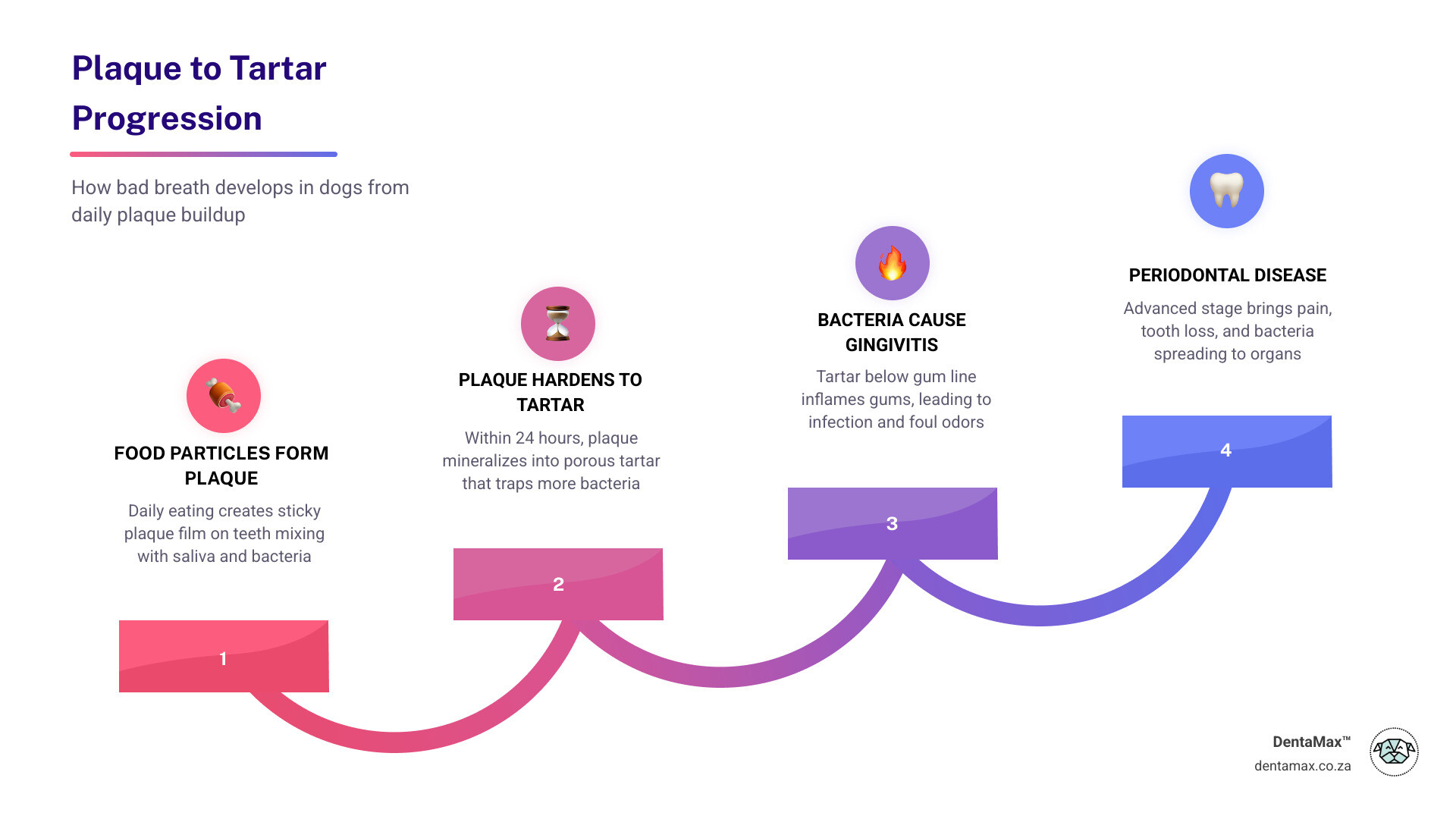
Plaque forms on your dog’s teeth every single day. Left untreated, it hardens into tartar in as little as 24 hours. From there, bacteria thrive beneath the gum line, causing infection, pain and eventually tooth loss. In serious cases, those bacteria can enter the bloodstream and affect the kidneys, liver and heart.
The good news is that most cases of bad dog breath can be meaningfully improved at home with the right routine and products. This guide covers everything you need to know, from natural remedies to brushing technique, dietary changes and when it is time to call the vet.
For more information on dental care for dogs and cats, visit the DentaMax dental care resource centre.
Understanding the Root of the Smell: Common Causes of Halitosis
Before we dive into the home treatment for dogs bad breath, we need to understand why your pup’s mouth smells like a swamp in the first place. Halitosis is almost always caused by a build-up of bacteria. When your dog eats, food particles mix with saliva to form plaque, a sticky film that coats the teeth. If you do not remove this plaque, it reacts with minerals in the saliva and hardens into tartar.
Tartar is the real villain here. It is porous, meaning it provides the perfect “apartment block” for more bacteria to move in and multiply. This leads to gingivitis (inflamed gums) and periodontal disease. As the bacteria thrive, they release foul-smelling sulphur compounds. This is the “stink” you notice during those morning licks.
However, dental hygiene is not the only culprit. Sometimes, the cause is dietary. We have all seen our dogs find “treasures” in the garden or the park, whether it is cat poop (a delicacy to some dogs) or rotting organic matter. This “garbage gut” breath is usually temporary but can be avoided by securing bins and supervising walks.
Other times, the issue might be anatomical. Breeds with deep lip folds, like Spaniels or Bulldogs, can trap moisture and food particles in the skin around their mouths, leading to smelly infections. Similarly, small breeds often have crowded teeth, which makes them more prone to plaque build-up than larger dogs.
Effective home treatment for dogs bad breath
When we talk about the most effective home treatment for dogs bad breath, we are looking for solutions that address the problem at the source: the bacterial biofilm on the teeth. While many people think they have to choose between expensive vet cleanings or a daily wrestling match with a toothbrush, there is a middle ground that is both effective and stress-free.
Clinically supported dental care products, like dental powders, have changed the way we manage pet oral health in South Africa. Instead of just masking the smell with a minty treat, these products work with your dog’s natural biology to stop plaque from sticking in the first place.

One of the most powerful tools in our arsenal is DentaMax dental powder. It is a simple, single-ingredient supplement that you sprinkle onto your dog’s food once a day. It is particularly popular in Cape Town and Johannesburg because it fits easily into a busy lifestyle while providing professional-grade results.
But how exactly does a powder you put on food clean teeth? You can learn more about how DentaMax works here. Essentially, it is absorbed into the bloodstream and secreted back into the saliva, where it works to break down the “glue” that allows plaque to stick to the teeth.
Natural home treatment for dogs bad breath
If you prefer a holistic approach, you will be pleased to know that the best home treatment for dogs bad breath often comes directly from the ocean. The star ingredient in high-quality dental powders is Ascophyllum nodosum, a specific type of organic kelp harvested from cold North Atlantic waters.
This seaweed is not just a bunch of vitamins. It contains unique compounds that have been clinically validated to reduce plaque and tartar. When your dog consumes this kelp, it changes the composition of their saliva, making it much harder for plaque to mineralise into tartar. It also helps soften existing tartar, making it easier to remove through normal chewing or light brushing.
For pet owners who want to avoid chemicals, fillers or artificial flavourings, this is the gold standard. You can find out more about the scientific research on seaweed for dogs and why it is a staple for natural pet care.
To help you decide which route to take, here is a comparison of two popular methods:
| Feature | Dental Powder (Ascophyllum nodosum) | Traditional Tooth Brushing |
|---|---|---|
| Ease of Use | Extremely easy (sprinkle on food) | Difficult (requires training and patience) |
| Time Required | 10 seconds a day | 2 to 5 minutes a day |
| Consistency | High (dog eats every day) | Low (owners often skip days) |
| Reach | Cleans the whole mouth, including gaps | Only cleans where the brush reaches |
| Stress Level | Zero stress for dog and owner | Can be stressful for resistant dogs |
| Natural | 100% natural and organic | Depends on the toothpaste used |
Brushing as a home treatment for dogs bad breath
While we love the ease of dental powders, we cannot deny that brushing is a highly effective home treatment for dogs bad breath if your dog allows it. Brushing provides mechanical action to scrub away plaque before it hardens.
The key to success is the technique. You should never use human toothpaste, as it often contains xylitol, which is toxic to dogs, or fluoride, which can cause stomach upset. Instead, use an enzymatic dog toothpaste in a flavour they love, like chicken or liver.
When brushing, use a soft-bristled dog brush or a finger brush. Start by letting your dog lick the paste off your finger. Gradually move to lifting their lips and rubbing the teeth in a gentle, circular motion. Focus heavily on the gum line, as that is where the most dangerous bacteria hide.
If you are just starting out, do not try to do the whole mouth at once. Spend 30 seconds on one side, give a treat and try the other side tomorrow. For more detailed tips on how to introduce this routine, check out our dog dental powder guides which often include advice on combining methods for the best results.
Natural Remedies and Dietary Adjustments
Beyond powders and brushes, your kitchen holds several secrets for improving your dog’s breath. A balanced diet is the foundation of oral health. While some people believe kibble cleans teeth, most standard kibble is too small and brittle to provide any real scrubbing action. However, certain “crunchy” additions can act as natural toothbrushes.
- Carrots and Apples: Giving your dog bite-sized pieces of raw carrot or apple slices (without seeds) can help scrape away surface plaque. Plus, they are low-calorie and high in fibre.
- Coconut Oil: This is a fantastic home treatment for dogs bad breath. It has natural antibacterial and antifungal properties. You can add a small amount to their food or even use it as a natural toothpaste. It also makes their coat incredibly shiny!
- Fresh Herbs: Parsley and mint are rich in chlorophyll, which is a natural deodoriser. Finely chop a few leaves and sprinkle them over your dog’s dinner to help neutralise odours from the inside out.
- Probiotics: Sometimes bad breath starts in the gut. If your dog has a bacterial imbalance in their digestive tract, it can manifest as smelly breath. Plain, unsweetened yoghurt or a dedicated pet probiotic can help restore balance.
- Activated Charcoal: For dogs that tend to have “stinky” breath regardless of their teeth, activated charcoal can help absorb toxins and gases in the digestive tract. You can learn more about activated charcoal in dog dental powders here.
When to Seek Professional Veterinary Care
While we advocate for home treatment for dogs bad breath, it is vital to know when the problem is bigger than a home remedy can handle. If your dog’s breath smells truly offensive, it might be a “red flag” for an underlying health condition.
Here are the specific smells you should never ignore:
- Ammonia or Urine Smell: This can be a sign of kidney disease. When the kidneys are not filtering waste properly, urea builds up in the blood and can be smelled on the breath.
- Sweet or Fruity Breath: This is often a classic symptom of diabetes. If your dog’s breath smells like pear drops or sugar, see a vet immediately.
- Extremely Foul/Rotten Smell with Yellow Gums: This could indicate liver disease.
- Metallic Smell: This often indicates bleeding gums or an oral injury.
If you notice your dog is pawing at their mouth, dropping food, drooling excessively or has visibly red and bleeding gums, these are signs of advanced periodontal disease. At this stage, a professional veterinary cleaning under anaesthesia is usually necessary to remove the tartar deep under the gum line. Once the vet has cleared the infection, you can resume using DentaMax dental powder to keep the teeth clean and prevent a recurrence.
Frequently Asked Questions about Dog Breath
Dealing with halitosis can be confusing, so we have gathered some of the most common questions we hear from pet owners in Muizenberg, Durban and across South Africa.
Can diet alone fix bad breath?
While a high-quality diet is essential, diet alone is rarely a total fix for bad breath. Many owners think switching from wet food to dry kibble will solve the problem, but most kibble shatters upon contact with the tooth and provides very little cleaning.
However, certain ingredients can make a difference. Some specialised dental diets include sodium hexametaphosphate, which binds to calcium in the saliva to prevent tartar from forming. Combining a good diet with a daily dental powder is the most effective strategy.
Is bad breath normal for older dogs?
Absolutely not! While it is true that older dogs have had more time to accumulate plaque and tartar, “old dog breath” is usually just a sign of untreated dental disease or declining organ function. As dogs age, their immune systems may not fight off oral bacteria as effectively, so they actually need more dental support, not less.
If your senior dog has suddenly developed a new smell, it is worth a check-up to rule out issues with their kidneys or liver. For more on this, visit our frequently asked questions page.
How often should I clean my dog’s teeth?
Ideally, dental care should be a daily habit. Plaque turns into tartar in about 24 to 48 hours, so if you only clean their teeth once a week, you are already fighting a losing battle against hardened tartar.
We recommend a daily routine: sprinkle your dental powder on their breakfast, provide a safe chew toy in the afternoon and, if they allow it, a quick brush in the evening. This multi-layered approach is the best way to ensure long-term health. You can read more about the rise of natural dental care and why consistency matters.
Conclusion
Fixing your dog’s bad breath at home does not have to be a chore. By understanding that halitosis is a health signal rather than just a nuisance, you can take proactive steps to ensure your furry friend lives a longer, more comfortable life.
Whether you choose the mechanical route of brushing, the dietary route of fresh snacks or the scientifically-backed ease of a kelp-based supplement, the most important thing is to start today. In South Africa, we are lucky to have access to premium, natural solutions like DentaMax that make pet health accessible to everyone.
Ready to transform your dog’s breath and protect their smile? Fix your dog’s breath today with DentaMax™ and get back to those stink-free snuggles!