Most dog owners think dental problems are just about bad breath or dirty teeth.
They are not.
A dog’s mouth is one of the most bacteria-dense environments in the body. When plaque builds up, bacteria can damage gums, destroy teeth, and enter the bloodstream, where they may affect the heart, liver, and kidneys.
Understanding how oral bacteria work is the first step in protecting long-term health.
What Are Oral Bacteria in Dogs?
A dog’s mouth naturally contains hundreds of bacterial species. Together, they form the oral microbiome.
Some are harmless. Others become destructive when conditions allow them to multiply.
When food particles, saliva proteins, and minerals collect on the teeth, they form a sticky layer called plaque. This plaque creates an ideal environment for bacteria to grow.
If plaque is not disrupted regularly, harmful bacterial populations begin to dominate.
How Oral Bacteria Develop in Dogs
Oral bacteria follow a predictable process:
- Food particles remain on the teeth after eating
- Saliva proteins form a thin film on the tooth surface
- Bacteria attach to this film and begin multiplying
- The bacteria create a biofilm known as plaque
This process begins quickly. In many dogs, plaque can start forming within hours after a meal.
What Is Plaque on Dog Teeth?
Plaque is a living bacterial colony that sticks to the teeth and gumline.
It is soft, sticky, and almost invisible at first. Inside this film, millions of bacteria multiply and produce toxins that irritate the gums.
If plaque is not removed, it continues to thicken and spread across the tooth surface.
What Happens When Plaque Hardens into Tartar
Plaque does not stay soft forever.
Saliva contains minerals such as calcium and phosphorus. These gradually harden plaque into tartar (dental calculus).
Once tartar forms:
- The surface becomes rough
- More bacteria attach easily
- The gumline becomes chronically inflamed
Unlike plaque, tartar cannot be brushed away easily and often requires professional dental cleaning.
The Most Harmful Oral Bacteria in Dogs
Veterinary dental research has identified several bacterial groups strongly associated with periodontal disease in dogs.
Common culprits include:
- Porphyromonas species – linked to severe gum infections
- Fusobacterium species – associated with foul breath
- Actinomyces bacteria – contributors to plaque formation
These bacteria produce toxins that damage gum tissue and trigger inflammation.
How Oral Bacteria Cause Gum Disease
The earliest stage of dental disease is gingivitis.
This happens when bacterial toxins irritate the gumline.
Typical signs include:
- Red gums
- Swelling
- Bleeding when chewing
- Bad breath
At this stage, the damage is still reversible if plaque is controlled.
If bacteria continue multiplying, the infection spreads deeper.
When Bacteria Cause Periodontal Disease
Periodontal disease develops when bacteria move below the gumline.
They then attack the structures that hold the tooth in place:
- Periodontal ligament
- Surrounding gum tissue
- Supporting jawbone
Over time, this can cause:
- Receding gums
- Loose teeth
- Tooth loss
By the age of three, most dogs already show some signs of periodontal disease.
How Oral Bacteria Enter the Bloodstream
Inflamed gums create tiny openings through which bacteria can enter the bloodstream.
This process is called bacteremia.
Everyday activities such as chewing or eating can release bacteria into the bloodstream when gum tissue is inflamed.
Once circulating, these microbes can reach distant organs.
How Oral Bacteria Affect the Heart
One of the most serious consequences of dental disease is damage to the heart.
Certain oral bacteria can attach to heart valves, leading to bacterial endocarditis.
Over time, this may cause:
- Valve damage
- Impaired blood flow
- Chronic heart disease
Dogs with long-term periodontal disease are at significantly higher risk.
How Oral Bacteria Affect the Kidneys
The kidneys filter toxins and bacteria from the bloodstream.
Chronic oral infections increase the workload on these organs.
Over time, bacterial toxins and inflammatory molecules can contribute to kidney tissue damage, especially in older dogs.
The Link Between Oral Bacteria and the Liver
The liver also helps filter bacteria from the blood.
Persistent bacterial exposure from dental disease may contribute to inflammation in liver tissue.
This is why veterinarians often evaluate dental health when investigating chronic organ disease.
Why Oral Bacteria Cause Bad Breath
Bad breath in dogs is rarely just a cosmetic issue.
Many oral bacteria produce volatile sulphur compounds during protein digestion. These gases smell like:
- Rotten eggs
- Sulphur
- Decaying food
Persistent bad breath is often the first warning sign that bacterial plaque is growing out of control.
Why Small Dogs Often Have Worse Oral Bacteria Problems
Small breeds are especially prone to dental disease.
Reasons include:
- Crowded teeth
- Narrow jaws
- Reduced airflow between teeth
These conditions allow plaque bacteria to accumulate more easily.
Breeds frequently affected include:
- Yorkshire Terriers
- Pomeranians
- Dachshunds
- Toy Poodles
How Diet Influences Oral Bacteria
Diet can influence how quickly plaque bacteria grow.
Factors that increase plaque accumulation include:
- Sticky foods
- Carbohydrate-heavy diets
- Processed ingredients that cling to teeth
These foods provide an ongoing fuel source for plaque bacteria.
Signs Your Dog Has Harmful Oral Bacteria
Early detection can help prevent severe dental disease.
Common warning signs include:
- Persistent bad breath
- Yellow or brown tartar buildup
- Red or swollen gums
- Bleeding gums
- Difficulty chewing
- Loose teeth
When these symptoms appear, bacterial plaque has usually been present for some time.
Veterinary Treatment for Severe Oral Bacterial Infection
When dental disease becomes advanced, professional treatment is necessary.
Veterinary dental procedures may include:
- Ultrasonic scaling to remove tartar
- Polishing tooth surfaces
- Antibiotic therapy for infection
- Extraction of severely damaged teeth
These procedures remove existing bacteria, but prevention remains essential.
How to Prevent Harmful Oral Bacteria in Dogs
The most effective strategy is interrupting plaque formation before bacteria multiply.
Veterinary dental care typically includes:
- Tooth brushing
- Dental chews
- Dental diets
- Oral supplements
However, brushing is not always easy, especially with resistant dogs.
This is why many owners also use daily dental powders designed to disrupt plaque bacteria.
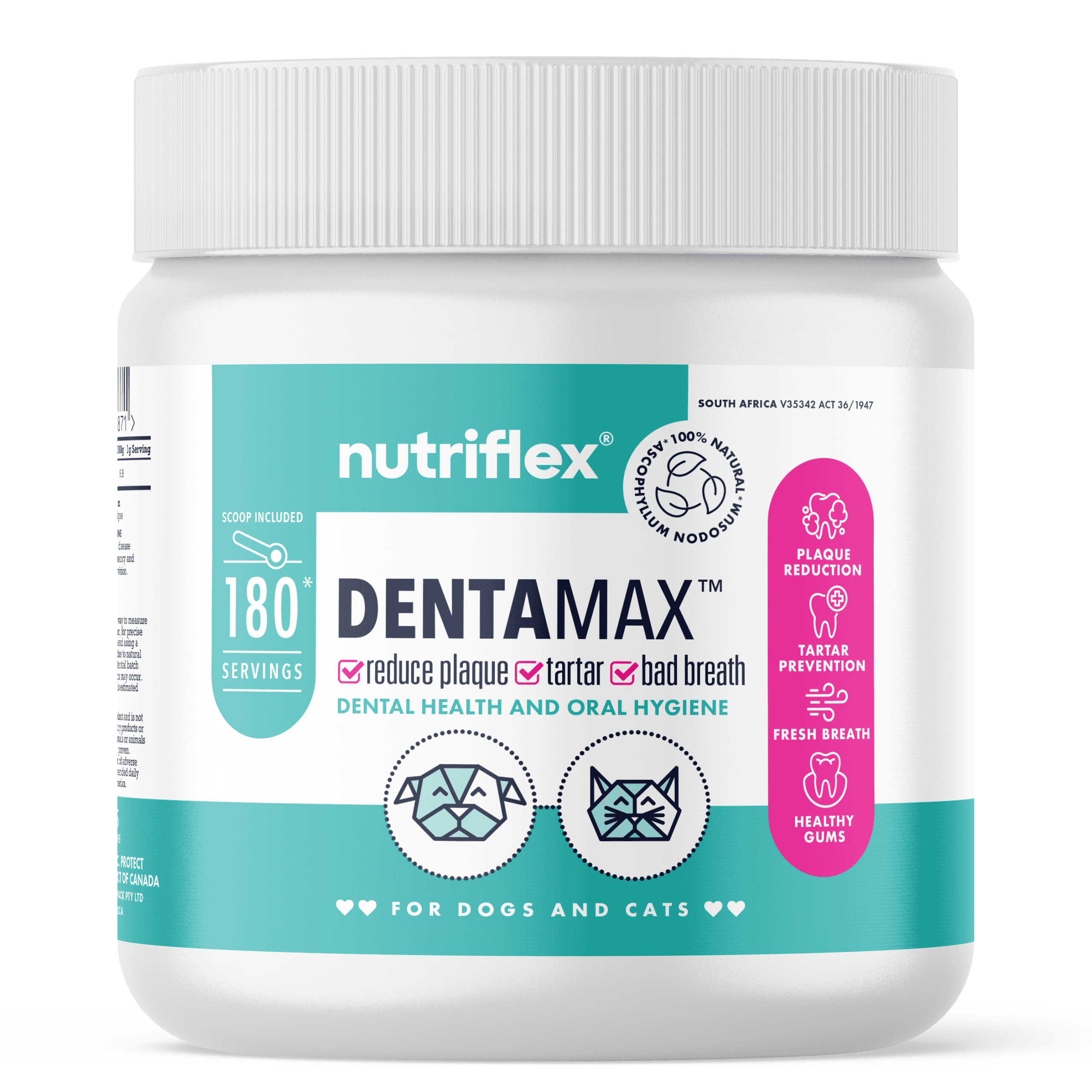
Products such as DentaMax are formulated to help reduce plaque-forming bacteria through natural ingredients that work systemically after digestion, supporting oral hygiene without brushing.
When used consistently, this approach can help maintain healthier gums and reduce bacterial buildup over time.
Why Prevention Matters More Than Treatment
Once periodontal disease becomes advanced, damage to teeth and bone is often permanent.
Preventing bacterial plaque accumulation early:
- Protects teeth and gums
- Reduces systemic infection risk
- Lowers veterinary dental costs
- Improves long-term health
Dental care is not only about a dog’s mouth. It affects the entire body.
Key Takeaways
Oral bacteria are one of the most overlooked health threats in dogs.
What begins as invisible plaque can develop into gum disease, tooth loss, and systemic infections affecting vital organs.
By controlling plaque bacteria early and maintaining consistent dental care, dog owners can protect their pets from one of the most common and preventable diseases in veterinary medicine.
Healthy teeth support more than a clean smile. They support a longer, healthier life.
What do oral bacteria do to dogs?
Oral bacteria form plaque on a dog’s teeth. As plaque builds up, bacteria release toxins that inflame the gums and damage the tissues supporting the teeth. In advanced cases, bacteria can enter the bloodstream and affect organs such as the heart, kidneys, and liver.
Can dental bacteria make dogs sick?
Yes. Dental bacteria can cause periodontal disease, tooth loss, and systemic infections. When bacteria enter the bloodstream through inflamed gums, they may contribute to heart disease, kidney damage, and other health problems.
Why do dogs get so much oral bacteria?
Dogs develop oral bacteria when food particles and saliva form plaque on the teeth. Without regular dental care, this plaque becomes a bacterial biofilm that grows rapidly and eventually hardens into tartar.
Is bad breath in dogs caused by bacteria?
Yes. Most bad breath in dogs is caused by bacteria that produce sulphur-containing gases as they break down food particles and plaque on the teeth.