Diet plays a significant role in your dog’s overall health, but its impact on dental health is often misunderstood.
Many pet owners believe that certain foods can clean a dog’s teeth or prevent dental disease. In reality, diet can influence plaque formation, oral bacteria, and chewing behaviour, but it cannot replace proper dental care.
Understanding how food interacts with your dog’s mouth helps clarify what diet can and cannot do for dental health.
Understanding the Basics of Canine Oral Health
Healthy dog teeth should appear clean and white with firm pink gums surrounding them.
Inside a dog’s mouth lives a complex community of bacteria known as the oral microbiome. These bacteria naturally attach to the tooth surface and begin forming a thin biological layer called plaque.
Plaque formation is a normal biological process that begins shortly after eating.
If plaque is not regularly disrupted or managed, it gradually hardens into tartar.
What Plaque Really Is
Plaque is not simply food debris. It is a structured bacterial biofilm.
This biofilm forms when oral bacteria attach to the tooth surface and begin multiplying. Saliva proteins, bacterial cells, and microscopic food particles combine to create a sticky film that adheres tightly to teeth.
Plaque begins forming within hours after a dog eats.
Without intervention, this biofilm thickens and spreads along the gum line.
How Plaque Turns Into Tartar
Over time, minerals naturally present in saliva begin to deposit into plaque.
This process causes plaque to harden into tartar, also known as calculus.
Tartar forms a rough, porous surface that allows more plaque to accumulate. Once tartar develops, it becomes extremely difficult to remove without professional dental cleaning.
As tartar builds up along the gum line, it can contribute to gum inflammation and periodontal disease.
The Role of Diet in Plaque Formation
Food affects the oral environment in several ways.
Certain foods leave more residue on the teeth, which can provide nutrients for oral bacteria. Carbohydrate-rich foods can also contribute to bacterial activity because many oral bacteria metabolise sugars and starches.
However, plaque formation occurs regardless of diet type.
Even dogs eating raw diets, fresh diets, or grain-free foods still develop plaque.
The difference lies primarily in how food textures interact with the teeth during chewing.
Does Dry Kibble Clean Dog Teeth?
One of the most common beliefs in pet nutrition is that dry kibble helps clean dog teeth.
This idea is widely repeated in marketing materials and pet food advertisements.
In reality, most standard kibble provides little meaningful cleaning effect.
Kibble pieces are typically brittle and designed to shatter easily when bitten. When a dog chews kibble, the pieces usually break apart before the tooth can penetrate deeply enough to create significant friction against the tooth surface.
This means the mechanical cleaning effect is minimal.
Crunching food is not the same as brushing teeth.
Why Most Dry Food Offers Limited Dental Benefits
For a food to meaningfully clean teeth, it must maintain structural integrity long enough for the tooth to penetrate it.
Standard kibble is designed for palatability and digestibility, not for dental abrasion.
Because most kibble fragments instantly when bitten, the tooth spends very little time in contact with the food surface.
As a result, plaque remains largely undisturbed.
This is why dogs fed exclusively on dry food still commonly develop plaque and tartar accumulation.
Wet Food and Plaque Formation
Wet food provides virtually no mechanical abrasion during eating.
Soft food is swallowed quickly and does not interact with the tooth surface in a way that could disrupt plaque biofilm.
However, this does not necessarily mean wet food directly causes dental disease.
Plaque forms naturally in all dogs regardless of diet type.
The key difference is that wet food does not offer any mechanical resistance during chewing.
Raw Diets and Dental Health
Raw feeding advocates often suggest that raw diets improve dental health.
Some benefits may occur when dogs chew raw bones or fibrous meat pieces, which can provide mechanical abrasion against the teeth.
Chewing large pieces of food encourages natural gnawing behaviour that may help reduce plaque accumulation.
However, diet alone still does not prevent plaque formation entirely.
Even dogs on raw diets can develop tartar and periodontal disease if plaque is not consistently managed.
The Role of Chewing in Dental Health
Chewing is one of the few natural behaviours that can help disrupt plaque.
When a dog gnaws on firm objects or fibrous foods, friction is created against the tooth surface.
This friction may help reduce plaque build-up in certain areas.
However, chewing is unpredictable and uneven.
Many teeth, particularly those near the back of the mouth, receive little mechanical cleaning during chewing.
Nutritional Factors That Influence Oral Health
Diet composition can influence the oral environment.
Protein-rich diets may produce fewer fermentable residues compared to carbohydrate-heavy diets.
Minerals present in saliva also play a role in tartar formation. Calcium and phosphorus naturally contribute to plaque mineralisation.
Saliva production itself can also be influenced by diet and chewing behaviour.
However, none of these factors completely prevent plaque formation.
Foods That May Worsen Dental Problems
Certain foods may contribute to faster plaque accumulation.
Sticky treats can cling to tooth surfaces and remain in the mouth longer.
Highly processed snacks often contain starches that oral bacteria can readily metabolise.
Frequent treat feeding can also increase the number of times plaque begins forming throughout the day.
Why Diet Alone Cannot Prevent Dental Disease
Dental disease is driven primarily by bacterial biofilm formation.
Because plaque begins forming within hours, food alone cannot prevent it.
Even the healthiest diet cannot eliminate oral bacteria.
This is why most dogs begin showing signs of dental disease by around three years of age.
Without active plaque management, tartar accumulation is extremely common.
The Importance of Daily Dental Support
Effective dental care focuses on disrupting plaque before it mineralises.
Daily strategies are far more effective than occasional cleaning.
These may include tooth brushing, dental chews, or supplements designed to support oral health.
Consistency is the most important factor.
Plaque management must occur regularly to prevent long-term accumulation.
Nutritional Dental Supplements for Dogs
In recent years, nutritional dental supplements have gained popularity.
These supplements are typically added to food and work through ingestion rather than mechanical abrasion.
Certain natural ingredients can influence the oral environment and bacterial biofilm.
This approach focuses on supporting oral health internally rather than relying solely on physical cleaning.
Seaweed-Based Dental Powders
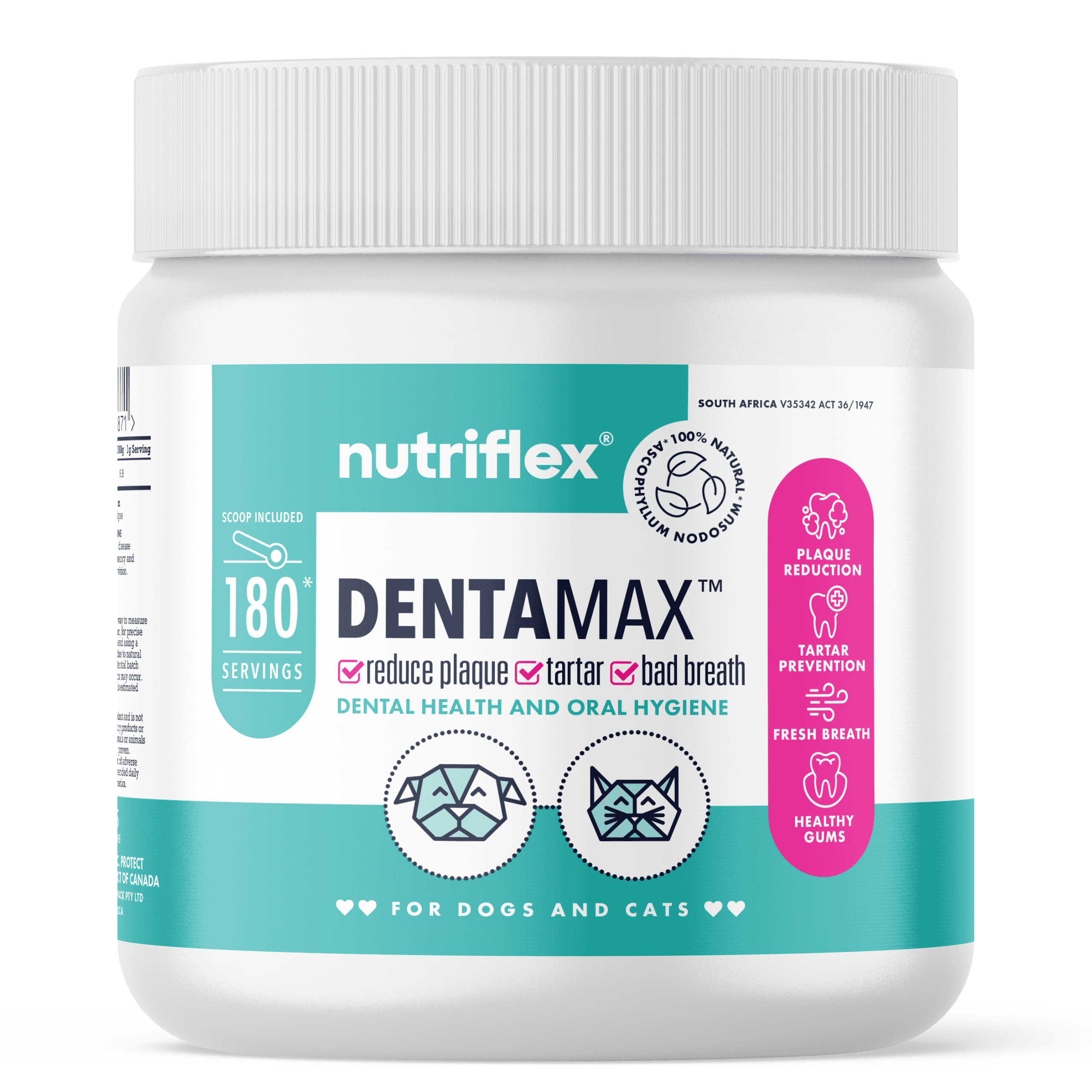
One ingredient that has attracted attention in veterinary dentistry is Ascophyllum nodosum, a North Atlantic brown seaweed.
Specific preparations of this marine algae contain bioactive compounds including polyphenols, phlorotannins, and trace minerals.
When consumed daily, these compounds appear to influence the oral environment in ways that may help reduce plaque accumulation and support gum health.
Seaweed-based dental powders are typically sprinkled onto food as part of a daily feeding routine.
Building a Diet That Supports Dental Health
A balanced diet supports overall health, but dental care requires additional strategies.
Good dental care often combines several elements:
• Appropriate nutrition
• Natural chewing opportunities
• Daily plaque management
• Regular veterinary dental assessments
No single method provides complete protection.
Instead, long-term dental health depends on consistent daily care.
Signs That Diet May Be Affecting Your Dog’s Teeth
Certain symptoms may indicate that dental health is deteriorating.
Persistent bad breath is often one of the earliest signs of plaque build-up.
Visible yellow or brown deposits along the gum line may indicate tartar formation.
Red or swollen gums may suggest gingivitis.
Early recognition allows owners to intervene before periodontal disease progresses.
Supporting Lifelong Dental Health
Dental disease is one of the most common yet preventable health conditions in dogs.
Diet influences the oral environment, but it cannot replace proper dental care.
Understanding the limits of food-based dental cleaning helps pet owners focus on strategies that actually work.
Consistent daily plaque management, combined with supportive nutrition, remains the most effective approach to maintaining healthy teeth and gums throughout a dog’s life.