Ascophyllum nodosum is not just “seaweed.”
It is a specific species of North Atlantic brown marine algae that has been clinically studied for its ability to help manage plaque, tartar and gum health in dogs.
Unlike mechanical dental products that attempt to scrape plaque off the teeth, Ascophyllum nodosum works systemically. After ingestion, bioactive compounds circulate through the body and are secreted into saliva, where they influence the oral environment.
Understanding the ingredient itself, not just the finished product, is essential when evaluating dental powders for dogs and cats.
Employing ingredient composition analysis techniques enables pet owners to make informed decisions based on the nutritional value and safety of dental powders. By examining the specific components, one can assess how these ingredients contribute to overall dental health.
This thorough understanding can significantly impact the effectiveness of the products used for canine and feline dental care. When considering chlorhexidine side effects in pets, it is essential to consult with a veterinarian for guidance tailored to your specific animal. Understanding these potential side effects can help pet owners make informed decisions about their pets’ health and wellness. Additionally, monitoring any reactions after using products containing chlorhexidine can aid in ensuring the safety and comfort of your furry companions.
What Is Ascophyllum Nodosum?
Ascophyllum nodosum is a brown marine algae harvested from cold North Atlantic coastal waters.
It grows attached to rocky shorelines in regions including:
-
Norway
-
Iceland
-
Canada
-
Northern Scotland
The seaweed has been used for decades in agriculture, animal nutrition and human food products due to its rich concentration of naturally occurring marine compounds.
These include:
-
polyphenols
-
phlorotannins
-
trace minerals
-
bioactive marine polysaccharides
When processed correctly and used in controlled quantities, these compounds can influence oral health through systemic biological pathways.
Not all kelp species have the same composition.
Ascophyllum nodosum is distinct from generic kelp powders commonly used in animal feeds.
Oral Biofilm: The First Stage of Dental Disease
Dental disease in dogs begins with the formation of plaque, a complex bacterial biofilm that forms on the tooth surface.
Biofilm is not simply “dirt on teeth.” It is a structured microbial community embedded in a protective matrix.
Within hours after eating:
-
Saliva coats the tooth surface
-
Early bacteria attach to this film
-
Additional bacterial species join the colony
-
A mature plaque biofilm develops
If this plaque is not disrupted, minerals present in saliva cause it to harden into tartar (calculus).
This rough mineral layer allows additional bacteria to accumulate, eventually triggering:
-
gingivitis (gum inflammation)
-
periodontal disease
-
gum recession
-
chronic bad breath
You can learn more about this process in our guide to
<a href=”https://dentamax.co.za/plaque-and-tartar-dogs-cats/”>plaque and tartar formation in dogs and cats</a>.
Because plaque formation occurs continuously, effective dental care requires consistent daily management.
How Ascophyllum Nodosum Influences Plaque
Plaque begins as an oral biofilm, a structured bacterial community adhering to the tooth surface.
If unmanaged, it mineralises into tartar (calculus).
Clinical studies conducted on specific preparations of Ascophyllum nodosum have shown that daily intake may:
-
Reduce plaque accumulation
-
Limit tartar formation
-
Reduce gingival bleeding
-
Improve breath freshness
These effects occur because the ingredient works systemically rather than mechanically.
After digestion, bioactive compounds from the seaweed are absorbed into the bloodstream and eventually secreted into saliva.
Saliva constantly bathes the teeth and gum margins. By influencing the chemistry of this oral environment, plaque bacteria find it more difficult to adhere and mineralise.
This process affects plaque formation before tartar develops, rather than attempting to scrape hardened deposits off the tooth surface.
For a deeper explanation of this mechanism, read our guide on how systemic dental powders work.
Systemic vs Mechanical Plaque Control
Most traditional dental products rely on mechanical abrasion.
Examples include:
-
tooth brushing
-
dental chews
-
abrasive treats
-
dental toys
These methods attempt to remove plaque by physically scraping it off the tooth surface.
While brushing can be effective, daily brushing is difficult for many pet owners and often poorly tolerated by dogs and cats.
Systemic ingredients such as Ascophyllum nodosum work differently.
Instead of physically removing plaque, they influence:
-
bacterial adhesion
-
plaque mineralisation
-
oral microbial balance
Because the effect occurs through saliva, the ingredient reaches areas that mechanical products often miss, including the gumline and interdental spaces.
Clinical Evidence
Controlled veterinary trials using specific preparations of Ascophyllum nodosum have reported measurable improvements in oral health indicators.
Results observed in these studies include:
-
up to 32% reduction in plaque accumulation
-
up to 35% reduction in tartar formation
-
up to 67% reduction in gingival bleeding
These outcomes were observed when the ingredient was administered daily over several weeks.
An important distinction must be made:
The research applies to specific ingredient preparations, not arbitrary seaweed blends.
Ingredient identity determines outcome.
How Long Does Ascophyllum Nodosum Take to Work?
Because Ascophyllum nodosum works systemically, improvements occur gradually rather than immediately.
Typical observations reported in studies and clinical use include:
-
2–3 weeks: improvement in breath freshness
-
4–6 weeks: visible reduction in plaque accumulation
-
6–8 weeks: slower tartar buildup and improved gum health
Consistency is critical.
Daily administration allows bioactive compounds to maintain a stable presence in saliva, where they influence plaque formation over time.
Does It Remove Existing Tartar?
When used consistently, clinically studied Ascophyllum nodosum has been shown to soften existing tartar and gradually reduce accumulation over time.
However, thick, fully mineralised calculus may still require professional cleaning to restore a clean baseline.
The ingredient is most effective for:
-
preventing new plaque formation
-
slowing tartar accumulation
-
maintaining oral health after dental cleaning
Why Source Matters
“Seaweed” is not a regulated or standardised ingredient category.
Ascophyllum nodosum used in dental research typically comes from carefully controlled sources and is:
-
Wild-harvested
-
Sustainably sourced
-
Carefully processed to preserve bioactive compounds
Generic kelp powders sold for animal feeds are not equivalent to clinically studied preparations.
Factors that influence efficacy include:
-
species identification
-
harvesting region
-
drying method
-
compound preservation during processing
When evaluating dental powders, it is essential to verify the specific ingredient used, not simply the presence of “kelp” on the label.
Iodine Content and Thyroid Safety
Like many marine plants, Ascophyllum nodosum naturally contains iodine.
Iodine is an essential trace mineral involved in thyroid hormone regulation. However, excessive iodine intake can affect thyroid function if consumed in extremely large quantities.
For this reason, responsible formulations use carefully controlled inclusion levels that remain within safe nutritional ranges for dogs and cats.
When used as directed in veterinary dental supplements, Ascophyllum nodosum has demonstrated a strong safety profile.
Pet owners concerned about thyroid health should consult their veterinarian before introducing any supplement.
Why Dental Powders Use Ascophyllum Nodosum
Dental powders provide a practical delivery method for systemic oral health ingredients.
Unlike dental chews or brushing, powders:
-
require no mechanical action
-
mix easily with food
-
provide consistent daily dosing
-
work through normal digestive processes
Because the active compounds are absorbed and secreted into saliva, daily ingestion ensures continuous exposure of the teeth and gums to the ingredient’s effects.
This makes powders particularly suitable for long-term preventative dental care.
How This Relates to DentaMax
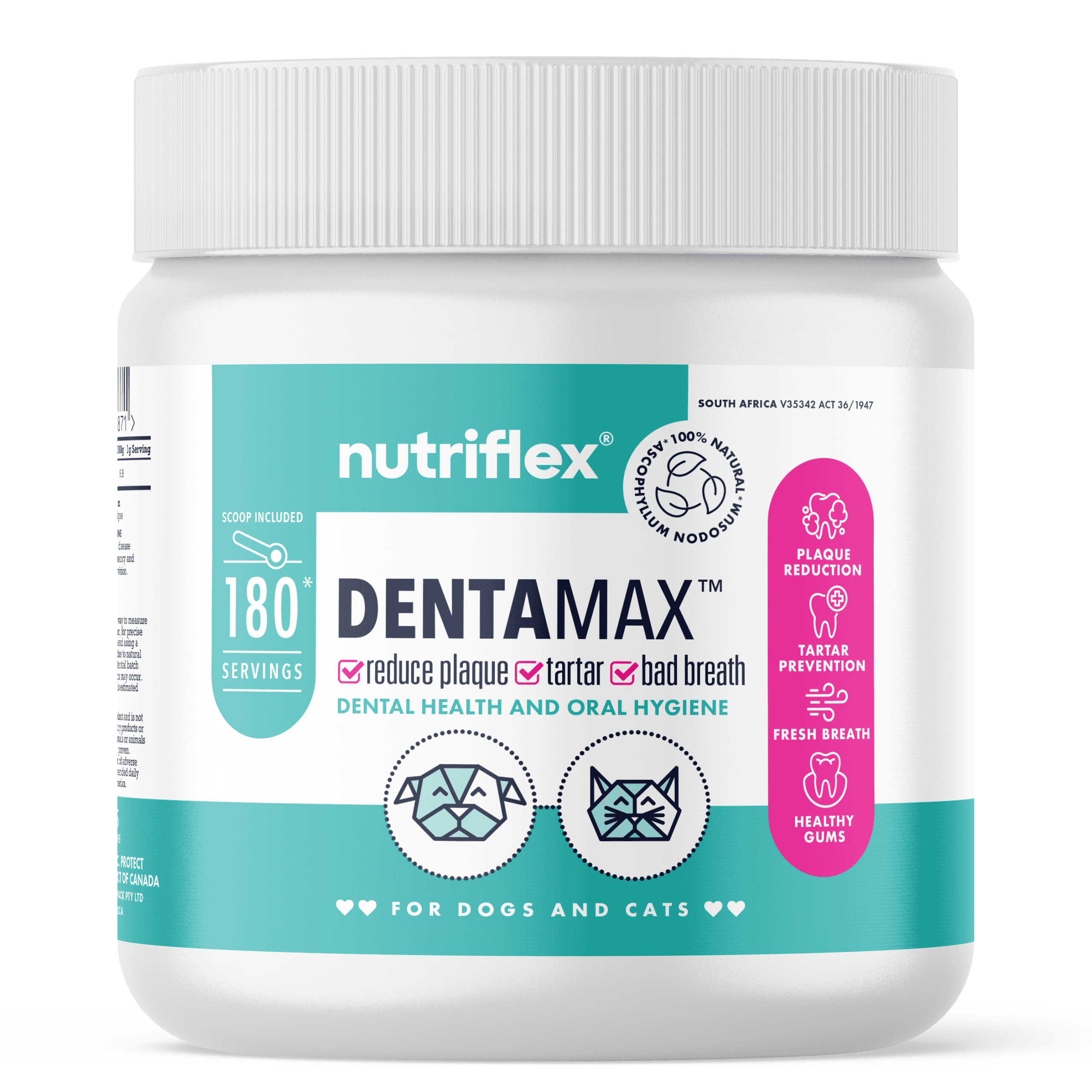
DentaMax™ Dog & Cat Dental Powder is formulated with clinically studied Ascophyllum nodosum as its core active ingredient.
The formulation focuses on a simple, targeted approach to systemic plaque management rather than complex blends of additives.
You can view the full product details here: DentaMax™ Dog & Cat Dental Powder
Understanding the ingredient provides context for how systemic dental powders work and why formulation simplicity can matter.
Understanding the ingredient itself provides important context for how systemic dental powders function and why formulation clarity matters.
Frequently Asked Questions
Is Ascophyllum nodosum safe for dogs?
Clinically studied preparations have demonstrated safety when used as directed.
Is all kelp the same?
No. Different species of seaweed vary significantly in composition. Ascophyllum nodosum is a specific species studied for dental applications.
Does it help with bad breath?
Yes. Improvements in breath freshness have been observed in studies evaluating plaque reduction and gingival health. For more information see our guide on dog bad breath causes and prevention.
Is it suitable for cats?
When appropriately formulated, Ascophyllum nodosum can be used in both dogs and cats.
The Bottom Line
Ascophyllum nodosum is a clinically studied marine ingredient that helps manage plaque, tartar and bad breath in dogs.
It works from within. After digestion, it influences the oral environment through saliva rather than relying on scraping the surface of the teeth.
When choosing a dental powder, focus on the active ingredient, whether it has been clinically studied, and whether it is suitable for consistent daily use, unlike powders with added activated charcoal.