Your Dog’s Teeth Are in Trouble, and Brushing Is Not the Only Answer
No brushing dog dental care is a real and effective approach, not just a shortcut. If your dog won’t sit still for a toothbrush, or you simply cannot fit it into your day, there are proven alternatives that can protect their teeth and gums.
The best no-brushing dog dental options include:
- Dental powders (sprinkled over food daily, often kelp-based)
- Water additives (added to the drinking bowl)
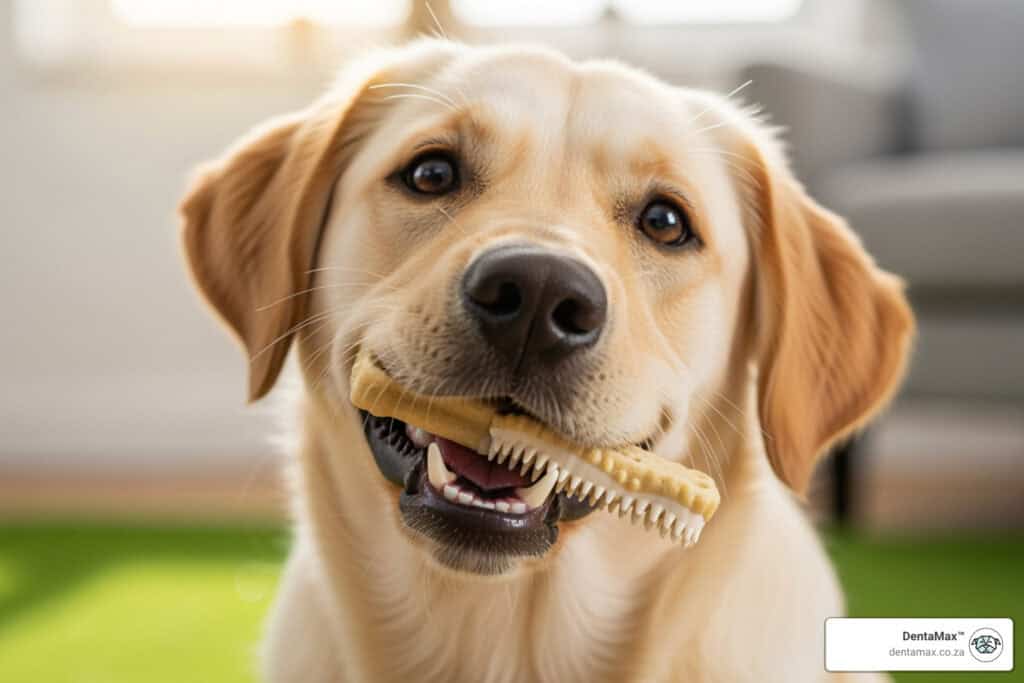
- Dental chews and treats (VOHC-approved options available)
- Dental gels and sprays (applied directly to teeth or gums)
- Dental toys (support mechanical plaque removal through chewing)
These products vary in effectiveness. Dental powders and water additives tend to suit busy owners best because they fit into existing routines with no extra effort.
Here is a quick comparison to help you decide:
| Product Type | Ease of Use | Plaque Control | Best For |
|---|---|---|---|
| Dental powder | Very easy | Good | Daily mealtime routine |
| Water additive | Very easy | Moderate | Multi-dog households |
| Dental chews | Easy | Moderate | Food-motivated dogs |
| Dental gel/spray | Moderate | Good | Targeted application |
| Dental toys | Easy | Mild | Active chewers |
Now here is the sobering reality. Up to 80% of dogs develop dental problems before they turn three years old. Gum disease is five times more common in dogs than in humans, largely because most dogs never have their teeth brushed at all. Plaque can harden into tartar in as little as 24 to 48 hours, and once that happens, no at-home product can remove it without a professional cleaning.
Imagine never brushing your own teeth. That is the everyday reality for most dogs.
The good news is that no-brushing dental products, used consistently, can meaningfully slow plaque and tartar build-up and reduce the risk of serious dental disease. This guide covers the best options available, what to look for and how to make them work for your dog’s specific needs.
Why No Brushing Dog Dental Care is Essential for Your Pet
As pet owners in South Africa, we often focus on nutrition, exercise and vaccinations, yet oral hygiene is frequently overlooked. The statistics are startling. Over 80% of dogs suffer from some stage of gum disease by the time they reach their third birthday. This is not just about bad breath. It is a significant health crisis that can shorten your dog’s life.
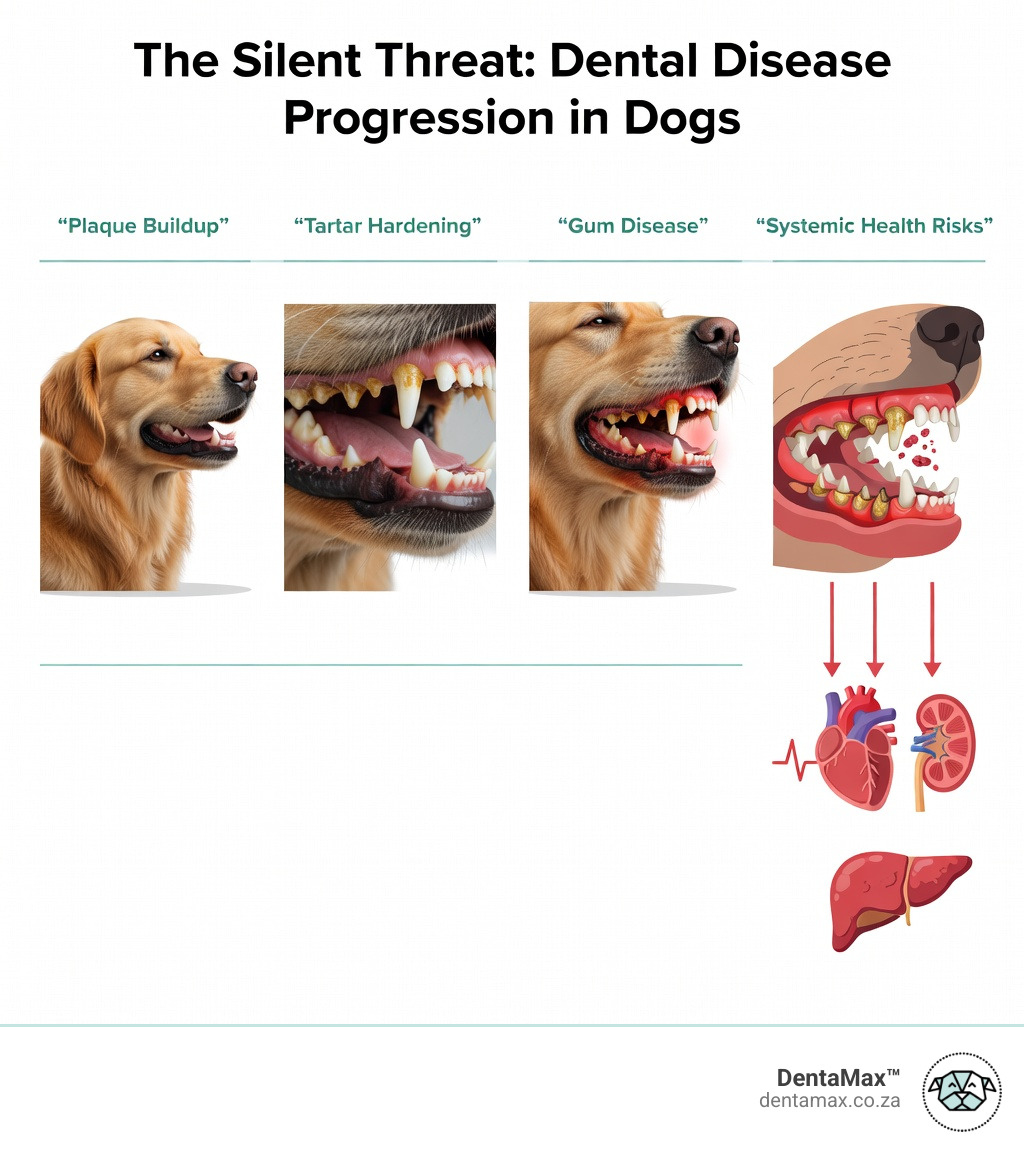
The primary culprit is a bacterial biofilm known as plaque. Because a dog’s mouth is more alkaline than a human’s, plaque forms five times faster. When plaque remains on the teeth, it reacts with minerals in the saliva and hardens into tartar, also known as calculus. This process happens rapidly, often within 24 to 48 hours. Once tartar has formed, it creates a rough surface that allows even more plaque to stick, leading to a vicious cycle of decay.

Untreated dental disease leads to periodontitis, where bacteria manipulate the dog’s immune system to attack its own gum tissue. This causes chronic pain, eroded gums and bone loss. However, the risks extend far beyond the mouth. When the gums are inflamed and bleeding, bacteria can enter the bloodstream. This systemic spread can lead to serious damage in vital organs, including the heart, kidneys and liver.
In South Africa, where veterinary costs for professional cleanings under general anaesthesia can be significant, preventive care is the most responsible choice. Organisations like the VOHC.org provide a seal of acceptance for products that are clinically proven to reduce plaque and tartar. By implementing a no brushing dog dental routine, we can manage these risks without the daily struggle of a toothbrush.
Top No-Brushing Solutions for Plaque and Tartar Control
For the busy owner, the most effective dental solution is one that requires the least amount of “buy-in” from a reluctant dog. While we acknowledge that traditional brushing with a fingertip brush is the gold standard, it is simply not practical for every household.
Effective no-brushing solutions work through either mechanical action or systemic chemistry. Mechanical options, such as dental toys or dental treats, rely on the dog’s chewing to scrape away soft plaque. Systemic options, like water additives and dental powders, work from the inside out.
The Benefits of a No Brushing Dog Dental Powder
Dental powders have emerged as a favourite for South African pet parents in Cape Town, Johannesburg and beyond. Unlike gels that require manual application or treats that add extra calories to the diet, a high-quality powder is simply added to the daily meal.
Our DentaMax™ dental powder is a prime example of this “set and forget” efficiency. It is a single-ingredient product made from Ascophyllum nodosum, a specific type of North Atlantic kelp. This kelp contains natural compounds that are absorbed into the dog’s bloodstream and then secreted back into the mouth via the saliva.
This systemic action is what makes it so powerful. It works on every tooth surface, even the hard-to-reach back molars and the lingual surfaces that brushes often miss. The compounds in the kelp help to soften existing tartar and prevent new plaque from sticking. Because DentaMax™ contains no chemicals, fillers or artificial flavours, it is a clean and natural way to support oral hygiene. You can learn more about how this works on our How Does Dentamax Work? page.
Using a Dentamax Dental Powder is particularly beneficial for dogs that are food-motivated. They simply eat their dinner as usual while the powder goes to work. For many, this is a far more sustainable routine than attempting to use a manual dental kit on a pet that hates having its mouth touched.
Integrating No Brushing Dog Dental Routines into Daily Life
The secret to success with no brushing dog dental care is consistency. Because plaque forms every single day, the preventive measures must also be daily. Here is how we recommend integrating these steps into your routine:
- The Morning Meal: Add a scoop of Dog & Cat Dental Powder South Africa to your dog’s breakfast. For dry kibble, a tiny splash of water or salmon oil can help the powder adhere to the biscuits.
- Fresh Water: If you use dental water additives, ensure you follow the dosage instructions on the bottle every time you refill the bowl. This is excellent for multi-pet households where everyone shares the same water source.
- Afternoon Enrichment: Provide a VOHC-approved dental chew. This provides a mechanical “scrub” to complement the systemic action of the powder.
- Monitoring: Once a week, lift your dog’s lips to check for redness or new buildup. Fresh breath is often the first sign that your new routine is working.
For more detailed guidance, we have compiled Dog & Cat Dental Powder Guides to help you optimise your pet’s oral health journey.
How to Choose the Right Products for Your Dog
Not all dogs have the same dental needs. Factors such as breed, age and diet play a massive role in how quickly dental disease progresses.
Breed Predispositions Small and toy breeds, such as Yorkies, Chihuahuas and Dachshunds, are at much higher risk for dental issues. Their teeth are often crowded into small mouths, creating perfect hiding spots for plaque. Greyhounds are another breed notoriously prone to early-onset periodontal disease. If you own one of these breeds, a multi-modal approach combining DentaMax™ with other solutions is vital.
Diet Influence Dogs fed exclusively on wet food tend to accumulate plaque faster because there is zero mechanical abrasion during eating. While dry kibble is better, standard kibble often shatters too quickly to provide real cleaning. Specialised dental diets are designed with a specific texture that “hugs” the tooth as the dog bites down.
Safety and Efficacy When shopping for no brushing dog dental products, always look for the VOHC seal. This ensures the product has been independently tested and proven to reduce plaque or tartar by at least 20%. Avoid extra-hard chews like antlers or real bones, as these can lead to painful tooth fractures.
Cost-effectiveness is also a major consideration. While a bottle of dental powder might seem like an investment, it is significantly more affordable than a R5,000 to R10,000 veterinary dental procedure involving extractions and anaesthesia.
When to Seek Professional Veterinary Care
While at-home preventive care is essential, it is not a replacement for professional intervention when disease is already present. No amount of powder or chewing can “cure” an infected tooth or reverse advanced periodontitis.
We must be vigilant for signs of VCA Canada, Dental Pain in Dogs. Dogs are experts at hiding pain, often continuing to eat even with severe oral infections. Watch for these red flags:
- Extremely bad breath (halitosis) that doesn’t improve with home care.
- Red, swollen or bleeding gums.
- Loose or missing teeth.
- Excessive drooling or blood in the water bowl.
- Pawing at the mouth or face.
- Dropping food or hesitating to eat hard kibble.
If you notice these signs, a trip to your local vet in Muizenberg, Durban or your nearest clinic is necessary. A professional dental cleaning is a thorough procedure. It requires general anaesthesia to allow the vet to clean below the gumline, where the most damaging bacteria hide. According to the AVMA.org, non-anaesthetic “cosmetic” cleanings are ineffective and can be stressful or even dangerous for the pet, as they cannot address the disease lurking beneath the surface.
Once your vet has performed a “prophy” (professional cleaning and polishing), you have a clean slate. This is the perfect time to start a no brushing dog dental regimen to maintain those pearly whites and extend the time between professional visits.
Frequently Asked Questions about Brushless Dental Care
Can no-brushing products completely replace traditional brushing?
In a perfect world, daily brushing is the best way to manage oral health. However, for many owners and dogs, it is simply not an option. High-quality no-brushing products, particularly those with systemic action like DentaMax™, can be a highly effective alternative. While they might not be a 100% replacement for the mechanical action of a brush, they are infinitely better than doing nothing at all. For most dogs, a combination of dental powder and occasional dental chews provides excellent protection.
How long does it take to see results with dental powders?
Patience is key. Because dental powders work systemically, it takes time for the active compounds to build up in the system and begin affecting the saliva. Most owners report a significant improvement in breath freshness within two to three weeks. Visible reduction in plaque and the softening of tartar typically take between six to twelve weeks of consistent daily use. You can find more answers to common queries on our Frequently Asked Questions page.
Are there any side effects to using kelp-based dental products?
Kelp-based products like DentaMax™ are natural and generally very safe. However, because kelp is a natural source of iodine, it may not be suitable for dogs with hyperthyroidism or those on a strictly iodine-restricted diet. If your dog has a pre-existing thyroid condition, we recommend consulting your veterinarian before adding a kelp supplement to their meal. For the vast majority of healthy dogs, it is a safe, single-ingredient solution.
Conclusion
Taking care of our dogs’ teeth doesn’t have to be a daily battle. By embracing no brushing dog dental solutions, we can protect our pets from the silent progression of gum disease and the serious systemic health risks that follow. Whether you are in Cape Town or Johannesburg, integrating a simple step like adding DentaMax™ powder to your dog’s food can make a world of difference to their comfort and longevity.
The best time to start a dental routine was when they were a puppy. The second best time is today. By choosing clinically validated, natural products and staying consistent, you are giving your dog the gift of a healthy, pain-free smile for years to come. Explore our full range of Dog & Cat Dental Care products to find the perfect fit for your busy lifestyle.
For more tips and updates, follow our Blog to see why our local South African solution is the right choice for your pet.