Many dog owners eventually notice their dog’s teeth turning yellow. While this change often seems cosmetic at first, yellow teeth are usually an early warning sign of plaque accumulation and developing dental disease.
Dental problems are one of the most common health issues in dogs. Veterinary studies estimate that more than 80% of dogs over the age of three show signs of periodontal disease. What begins as a thin bacterial film on the teeth can eventually lead to inflamed gums, infection, tooth loss and even systemic health complications.
Understanding why dog teeth turn yellow, what it means for your dog’s health, and how to manage it early can prevent serious dental disease later.
What Causes Yellow Teeth in Dogs?
The most common cause of yellow teeth in dogs is plaque buildup.
Plaque is a sticky biofilm made of bacteria, saliva and food particles that constantly forms on the surface of teeth. If it is not removed regularly, it begins to harden into tartar.
The typical progression looks like this:
- Plaque forms on teeth after eating
- Bacteria multiply within the plaque biofilm
- Minerals in saliva cause plaque to harden
- Hardened tartar develops along the gumline
- Teeth begin to appear yellow or brown
Once plaque mineralises into tartar, it becomes much harder to remove without professional dental cleaning.
Are Yellow Teeth Normal for Dogs?
Yellow teeth in dogs are usually caused by plaque and tartar buildup. While some colour change can occur with age, persistent yellow or brown deposits typically indicate dental plaque that has hardened into tartar. Without proper dental care, this can lead to gum disease and tooth loss.
Healthy dog teeth should appear off-white or slightly ivory. A noticeable yellow coating usually signals the early stages of dental disease.
Where Yellow Teeth Usually Appear First
Plaque does not accumulate evenly across all teeth. Certain areas are far more prone to buildup.
The most common locations include:
- The back molars and premolars
- Along the gumline
- The outer surfaces of teeth facing the cheeks
- Hard-to-reach areas during chewing
These areas receive less natural abrasion from chewing and brushing, allowing plaque to accumulate more easily.
Plaque vs Tartar: Why Teeth Turn Yellow
Plaque is a soft bacterial film that forms on dog teeth daily.
Tartar is hardened plaque that forms when plaque mineralises with minerals from saliva.
| Feature | Plaque | Tartar |
|---|---|---|
| Texture | Soft | Hard |
| Colour | Clear to pale yellow | Yellow to brown |
| Removal | Brushing | Professional cleaning or prevention |
Plaque can usually be removed with daily oral care. Tartar, however, is much more stubborn and often requires veterinary scaling.
Why Yellow Teeth Are a Warning Sign
Yellow teeth may look like a minor issue, but they often signal the beginning of periodontal disease.
As plaque bacteria accumulate along the gumline, they trigger inflammation in the surrounding tissues.
This process can lead to:
- Gingivitis (inflamed gums)
- Gum recession
- Infection around the tooth root
- Tooth mobility
- Tooth loss
Bacteria from infected gums can also enter the bloodstream, potentially affecting organs such as the heart, liver and kidneys.
Early plaque control is therefore critical for long-term health.
Dog Breeds That Develop Yellow Teeth More Easily
Some dogs are far more prone to dental plaque buildup.
Small breed dogs are particularly vulnerable.
Breeds such as:
- Yorkshire Terriers
- Chihuahuas
- Toy Poodles
- Miniature Schnauzers
often develop plaque faster because their teeth are crowded into smaller jaws. Crowded teeth create more plaque-retaining spaces where bacteria thrive.
Flat-faced breeds can also experience dental alignment issues that promote plaque accumulation.
Other Signs That Dental Disease Is Developing
Yellow teeth are rarely the only symptom of developing oral disease.
Dog owners should also watch for:
- Persistent bad breath
- Red or bleeding gums
- Thick tartar deposits
- Pawing at the mouth
- Difficulty chewing
- Dropping food while eating
These symptoms indicate that plaque has already progressed into gum disease.
How Veterinarians Treat Severe Tartar
If tartar becomes advanced, professional veterinary cleaning may be required.
This typically involves:
- Anaesthesia to allow thorough cleaning
- Ultrasonic scaling to remove tartar
- Polishing of tooth surfaces
- Dental probing to assess gum pockets
- X-rays if deeper disease is suspected
Professional dental cleaning can restore oral health, but prevention remains far easier than treatment.
How to Remove Plaque Before Teeth Turn Yellow
The key to preventing yellow teeth is stopping plaque from mineralising into tartar.
Effective plaque control methods include:
- Daily tooth brushing
- Plaque-reducing dental supplements
- Appropriate chewing activity
- Routine oral checks
The earlier plaque is disrupted, the lower the risk of tartar formation.
Do Dental Chews Prevent Yellow Teeth?
Dental chews can help reduce plaque through mechanical scraping, but they rarely remove plaque from the entire tooth surface. Most chews primarily clean the tips of teeth while plaque continues to accumulate along the gumline.
Many commercial dental chews also contain large amounts of starches and fillers which may not be ideal for regular consumption.
For this reason, veterinary dental strategies increasingly focus on plaque-targeting ingredients rather than mechanical chewing alone.
Natural Ingredients That Help Reduce Plaque
Some natural compounds can interfere with plaque bacteria and biofilm formation.
One of the most studied ingredients is marine algae (Ascophyllum nodosum).
Research suggests that specific compounds in marine algae may help:
- Reduce plaque formation
- Decrease tartar buildup
- Improve breath odour
- Alter oral bacterial activity
These ingredients work systemically through saliva rather than through mechanical scraping.
Supporting Oral Health With Daily Plaque Control
Because plaque forms continuously, the most effective dental care strategy is consistent daily prevention.
This may include:
- Tooth brushing when possible
- Diet that limits sticky plaque-promoting residues
- Daily oral health supplements
- Routine veterinary dental examinations
The goal is to prevent plaque from hardening into tartar.
A Practical Approach to Managing Yellow Teeth
For many pet owners, brushing every dog’s teeth daily is not always realistic. This is why modern veterinary dental care increasingly includes dietary plaque control strategies.
Dental powders formulated with plaque-targeting ingredients can help reduce the formation of plaque biofilm which leads to yellow teeth.
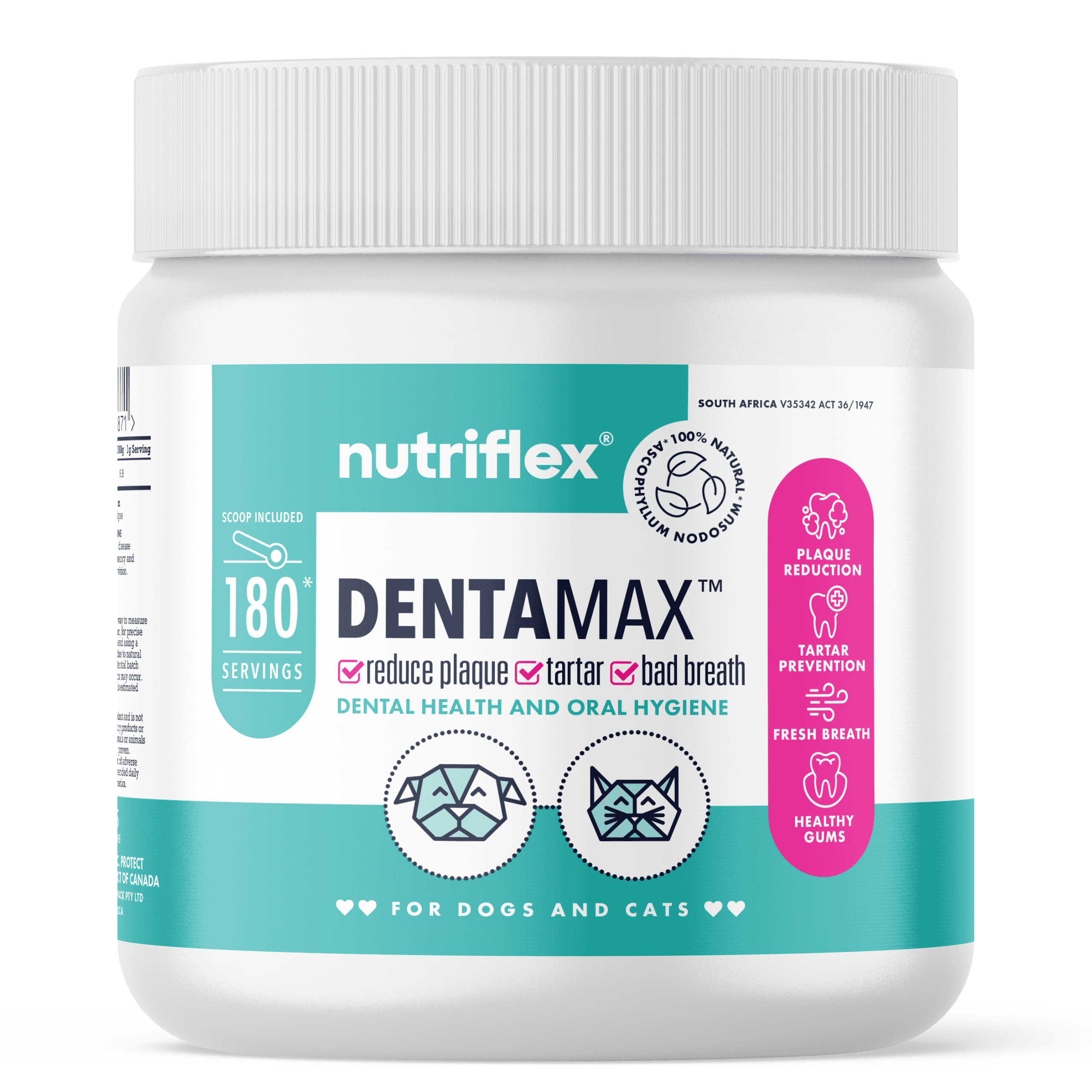
For example, NutriFlex DentaMax Dental Powder uses marine algae compounds that are widely studied for their ability to interfere with plaque formation and support healthier teeth and gums when used consistently.
Used daily, this approach focuses on preventing plaque from developing into tartar.
How Long Does It Take to Improve Yellow Teeth
Dental improvements do not happen overnight.
Typical timelines include:
- Breath improvement within a few weeks
- Plaque reduction over several weeks
- Gradual reduction in tartar accumulation over months
Consistency is far more important than occasional dental care.
How to Prevent Yellow Teeth in Dogs
The best way to prevent yellow teeth in dogs is consistent plaque control.
Effective prevention strategies include:
- Regular tooth brushing
- Daily plaque-reducing supplements
- Appropriate chewing activity
- Annual veterinary dental exams
Stopping plaque from hardening into tartar is the most reliable way to maintain healthy teeth.
Frequently Asked Questions
Can yellow teeth in dogs turn white again?
If yellow colour is caused by plaque, it can often be improved with consistent dental care. If tartar has already hardened, professional cleaning may be required.
Are yellow teeth always tartar?
Not always. Early plaque may appear pale yellow before mineralising into tartar.
Do all dogs eventually get yellow teeth?
Not necessarily. Dogs with consistent dental care routines often maintain healthy teeth well into old age.
Key Takeaways
Yellow teeth in dogs are usually the earliest visible sign of plaque buildup.
If left unmanaged, plaque can harden into tartar and lead to periodontal disease, which is one of the most common health conditions in dogs.
Preventing plaque formation through daily oral care, an appropriate diet and plaque-reducing supplements is the most effective strategy for maintaining healthy teeth and gums throughout a dog’s life.