Bad breath in dogs is almost always caused by dental plaque.
What many dog owners call “dog breath” is actually the smell produced by millions of bacteria living on the surface of the teeth and gums. These bacteria form a sticky film called plaque. As plaque grows thicker, it produces gases that produce the strong, unpleasant smell associated with dental disease.
Understanding how plaque causes bad breath is the key to solving the problem before it develops into serious oral disease.
What Is Dental Plaque?
Dental plaque is a sticky bacterial biofilm that forms on the surface of teeth.
It develops when three things combine:
• Oral bacteria
• Saliva
• Food particles
Within hours after eating, bacteria attach to the tooth surface and begin forming a thin film along the gumline. This film is plaque.
Plaque is soft and invisible at first, but it thickens and becomes more dangerous if it is not removed.
Why Plaque Smells So Bad
Featured Snippet Candidate
Why does plaque cause bad breath in dogs?
Plaque causes bad breath because oral bacteria break down proteins from food and saliva. During this process they release volatile sulphur compounds, which produce strong foul smells similar to rotten eggs or decay.
These gases include:
• Hydrogen sulphide
• Methyl mercaptan
• Dimethyl sulphide
The more plaque that accumulates, the more bacteria are present, and the stronger the smell becomes.
The Bacteria Behind Dog Bad Breath
The mouth contains hundreds of bacterial species. Some are harmless, but others thrive in plaque and produce strong odours.
These bacteria feed on proteins in:
• Food debris
• Saliva proteins
• Dead cells inside the mouth
As bacteria digest these materials, they release sulphur-based gases. These gases are responsible for the unpleasant smell associated with bad dog breath.
Why Plaque Forms So Quickly
Plaque formation begins within hours after eating.
The process looks like this:
-
Saliva coats the tooth surface
-
Bacteria attach to the tooth
-
Food particles feed bacterial colonies
-
A sticky biofilm develops along the gumline
Because dogs cannot naturally brush their teeth, plaque accumulates continuously unless it is actively controlled.
When Plaque Turns Into Tartar
Featured Snippet Candidate
How long does plaque take to turn into tartar in dogs?
Plaque can begin hardening into tartar within 24 to 72 hours if it is not removed. Minerals in saliva cause plaque to calcify, forming a hard substance called tartar (also known as dental calculus).
Once tartar forms, it becomes extremely difficult to remove without professional dental cleaning.
Why Tartar Makes Bad Breath Worse
Tartar creates a rough surface on teeth that allows even more bacteria to attach.
This leads to:
• Larger bacterial colonies
• Deeper plaque accumulation
• Increased production of sulphur gases
The result is stronger and more persistent bad breath.
Tartar also spreads beneath the gumline, where it can trigger inflammation and infection.
The Link Between Plaque and Gum Disease
Plaque does not just smell unpleasant. It also irritates the gums.
When plaque remains along the gumline, bacteria release toxins that inflame the surrounding tissue. This condition is called gingivitis.
Signs of gingivitis include:
• Red gums
• Swollen gums
• Bleeding when chewing
• Stronger mouth odour
If plaque is not controlled, gingivitis progresses to periodontal disease, which damages the structures supporting the teeth.
Why Small Dogs Often Have Worse Breath
Small dog breeds are more likely to develop dental disease than large dogs.
This happens because:
• Their teeth are crowded
• Food becomes trapped between teeth
• Plaque accumulates more easily
Breeds like Yorkies, Maltese, Pomeranians and Dachshunds are particularly prone to plaque buildup and chronic bad breath.
The Myth That Bad Dog Breath Is Normal
Many owners believe bad breath is simply part of owning a dog.
This is incorrect.
Is bad breath normal in dogs?
No. Persistent bad breath in dogs is usually a sign of plaque buildup and early dental disease. Healthy dog breath should not have a strong foul odour.
If a dog’s breath smells consistently unpleasant, plaque and bacterial activity are almost always the cause.
Signs Plaque Is Causing Your Dog’s Bad Breath
Common indicators include:
• Yellow film on teeth
• Brown tartar buildup
• Red or irritated gums
• Strong odour when the dog pants
• Reluctance to chew hard food
These signs suggest plaque has already begun affecting oral health.
Why Controlling Plaque Is the Only Real Solution
Mouth odour products that simply mask the smell do not solve the underlying problem.
Bad breath improves only when plaque bacteria are reduced.
This means preventing plaque from establishing itself along the gumline.
Once tartar forms, prevention becomes much harder.
Daily Habits That Reduce Plaque Buildup
Effective plaque control usually involves a combination of approaches.
These include:
• Regular tooth brushing
• Mechanical chewing
• Oral supplements that target plaque bacteria
• Professional veterinary dental cleanings when needed
Consistency matters more than intensity. Small daily actions prevent large plaque accumulation.
The Role of Dental Powders in Plaque Control
Dental powders are increasingly used to help manage plaque naturally.
These supplements are added to food and work by influencing the oral bacterial environment rather than mechanically scraping teeth.
Some seaweed-based dental powders have been shown to reduce plaque and tartar accumulation by interfering with the bacterial biofilm responsible for plaque formation.
When plaque formation slows down, the bacterial gases responsible for bad breath are reduced as well.
A Simple Daily Way to Help Control Plaque
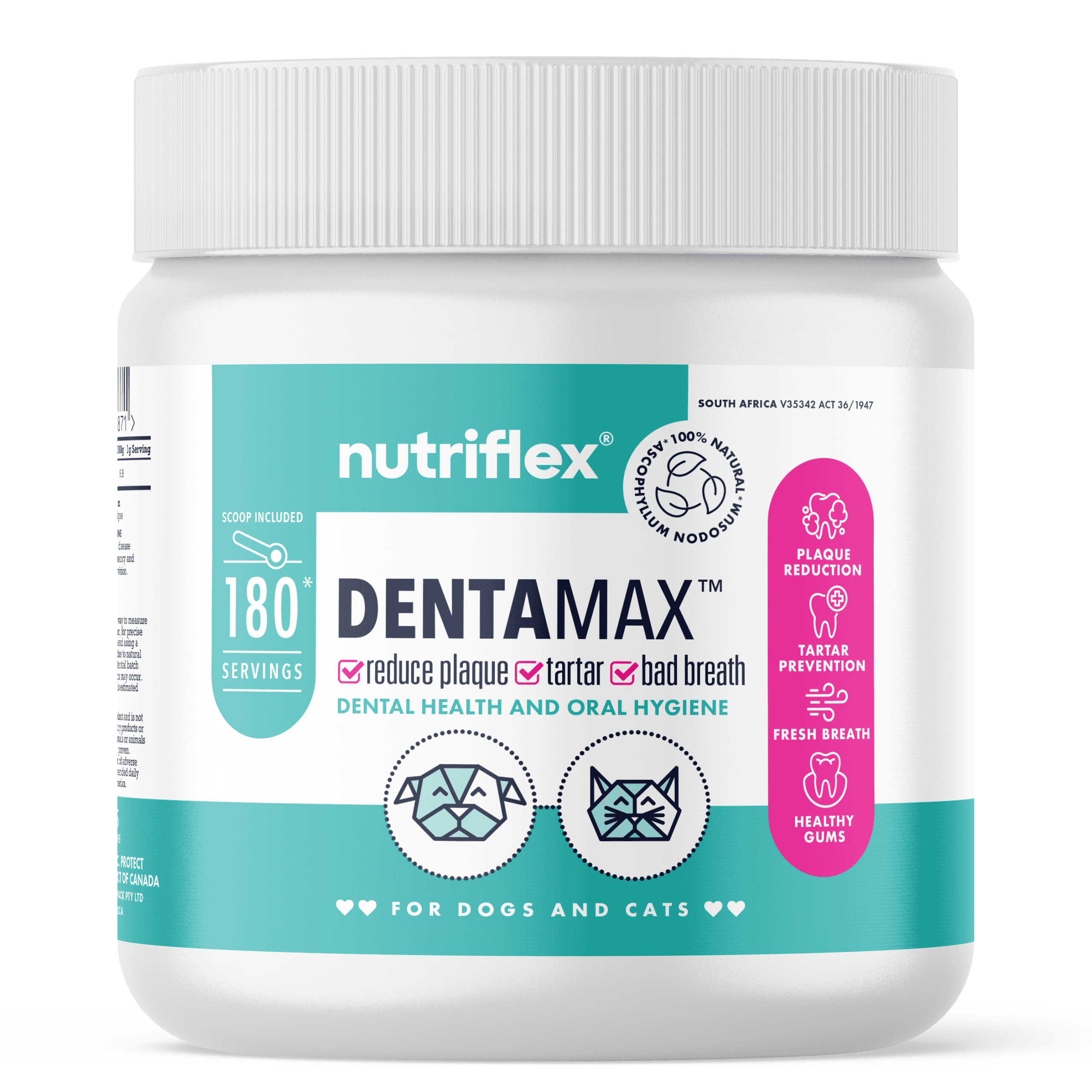
Products like DentaMax™ Dental Powder are designed to support plaque control through daily feeding.
The powder is mixed with a dog’s food and works systemically to help:
• Reduce plaque accumulation
• Limit tartar formation
• Support fresher breath
Because plaque bacteria drive bad breath, controlling plaque is the most effective way to improve oral odour over time.
Why Prevention Is Far Easier Than Treatment
Once tartar forms and periodontal disease develops, treatment becomes expensive and invasive.
Dogs often require:
• Anaesthesia
• Dental scaling
• Tooth extraction in severe cases
Preventing plaque buildup early helps avoid these procedures and keeps the mouth healthier for longer.
Long-Term Benefits of Managing Plaque
Controlling plaque offers several advantages:
• Fresher breath
• Healthier gums
• Reduced tartar buildup
• Lower risk of periodontal disease
• Better overall oral health
Most importantly, it interrupts the bacterial cycle that causes bad breath in the first place.
The Bottom Line
Bad breath in dogs is not simply an inconvenience. It is usually the first visible sign of plaque buildup and early dental disease.
Plaque forms when oral bacteria attach to teeth and feed on food debris and saliva proteins. As they grow, these bacteria release sulphur gases that create the unpleasant smell associated with dog breath.
Stopping plaque early is the most effective way to prevent bad breath and protect long-term dental health.
Consistent oral care, plaque control, and preventative solutions can dramatically improve a dog’s breath and overall oral well-being.