Plaque buildup is one of the most common dental problems in dogs. In fact, most dogs begin developing plaque within hours after their teeth are cleaned. If it is not removed regularly, that soft bacterial film hardens into tartar and eventually leads to gum disease.
Understanding why plaque forms on dog teeth is the first step to preventing it.
What Plaque Actually Is
Dental plaque is a sticky biofilm made up of bacteria, saliva proteins and food particles that forms on the surface of teeth.
It is not simply leftover food.
Instead, plaque is a living bacterial community that attaches itself to teeth and multiplies rapidly in the warm, moist environment of a dog’s mouth.
Once plaque forms, it continues to grow unless it is disrupted or removed.
How Plaque Forms on Dog Teeth
Plaque formation follows a predictable biological process.
Stage 1: Salivary Film
Within minutes after eating, a thin protein layer from saliva coats the tooth surface. This is called the pellicle layer.
Stage 2: Bacterial Attachment
Bacteria naturally present in the mouth attach to this salivary film.
Stage 3: Biofilm Development
The bacteria begin producing sticky substances that help them attach more firmly to the tooth.
Stage 4: Plaque Growth
More bacteria join the biofilm, creating the soft yellow film known as plaque.
This process can begin within hours after teeth are cleaned.
Why Dogs Are Naturally Prone to Plaque
Dogs are biologically predisposed to plaque formation for several reasons.
The Mouth Is a Perfect Bacterial Environment
A dog’s mouth provides:
-
Warm temperatures
-
Constant moisture
-
A steady supply of food particles
-
Natural oral bacteria
This creates ideal conditions for plaque biofilms.
Dogs Do Not Naturally Clean Their Teeth
Unlike humans, dogs rarely remove plaque through daily oral hygiene.
Without brushing or other dental care, plaque simply accumulates.
The Role of Oral Bacteria
A dog’s mouth contains hundreds of bacterial species.
Many of these bacteria contribute to plaque formation by producing substances that help them stick to teeth and form colonies. Research suggests that marine algae’s impact on oral health may help in the prevention of tooth decay and gum disease. By influencing the oral microbiome and inhibiting harmful bacterial growth, these algae could offer a natural alternative for dental care. Additionally, their rich nutrient profile may support overall oral hygiene and improve the strength of dental tissues.
As the bacterial population grows, plaque thickens and becomes more difficult to remove.
Why Plaque Sticks to Teeth
Plaque adheres easily because teeth are not perfectly smooth.
Microscopic grooves in enamel allow bacteria to anchor themselves to the surface.
Certain areas are especially vulnerable:
-
Along the gumline
-
Between crowded teeth
-
On the back molars
These regions tend to collect plaque first.
How Diet Contributes to Plaque Buildup
Food plays a role in plaque development.
When dogs eat, small food particles mix with saliva and oral bacteria. These particles provide nutrients for bacteria, allowing plaque colonies to grow.
Diets with higher levels of digestible carbohydrates may contribute to bacterial growth in the mouth.
However, plaque forms even in dogs eating high-quality diets because the mouth naturally contains bacteria.
The Myth That Dry Dog Food Cleans Teeth
Many owners believe dry kibble prevents plaque buildup.
In reality, most kibble pieces shatter when bitten, meaning they do little to scrape the tooth surface.
The majority of plaque forms along the gumline, where kibble rarely makes contact.
This is why many dogs eating dry food still develop significant plaque and tartar.
Small Dogs Often Develop Plaque Faster
Breed size plays a major role in dental health.
Small breeds frequently experience plaque problems because they have:
-
Smaller mouths
-
More crowded teeth
-
Reduced chewing pressure
Crowded teeth create tight spaces where plaque bacteria accumulate easily.
Age and Plaque Accumulation
Plaque tends to worsen as dogs age.
Several factors contribute:
-
Reduced chewing activity
-
Slower natural tooth cleaning
-
Long-term accumulation of bacteria
Without regular dental care, plaque slowly turns into hardened tartar.
How Plaque Turns Into Tartar
Plaque itself is soft and can be removed.
But when minerals in saliva combine with plaque, it begins to harden.
This hardened deposit is called tartar (calculus).
Tartar cannot be removed through brushing alone and usually requires professional cleaning.
Why Plaque Causes Bad Breath
Bad breath in dogs is usually caused by bacterial activity inside plaque.
Certain bacteria produce sulphur-containing compounds while breaking down food particles.
These compounds create the unpleasant odour associated with canine bad breath.
Plaque at the Gumline
The gumline is the most dangerous area for plaque accumulation.
When plaque collects here, bacteria begin to irritate the gums.
This leads to gingivitis, the earliest stage of gum disease.
Signs may include:
-
Red gums
-
Swelling
-
Bleeding during brushing
Early Signs of Plaque Buildup
Dog owners often miss the early warning signs.
Look for:
-
Yellow film on teeth
-
Sticky buildup along the gums
-
Persistent bad breath
-
Mild gum redness
Catching plaque early prevents more serious dental problems.
Why Plaque Gets Worse Over Time
Plaque growth accelerates if it is not controlled.
The biofilm becomes thicker and protects bacteria from removal.
As tartar forms, the rough surface provides even more areas for plaque to attach.
This cycle leads to progressive dental disease.
Why Prevention Is Easier Than Treatment
Once plaque hardens into tartar, removal usually requires veterinary dental scaling under anaesthesia.
This procedure removes mineralised deposits from the tooth surface and below the gumline.
Because treatment can be invasive and costly, prevention is far preferable.
Daily Habits That Help Reduce Plaque
Maintaining canine oral health typically requires a combination of strategies.
Common approaches include:
-
Tooth brushing
-
Dental chews
-
Professional cleanings
-
Oral health supplements
Consistency matters more than any single method.
Supporting Oral Health With Daily Plaque Control
Many dog owners struggle to brush their dog’s teeth every day.
Daily dental powders have become increasingly popular because they are easy to use and require no brushing.
These powders are typically added directly to food.
Some formulations use natural marine algae compounds that support the oral environment through saliva.
Where DentaMax Fits In
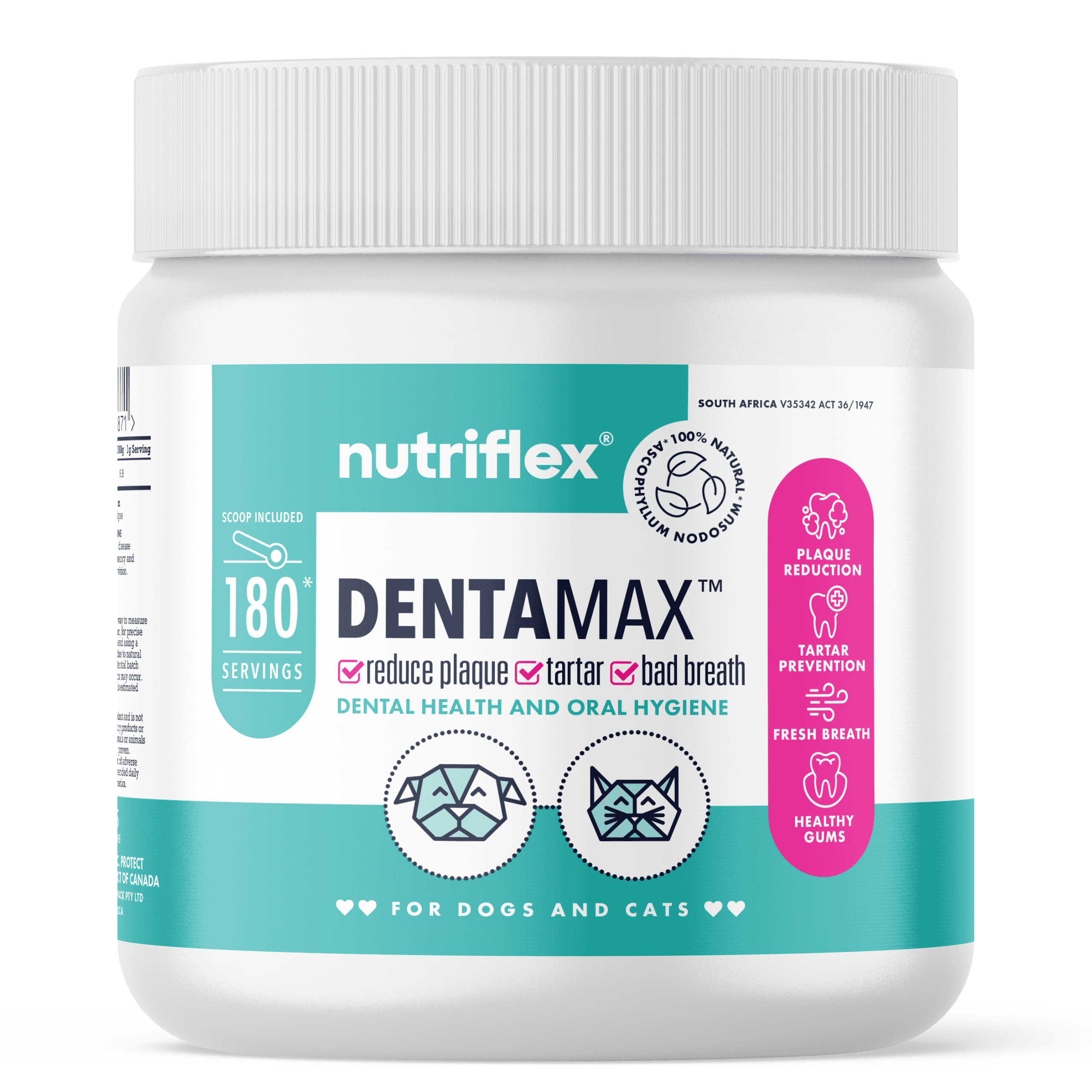
DentaMax™ is designed as a once-daily dental powder added to a dog’s food.
The marine algae ingredient works through the dog’s saliva to help support the oral environment and disrupt plaque bacteria before they contribute to tartar buildup.
Because it is mixed with food, it can be used even with dogs that resist brushing.
Many owners combine a dental powder such as DentaMax with occasional brushing to create a more comprehensive dental care routine.
The Key to Preventing Plaque Buildup
Plaque formation is a natural biological process in dogs.
It cannot be eliminated entirely, but it can be managed through consistent dental care.
Understanding how plaque forms allows owners to intervene early and reduce the risk of tartar, gum disease and tooth loss.
With daily attention and the right routine, most dogs can maintain significantly healthier teeth and gums throughout their lives.
What causes plaque buildup in dogs?
Plaque forms on dog teeth when oral bacteria attach to a thin salivary film on the tooth surface. These bacteria create a sticky biofilm made of bacteria, saliva proteins and food particles. Without removal, plaque thickens and eventually hardens into tartar.
How quickly does plaque form on dog teeth?
Plaque can begin forming within hours after teeth are cleaned. If it is not removed, minerals in saliva can harden plaque into tartar within a few days.
Why do small dogs get more plaque?
Small dogs often develop more plaque because their teeth are crowded in a smaller mouth. Tight spaces between teeth trap bacteria and food particles, allowing plaque to accumulate more easily.
Can plaque be prevented in dogs?
Plaque cannot be completely prevented, but it can be controlled through regular dental care such as tooth brushing, dental chews, veterinary cleanings and daily oral health supplements.