
Your Dog’s Bad Breath Is Telling You Something
Fixing bad breath in dogs is simpler than most pet owners think, but it starts with understanding the cause. Here is a quick overview of the most effective steps:
- Visit your vet to rule out dental disease or underlying health conditions
- Brush your dog’s teeth daily using a dog-safe toothpaste
- Use dental chews or a dental powder to reduce plaque and tartar between brushings
- Add a water additive to support oral hygiene throughout the day
- Secure your bins and litter trays to prevent scavenging
- Schedule professional dental cleanings at least once a year
If you have ever pulled back from a slobbery kiss because your dog’s breath stopped you in your tracks, you are not alone. Bad breath is one of the most common complaints among South African dog owners.
But here is what most people miss: doggy breath is not normal. A mild, neutral smell is fine. A strong, persistent odour is a sign that something needs attention.
Research shows that as many as 80% of dogs have some form of periodontal disease by the time they are just two years old. That statistic is striking, especially because most owners assume bad breath simply comes with the territory of owning a dog.
It does not.
Bad breath is most often a symptom, not a standalone problem. It can point to anything from simple plaque buildup to more serious conditions like kidney disease, diabetes or oral tumours. The good news is that most causes are manageable, and many are preventable with consistent daily care.
This guide covers everything you need to know, from identifying the cause to practical solutions you can start using today.
Is Doggy Breath Normal or a Sign of Health Problems?
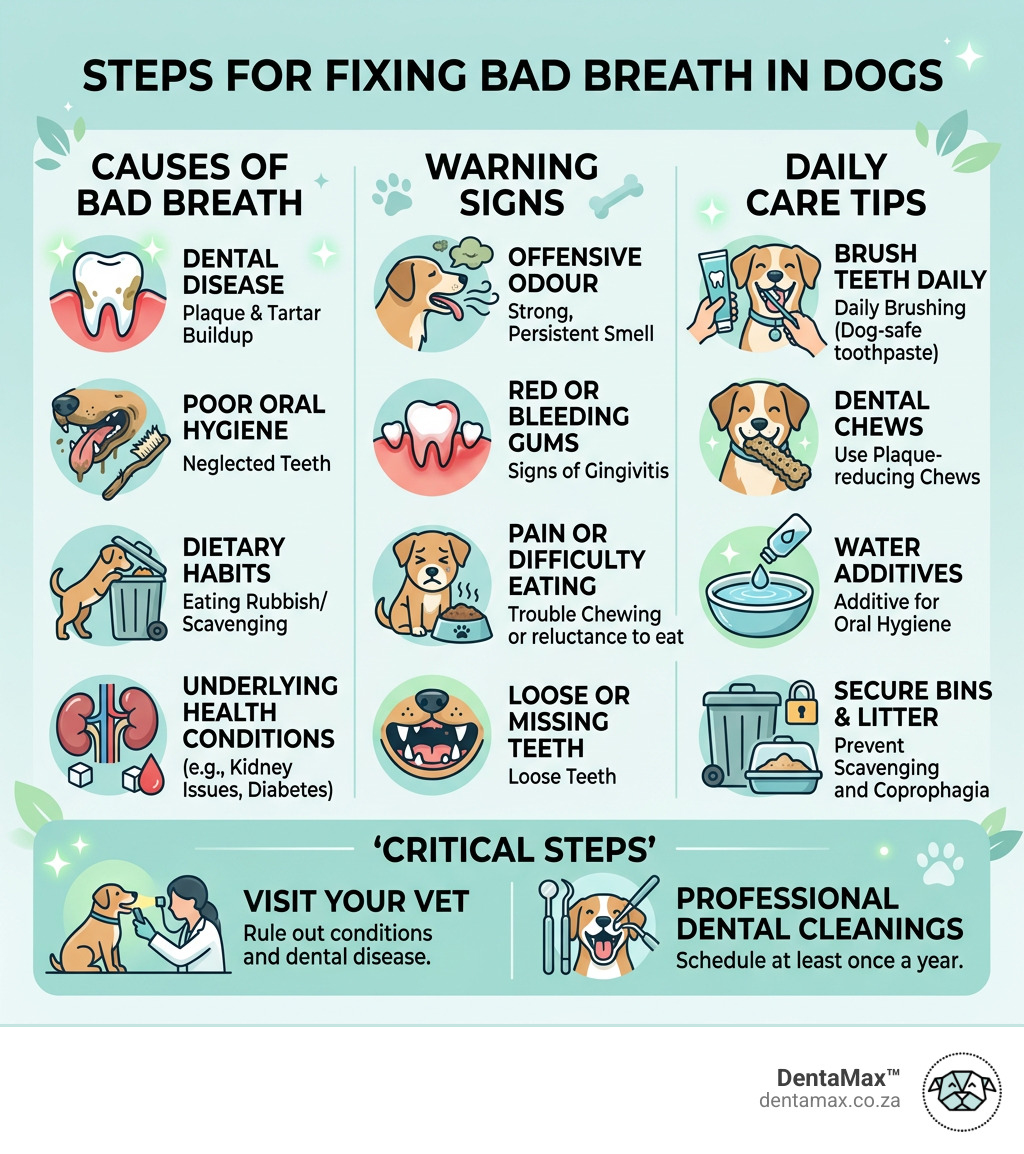
We often hear the phrase dog breath used as a joke or a lighthearted insult but in the veterinary world it is known as halitosis. While a dog’s breath will never smell like minty fresh roses, it should not be offensive. If you find yourself avoiding your pet’s face or if the smell fills a room when they pant it is a clear indicator of an underlying issue.
In the vast majority of cases bad breath is a sign of dental disease. When food particles and bacteria mix in the mouth they form a sticky film called plaque. If this is not removed through brushing or mechanical action it hardens into tartar (calculus) within days. Tartar provides a rough surface where even more bacteria can thrive leading to inflamed gums (gingivitis) and eventually the destruction of the tissues and bone supporting the teeth (periodontitis).
The foul smell you notice is actually the byproduct of these bacteria. They produce volatile sulphur compounds that are highly pungent. Beyond the smell this bacterial load is a constant threat to your dog’s systemic health. Bacteria from the mouth can enter the bloodstream through inflamed gums and travel to the heart, liver and kidneys causing micro-abscesses and organ damage over time.
However not all bad breath originates in the mouth. Sometimes the odour is a “canary in the coal mine” for internal health struggles. This is why we always recommend a professional evaluation rather than just trying to mask the smell with minty treats.
Common and Serious Health Causes of Halitosis
When we look at fixing bad breath in dogs we must first identify the culprit. The causes range from simple hygiene issues to complex metabolic diseases.
Dental and Gum Disease
This is the number one cause of halitosis in South African pets. As mentioned plaque and tartar buildup lead to infection. Small breeds like Yorkies, Chihuahuas and Poodles are particularly prone to this because their teeth are often crowded together. This tight spacing creates perfect “hiding spots” for food debris and bacteria making them much harder to keep clean than the teeth of a larger breed like a Boerboel or Labrador.
If you want a plain language overview of why dental disease matters, the American Kennel Club has a useful explainer on bad breath in dogs.
Dietary Indiscretion and Habits
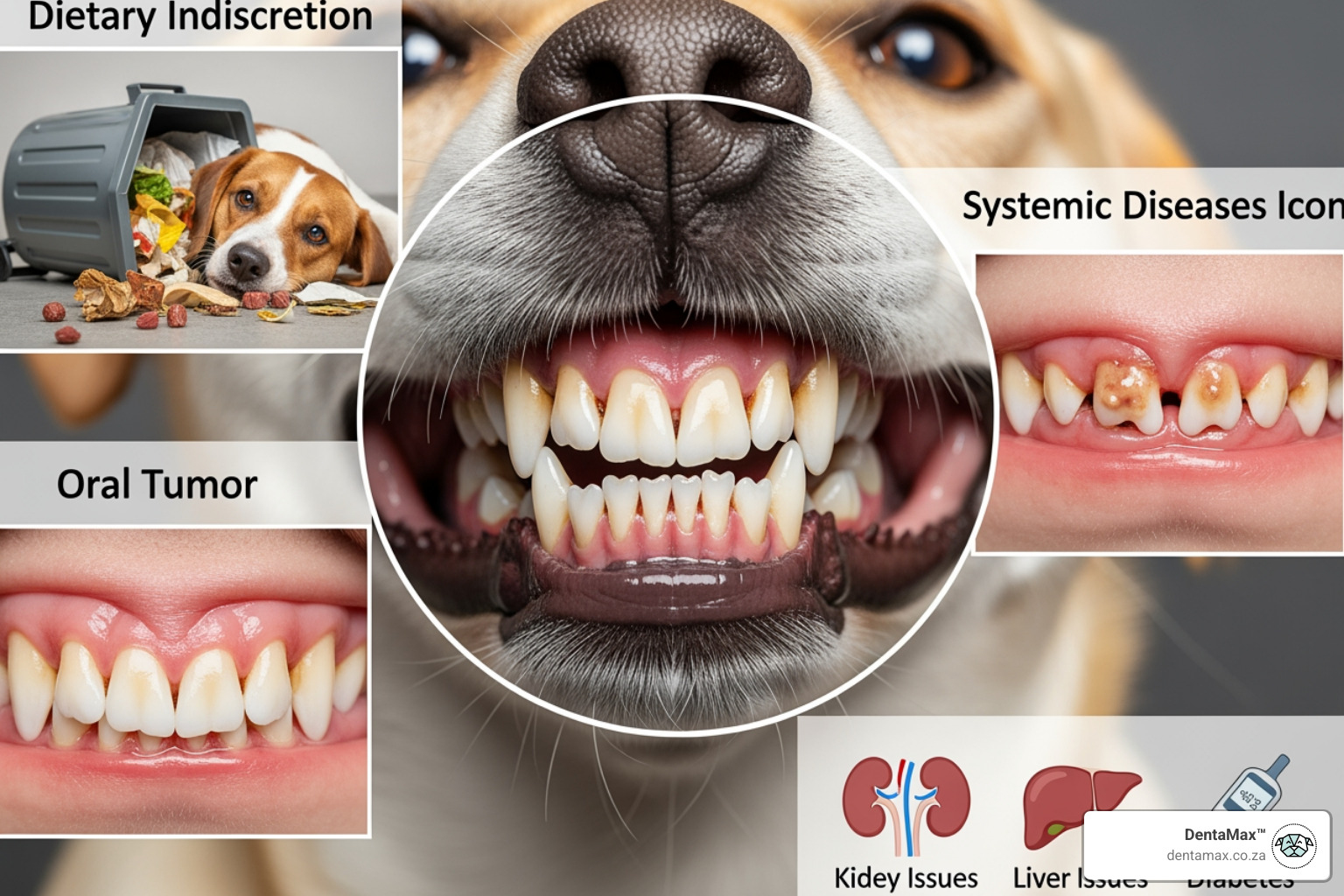
Dogs are natural scavengers. If your dog has a habit of “counter surfing” in the kitchen, raiding the rubbish bin or snacking on cat litter (a common habit known as coprophagia) their breath will reflect their recent menu. These habits introduce foreign bacteria into the mouth and can lead to lingering stenches that are quite distinct from dental disease.
Oral Tumours and Foreign Bodies
Approximately 6% of all tumours in dogs occur in the mouth. These can be benign or malignant but they often become infected or cause tissue death (necrosis) which results in a very specific, rotting smell. Similarly foreign objects like splinters from sticks or pieces of plastic can become lodged in the gums or between teeth. These cause local infections and abscesses that produce a foul odour. For a veterinary surgical overview see this resource from the American College of Veterinary Surgeons on oral tumours in dogs.
Systemic and Metabolic Diseases
Sometimes the smell of a dog’s breath can actually help a vet diagnose an internal problem:
- Kidney Disease: If the kidneys are not effectively filtering waste products from the blood the breath may smell like urine or ammonia.
- Liver Disease: A breath that smells extremely foul or musty combined with yellowing of the gums or eyes (jaundice) can indicate serious liver failure.
- Diabetes: If a dog’s breath smells sweet or fruity it may be a sign of ketoacidosis, a serious complication of undiagnosed or poorly managed diabetes.
Professional Veterinary Care and Fixing Bad Breath in Dogs
If you have noticed a persistent odour the first step in fixing bad breath in dogs is a trip to the vet. Home remedies are fantastic for maintenance but they cannot “brush away” established tartar or cure a systemic infection.
A professional veterinary dental cleaning is much more involved than a human’s visit to the oral hygienist. Because dogs will not sit still and open wide on command these procedures are performed under general anaesthesia. This allows the vet to:
- Perform a full oral exam including checking for tumours or hidden pockets.
- Take dental X-rays to see what is happening below the gum line (where 60% of dental disease hides).
- Scale the teeth to remove tartar from both the visible surfaces and the subgingival area (under the gums).
- Polish the teeth to smooth out microscopic scratches that would otherwise attract more plaque.
- Extract teeth that are loose, broken or so diseased that they are causing pain.
While many owners worry about anaesthesia modern veterinary protocols are extremely safe. The risk of leaving a chronic infection in your dog’s mouth is often much higher than the risk of a controlled medical procedure. Once the professional cleaning is done you have a “clean slate” to start a preventative home care routine.
When to Seek Professional Help for Fixing Bad Breath in Dogs
You should book a consultation if you notice any of the following “red flags” alongside the smell:
- Discoloured teeth (yellow, brown or grey).
- Bleeding or red, swollen gums.
- Excessive drooling.
- Reluctance to eat, especially hard kibble.
- Dropping food from the mouth while eating.
- Pawing at the face or mouth.
- A sudden change in the “type” of smell (e.g., switching from “stinky” to “fruity”).
Effective At-Home Remedies and Daily Care
Once your vet has given your dog a clean bill of health or finished a professional cleaning the responsibility for fixing bad breath in dogs shifts to your daily routine. Prevention is always more affordable and less stressful than treatment.
Brushing is the Gold Standard
There is no substitute for the mechanical action of a toothbrush. You should aim to brush your dog’s teeth at least three times a week though once a day is ideal.
- Use Dog-Specific Toothpaste: Never use human toothpaste. It contains fluoride and often Xylitol (a sweetener) both of which are toxic to dogs. Pet toothpastes come in flavours like chicken or beef to make the experience more pleasant.
- Start Slow: If your dog is not used to it start by letting them lick the paste off your finger. Gradually move to rubbing their teeth with your finger then introduce a soft brush.
The Power of Dental Powders
For many South African pet owners daily brushing is a struggle. This is where a high-quality dental powder can be a game changer. Products like DentaMax offer a systemic approach to oral health.
DentaMax consists of a single ingredient: Ascophyllum nodosum kelp. This specific seaweed is clinically validated to reduce plaque and tartar. When your dog eats the powder (which you simply sprinkle onto their food) the active compounds are absorbed into the bloodstream and then released back into the saliva. This changes the chemistry of the saliva making it harder for plaque to stick to the teeth and softening existing tartar over time. You can read more about how this works in our guide on Ascophyllum Nodosum for Dogs.
Water Additives and Oral Rinses
If your dog is particularly fussy about their food or mouth handling water additives are an easy supplement. These are liquids you add to the drinking bowl that contain enzymes or antibacterial agents to kill odour-causing bacteria. For dogs recovering from surgery or those with severe gingivitis a vet might prescribe a chlorhexidine rinse to be applied directly to the gums.
Natural Chews and Toys
Chewing is a natural behaviour that helps scrape plaque off the teeth.
- Rubber Toys: Durable toys with ridges or “nubs” are excellent for massaging gums.
- Raw Vegetables: Crunchy snacks like carrot sticks, cucumber or apple slices (without seeds) act as natural “toothbrushes” and provide vitamins.
- Dental Treats: Look for the Veterinary Oral Health Council (VOHC) seal on products. This seal ensures the product has been scientifically tested to reduce plaque or tartar.
Daily Habits for Fixing Bad Breath in Dogs
Consistency is the most important factor in oral hygiene. Here is a checklist for a breath-friendly household:
- Clean the Bowls: Bacteria thrive in stagnant water and leftover food bits. Wash your dog’s food and water bowls daily with hot soapy water.
- Manage the Diet: High-quality kibble is generally better for teeth than wet food because it provides some abrasive action. Avoid feeding sugary treats or human table scraps which can fuel bacterial growth.
- Monitor Hydration: A dry mouth is a stinky mouth. Ensure your dog has access to fresh water at all times. On average a dog should drink about 50ml to 70ml of water per kg of body weight daily.
- Secure the Bins: Prevent “garbage breath” by using pet-proof bins and keeping the cat’s litter box in an area the dog cannot reach.
- Check the Mouth Weekly: Make it a habit to lift your dog’s lips and look at their teeth. Catching a small red line on the gums or a tiny chip in a tooth early can save you thousands in vet bills later.
For a deeper dive into how natural solutions compare to traditional products you can explore our Dog & Cat Dental Powder Guides.
Conclusion
Fixing bad breath in dogs is not just about making your morning snuggles more pleasant. It is about extending your dog’s life and ensuring they are not living with chronic, hidden pain. While “doggy breath” might seem like a minor nuisance it is almost always a signal from the body that something is wrong.
By combining professional veterinary oversight with a dedicated home care routine you can tackle the root cause of the odour. Whether you choose the traditional route of daily brushing or opt for the systemic support of a dental powder, the key is to start today.
Every dog is different. What works for a young Great Dane might not be the best solution for a senior Maltese. Work closely with your vet to create a tailored plan. With the right approach you can turn those stinky puppy kisses back into something you actually look forward to receiving.