

Does Dental Powder Work for Dogs? Here Is What You Need to Know
Does dental powder work for dogs? Yes, it does, with some important caveats.
Dental powder is a proven supplementary tool for reducing plaque, freshening breath and supporting healthier gums. It works best when used consistently and as part of a broader oral care routine. It is not a replacement for professional dental cleanings or brushing, but it offers meaningful, measurable benefits for dogs whose owners struggle with daily toothbrushing.
Here is a quick summary:
| What dental powder does | What it does not do |
|---|---|
| Reduces plaque and bacteria buildup | Remove heavy, existing tartar on its own |
| Freshens breath by targeting odour-causing bacteria | Replace professional veterinary cleanings |
| Supports healthier gums over time | Provide mechanical scrubbing like a toothbrush |
| Easy to use daily, sprinkled on food | Work instantly, results build over weeks |
| Helps rebalance the oral microbiome | Suit every dog if ingredients are low quality |
For best results, look for products with clinically studied ingredients, use them daily for at least 28 to 90 days, and combine them with other dental care habits.
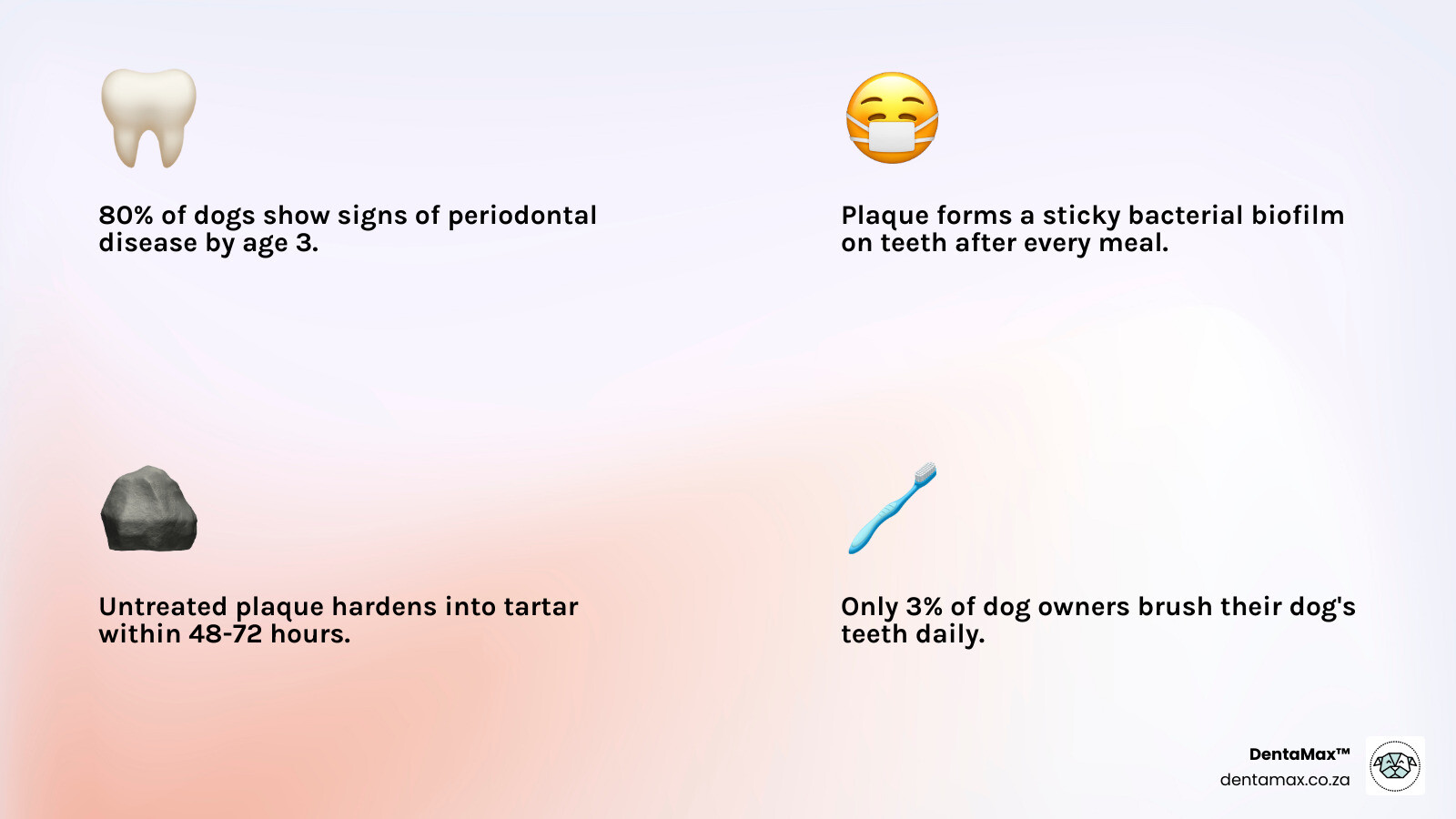
Now for the fuller picture. Dental disease is one of the most common health problems in dogs. Over 80% of dogs show signs of periodontal disease by the age of three, according to widely cited veterinary data. It starts simply. Plaque, a sticky film of bacteria, builds up on the teeth after every meal. Left untreated, it hardens into tartar, irritates the gums and eventually leads to pain, infection and tooth loss.
The real challenge is prevention. Brushing remains the most effective at-home method, but fewer than 3% of dog owners brush their dog’s teeth every day. Most dogs simply will not tolerate it. This is where dental powders have become an increasingly popular option for South African pet owners looking for a practical, low-stress daily solution.
But with so many products on the market making bold claims, it is fair to ask whether they actually deliver.
Understanding How Dog Dental Cleaning Powder Works
To understand if these products are effective, we must first look at the biology of a dog’s mouth. When your dog finishes a bowl of kibble or a tasty treat, bacteria immediately begin to colonise the surfaces of the teeth. These bacteria create a sticky biofilm known as plaque. If this biofilm is not disrupted, minerals in your dog’s saliva cause it to calcify into tartar, also known as calculus, within just 48 to 72 hours. Once tartar forms, it is like concrete. You cannot simply brush it away.
This is where the science of dental powder comes into play. Unlike traditional toothpaste that relies on the mechanical friction of a brush, many high quality dental powders work through a combination of systemic and local actions.
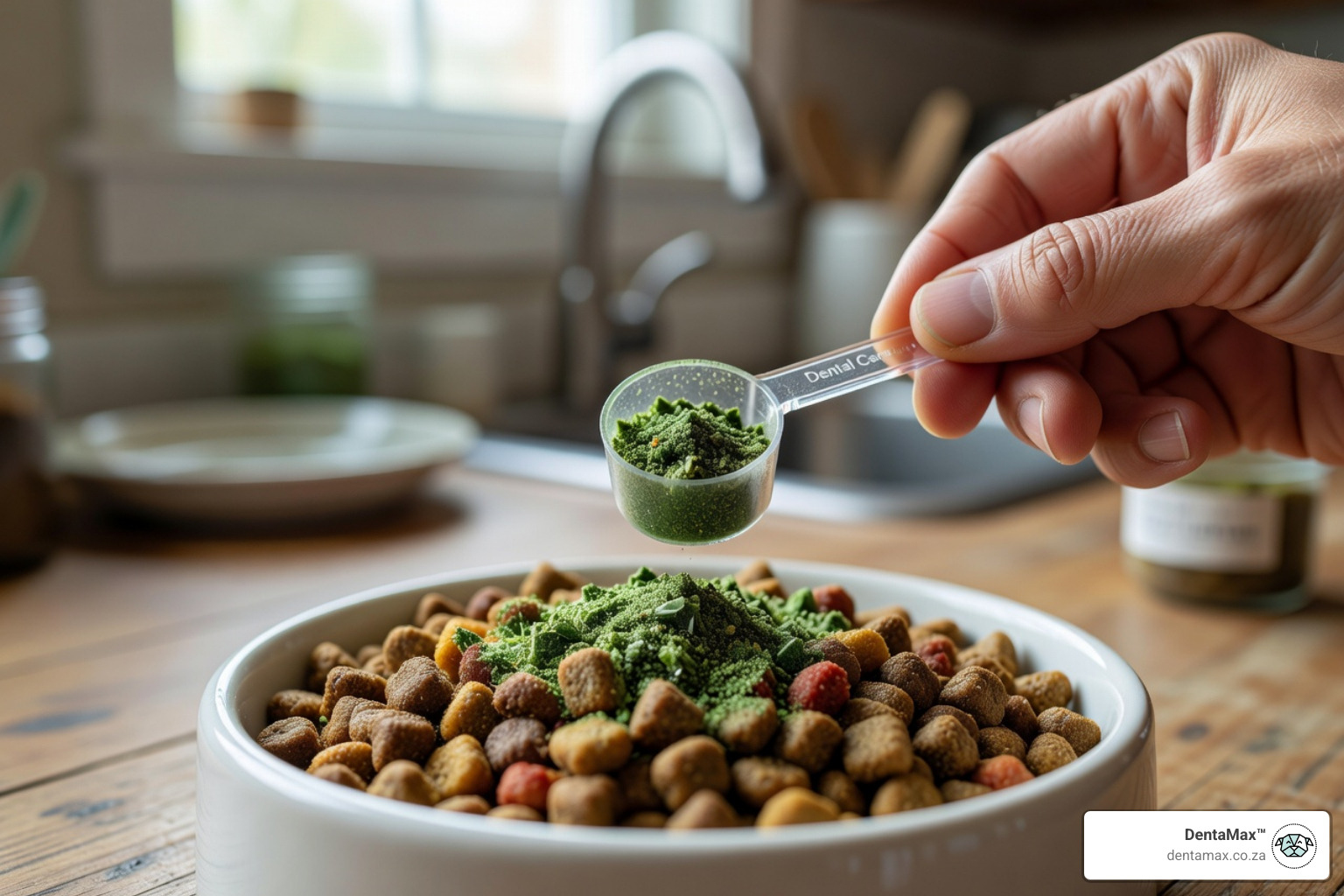
When you sprinkle a scoop of a product like Detamax Dental Powder onto your dog’s food, it mixes with their saliva. This activation is the first step. Some ingredients work locally by breaking down the sticky proteins that allow bacteria to cling to the enamel. Others, specifically certain types of brown seaweed like Ascophyllum nodosum, are absorbed into the bloodstream through the digestive tract.
Once absorbed, the active compounds are secreted back into the mouth through the saliva. This process alters the chemical composition of the saliva, making it harder for new plaque to stick and helping to soften existing tartar deposits over time. This unique “inside out” approach is a cornerstone of How Does Dentamax Work? and explains why it can reach areas that a toothbrush might miss, such as the very back molars or the tiny crevices between crowded teeth.
By targeting the oral microbiome, these powders help shift the balance of bacteria in the mouth. Instead of a mouth filled with “bad” bacteria that produce foul smells and destructive acids, the powder encourages a healthier environment. This systemic support is vital for long term oral hygiene.
Why consistency matters when asking does dental powder work for dogs
If there is one “secret” to making dental powder work, it is consistency. Because these products often rely on changing the chemistry of the saliva, a single dose will not do much. Think of it like taking a vitamin or starting a new exercise routine. The benefits are cumulative.
Research shows that significant improvements in breath and plaque reduction usually become visible after about 28 days of daily use. In one survey of pet owners using a high quality dental powder, 88% of customers saw cleaner teeth and fresher breath after consistent daily use for 90 days.
When we skip days, the bacterial biofilms have a chance to reset and begin the calcification process. For South African pet owners in busy cities like Johannesburg or Cape Town, incorporating the powder into the morning or evening feeding ritual is the easiest way to ensure success. By making it a non-negotiable part of their meal, you are providing 24/7 protection against the silent progression of periodontal disease.
Does dental powder work for dogs to reduce plaque?
When evaluating any pet health product, we look for scientific validation. The gold standard in the veterinary world is the Veterinary Oral Health Council (VOHC). This independent panel of veterinary dentists reviews clinical data to ensure products actually do what they claim.
For a product to earn the VOHC seal, it must demonstrate a reduction in plaque or tartar buildup by at least 20%. While many powders on the market have not yet undergone this specific, expensive testing, the core ingredients used in top tier powders, such as Ascophyllum nodosum, have been extensively studied.
One of the most immediate benefits pet owners notice is a change in breath. Bad breath, or halitosis, is often caused by an overgrowth of volatile sulfur compounds (VSCs). These compounds are the waste products of bacteria as they break down proteins in the mouth. Clinical evidence suggests that certain dental powder formulations can reduce a key VSC that causes bad breath by 40% in just 28 days.
This reduction in “stinky breath” is more than just a cosmetic fix. It is a sign that the bacterial load in the mouth is decreasing. When there are fewer bacteria producing VSCs, there is less plaque being formed, which directly leads to healthier gums and a lower risk of systemic issues like heart or kidney disease, which are often linked to oral infections.
Choosing the right product: does dental powder work for dogs of all ages?
A common question we hear in our Muizenberg and Durban communities is whether dental powder is safe for every dog. The answer is generally yes, but the “how” matters based on the dog’s life stage:
- Puppies: You can usually start introducing dental powder once a puppy is around 12 weeks old. Starting early helps prevent the initial buildup of plaque and gets them used to the taste.
- Senior Dogs: For older dogs who may have existing heart issues or can no longer safely undergo general anaesthesia for professional cleanings, dental powder is a lifesaver. It helps manage the bacterial load and prevents further deterioration of their dental health.
- Small Breeds: Breeds like Yorkies, Chihuahuas and Pugs are notorious for dental problems because their teeth are crowded into tiny mouths. Powder is often the only way to get “cleaning agents” into those tight spaces.
- Greyhounds: This breed is genetically predisposed to poor dental health. For them, a multi-layered approach including powder is essential.
For picky eaters, we recommend starting with a very small pinch mixed into wet food or a bit of plain yoghurt and gradually increasing to the full dose over two weeks. Most South African dogs love the natural, slightly salty taste of seaweed based powders.
Effective Ingredients for Canine Oral Hygiene
Not all powders are created equal. To ensure you are getting a product that actually works, you need to look at the label. The most potent and well-researched ingredient in dog dental powders is Ascophyllum Nodosum Dogs.
This specific type of brown algae, harvested from cold North Atlantic waters, contains natural enzymes and compounds that are clinically validated for plaque reduction. It is rich in natural antioxidants and vitamins that support gum health. However, because it is a seaweed, it is naturally high in iodine. While this is great for most dogs, if your dog has a known thyroid condition, you should always consult your vet before starting a kelp-based supplement.
Other effective ingredients often found in high quality blends include:
- Probiotics: These can help support a healthier oral microbiome by encouraging beneficial bacteria that compete with odor- and plaque-associated microbes.
- Green Tea Extract: Offers natural antioxidant and antimicrobial activity, which may help reduce bacterial load and calm irritated gum tissue.
- Rosemary and Parsley: Often used as natural breath fresheners, helping with day-to-day “stinky breath” (even if they don’t replace true plaque control).
Ingredients to avoid in dental supplements
While we want to focus on what works, it is equally important to know what can be harmful. Never use human dental products on your dog. Many human toothpastes and powders contain Xylitol, an artificial sweetener that is extremely toxic to dogs and can cause life-threatening liver failure or seizures.
Other things to watch out for include:
- Artificial Fillers: Ingredients like corn starch or grain by-products add no value to dental health and can actually provide “food” for the very bacteria you are trying to kill.
- Chemical Preservatives: Look for natural preservation methods like Vitamin E (tocopherols).
- Fluoride: While good for human enamel, dogs swallow their “toothpaste”, and excessive fluoride ingestion can be toxic over time.
- Mineral-binding synthetics (like sodium hexametaphosphate): These are better suited to products with longer contact time in the mouth (for example, kibble), and they can bind minerals. Because of that, they’re generally not a great fit for a dental powder that’s swallowed quickly.
By choosing a single-ingredient or clean-label product like DentaMax, you ensure your pet is getting only the active benefits without unnecessary metabolic stress.
Integrating Dental Powder with Other Oral Hygiene Methods
We like to think of dental powder as the “foundation” of a house. It provides a solid base of protection, but for a truly “clean” house, you might still need to do some dusting and deep cleaning.
For many pet owners in South Africa, the cost of a professional veterinary dental cleaning can be daunting, often ranging from R3,000 to R8,000 depending on the need for extractions and blood work. Using Dog & Cat Dental Powder South Africa daily is a highly cost-effective preventative measure that can significantly extend the time between these expensive professional procedures.
Limitations of at home dental powders
It is important to be realistic. If your dog’s teeth are already covered in thick, brown, “rock-like” tartar, a powder is not going to make those chunks fall off overnight. At that stage, the bacteria have already moved under the gumline where they can cause bone loss and systemic infection.
In these cases, a professional scaling under general anaesthesia is necessary. The vet will use ultrasonic tools to remove the tartar above and below the gumline. Once the teeth are back to a “clean slate”, that is the perfect time to start using dental powder to ensure the buildup never gets that bad again.
If you notice bleeding gums, loose teeth or if your dog is pawing at their mouth or struggling to eat, skip the supplements for a moment and head straight to your vet. These are signs of advanced periodontal disease that require medical intervention.
Frequently Asked Questions about Dental Powders
Can dental powder remove existing heavy tartar?
No, dental powder is primarily a preventative tool. While it can help soften tartar over several months, making it slightly easier to remove during a professional cleaning, it cannot “dissolve” heavy calculus. Think of it as a way to keep the “soft” plaque from becoming “hard” tartar.
Is dental powder safe for dogs with health issues?
Most dental powders are very safe because they use natural ingredients. However, as mentioned, seaweed-based powders contain iodine. If your dog has thyroid issues, kidney disease or is on a restricted sodium diet, always check with your vet first. For the vast majority of healthy dogs, it is a safe and beneficial addition to their diet.
How long does it take to see results from dental powder?
You will likely notice an improvement in your dog’s breath within 2 to 4 weeks. For visible changes in the whiteness of the teeth or a reduction in new plaque formation, you should commit to at least 90 days of daily use.
Conclusion
So, does dental powder work for dogs? The science and the feedback from thousands of South African pet owners say a resounding yes. It is one of the easiest, most effective ways to manage your pet’s oral health without the daily “wrestling match” of a toothbrush.
By choosing a high quality, vet-recommended product like DentaMax, you are investing in your dog’s long term wellness. Preventing dental disease is not just about a pretty smile. It is about preventing pain and protecting your dog’s heart, liver and kidneys from the dangers of oral bacteria.
Whether you are in Cape Town, Durban or Johannesburg, we invite you to Optimise your pet’s oral health with Dog & Cat Dental Powder South Africa. Your dog might not be able to thank you in words, but their fresh-smelling kisses will say it all.
