Quick Answer
Systemic plaque control works by delivering active compounds through saliva to reach all areas of the mouth, helping to interfere with plaque bacteria formation on teeth, gums, and in hard-to-reach spaces. Unlike brushing or chews, it does not depend on physical contact to be effective.
The Core Problem Most Owners Miss
Plaque is not simply dirt.
It is a living bacterial system.
Brushing treats plaque as something to be scraped away.
In reality, plaque must be disrupted continuously.
This distinction is critical.
What Plaque Actually Is
Plaque is a biofilm, a structured colony of bacteria embedded in a protective matrix.
Once established, it:
- Adheres tightly to tooth surfaces
- Shields itself from removal
- Rebuilds rapidly after disruption
This is why cleaning alone is insufficient.
You are not addressing simple debris.
You are addressing a self-reinforcing biological layer.
How Plaque Forms (And Why It Always Comes Back)
The cycle is simple:
- Saliva deposits proteins on teeth
- Bacteria attach within hours
- Biofilm matures within 24–48 hours
- Minerals harden it into tartar
It is essential to interrupt the cycle early to prevent plaque buildup.
Most owners intervene too late and lack consistency.
The Mechanical Trap
Traditional dental care is built on abrasion:
- Brushing
- Dental chews
- Hard textures
These methods depend on direct contact.
This is their primary limitation.
They are only effective on surfaces they physically contact.
Where Mechanical Methods Fail
They miss:
- The gumline
- Between teeth
- Subgingival areas
These areas are not exceptions.
They are the primary sites where disease develops.
Therefore, even thorough brushing remains incomplete.
Additionally, most owners do not brush daily.
What “Systemic” Actually Means
Systemic does not mean internal.
It means distributed throughout the mouth.
Instead of relying on contact, the active compounds circulate through saliva and reach:
- All tooth surfaces
- The gumline
- Crevices and gaps
Coverage is continuous rather than selective.
Why Saliva Is an Advantage
Saliva is always present.
It flows constantly across the entire mouth.
Using saliva as a delivery system addresses the coverage problem.
This is the underlying mechanism.
Biochemical Control vs Physical Removal
Mechanical care tries to remove plaque after it forms.
Systemic care interferes before it stabilises.
This includes:
- Reducing bacterial adhesion
- Disrupting biofilm structure
- Slowing accumulation
The focus is on control, not cleanup.
The Role of a Biodisruptor
A biodisruptor does not scrub.
It interferes with the biological processes that allow plaque to form and persist.
It functions by weakening the plaque system from within:
- Less adhesion
- Less structure
- Less accumulation
Over time, this shifts the balance.
Where Marine Algae Fits In
Certain marine algae, such as Ascophyllum nodosum, contain bioactive compounds that:
- Alter the oral environment
- Interfere with plaque bacteria
- Reduce the formation of tartar
The key is delivery via saliva rather than direct contact.
Does Systemic Plaque Control Actually Work?
Yes. When used daily, systemic plaque control can significantly reduce plaque buildup, slow tartar formation, and improve breath by disrupting the bacterial processes that cause oral disease.
Why Daily Consistency Wins
Plaque forms daily.
Therefore, plaque control must be performed daily.
It should be consistent, not intense or occasional.
A small daily intervention produces cumulative benefits.
Occasional aggressive interventions do not provide lasting results.
Systemic vs Brushing
| Coverage | Full mouth | Limited to contact |
| Compliance | High | Low |
| Frequency | Daily (easy) | Often inconsistent |
| Target | Bacteria | Surface plaque |
Brushing is precise but often unreliable.
Systemic control offers broad and consistent coverage.
Systemic vs Dental Chews
Chews:
- Work only when chewed
- Target limited surfaces
- Often contain unnecessary fillers
Systemic control:
- Works continuously
- Reaches all areas
- Targets plaque biology
These approaches are not equivalent.
The Compliance Reality
Most owners:
- Do not brush daily
- Do not maintain routines
- Overestimate effort
Therefore, the system must adapt to actual owner behavior rather than ideal scenarios.
This is where systemic approaches are most effective.
Building a System That Actually Works
Consider a layered approach:
- Daily systemic control (non-negotiable)
- Optional mechanical support (brushing or chews)
- Diet that does not fuel bacteria
Reversing this order leads to inconsistent results.
Can It Replace Brushing?
In many real-world cases, yes.
Because:
- It is actually used daily
- It covers the entire mouth
Brushing still provides additional benefits.
However, it is not the foundational method many assume it to be.
How Long Before You See Results?
Most dogs show noticeable improvement in breath within a few weeks. Visible plaque reduction and gradual tartar softening typically occur over four to eight weeks with consistent daily use.
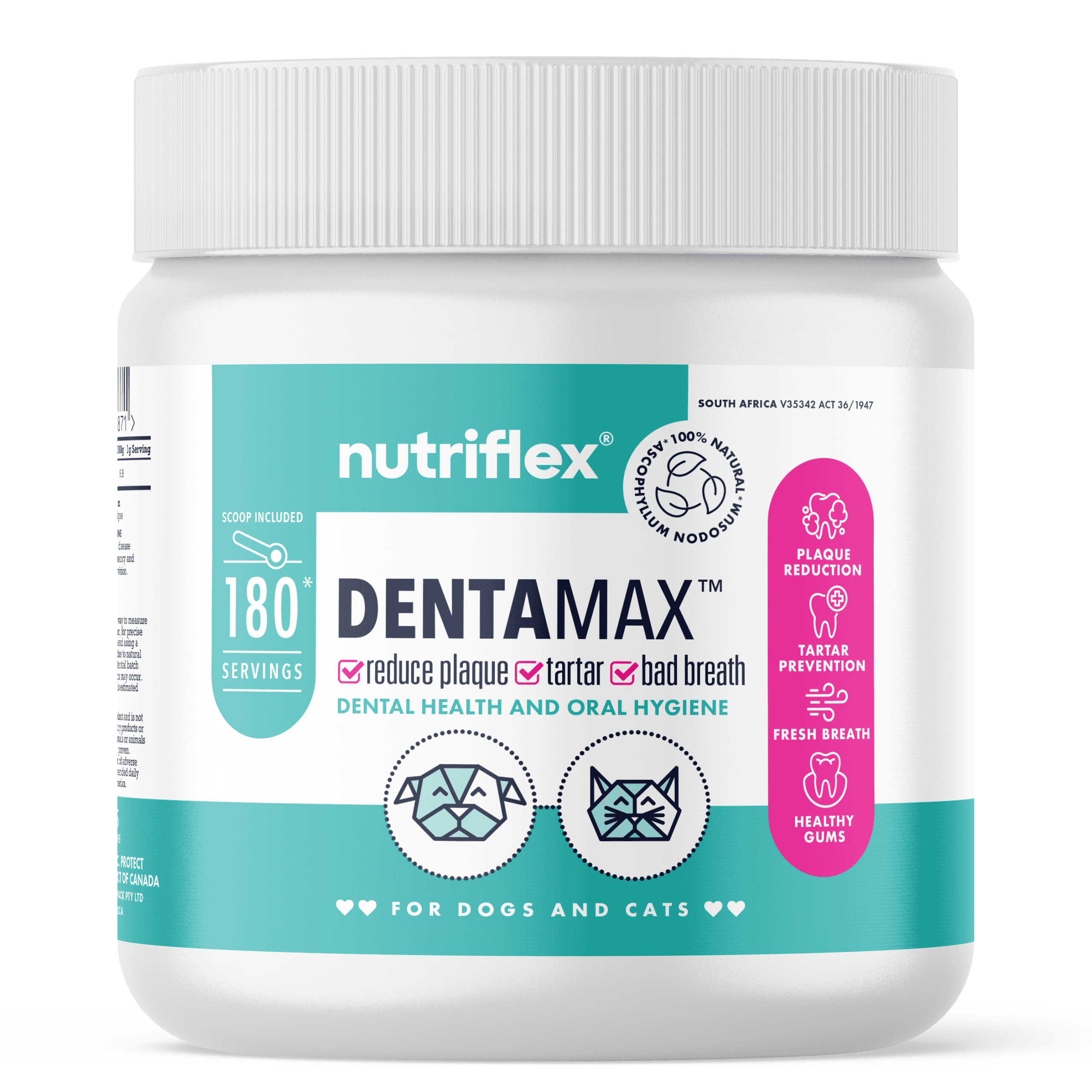
Where DentaMax™ Fits In
DentaMax™ is designed with one primary consideration:
Owners do not brush daily.
Instead of relying on owner compliance, it employs a systemic approach.
- Added once daily to food
- Works through saliva
- Uses Ascophyllum nodosum as a biodisruptor
The goal is simple:
The goal is to establish a baseline level of plaque control that operates daily, regardless of routine.
In practice:
- Daily powder = control layer
- Optional brushing = support layer
This combination produces consistent results.
When You Still Need a Vet
Systemic control does not reverse advanced disease.
If there is:
- Heavy tartar
- Bleeding gums
- Tooth loss
Professional cleaning is required.
Systemic control helps prevent recurrence.
Common Misconceptions
“If it’s not scrubbing, it’s not working”
False. Scrubbing removes.
Control prevents.
“Bad breath is normal”
It is not normal; it results from bacterial activity.
“Chews are enough”
They are insufficient because they lack comprehensive coverage.