
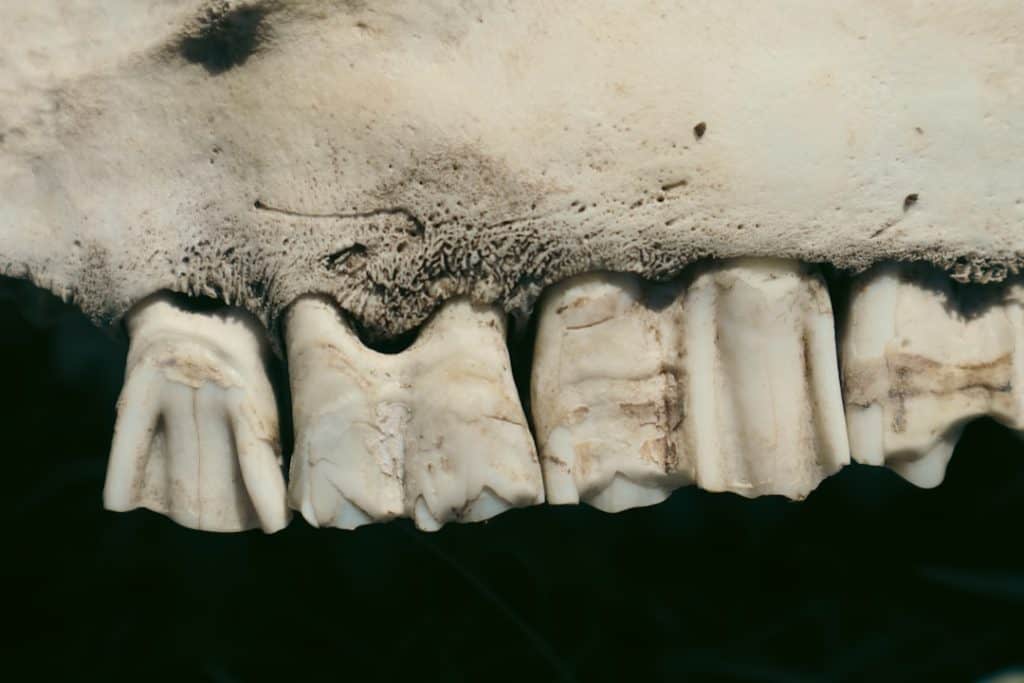
Why Dog Bad Teeth Are a Serious Health Problem, Not Just a Cosmetic One
Dog bad teeth are one of the most common and most overlooked health problems in South African pets. Here is what you need to know at a glance:
Quick answers:
- Up to 80% of dogs show signs of periodontal disease by age 3
- Bad breath is usually the first visible sign
- Dental disease is not just a mouth problem. Bacteria can travel to the heart, liver and kidneys
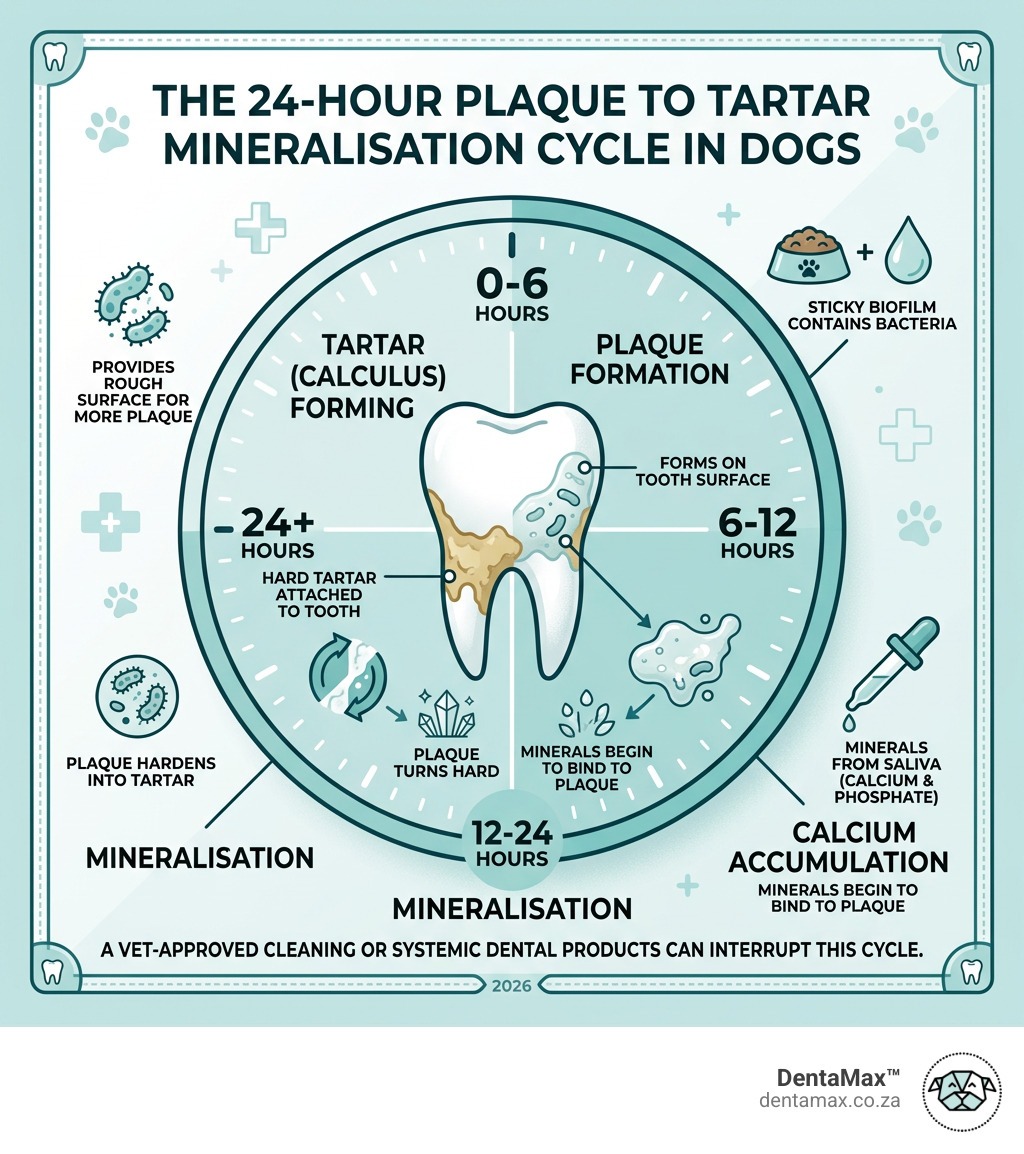
- Plaque hardens into tartar in as little as 24 hours
- Most dental damage (around 40%) happens below the gum line, where you cannot see it
- Prevention is far easier and less costly than treatment
Many dog owners assume bad breath in their pet is normal. It is not. Persistent bad breath signals bacterial buildup that, if left untreated, progresses into gum infection, bone loss and eventually tooth loss. In advanced cases, the infection spreads beyond the mouth entirely.
What makes this condition particularly difficult to manage is that dogs instinctively hide dental discomfort. By the time an owner notices something is wrong, the disease is often already at an advanced stage.
The good news is that with the right knowledge and a consistent preventative routine, dental disease is largely avoidable.
I’m Sharon Milani, Co-Founder and Director of NutriFlex® and developer of DentaMax™, a 100% pure organic Ascophyllum nodosum dental powder formulated specifically to support systemic plaque reduction in dogs with dog bad teeth. My work is grounded in evidence-based pet nutrition and I collaborate closely with veterinary and nutritional professionals to ensure every recommendation is safe, compliant and practical for South African pet owners.
Identifying the Signs and Symptoms of Dog Bad Teeth
Recognising the early warning signs of dog bad teeth is the first step toward preventing a lifetime of pain for your pet. In South Africa, many pet owners only seek help when a dog stops eating, but by then, the disease has usually progressed to a severe stage.
Plaque is a sticky, colourless film of bacteria that constantly forms on the teeth. If it is not removed through mechanical or systemic means, it reacts with minerals in the dog’s saliva to form tartar (calculus). This process happens rapidly, often within 24 to 48 hours. Once tartar has formed, it provides a rough surface that allows even more plaque to stick, creating a cycle of infection that moves under the gum line.
Common Signs and Symptoms of dog bad teeth
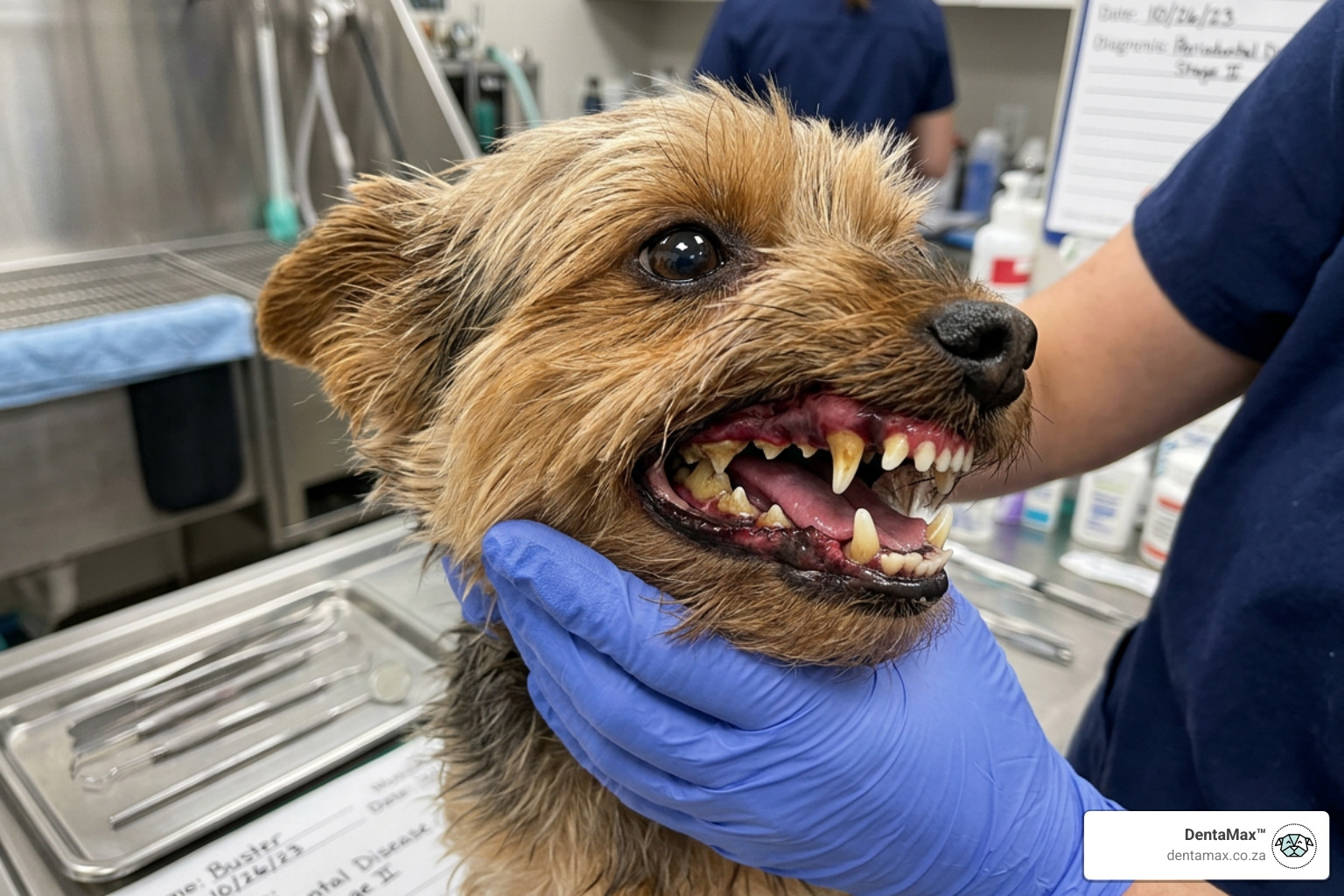
The most obvious sign of dental trouble is halitosis, or foul breath. While many people joke about “dog breath”, a healthy dog’s mouth should not smell offensive. Beyond the smell, owners should look for physical changes in the mouth.
- Gingivitis: This is the earliest stage of periodontal disease. You will notice a thin red line along the gums where they meet the teeth. Healthy gums should be a consistent light pink.
- Bleeding Gums: You might find blood on chew toys or see pink-tinged saliva.
- Tartar Buildup: Visible yellow or brown deposits on the teeth, especially the large carnassial teeth at the back.
- Excessive Drooling: While some breeds like Bloodhounds naturally drool, a sudden increase can indicate oral pain.
- Facial Swelling: This often signals a tooth root abscess, which may even cause a draining tract under the eye.
- Pawing at the Mouth: Dogs may rub their face against furniture or paw at their muzzle to relieve discomfort.
To help you identify the severity, we can compare healthy mouths to those with advanced disease:
| Feature | Healthy Gums & Teeth | Stage 4 Periodontal Disease |
|---|---|---|
| Tooth Colour | Bright white | Yellow, brown or black |
| Gum Appearance | Light pink and firm | Deep red, swollen or receding |
| Stability | Teeth are firmly rooted | Teeth are loose or missing |
| Odour | Neutral or smells of food | Strong, repulsive “rotten” smell |
| Pain Level | None | High (often hidden by the dog) |
For a deeper dive into how these biofilms form, you can read our guide on What is Plaque in Dogs. If you suspect your dog is in pain, it is vital to understand Dental Pain in Dogs and seek professional advice immediately.
Behavioral Changes and Quality of Life
Because dogs are masters at hiding physical pain, behavioural changes are often the only clues we get. A dog with dog bad teeth may become irritable or “grumpy”. Owners often mistake this for old age, but it is frequently a reaction to chronic dental pain.
You might notice your dog dropping food while eating or running away from the food bowl after taking a bite. Some dogs may lose interest in their favourite fetch toys because carrying them hurts their gums. When these dental issues are treated, many owners report that their dogs “act like puppies again”, proving that the silent burden of dental disease was significantly impacting their quality of life. Explore more about Dog Cat Dental Care to see how these changes manifest.
The Progression of Periodontal Disease and Systemic Risks
Periodontal disease does not stay in the mouth. It is a progressive inflammatory condition affecting the periodontium, which includes the gums, the cementum covering the tooth root, the periodontal ligament and the alveolar bone socket.
It begins with the formation of a biofilm (plaque). If not disrupted, this biofilm mineralises into tartar. The bacteria then migrate subgingivally (below the gum line), where they are protected from the dog’s tongue and even most toothbrushes. Here, they produce toxins that trigger the body’s immune system to destroy the very bone holding the teeth in place. Learn more about the Periodontal Disease in Dogs progression and how How Does Dentamax Work to disrupt this cycle.
Why Professional Care is Essential for dog bad teeth
There is a common misconception that “cleaning” a dog’s teeth at a groomer or at home with a scaler is enough. This is dangerous. This only removes the visible tartar above the gum line, leaving the active infection underneath untouched.
Veterinarians follow the “40 percent rule”: approximately 40% of dental disease is hidden beneath the gum line and can only be seen with digital X-rays. Without professional intervention, untreated dog bad teeth can lead to:
- Tooth Root Abscesses: These are painful infections at the base of the tooth. You can read more about a Tooth Root Abscess in Dogs to understand the risks.
- Oronasal Fistulas: In small breeds like Dachshunds, the infection can eat through the bone between the mouth and the nasal cavity, causing chronic sneezing and nasal discharge.
- Jaw Fractures: Severe bone loss can weaken the lower jaw (mandible) so much that it snaps during normal activities like eating.
Impact on Heart, Liver and Kidneys
The most frightening aspect of dog bad teeth is bacteremia. Every time a dog with gum disease chews, bacteria enter the bloodstream through the inflamed, bleeding tissues in the mouth.
These bacteria can then travel to and colonise vital organs. Studies have shown a direct link between periodontal disease and:
- Heart Disease: Bacteria can cause endocarditis, an inflammation of the heart valves.
- Kidney and Liver Damage: Chronic infection forces these organs to work overtime to filter toxins, leading to long-term inflammation and organ failure.
Protecting your pet’s systemic health starts with understanding Dental Disease and its Relation to Systemic Disease in Pets.
Professional Diagnosis and Veterinary Treatment
When a dog has advanced dental disease, home care is no longer enough. A professional veterinary dental procedure is required. This is a medical treatment, not just a “cleaning”.
The Role of Anaesthesia and X-rays
In South Africa, “anaesthesia-free” dental cleanings are sometimes marketed to worried pet owners. However, professional bodies and the Veterinary Oral Health Council strongly advise against them.
General anaesthesia is necessary for several reasons:
- Safety: It allows the vet to place a breathing tube, which prevents the dog from inhaling bacteria-laden water and debris during the cleaning.
- Thoroughness: A dog will not sit still for subgingival scaling or the probing of deep gum pockets.
- X-rays: Full-mouth radiographs are the gold standard. They allow the vet to see bone loss, hidden abscesses and resorptive lesions that are invisible to the naked eye.
Modern anaesthesia is very safe, and the risks are far outweighed by the benefits of removing a chronic, painful infection from the body. You can find more details in our Dog Cat Dental Powder Guides.
Common Dental Procedures
During a professional session, the veterinarian will scale the teeth using ultrasonic tools to remove tartar, then polish the enamel to smooth out microscopic scratches where plaque could hide. If a tooth is “rotting” or has significant bone loss (Stage 3 or 4), extraction is often the kindest option. Dogs actually eat much better with no teeth than they do with painful, infected ones.
Veterinary intervention may involve various necessary treatments to restore oral health, with costs typically ranging from R500 to R5000 or more, depending on the complexity and whether extractions or specialist root canals are needed.
A Step-by-Step Prevention Plan for dog bad teeth
Once the mouth is clean, the goal is to keep it that way. Prevention is a multi-modal approach combining systemic support, mechanical cleaning and regular check-ups.
Systemic Plaque Reduction with Ascophyllum nodosum
At DentaMax™, we focus on the power of Ascophyllum nodosum, a specific type of North Atlantic kelp. Unlike standard treats that only work through friction, this seaweed works systemically.
When a dog ingests Ascophyllum nodosum, the active compounds are absorbed into the bloodstream and then excreted back into the mouth via the saliva. This process:
- Disrupts the biofilm of plaque, making it “softer” and harder for it to stick to the teeth.
- Slows down the mineralisation of plaque into hard tartar.
- Improves the overall health of the oral microbiome.
For South African pet owners, using Dentamax Dental Powder is an easy way to support dental health, especially for dogs that do not tolerate brushing.
Mechanical Cleaning and Dietary Support
Daily brushing remains the “gold standard” for removing plaque before it hardens. Use a soft-bristled toothbrush or a finger brush and a toothpaste specifically formulated for dogs. Never use human toothpaste, as it often contains xylitol or fluoride, both of which are toxic to dogs.
Diet also plays a role. While some dry kibbles provide a slight abrasive effect, they are not a substitute for active care. Avoid sugary treats and very hard items like cow hooves or stones, which can cause painful slab fractures on the teeth. If your dog has bad breath, finding a Dog Bad Breath Cure usually involves a combination of these methods.
Frequently Asked Questions about Dog Bad Teeth
We receive many questions from concerned pet owners at our locations in Cape Town, Johannesburg and Durban. Here are some of the most common ones. You can also view our full Frequently Asked Questions page.
Are cavities common in dogs?
In humans, cavities (caries) are very common due to our high-sugar diets and flat molar surfaces. In dogs, however, true cavities are rare, occurring in 5% or less of the population. This is because dog teeth are mostly cone-shaped, and their saliva has a more basic pH which neutralises acids.
When a dog has “rotten” teeth, it is almost always due to periodontal disease rather than a cavity. For more on this distinction, see Rotten Dog Teeth: Signs, Symptoms and Treatments.
Can I remove tartar at home?
No. Once plaque has mineralised into tartar, it is effectively like concrete bonded to the tooth. Attempting to scrape it off with a metal tool at home can easily damage the enamel, creating a rough surface that attracts even more bacteria. It also risks causing the dog pain, which may lead to biting or a fear of having their mouth touched. Tartar removal must be done by a professional using specialised equipment.
Which breeds are most at risk?
While all dogs can develop dog bad teeth, small and “toy” breeds are at significantly higher risk. Owners of small breeds often file 10% more dental claims than large breed owners.
Breeds like Chihuahuas, Yorkshire Terriers, Dachshunds and Poodles have tiny mouths but the same number of teeth as large dogs. This leads to crowding, which traps food and bacteria more easily. Brachycephalic (flat-faced) breeds like Pugs and Bulldogs also suffer from rotated teeth and abnormal bites, making them highly susceptible to early-onset periodontal disease.
Conclusion
DentaMax™ provides the educational framework for South African pet owners to understand the critical link between oral hygiene and systemic longevity. By combining professional veterinary intervention with evidence based systemic supplementation like Ascophyllum nodosum and daily mechanical brushing, owners can effectively manage oral biofilms.
Whether you are in Muizenberg or Johannesburg, prioritising early detection and a structured preventative programme ensures that dental disease does not compromise a dog’s health or comfort. If you want to learn more about how to protect your pet, find More info about systemic dental powder and start your journey toward a healthier, happier dog today.