Plaque vs Tartar in Dogs
Dental disease in dogs usually starts with something small and invisible: plaque.
Many dog owners only notice a problem once thick brown tartar appears on their dog’s teeth. By that stage, the dental disease process has already been active for weeks or months. The tartar effects on dog dental health can lead to significant issues, including pain and tooth loss. Regular dental check-ups and cleanings are crucial to prevent the progression of these problems. Additionally, maintaining proper oral hygiene at home can greatly reduce the buildup of tartar and improve your dog’s overall health.
Understanding the difference between plaque and tartar is one of the most important steps in protecting your dog’s oral health.
What Is Plaque on Dog Teeth?
Plaque is a soft, sticky layer of bacteria that constantly forms on the surface of a dog’s teeth.
It develops when:
-
Oral bacteria
-
Saliva proteins
-
Food particles
combine to form a biofilm that attaches to the enamel.
Plaque begins forming within hours after eating. It is usually invisible at first but quickly becomes the starting point of dental disease.
If plaque is removed early, teeth remain healthy. If it stays on the tooth surface, the situation changes.
What Is Tartar in Dogs?
Tartar (also called dental calculus) is hardened plaque.
When plaque remains on teeth, minerals in saliva begin to crystallise inside the bacterial film. This causes the plaque to harden into a rough, calcified deposit.
Tartar typically appears as:
-
Yellow
-
Brown
-
Grey crust
along the gumline and on the outer surface of teeth.
Unlike plaque, tartar cannot be removed with simple brushing once it has hardened.
Plaque vs Tartar in Dogs (Quick Comparison)
| Feature | Plaque | Tartar |
|---|---|---|
| Texture | Soft and sticky | Hard and crusty |
| Colour | Colourless or pale film | Yellow, brown or grey |
| Formation time | Within hours | Within 1–3 days |
| Removal | Can be removed early | Usually requires professional cleaning |
| Risk | Early stage of dental disease | Accelerates gum disease |
What Is the Difference Between Plaque and Tartar in Dogs?
Plaque is a soft bacterial film that forms on dog teeth within hours after eating. If plaque is not removed, minerals in saliva cause it to harden into tartar, a rough calcified deposit that sticks to teeth and irritates the gums. Plaque can often be removed with early dental care, but tartar usually requires professional cleaning.
How Plaque Turns Into Tartar
The transformation from plaque to tartar happens surprisingly quickly.
The process typically follows this timeline:
-
Hours after eating: bacteria attach to the tooth surface
-
24 hours: plaque begins forming a visible biofilm
-
24–72 hours: minerals in saliva start hardening the plaque
-
Several days: tartar deposits become firmly attached to teeth
Once tartar forms, the rough surface traps even more bacteria, accelerating dental disease.
Why Plaque Is the Real Problem
Most people focus on tartar because it is visible.
However, plaque is the real driver of dental disease.
Plaque bacteria release toxins that irritate the gums. This irritation causes inflammation known as gingivitis, which is the first stage of periodontal disease.
If untreated, the infection can progress deeper into the structures that hold teeth in place.
What Tartar Does to Dog Teeth
Tartar itself is not just cosmetic.
Its rough structure creates a surface where bacteria multiply rapidly.
This leads to:
-
Chronic gum inflammation
-
Gum recession
-
Destruction of the bone supporting the teeth
-
Tooth loss in advanced cases
Tartar also traps bacteria under the gumline, where infections become much harder to treat.
Signs Your Dog Has Plaque
Plaque can be difficult to spot early, but some subtle signs include:
-
Slight film on teeth
-
Mild bad breath
-
Teeth feeling sticky when touched
-
Early redness along the gumline
At this stage, dental disease is still highly reversible.
Signs Your Dog Has Tartar
Tartar is far easier to recognise.
Common signs include:
-
Yellow or brown crust on teeth
-
Thick buildup along the gumline
-
Persistent bad breath
-
Red or swollen gums
Once tartar appears, plaque has usually been present for some time.
Why Small Dogs Often Have More Tartar
Small dog breeds are especially prone to tartar buildup.
This happens because:
-
Teeth are crowded in small jaws
-
Food particles become trapped more easily
-
Plaque accumulates faster between teeth
Breeds commonly affected include:
-
Yorkshire Terriers
-
Dachshunds
-
Chihuahuas
-
Toy Poodles
Without consistent dental care, tartar can develop rapidly.
The Link Between Tartar and Periodontal Disease
If tartar continues to accumulate, bacteria move deeper below the gumline.
This leads to periodontal disease, a progressive infection that damages the structures supporting the teeth. canine periodontal disease symptoms can range from bad breath and swollen gums to more serious outcomes like tooth loss. Early detection is crucial in managing these symptoms effectively to ensure the health and well-being of the animal. Regular veterinary check-ups can help identify the onset of periodontal issues before they progress.
Advanced stages can result in:
-
Loose teeth
-
Tooth loss
-
Bone destruction
-
Chronic oral pain
By the time severe tartar is present, periodontal disease is often already underway.
How Fast Does Plaque Turn Into Tartar in Dogs?
Plaque can begin forming on a dog’s teeth within hours after eating. If plaque is not removed, minerals in saliva begin to harden it into tartar within 24 to 72 hours. Once tartar forms, it attaches firmly to the teeth and typically requires professional dental cleaning to remove.
Preventing Plaque Before It Becomes Tartar
Because tartar forms from plaque, prevention focuses on stopping plaque early.
Effective strategies include:
-
Regular brushing
-
Routine dental monitoring
-
Preventing bacterial biofilm buildup
The key principle is simple: plaque must be disrupted before it mineralises.
Why Dental Powders Are Becoming Popular
Many dog owners struggle with brushing their dog’s teeth daily.
As a result, dental powders have become a popular preventative approach.
These powders are typically sprinkled onto food and work by supporting the natural balance of oral bacteria while helping reduce plaque formation.
By addressing plaque early, they aim to slow the plaque-to-tartar cycle.
Where DentaMax Fits Into the Picture
Products designed to support oral health are most effective before heavy tartar forms.
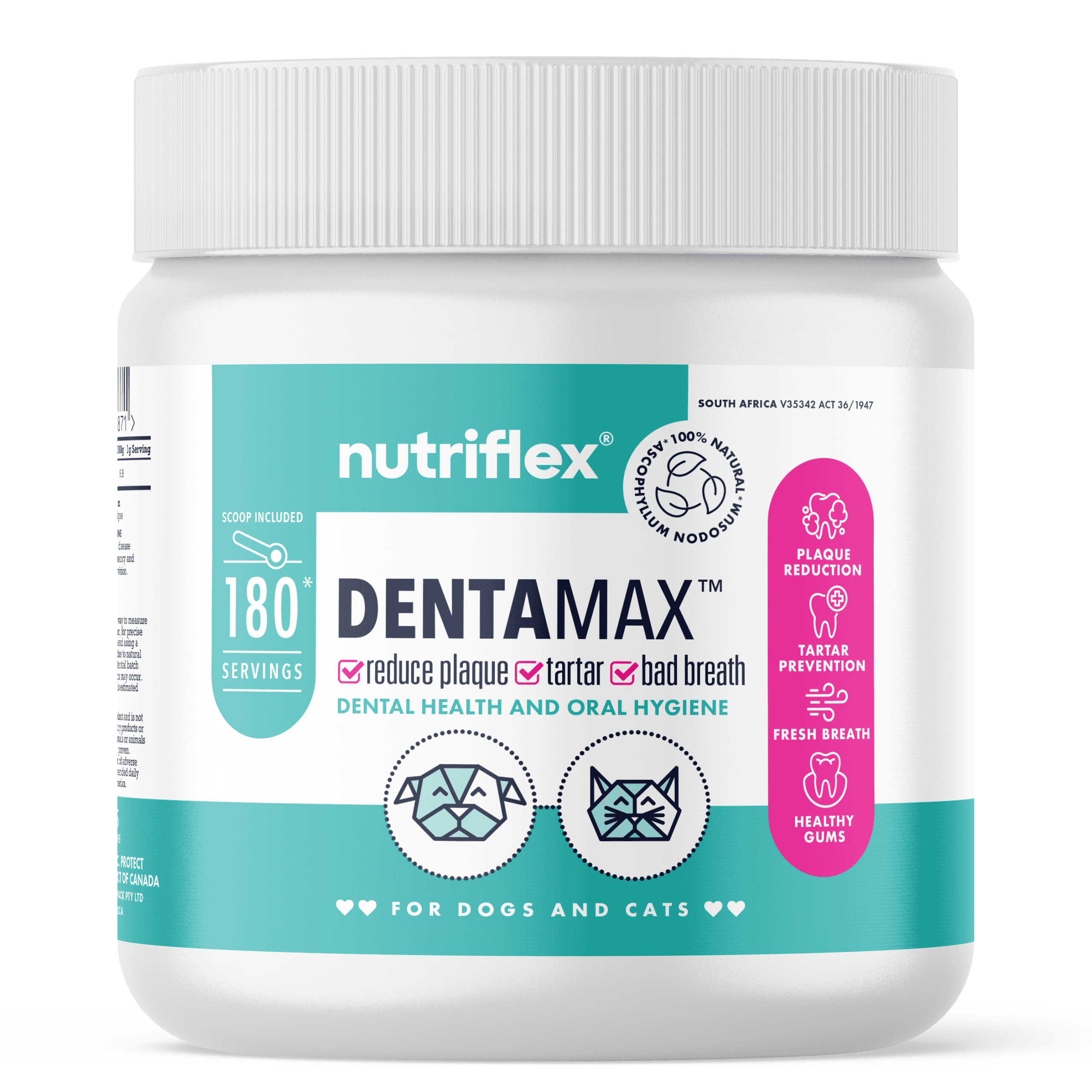
A daily dental powder such as DentaMax is designed to help reduce plaque accumulation in the mouth, the stage at which dental disease begins.
By targeting plaque early in the process, the goal is to help prevent the buildup that eventually hardens into tartar.
For dogs that already have heavy tartar, veterinary cleaning may still be required, but maintaining plaque control afterwards becomes critical for long-term oral health.
Why Preventing Plaque Matters Most
Once tartar forms, removing it becomes significantly more difficult.
Preventing plaque buildup is, therefore, the most effective strategy for maintaining healthy teeth.
Dogs that maintain low plaque levels are far less likely to develop:
-
chronic bad breath
-
gum inflammation
-
periodontal disease
-
tooth loss
Consistent dental care is the key factor that determines long-term oral health.
Is Plaque or Tartar Worse for Dogs?
Plaque is the root cause of dental disease, while tartar is hardened plaque that worsens the problem. Plaque bacteria irritate the gums and trigger inflammation. If plaque is not removed, it mineralises into tartar, which traps more bacteria and accelerates periodontal disease.
The Bottom Line
Plaque and tartar are not the same.
Plaque is the early bacterial film that forms daily on teeth.
Tartar is plaque that has hardened into mineral deposits.
Once tartar forms, dental disease becomes much harder to control.
The most effective approach is simple:
Stop plaque from turning into tartar.