Dental plaque is the starting point of nearly every dental problem dogs experience. Most owners only notice a problem when tartar, bad breath, or gum disease appear, but the process begins much earlier with an invisible bacterial film on the teeth.
Understanding plaque is the key to preventing dental disease. Once you know how it forms and why it builds up so quickly, the path to protecting your dog’s teeth becomes far clearer.
What Is Plaque on Dog Teeth?
Within hours after eating, bacteria in the mouth attach themselves to the enamel and begin multiplying. These bacteria produce a thin film that coats the tooth surface.
If plaque is not regularly disrupted or removed, it continues to grow and thicken.
Over time, it becomes the foundation for tartar and periodontal disease.
What Does Plaque Look Like on Dog Teeth?
Plaque is often difficult to see at first because it forms as a thin, pale film.
Common visual signs include:
-
A slightly yellow or off-white coating on teeth
-
A film along the gumline
-
Teeth that appear dull rather than glossy
-
Mild gum redness
In early stages, plaque may only be noticeable when you gently run a fingernail across the tooth and feel a soft coating.
How Quickly Plaque Forms on Dog Teeth
One of the most misunderstood facts about canine dental health is how fast plaque develops.
Bacteria begin colonising the tooth surface within hours after eating.
The typical cycle looks like this:
-
Food particles remain in the mouth after meals
-
Oral bacteria attach to the enamel
-
Bacteria multiply and produce a sticky biofilm
-
The biofilm thickens into plaque
This entire process can occur in less than 24 hours.
That is why plaque control must be consistent.
Where Plaque Builds Up First
Plaque rarely forms evenly across the mouth. It tends to accumulate in areas where natural cleaning from chewing is limited.
Common plaque accumulation zones include:
-
The gumline
-
The back molars
-
Crowded teeth
-
The inside surfaces of teeth
-
Teeth in small dog breeds
These areas create sheltered pockets where bacteria thrive.
Why Dogs Are Prone to Plaque Buildup
Dogs are particularly vulnerable to plaque for several biological reasons.
Oral bacteria thrive in warm, moist environments
A dog’s mouth provides ideal conditions for bacterial growth.
Saliva contains minerals
These minerals eventually harden plaque into tartar.
Food residue remains in the mouth
Particles become fuel for bacteria.
Many dogs lack daily dental care
Without routine plaque disruption, buildup continues unchecked.
The result is that most dogs develop dental disease during their lifetime if plaque is not managed.
Plaque vs Tartar on Dog Teeth
Many dog owners confuse plaque and tartar, but they are not the same thing.
| Plaque | Tartar |
|---|---|
| Soft bacterial film | Hardened mineral deposits |
| Forms within hours | Forms after plaque mineralises |
| Often invisible | Usually yellow or brown |
| Can be removed easily | Requires professional cleaning |
The key difference is that plaque is preventable, while tartar is much harder to remove once it forms.
How Plaque Turns into Tartar
If plaque is not disrupted regularly, minerals in saliva begin to harden it.
This process is called mineralisation.
Over time:
-
Calcium and phosphate from saliva bind to plaque
-
The plaque begins to harden
-
It transforms into tartar (also called calculus)
Once tartar forms, it creates a rough surface that allows even more plaque to accumulate.
This accelerates dental disease.
Why Plaque Causes Bad Breath in Dogs
One of the earliest signs of plaque is bad breath.
Plaque bacteria break down proteins in food particles and produce volatile sulphur compounds.
These gases create the unpleasant smell commonly known as dog breath.
As plaque increases, bad breath usually becomes more noticeable.
How Plaque Leads to Gum Disease
Plaque does more than coat the teeth. It also irritates the gums.
Bacteria release toxins that trigger inflammation.
This leads to:
-
Red gums
-
Swelling
-
Bleeding
-
Gingivitis
If plaque remains untreated, inflammation progresses into periodontal disease, which damages the tissues supporting the teeth.
Breeds Most at Risk of Plaque Buildup
Some dogs develop plaque faster than others.
Small breeds are particularly vulnerable.
Common high-risk breeds include:
-
Yorkshire Terriers
-
Pomeranians
-
Chihuahuas
-
Maltese
-
Toy Poodles
These breeds often have crowded teeth, which trap plaque easily.
Age and Plaque Accumulation
Plaque tends to increase as dogs age.
The reasons are simple:
-
Years of buildup accumulate
-
Gum recession creates deeper pockets
-
Older dogs may chew less
Without regular plaque management, dental disease often becomes more severe with time.
Does Kibble Remove Plaque?
A widespread myth suggests that dry dog food cleans teeth.
In reality, most kibble breaks apart immediately when bitten.
This means it rarely scrapes plaque off the tooth surface.
While chewing may provide minor mechanical contact, it is usually not enough to control plaque buildup effectively.
How to Remove Plaque from Dog Teeth
Because plaque is soft, it can be disrupted relatively easily.
Common approaches include:
Tooth brushing
Mechanical brushing physically removes plaque before it hardens.
Dental chews
Some products provide limited mechanical scraping.
Professional cleaning
Veterinary scaling removes hardened tartar.
However, consistency is the most important factor.
Plaque forms daily, so plaque control must also be daily.
Daily Plaque Control for Dogs
The most effective dental routines combine multiple strategies.
Common plaque control methods include:
-
Regular tooth brushing
-
Appropriate chewing activity
-
Veterinary dental checks
-
Daily dental supplements
The goal is to disrupt plaque before it mineralises.
Dental Powders and Plaque Control
Many pet owners struggle to brush their dog’s teeth every day.
For this reason, some owners use dental powders that work through saliva.
These powders are added to food and contain natural ingredients that help reduce plaque accumulation on the tooth surface.
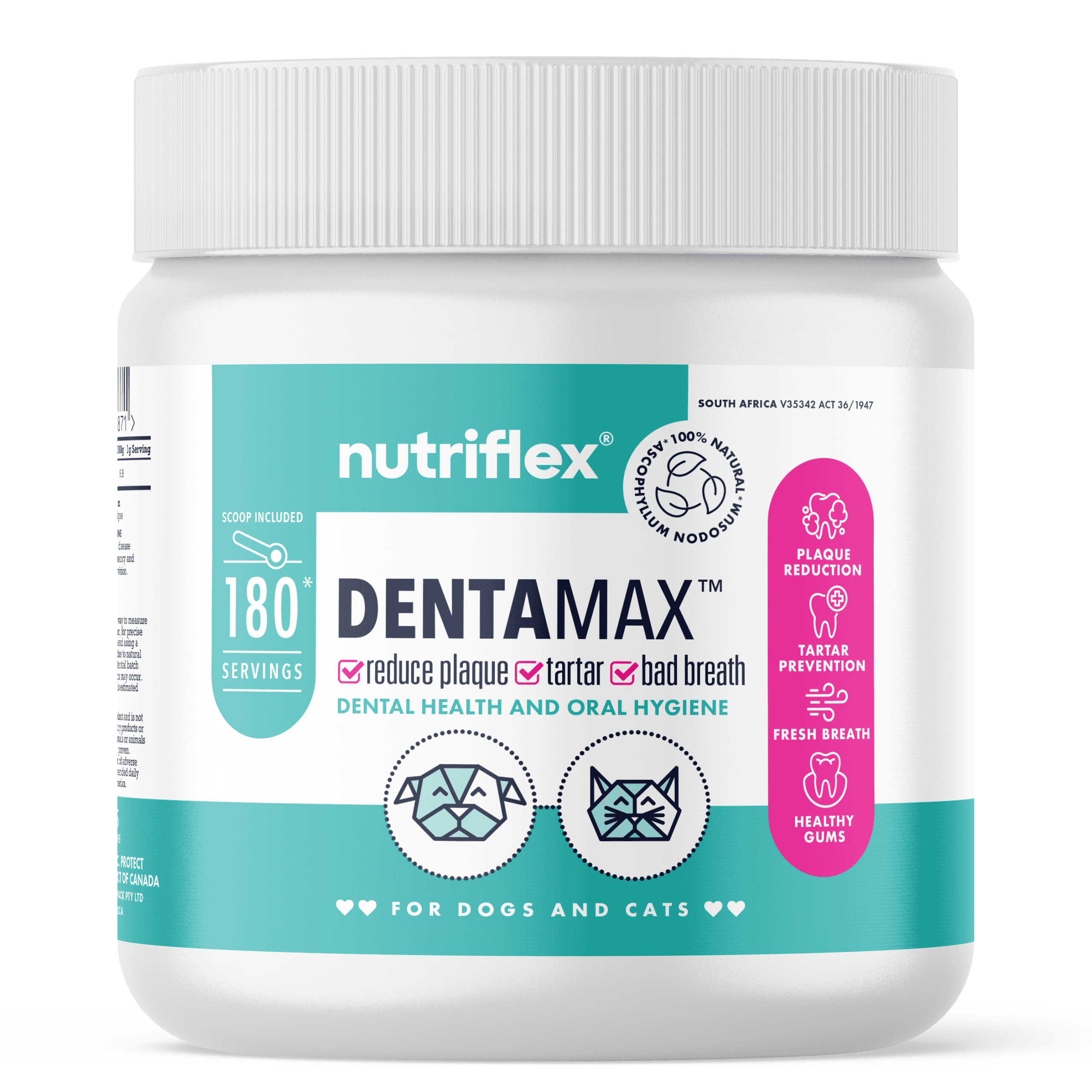
Products such as DentaMax dental powder are designed to support daily plaque management by helping to reduce the formation of plaque biofilm.
Because they are added directly to food, they can be used as part of a simple daily dental routine.
How to Check Your Dog’s Teeth for Plaque
You can monitor plaque buildup at home.
Look for:
-
Yellow film on teeth
-
Bad breath
-
Red gums
-
Deposits along the gumline
Checking your dog’s mouth regularly allows problems to be addressed before they worsen.
Preventing Plaque Before It Starts
The most effective dental strategy is prevention.
Healthy routines include:
-
Starting dental care early in life
-
Maintaining consistent daily hygiene
-
Monitoring teeth regularly
-
Using supportive dental products
Preventing plaque buildup is far easier than treating advanced dental disease.
When Plaque Requires Veterinary Care
If plaque progresses to tartar and gum disease, professional treatment may be necessary.
Signs that require veterinary attention include:
-
Thick brown tartar
-
Bleeding gums
-
Loose teeth
-
Severe bad breath
-
Difficulty eating
Veterinary dental cleaning may be required to restore oral health.
The Bottom Line on Plaque in Dogs
Plaque is the first stage of canine dental disease.
It forms quickly, often within hours after eating, and if it is not managed regularly, it can harden into tartar and lead to periodontal disease.
The key to protecting your dog’s teeth is consistent plaque control.
Simple daily habits can make a significant difference to long-term dental health.
What is plaque on dog teeth?
Plaque on dog teeth is a data-end=”8496″>soft bacterial film made up of bacteria, saliva, and food particles that forms on the tooth surface. It develops within hours after eating and, if not removed, can harden into tartar and contribute to gum disease. removing plaque from pet teeth is essential to maintaining their oral health. Regular dental care can prevent serious issues such as tooth decay and infection. Additionally, using specialised pet dental products can make this task easier and more effective for pet owners.
How quickly does plaque form on dog teeth?
Plaque can begin forming within hours after a dog eats. Oral bacteria attach to the tooth surface and multiply, creating a sticky biofilm that gradually thickens if not regularly removed.
What causes plaque on dog teeth?
Plaque forms when bacteria in the mouth combine with saliva and food particles, creating a sticky biofilm that coats the teeth. Without regular dental care, this film accumulates and can eventually harden into tartar.
Can plaque on dog teeth be removed?
Yes. Because plaque is soft, it can often be removed through tooth brushing, dental hygiene routines, or supportive dental supplements before it hardens into tartar.