Plaque is the starting point of almost every dental problem in dogs.
It begins as a soft, sticky bacterial film that forms on the surface of teeth. This biofilm develops within hours after eating. If plaque is not disrupted regularly, it mineralises into tartar along the gum line.
Once tartar forms, it becomes much harder to remove and often requires professional veterinary cleaning.
Understanding how plaque forms and how to manage it consistently is the key to maintaining healthy teeth and gums in dogs.
What Plaque Is and Why It Forms on Dog Teeth
Plaque is a bacterial biofilm composed of:
-
Oral bacteria
-
Food particles
-
Saliva proteins
-
Bacterial waste products
This mixture adheres tightly to the tooth surface.
When dogs eat, microscopic food particles remain in the mouth. Oral bacteria rapidly colonise these particles, creating a structured bacterial layer.
This biofilm begins forming within hours after a meal.
If plaque is disrupted daily, it can be removed easily. If left undisturbed, minerals from saliva harden the plaque into tartar (dental calculus).
Plaque vs Tartar: Understanding the Difference
Plaque and tartar are often confused, but they are very different.
Plaque
-
Soft and sticky
-
Forms daily
-
Can be removed with brushing or daily dental care
Tartar (Calculus)
-
Hardened mineral deposit
-
Forms when plaque mineralises
-
Usually requires professional scaling by a veterinarian
The goal of dental care is to remove plaque before it becomes tartar.
Why Plaque Removal Is Important for Dogs
Plaque is not just a cosmetic issue.
As plaque accumulates, bacteria release toxins that irritate the gums. This causes inflammation known as gingivitis.
Over time, untreated plaque can lead to:
-
Gum inflammation
-
Periodontal disease
-
Tooth loosening or tooth loss
-
Oral pain and infection
In severe cases, oral bacteria can enter the bloodstream and contribute to systemic health issues.
Veterinary studies suggest that many dogs show signs of periodontal disease by the age of three.
This makes early plaque control essential.
Signs Your Dog Has Plaque Buildup
Dog owners often notice plaque through visible changes in the mouth.
Common signs include:
-
Yellow film on teeth
-
Brown deposits near the gum line
-
Bad breath
-
Red or swollen gums
-
Bleeding gums when chewing
-
Reluctance to chew hard foods
Early plaque appears as a thin yellow layer on the tooth surface.
At this stage, it can still be managed with consistent dental care.
Brushing Your Dog’s Teeth
Tooth brushing remains the most direct method of plaque removal.
Brushing works because it physically disrupts the bacterial biofilm before it mineralises.
Key points for brushing:
-
Use a toothbrush designed for dogs
-
Use dog-safe toothpaste (never human toothpaste)
-
Focus on the outer surfaces of the teeth
-
Brush gently along the gum line
Ideally, brushing should be done daily.
However, many dogs resist tooth brushing, and many owners struggle to maintain a consistent routine.
For this reason, alternative plaque management strategies are often used alongside brushing.
Dental Powders for Dogs
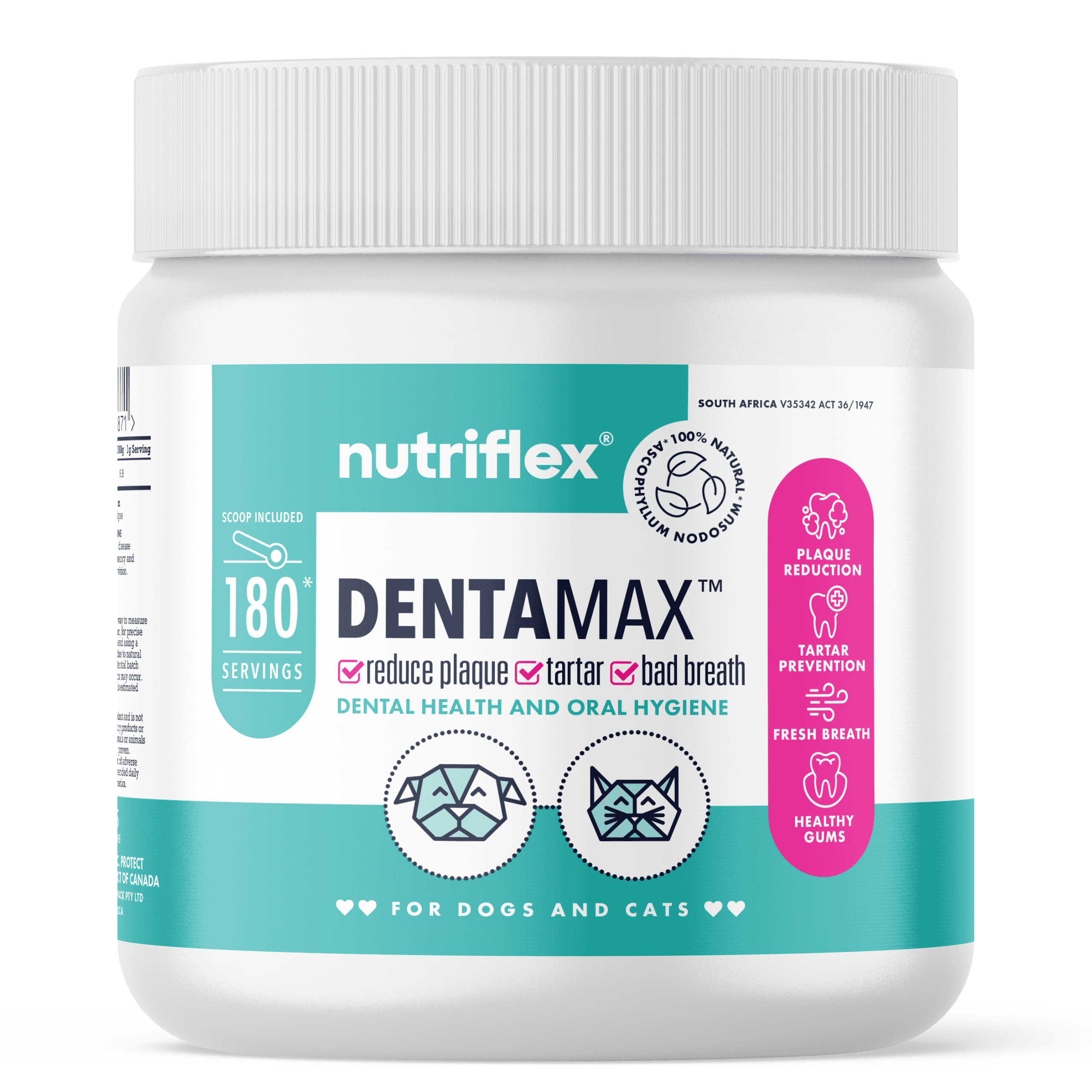
Dental powders are a simple way to support daily plaque control.
These supplements are typically sprinkled onto a dog’s food and consumed during meals.
Certain ingredients influence the oral environment through the bloodstream and saliva, helping to reduce plaque accumulation and tartar formation.
Dental powders are particularly useful for:
-
Dogs that resist brushing
-
Busy households that struggle with daily brushing routines
-
Long-term plaque management
When used consistently, they provide a passive form of daily dental support.
Ascophyllum Nodosum and Plaque Control
One ingredient that has received attention in veterinary dentistry is Ascophyllum nodosum.
This is a brown marine algae harvested from the North Atlantic.
Specific preparations of this ingredient have been studied for their potential role in plaque and tartar management in dogs.
The proposed mechanism involves bioactive compounds that influence the oral environment when absorbed and secreted through saliva.
Not all kelp products are the same. The source and preparation of the ingredient are important factors.
Dental Chews and Mechanical Cleaning
Chewing can help remove some plaque from tooth surfaces.
When dogs chew firm textures, mechanical abrasion may reduce soft plaque buildup.
However, the effectiveness depends on several factors:
-
The hardness of the chew
-
The dog’s chewing behaviour
-
The duration of chewing
Many dental treats are consumed too quickly to provide meaningful plaque removal.
While chewing can contribute to oral hygiene, it is rarely sufficient as the sole dental care strategy.
Does Kibble Clean Dog Teeth?
A common marketing claim suggests that dry kibble cleans dog teeth.
In reality, most standard kibble provides little meaningful plaque removal.
This happens because kibble typically shatters immediately when bitten, creating minimal contact with the tooth surface.
For mechanical cleaning to occur, food must resist crumbling and remain in contact with the tooth as the dog bites down.
Most commercial kibble does not function this way.
Dental hygiene in dogs therefore depends more on consistent oral care than on the type of food alone.
Water Additives and Oral Rinses
Some dental products are designed to be added to drinking water.
These solutions typically aim to:
-
Reduce oral bacteria
-
Freshen breath
-
Support gum health
While they may contribute to overall oral hygiene, their effects on established plaque biofilm are generally limited.
They are best used as part of a broader dental care routine.
Professional Veterinary Dental Cleaning
When plaque has already hardened into tartar, professional cleaning may be required.
Veterinary dental procedures typically involve:
-
Anaesthesia
-
Ultrasonic scaling
-
Removal of tartar above and below the gum line
-
Dental examination
Professional cleaning removes hardened calculus that cannot be safely removed at home.
However, without daily plaque control, tartar will eventually return.
Preventing Plaque from Returning
The most effective dental strategy focuses on daily plaque disruption.
This can include a combination of:
-
Tooth brushing
-
Dental powders
-
Chewing activity
-
Regular oral checks
Consistency matters more than intensity.
Plaque forms continuously, so daily dental habits are the most effective way to maintain oral health.
Dogs at Higher Risk of Plaque Buildup
Some dogs develop dental disease more quickly than others.
Higher-risk groups include:
-
Small breed dogs
-
Dogs with crowded teeth
-
Senior dogs
-
Dogs that eat soft diets
These dogs often benefit from more consistent dental care routines.
A Practical Daily Dental Routine for Dogs
A sustainable dental routine may include:
Daily
-
Add a dental powder to meals
-
Check the gums and teeth briefly
Several times per week
-
Brush teeth if the dog tolerates it
Regularly
-
Provide safe chewing opportunities
Annually
-
Veterinary dental examination
Consistency is the single most important factor in plaque prevention.
Key Takeaways
Plaque forms on dog teeth within hours after eating.
If not removed regularly, it mineralises into tartar and contributes to periodontal disease.
Effective plaque management focuses on daily disruption of bacterial biofilm through practical strategies such as brushing, dental supplements, and regular oral monitoring.
The earlier plaque control begins, the easier it is to maintain healthy teeth and gums throughout a dog’s life.