
Understanding Dental Plaque and Tartar in Cats
- Bacterial biofilm; mineralisation process; gingivitis risks; periodontal disease; systemic health; 24-48 hour window; South African veterinary standards; feline oral anatomy
- Scientific research on plaque formation: Dental Care Routines: Preventing Plaque Buildup in Cats
- More info about oral health: Dog & Cat Dental Care
Dental plaque is a living, sticky biofilm composed almost entirely of bacteria that colonise the tooth surfaces. In the warm, moist environment of a cat’s mouth, these bacteria multiply rapidly. Within just six hours of a professional cleaning, plaque begins to re-form. If this biofilm is not disrupted, it reacts with minerals in the saliva to harden into tartar (calculus) in as little as 24 to 48 hours. This mineralisation process is particularly aggressive in felines due to the specific pH levels of their saliva.
Unlike plaque, which can be managed with cat plaque control natural supplements, tartar is a cement-like substance that requires professional veterinary intervention to remove. Unchecked plaque leads to inflammation of the gums, known as gingivitis. If left to progress, it develops into periodontal disease, which can cause hidden pain, tooth loss and even damage to internal organs like the heart, liver and kidneys as bacteria enter the bloodstream. In South Africa, dental disease remains one of the most under-diagnosed conditions in domestic cats, often because felines are masters at hiding chronic pain.
The Science of Systemic Plaque Control
- Saliva chemistry; Ascophyllum nodosum; bacterial adherence; biofilm disruption; internal mechanism; clinical validation; VOHC approval; long-term safety
- More info about systemic action: How Does Dentamax Work?
The most significant breakthrough in natural feline dental care is the use of specific seaweed. When a cat ingests Ascophyllum nodosum kelp, the natural compounds are absorbed into the bloodstream and released back into the mouth through the saliva. This systemic process alters the chemical makeup of the saliva, making it harder for bacteria to stick to the enamel and softening existing tartar deposits. This method is particularly effective for cats that do not tolerate manual brushing, providing a non-invasive alternative that works from the inside out.
Key Benefits of Cat Plaque Control Natural Supplements
- Fresher breath; tartar reduction; gum health; non-invasive care; ease of use; cost-effectiveness; South African pet owner preferences; long-term wellness
- Scientific research on dental benefits: Clinically Proven Cat Dental Care: Natural Science Made Simple
- More info about product benefits: Dog & Cat Dental Powder South Africa

Using a cat plaque control natural supplement offers several advantages over traditional methods. The primary benefit is the noticeable improvement in halitosis (bad breath). Since bad breath is usually caused by gas-emitting bacteria in the plaque, reducing the bacterial load leads to a much fresher-smelling mouth. Owners typically report a difference in breath quality within just three weeks of daily use. This is a significant indicator that the bacterial colonies in the mouth are being successfully managed.
Furthermore, these supplements contribute to healthier gums by reducing the inflammatory response to plaque. By keeping the gumline clean, you reduce the risk of gingivitis and the associated pain that often leads to cats becoming fussy eaters. For South African pet owners, these supplements provide a cost-effective way to extend the time between expensive professional dental cleanings under anaesthesia. Chronic dental pain can also lead to behavioural changes such as irritability or withdrawal, so maintaining oral health is a vital component of feline mental wellness. By addressing the root cause of plaque formation, you are supporting the cat’s overall longevity and quality of life.
Top Natural Ingredients for Feline Dental Health
- Norwegian kelp; coconut powder; brewer’s yeast; iodine content; antimicrobial properties; palatability; single-ingredient purity; nutritional analysis
- Scientific research on seaweed: Ascophyllum Nodosum Dogs
- More info about ingredients: Dentamax Dental Powder
Why Ascophyllum Nodosum is the Gold Standard
- Bioactive compounds; seaweed harvesting; Scandinavian waters; biofilm prevention; tartar softening; mineral profile; vet-recommended; organic sourcing
The most effective ingredient for cat plaque control natural routines is Ascophyllum nodosum. This specific kelp, often harvested from pristine Scandinavian waters, contains unique bioactive compounds that have been clinically proven to reduce plaque and tartar. It is rich in vitamins and minerals, providing a nutritional boost alongside dental benefits. The polyphenols found in this seaweed are particularly effective at disrupting the sticky matrix that bacteria use to cling to the teeth. Because it is a natural, organic source, it avoids the synthetic chemicals often found in commercial dental chews.
The Role of Palatability Enhancers
- Brewer’s yeast; coconut flavour; cat preferences; easy administration; powder texture; moisture content; protein levels; salt restrictions
Because cats are notoriously picky, many natural dental powders include brewer’s yeast or coconut powder. Brewer’s yeast is highly attractive to most felines, ensuring they consume the full dose of the active kelp. It is also a rich source of B vitamins which support skin and coat health. Coconut powder is another excellent addition, offering mild antimicrobial properties while improving the taste profile of the supplement. These ingredients ensure that the dental care routine is a positive experience for the cat rather than a daily struggle for the owner.
How to Administer Natural Plaque Control Powders
- Weight-based dosage; daily routine; wet food vs dry food; gradual introduction; scoop measurements; storage tips; safety precautions; multi-cat households
- Scientific research on administration: Dental Powder for Cats and Dogs – Simply Natural
- More info about usage: Dog & Cat Dental Powder Guides

Administering a cat plaque control natural powder is remarkably simple. For most products, such as DentaMax™, you simply sprinkle the recommended amount onto your cat’s wet or dry food once per day. The powder adheres well to kibble and mixes seamlessly into wet food, making it virtually undetectable to most cats once they are accustomed to the scent.
Recommended Dosage Guidelines
- Milligram precision; cat weight categories; 330mg serving; R-value per dose; 40g bottle longevity; 60g bottle value; daily consistency; overdose prevention
Dosage is typically determined by the weight of your cat. For a standard cat, a daily serving of approximately 330mg is sufficient. It is often helpful to start with a smaller portion and gradually increase to the full dose over a week to allow your cat to adjust to the new taste. This gradual introduction is key for sensitive felines. A 40g bottle of high-quality dental powder can last a single cat up to four months, making it an affordable addition to their health regime. Consistency is vital, as the systemic effect relies on a steady level of the active compounds being present in the saliva. Skipping doses can allow the biofilm to begin mineralising into tartar again.
Precautions and Safety for Kelp Supplements
- Thyroid health; iodine sensitivity; hyperthyroidism; veterinary consultation; age restrictions; 12-week minimum; pregnancy considerations; monitoring reactions
- Scientific research on safety: Why We Don’t Use Activated Charcoal In Dog And Cat Dental Powders
- More info about safety: Activated Charcoal Dog Dental Powders
While kelp is a safe and natural ingredient for the vast majority of felines, there are specific precautions to keep in mind. Seaweed has a naturally high iodine content. Therefore, cats currently undergoing treatment for hyperthyroidism should avoid kelp-based products unless specifically cleared by a veterinarian. Hyperthyroidism is common in older South African cats, and managing their iodine intake is a critical part of their treatment plan.
It is also important to choose products that avoid unnecessary fillers. For example, some dental powders use activated charcoal, which we avoid because it can interfere with the absorption of certain medications and is generally unnecessary for effective plaque control. Furthermore, charcoal can be abrasive and may cause staining of household surfaces. Always store your supplements in a cool, dry place and keep the container tightly closed to maintain the potency of the natural ingredients. If you notice any unusual reactions, such as changes in appetite or energy levels, consult your veterinarian immediately.
Combining Natural Supplements with Home Care
- Alternative methods; dental treats; water additives; lip massage; gradual desensitisation; professional cleanings; South African vet advice; holistic routine
- Scientific research on home care: Why DentaMax Is The Best Choice For Your Pet’s Dental Health
- More info about comparisons: Dog & Cat Dental Powder South Africa
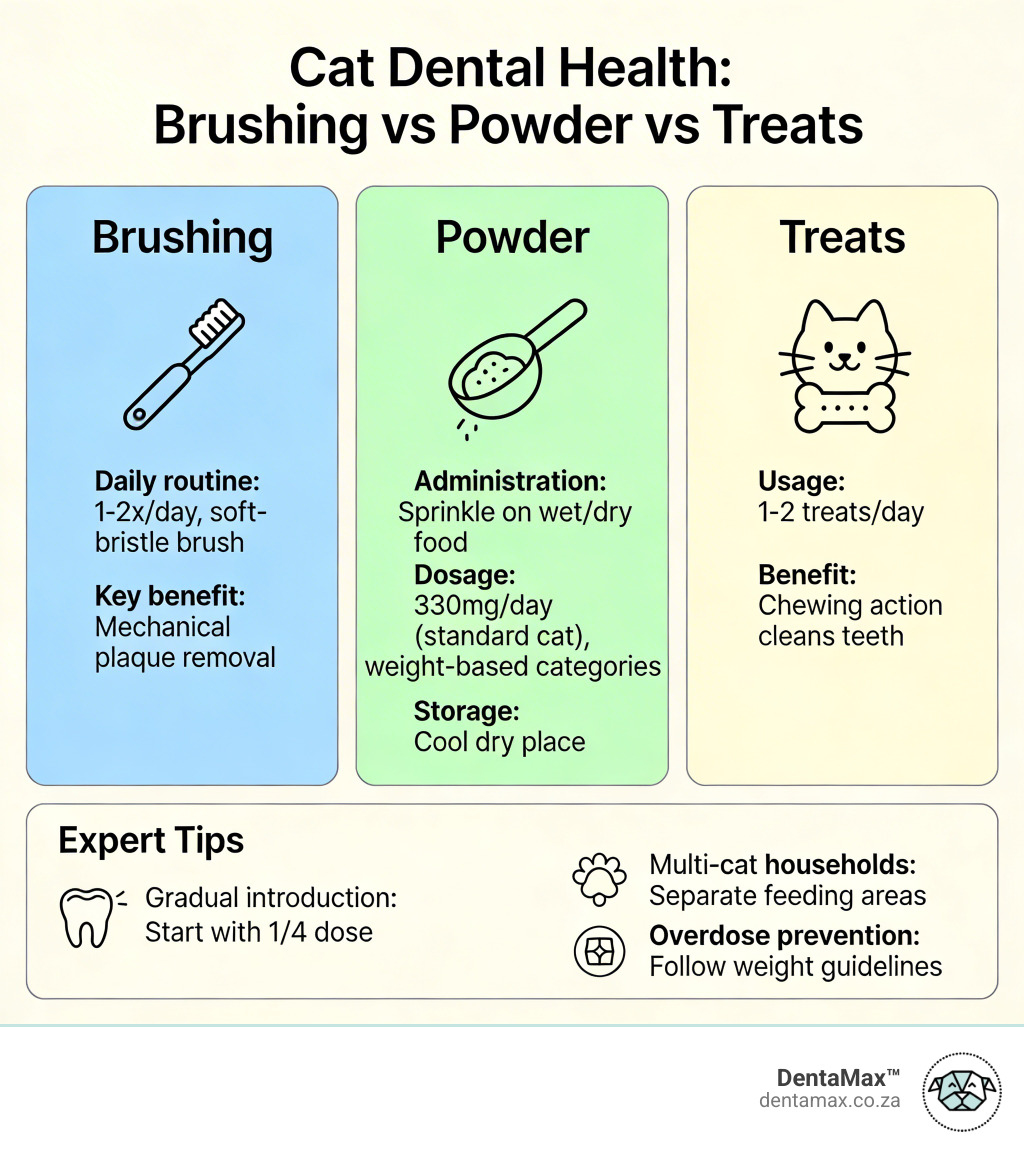
While cat plaque control natural powders are highly effective, they work best as part of a comprehensive oral hygiene strategy. If your cat allows it, occasional brushing with an enzymatic toothpaste can provide mechanical cleaning to supplement the systemic action of the powder. You can begin by using a soft finger brush and slowly introducing the taste of the paste. Lip massages can also help desensitise your cat to having their mouth handled, which makes veterinary examinations much less stressful.
For cats that absolutely refuse brushing, you can combine the powder with VOHC-approved dental treats. These treats provide a different type of mechanical abrasion that helps scrub the surface of the teeth. Additionally, ensure your cat has access to fresh water at all times, as hydration is essential for maintaining healthy saliva production. No home routine can fully replace professional veterinary examinations. Regular check-ups at your local clinic in Cape Town, Johannesburg or Durban are vital for detecting deep-seated issues like resorptive lesions that may not be visible to the naked eye. These lesions are incredibly painful and require professional imaging and treatment to resolve.
Conclusion: A Simple Step for Feline Wellness
Implementing a natural plaque control routine is one of the most impactful things you can do for your cat’s long-term health. By choosing a high-quality, single-ingredient supplement like DentaMax™, you provide your pet with clinically validated protection against the “silent” threat of dental disease. With just one small addition to their daily meal, you can look forward to fresher breath, cleaner teeth and a much happier cat.
To start your cat’s journey toward better oral health, explore our range of Dog & Cat Dental Powder South Africa and see why thousands of South African pet owners trust our natural science.