How Plaque Turns to Tartar
Dental disease rarely begins with obvious symptoms.
It usually starts with something almost invisible: plaque.
Plaque forms on teeth within hours after eating. If it is not regularly disrupted, it gradually hardens into tartar, also known as dental calculus. Once tartar forms, it becomes much harder to remove and often contributes to gum inflammation and periodontal disease.
Understanding how plaque turns into tartar is the key to preventing long-term dental problems in dogs. One major concern among dog owners is the tartar effects on dog dental health, as neglected plaque can lead to painful conditions like gum disease and tooth loss. Regular dental check-ups and professional cleanings are essential to combat these effects, keeping your dog’s teeth and gums in optimal condition. Additionally, incorporating dental chews and maintaining a proper at-home oral hygiene routine can significantly reduce the risk of tartar buildup.
What Is Dental Plaque?
Dental plaque is a sticky biofilm made up of:
-
Bacteria
-
Salivary proteins
-
Food debris
-
Microbial by-products
This film forms naturally on the surface of teeth. It is soft, colourless, and often difficult to see in the early stages.
Plaque begins developing very quickly after a dog eats.
Within a few hours, bacteria start attaching to the tooth surface and multiplying.
Why Plaque Forms So Quickly
A dog’s mouth is the perfect environment for bacteria:
-
Warm
-
Moist
-
Constantly supplied with nutrients
After meals, bacteria feed on leftover food particles and sugars. As they multiply, they produce a sticky matrix that allows them to attach tightly to the tooth surface.
This bacterial community is known as a biofilm.
Once established, the biofilm becomes difficult to wash away with saliva alone.
Where Plaque Usually Builds Up First
Plaque tends to accumulate in areas where natural cleaning from chewing or tongue movement is limited.
Common plaque accumulation zones include:
-
Along the gum line
-
Between teeth
-
On the back molars
-
Around crowded teeth
These areas provide sheltered surfaces where bacteria can grow undisturbed.
How Plaque Turns Into Tartar
The transformation from plaque to tartar happens through a process called mineralisation.
Saliva contains natural minerals such as:
-
Calcium
-
Phosphate
These minerals gradually deposit into the plaque layer.
As minerals accumulate, the soft plaque begins to harden.
Within days, the plaque becomes tartar (dental calculus).
How Does Plaque Turn Into Tartar?
Plaque turns into tartar when minerals from saliva, mainly calcium and phosphate, deposit into the bacterial plaque layer on teeth. This process, called mineralisation, hardens the soft plaque biofilm into dental calculus. Once plaque becomes tartar, it firmly attaches to the tooth surface and usually requires professional removal.
How Quickly Plaque Becomes Tartar
The timeline varies between dogs, but the process can begin surprisingly fast.
Typical progression:
-
0–24 hours: Plaque begins forming
-
24–72 hours: Bacterial biofilm thickens
-
Several days: Minerals start depositing
-
1–2 weeks: Hardened tartar deposits develop
Some dogs accumulate tartar faster due to genetics, diet, or oral microbiome differences.
Why Tartar Is Hard to Remove
Unlike plaque, tartar is hard and porous.
Once it forms, it bonds tightly to the enamel surface of the tooth.
Because of this, normal chewing or simple brushing may not remove it completely.
Veterinarians often need specialised dental tools to scale tartar off teeth during professional cleanings.
Why Tartar Makes Dental Disease Worse
Tartar does more than simply sit on the tooth surface.
Its rough texture creates the ideal environment for bacteria to accumulate.
This leads to a cycle:
-
Plaque forms
-
Plaque hardens into tartar
-
Tartar traps more bacteria
-
Bacterial irritation affects the gums
Over time this can lead to:
-
Gingivitis
-
Periodontal disease
-
Gum recession
-
Tooth loosening
The Gum Line: The Most Dangerous Area
Tartar often accumulates along the gum margin.
This area is particularly sensitive because bacteria can move beneath the gums and begin damaging the supporting tissues around the tooth.
As the infection progresses, it can affect:
-
Gum tissue
-
Periodontal ligaments
-
Jawbone around the tooth roots
This is why early plaque control is so important.
What Is the Difference Between Plaque and Tartar?
Plaque is a soft, sticky bacterial film that forms on teeth shortly after eating. Tartar, also called dental calculus, is hardened plaque that forms when minerals in saliva crystallise within the plaque layer. Plaque can often be removed with brushing, while tartar usually requires professional dental scaling.
Why Some Dogs Develop Tartar Faster
Not all dogs accumulate tartar at the same rate.
Several factors influence the speed of plaque mineralisation.
These include:
Breed and jaw structure
Small breeds often develop tartar faster because crowded teeth trap plaque more easily.
Saliva composition
Differences in mineral concentration can accelerate tartar formation.
Diet
Certain diets leave more residue on teeth.
Oral microbiome
The balance of bacteria in the mouth affects plaque growth.
The Role of Diet in Plaque Formation
Food residue can influence how quickly plaque develops.
Sticky foods or residues that remain on teeth may allow bacteria to multiply more easily.
Once plaque forms, mineralisation begins regardless of diet type.
This means plaque control is necessary even for dogs eating dry food.
Visible Signs Plaque Has Turned Into Tartar
When plaque hardens into tartar, it becomes easier to see.
Common signs include:
-
Yellow or brown deposits on teeth
-
Rough surfaces near the gum line
-
Persistent bad breath
-
Gum redness
As tartar thickens, it can darken in colour and extend further along the tooth surface.
Why Preventing Plaque Matters More Than Removing Tartar
Once tartar forms, removal becomes more difficult.
Preventing plaque buildup in the first place is far easier than dealing with hardened calculus.
Effective dental care focuses on interrupting plaque before it mineralises.
This reduces the risk of long-term periodontal disease.
Daily Strategies That Help Slow Tartar Formation
Because plaque forms continuously, daily plaque management is often the most effective strategy.
Common approaches include:
-
Tooth brushing
-
Dental supplements
-
Oral hygiene additives
-
Veterinary dental cleanings, when necessary
Consistency is more important than any single method.
Supporting Oral Health With Daily Dental Supplements
Many dogs resist brushing, which makes daily plaque disruption challenging.
For this reason, some pet owners use dental supplements that can be added directly to food.
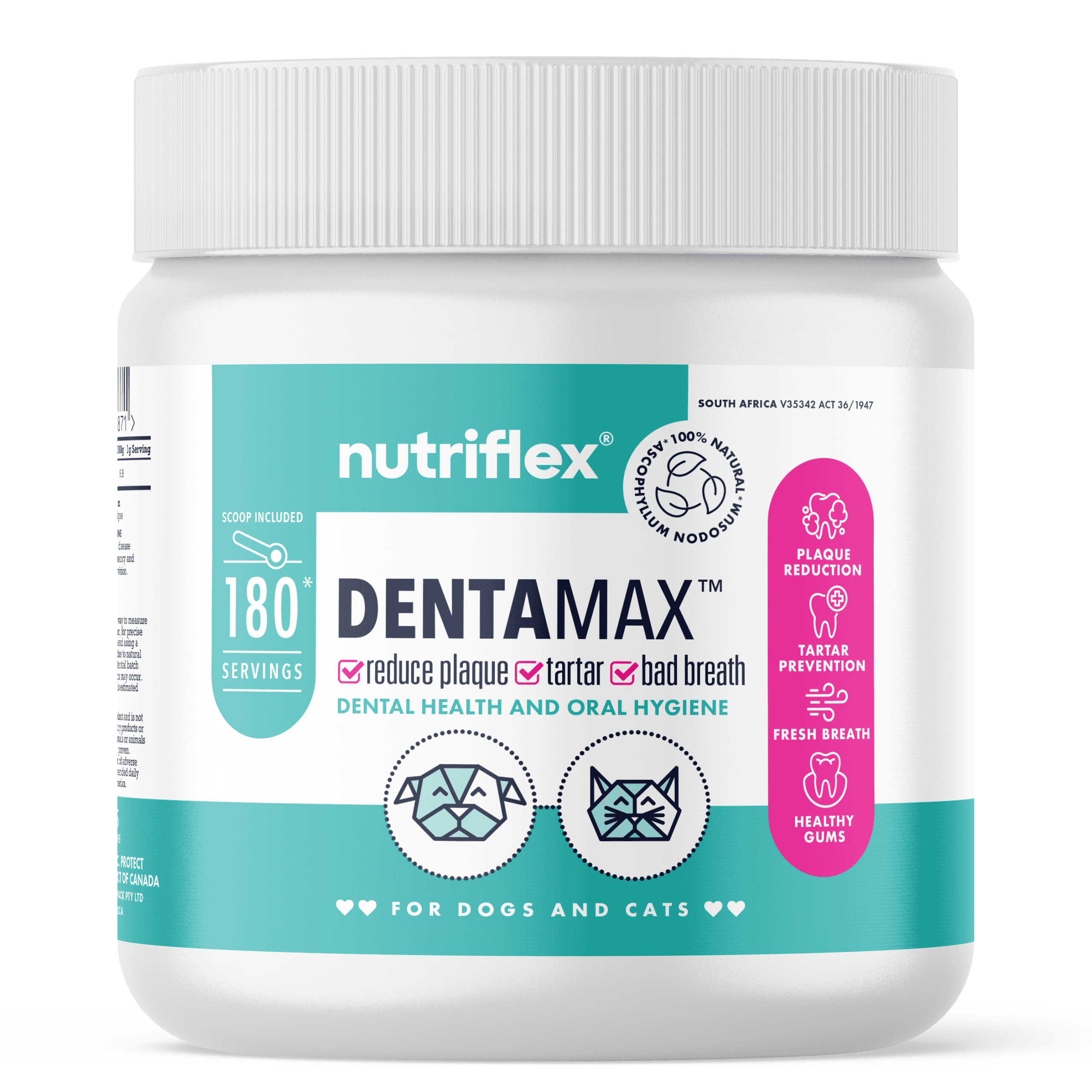
One example is NutriFlex DentaMax, a dental powder designed to support oral hygiene by helping reduce plaque accumulation over time.
These types of supplements are typically used daily and can complement other dental care practices.
Featured Snippet Opportunity
How Can You Stop Plaque From Turning Into Tartar in Dogs?
You can help stop plaque from turning into tartar by disrupting plaque before it mineralises. Effective strategies include regular tooth brushing, using dental supplements that support plaque control, providing appropriate chewing activity, and maintaining consistent oral hygiene routines.
The Long-Term Impact of Untreated Tartar
If tartar remains on teeth for long periods, bacteria continue to irritate the gums.
This can eventually lead to:
-
Chronic gum inflammation
-
Periodontal disease
-
Tooth root infection
-
Tooth loss
Dental disease may also affect a dog’s overall wellbeing, which is why early prevention is so important.
Breaking the Plaque-to-Tartar Cycle
Plaque formation cannot be completely prevented.
However, the progression from plaque to tartar can often be slowed or interrupted with consistent oral care.
The most effective dental care routines focus on:
-
Managing plaque daily
-
Preventing mineralisation
-
Supporting a healthy oral microbiome
When plaque is controlled early, tartar has far fewer opportunities to form.