80% of Dogs Over Three Have Gum Disease. Does Yours?
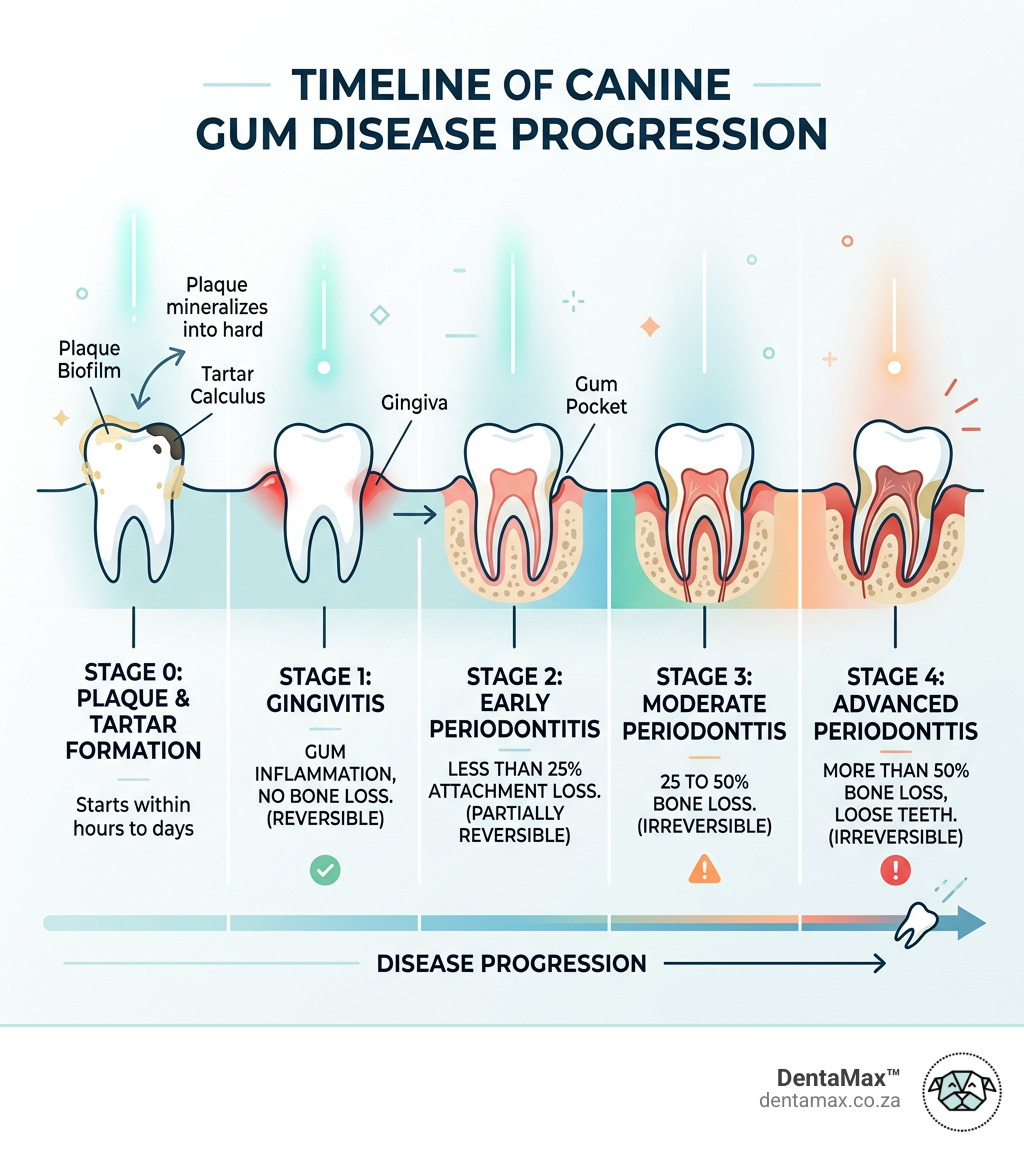
Gum disease stages dogs experience follow a clear, measurable progression from mild gum inflammation to severe bone and tissue destruction. Here is a quick overview:
| Stage | Name | Key Feature | Reversible? |
|---|---|---|---|
| Stage 1 | Gingivitis | Gum inflammation, no bone loss | Yes |
| Stage 2 | Early Periodontitis | Less than 25% attachment loss | Partially |
| Stage 3 | Moderate Periodontitis | 25 to 50% bone loss | No |
| Stage 4 | Advanced Periodontitis | More than 50% bone loss, loose teeth | No |
Most dog owners are surprised to learn that by age three, more than 80% of dogs already show signs of periodontal disease. It often starts invisibly. Plaque forms within hours of a meal. If it is not removed, it mineralises into tartar within days. From there, bacteria work their way below the gumline, silently destroying the ligaments and bone that hold teeth in place.
The problem is that dogs rarely show obvious signs of pain, even when the damage is severe. By the time most owners notice something is wrong, the disease has already progressed beyond the reversible stage.
This guide walks you through each stage of canine gum disease, what to look for and what you can do before it is too late.
I am Sharon Milani, co-founder of NutriFlex® and the developer of DentaMax™, a pure organic Ascophyllum nodosum dental powder formulated to support systemic plaque and tartar control in dogs. My work in evidence-based pet nutrition has focused specifically on the oral health science behind gum disease stages in dogs and practical preventative strategies aligned with South African veterinary standards.
Understanding the Progression of Gum Disease Stages in Dogs
Periodontal disease is not just about yellow teeth or smelly breath. It is a progressive inflammatory condition that affects the supporting structures of the teeth. When we talk about gum disease stages dogs go through, we are looking at the health of the periodontium. This includes the gingiva (gums), the periodontal ligament, the cementum (the covering of the tooth root) and the alveolar bone (the socket).
According to the Periodontal disease staging guidelines, staging is used to define the severity of the disease based on how much “attachment” has been lost. In a healthy mouth, the gums and bone fit snugly around the tooth. As disease progresses, this attachment is destroyed, creating deep pockets where bacteria thrive.
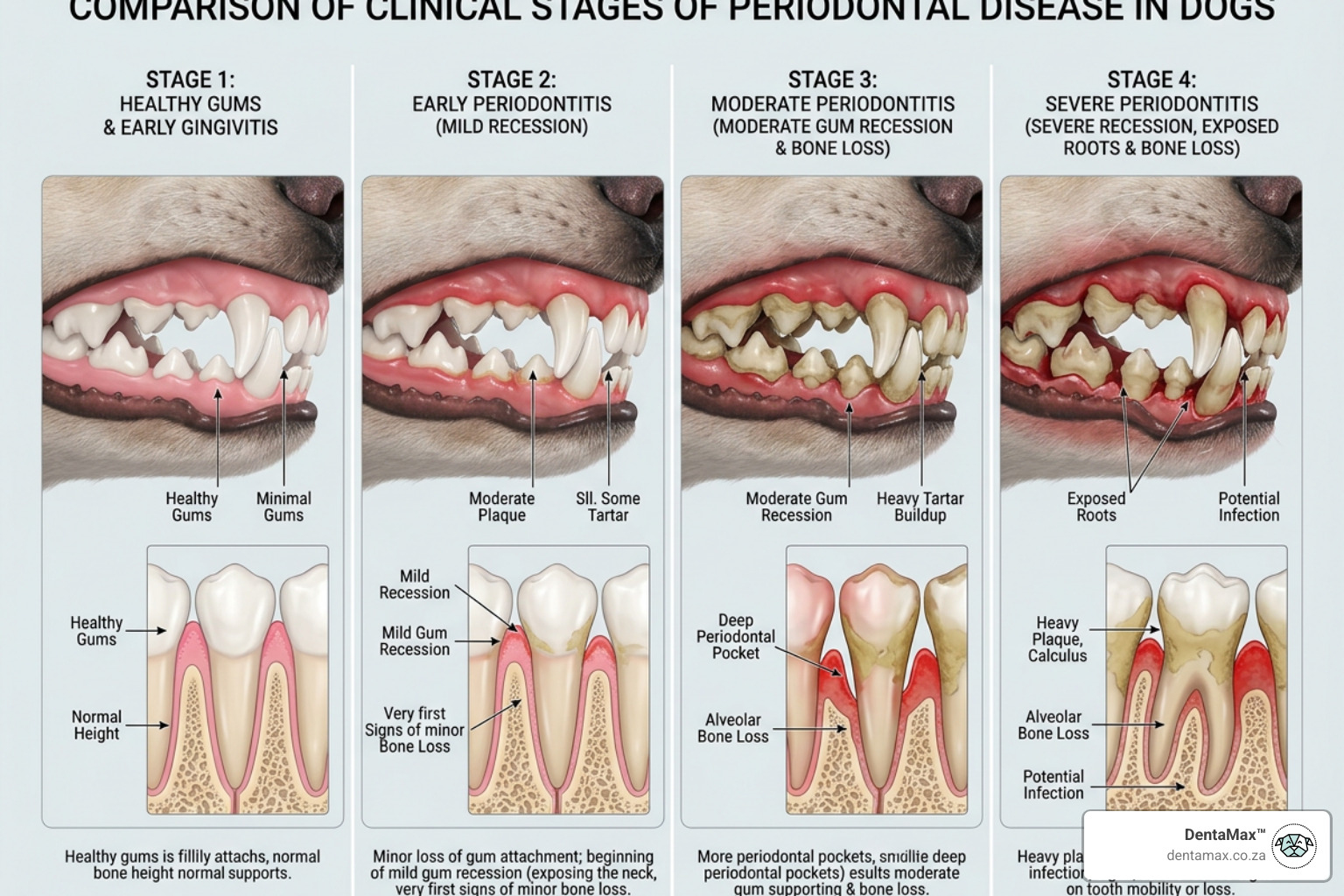
It is important to realise that different teeth in the same dog can be at different stages. A dog might have Stage 1 gingivitis on their front incisors but Stage 4 advanced periodontitis on their upper carnassial teeth. This is why a comprehensive exam is vital. You can find more info about symptoms of dental disease to help you spot the early warning signs before they become emergencies.
Identifying Early Gum Disease Stages in Dogs
The early gum disease stages dogs face are often the most overlooked because they do not always cause obvious distress. However, this is the most critical time for intervention.
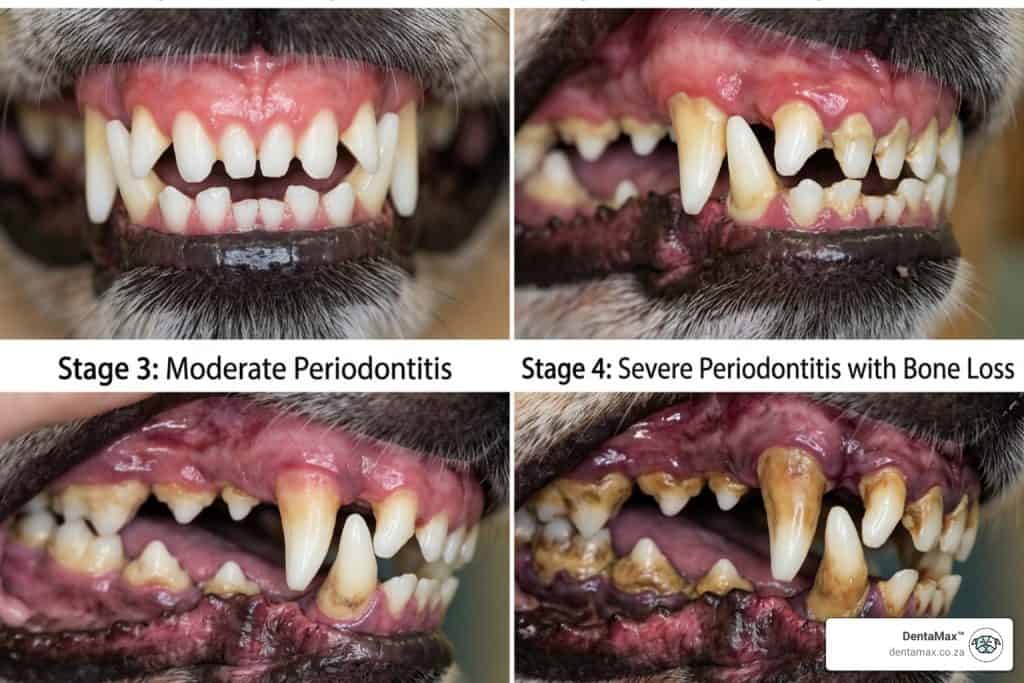
Stage 1: Gingivitis This is the only stage that is fully reversible. At this point, the inflammation is confined to the soft gum tissue. You might notice a thin red line along the gumline, slight swelling or gums that bleed easily when touched. There is no attachment loss or bone destruction yet. The primary culprit here is plaque, a sticky biofilm of bacteria. Understanding what is Plaque in Dogs is the first step in stopping the transition to Stage 2.
Stage 2: Early Periodontitis In Stage 2, the disease has officially moved from the surface to the supporting structures. By definition, Stage 2 involves less than 25% attachment loss. The gums may appear more swollen (edematous) and you might notice the beginning of “pockets” forming between the tooth and the gum. While some of the damage to the ligament might be permanent, professional treatment can stop the progression and prevent further bone loss. At this stage, bad breath (halitosis) becomes much more pronounced.
Managing Advanced Gum Disease Stages in Dogs
Once a dog reaches the advanced gum disease stages dogs suffer from, the focus shifts from prevention to salvage and pain management.
Stage 3: Moderate Periodontitis This stage is characterized by 25% to 50% loss of the supporting bone and attachment. At this point, the damage is irreversible. You may see significant gum recession, exposing the sensitive roots of the teeth. The teeth may still feel firm to your touch, but the underlying structure is severely compromised. Dogs in Stage 3 often experience chronic pain, although they are experts at hiding it. They might favor one side of the mouth while chewing or drop kibble while eating.
Stage 4: Advanced Periodontitis This is the end stage of dental disease. Stage 4 involves more than 50% bone loss. Teeth are often loose (mobile), covered in thick tartar and may even be falling out. Pus may be visible around the gumline (pyorrhea). The risk of systemic infection is at its highest here. For most Stage 4 teeth, extraction is the only humane treatment. Proper Dog Cat Dental Care at earlier stages is the only way to avoid this painful and expensive outcome.
How Veterinarians Diagnose and Stage Periodontal Disease
You cannot accurately stage gum disease just by looking into a dog’s mouth while they are awake. A dog might have pearly white crowns but severe bone loss hidden beneath the gumline. This is why veterinarians perform a Comprehensive Oral Health Assessment and Treatment (COHAT) under general anaesthesia.
During a COHAT, the vet uses several tools:
- Periodontal Probing: A specialized probe is used to measure the depth of the sulcus (the space between the tooth and gum). In a healthy dog, this depth is 1 to 3mm. Anything deeper indicates a periodontal pocket.
- Intraoral Radiographs (X-rays): This is the most critical step. Since 60% of the tooth is below the gumline, X-rays are the only way to see the actual bone height and detect root abscesses or jaw fractures.
- Dental Charting: Every tooth is inspected and its condition is recorded on a chart, noting mobility, recession and pocket depth.
By following these professional protocols, vets can identify “hidden” pain. If you are struggling with your pet’s breath, exploring professional ways to cure your dog’s halitosis will involve these diagnostic steps to find the root cause of the odour.
The Systemic Impact: Why Oral Health Affects Longevity
One of the biggest misconceptions in pet care is that “it is just a mouth problem.” In reality, the mouth is the gateway to the rest of the body. When a dog has advanced gum disease stages dogs, their gums become a bleeding, porous gateway for bacteria to enter the bloodstream.
This constant “showering” of bacteria into the blood (bacteraemia) has serious consequences:
- Heart Valve Disease: Bacteria like Streptococcus and Staphylococcus from the mouth can latch onto heart valves, causing inflammation and endocarditis. Scientific research on canine gum disease linked to heart problems shows a direct correlation between the severity of periodontal disease and the risk of heart failure.
- Liver and Kidney Damage: The liver and kidneys act as filters for the blood. When they are constantly filtering out oral bacteria and inflammatory byproducts, it leads to chronic organ strain and eventual dysfunction.
- Chronic Pain and Behavioural Changes: Because dogs have an evolutionary adaptation to mask pain (to avoid appearing weak to predators), they often suffer in silence. A “grumpy” senior dog is often just a dog with a chronic toothache.
A PubMed study on periodontal disease and endocarditis confirms that the inflammatory burden of a diseased mouth shortens a dog’s lifespan. By managing the Systemic Dental Health Science, we are not just saving teeth; we are adding years to our dogs’ lives.
Prevention and Treatment Strategies for Every Stage
The best strategy for managing gum disease stages dogs face depends on how far the disease has progressed.
Mechanical Cleaning and Home Care
Daily brushing remains the gold standard for removing plaque before it turns into tartar. Use a soft-bristled pet toothbrush and pet-safe toothpaste (never human toothpaste, which can contain xylitol). However, we know that for many South African pet owners, brushing a dog’s teeth every single day is a significant challenge.
If your dog already has tartar (hard, brown deposits), brushing will not remove it. Your dog will need a professional veterinary cleaning. This involves:
- Ultrasonic Scaling: Vibrating tools that shatter tartar above and below the gumline.
- Polishing: Smoothing the tooth surface so plaque has a harder time sticking.
- Irrigation: Flushing out the pockets with antibacterial solutions.
For those looking for home-based solutions, learning how to fix your dog’s bad breath at home focuses on a combination of mechanical and systemic approaches.
Systemic Plaque Control with Ascophyllum Nodosum
This is where the science of systemic dental health becomes exciting. Ascophyllum nodosum is a specific type of North Atlantic seaweed that works differently from chews or brushes. When ingested, its active compounds are absorbed into the bloodstream and excreted through the saliva.
This creates a systemic effect that:
- Disrupts Biofilm: It changes the composition of the saliva to prevent plaque from sticking.
- Softens Tartar: Existing tartar becomes more porous and brittle, making it easier to remove during chewing or professional cleaning.
In clinical trials, dogs given this seaweed supplement showed 32% less plaque and 35% less tartar after just 30 days. This is a game-changer for dogs that will not tolerate brushing. You can dive deeper into the mechanics of this in our Plaque Tartar Education section.
Professional Treatment Costs in South Africa
Treating advanced gum disease stages dogs have reached can be a significant financial investment. In South Africa, a professional dental procedure typically ranges from R2500 to R8000, depending on the city and the complexity of the case.
This cost usually covers:
- Pre-anaesthetic blood work (essential to check organ function).
- General anaesthesia and monitoring.
- Dental X-rays.
- Scaling and polishing.
If surgical extractions are needed for Stage 3 or 4 teeth, the cost can increase due to the time and materials required for oral surgery. While it may seem expensive, it is far cheaper than treating the heart or kidney failure that results from neglect. For more on professional options, see our guide on Dog Bad Breath Cure.
High Risk Breeds and Genetic Predispositions in South Africa
While any dog can develop dental issues, certain breeds in South Africa are genetically “behind the curve.”
- Small and Toy Breeds: Yorkshire Terriers, Dachshunds and Chihuahuas have the same number of teeth as a Great Dane but in a much smaller mouth. This “crowded dentition” creates perfect nooks and crannies for plaque to hide.
- Brachycephalic Breeds: Pugs, Bulldogs and Boxers often have misaligned jaws (malocclusions). When teeth do not line up, the natural self-cleaning action of chewing is lost.
- Boerboels and Large Breeds: While they have more space, they are prone to fractured teeth from chewing on inappropriate items like stones or large bones, which can lead to Stage 4 infections quickly.
- Retained Deciduous Teeth: If puppy teeth do not fall out, they trap food against the adult teeth, fast-tracking the dog toward early periodontitis.
Owners of these breeds should be extra vigilant with Dog Cat Dental Care and start preventative routines as early as puppyhood.
Frequently Asked Questions about Canine Dental Health
Can I remove my dog’s tartar at home?
No. Tartar (calculus) is a mineralised deposit that is physically bonded to the tooth enamel. Attempting to “flick” it off with a metal tool at home is dangerous. You can easily fracture the enamel or slip and stab the gums, causing a deep infection. Tartar removal requires professional ultrasonic equipment.
Why does my dog need anaesthesia for a dental cleaning?
“Anaesthesia-free” dental cleanings are purely cosmetic. You cannot probe deep pockets, take X-rays or scale under the gumline (where the real disease lives) on a conscious dog. It is also incredibly stressful for the animal to have their mouth forced open and sharp tools used near their throat.
How often should I brush my dog’s teeth?
Ideally, every day. Plaque mineralises into tartar in as little as 48 to 72 hours. If daily is impossible, aim for at least three times a week. Supplementing with Ascophyllum nodosum can help bridge the gap for days when brushing does not happen.
Conclusion
The journey through the gum disease stages dogs experience is a race against time. From the reversible inflammation of Stage 1 to the irreversible bone destruction of Stage 4, early detection is your dog’s best friend.
At DentaMax™, we are committed to evidence-based education for South African pet owners. By combining professional veterinary care with systemic supplementation like Ascophyllum nodosum, we can disrupt the biofilm and protect our pets from the silent pain of periodontal disease. Don’t wait for your dog to stop eating or for their breath to become unbearable. Start a proactive routine today and help your best friend live a longer, healthier life.