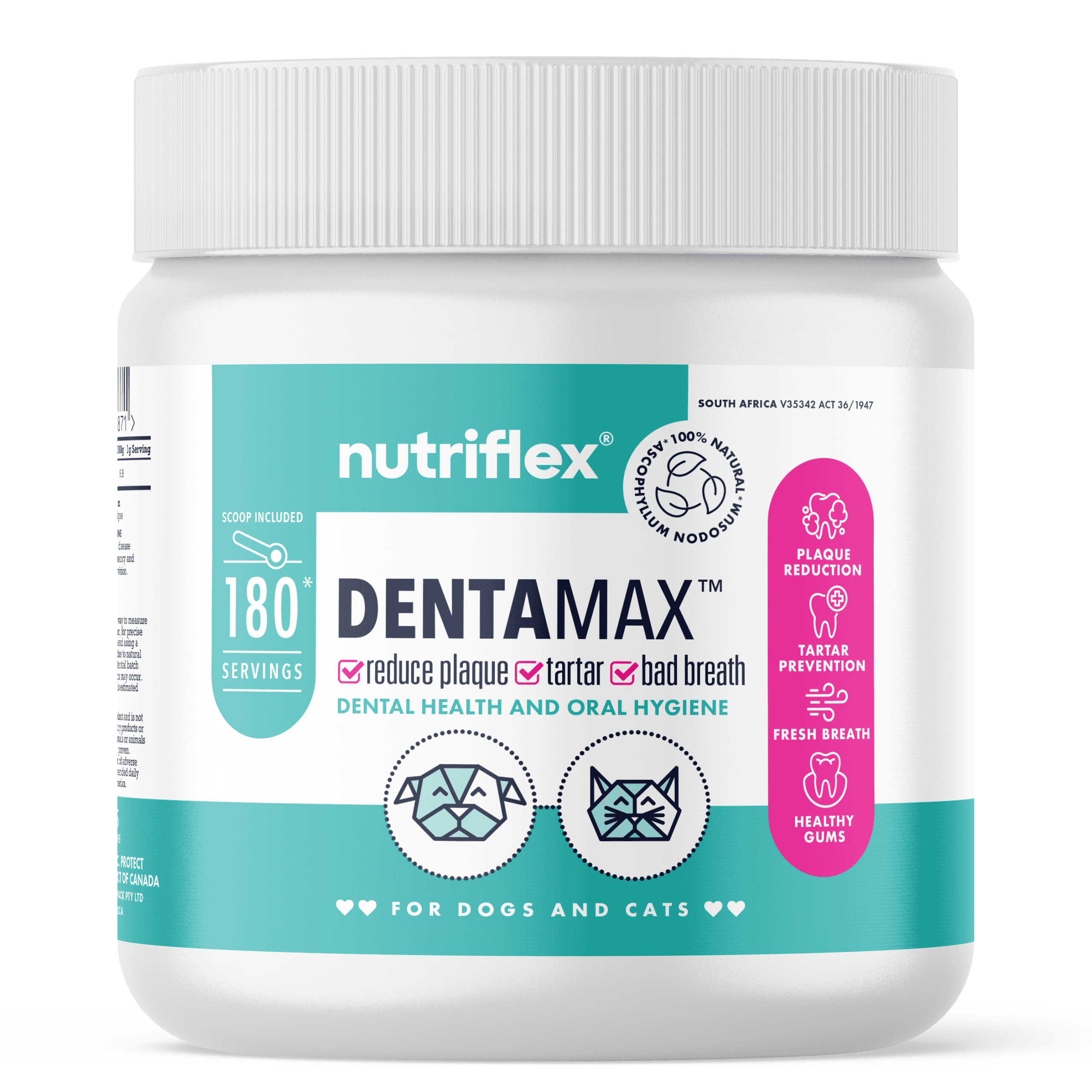
Dog dental care advice often starts with the same recommendation: brush your dog’s teeth.
Brushing can help remove plaque from the tooth surface. In theory, daily brushing with dog toothpaste is one of the most effective ways to maintain oral hygiene.
In practice, however, most dogs never receive consistent tooth brushing.
This is why many pet owners begin exploring alternatives such as dental powders added to food.
Understanding the differences between these two approaches helps clarify which method is more realistic for long-term plaque management.
Why Plaque Control Matters in Dogs
Plaque is a bacterial biofilm that forms naturally on the teeth of dogs and cats.
Within a short period, this biofilm begins to mineralise.
The process typically follows this sequence:
-
Oral bacteria form a sticky film on the tooth surface
-
Minerals in saliva bind to the plaque
-
The plaque hardens into tartar (calculus)
Once tartar forms, it cannot be removed without professional veterinary cleaning.
Daily plaque management is therefore the foundation of preventative dental care.
How Dog Toothpaste Works
Dog toothpaste is designed to remove plaque during brushing.
Unlike human toothpaste, pet formulations are safe to swallow and usually contain:
-
Mild abrasives or polishing agents
-
Enzymes intended to break down biofilm
-
Flavouring agents to encourage acceptance
When brushing is performed correctly, the mechanical action of the toothbrush disrupts plaque accumulation.
The toothpaste itself plays a supporting role.
The Limitation of Toothpaste Without Brushing
Toothpaste alone does not remove plaque.
Without brushing, the product simply coats the teeth briefly before being swallowed.
The effectiveness of toothpaste, therefore, depends entirely on consistent brushing behaviour.
For many dogs, this presents a challenge.
Common obstacles include:
-
Dogs resisting tooth brushing
-
Difficulty reaching the back molars
-
Owners stopping the routine after a short period
Even veterinarians acknowledge that daily brushing compliance is extremely low in real-world households.
How Dental Powders Work
Dental powders take a different approach.
Instead of relying on mechanical cleaning, they work systemically through ingestion.
The powder is mixed into the dog’s food, and the active ingredients enter the body through digestion.
From there, certain compounds interact with saliva and the oral environment, influencing plaque accumulation.
This approach removes the need for manual brushing.
The Role of Ascophyllum Nodosum
Many dental powders contain Ascophyllum nodosum, a brown marine algae harvested from cold North Atlantic waters.
This ingredient has been studied for its potential role in supporting:
-
Plaque control
-
Tartar management
-
Reduction of oral malodour
-
Improved gingival health
Unlike toothpaste, which acts only on the tooth surface during brushing, compounds derived from this algae may influence the oral biofilm environment via saliva.
This systemic mechanism is the reason it is commonly used in dental powder supplements.
Compliance: The Most Overlooked Factor
Dental products only work if they are used consistently.
From a practical standpoint, the difference between brushing and powders is significant.
| Method | How It Is Used | Typical Compliance |
|---|---|---|
| Dog Toothpaste | Requires brushing teeth daily | Low |
| Dental Powder | Mixed into food daily | High |
Adding powder to food is often easier to maintain than a brushing routine.
This difference in compliance can influence long-term dental outcomes.
When Tooth Brushing Is Still Valuable
Brushing remains one of the most direct methods of plaque removal.
It may be particularly beneficial when:
-
Dogs have been trained to accept brushing
-
Owners are able to maintain a daily routine
-
Plaque accumulation is already visible
For these reasons, some veterinarians recommend brushing alongside other dental support methods.
However, brushing is not always feasible for every household.
Choosing Between Toothpaste and Dental Powders
The decision often comes down to practicality and consistency.
Toothpaste may provide effective plaque removal when brushing occurs regularly.
Dental powders may provide a simpler routine for owners who struggle to maintain brushing.
Other factors to consider include:
-
Ingredient transparency
-
Evidence supporting specific ingredients
-
Simplicity of the formulation
-
Long-term daily use
Not all dental powders are the same, and ingredient quality can vary between products.
The benefits of using dental powder extend beyond basic oral hygiene, as they can also contribute to overall systemic health in pets. By incorporating unique formulations that target harmful bacteria and reduce plaque buildup, these products may significantly improve a pet’s quality of life. Additionally, understanding the specific benefits of using dental powder can empower pet owners to make informed choices about their pets’ dental care routines.
A Practical Approach to Dog Dental Care
Maintaining dental health in dogs often requires a multi-layered strategy.
Preventative care typically includes:
-
Regular veterinary dental examinations
-
Appropriate diet and nutrition
-
Daily plaque management
-
Monitoring for signs of oral disease
For many owners, incorporating a dental powder into the feeding routine can make daily plaque management easier. PetDent Duo effectiveness is often cited as part of a broader dental care routine, but its impact is typically limited to surface-level support, such as fresher breath or a mild improvement in bacterial balance. It does not reliably control plaque formation at the gumline, where dental disease begins.
The Bottom Line
Dog toothpaste works by helping remove plaque during brushing.
Dental powders use a different strategy by influencing the oral environment through ingestion.
The most effective dental routine is the one that can be maintained consistently over time.
Understanding the strengths and limitations of each method helps pet owners choose the approach that best fits their dog and their daily routine.
Related Reading
For a deeper understanding of dog dental health:
-
The role of Ascophyllum nodosum in dental powders
-
Causes of bad breath in dogs
Exploring these topics provides a clearer picture of how different dental care strategies support long-term oral health.