Tooth loss in dogs is far more common than most owners realise.
Many dogs begin developing dental disease years before a tooth actually falls out. By the time a tooth becomes loose or disappears completely, the underlying problem has often been progressing quietly beneath the gums for a long time.
While it is normal for puppies to lose their baby teeth, adult dogs should not be losing teeth. When this happens, it usually indicates advanced dental disease, trauma, or severe infection.
Understanding why dogs lose teeth is the first step toward protecting your dog’s long-term oral health.
Are Dogs Supposed to Lose Teeth?
Puppies naturally lose baby teeth
Yes. Puppies go through a teething stage.
Just like human children, puppies develop temporary baby teeth that eventually fall out as permanent adult teeth grow in.
Typical puppy tooth timeline:
-
3–4 weeks: Baby teeth begin erupting
-
3–4 months: Puppy teeth start falling out
-
5–6 months: Adult teeth replace baby teeth
During this stage, finding small teeth on the floor or noticing mild bleeding from the gums is completely normal.
Adult dogs should not lose teeth
If an adult dog loses a tooth, it almost always indicates a dental health problem.
In most cases, the cause is periodontal disease, the most common health condition affecting dogs worldwide.
Why is my dog losing teeth?
Dogs lose teeth for several reasons, but the most common cause is advanced periodontal disease. Plaque bacteria accumulate on the teeth and gradually harden into tartar. Over time, infection spreads below the gum line, damaging the tissues and bone that hold the tooth in place. As the support structures weaken, the tooth eventually becomes loose and may fall out.
Other possible causes include:
-
Gum infection
-
Severe tartar buildup
-
Tooth root abscess
-
Trauma or injury
-
Retained baby teeth
-
Poor dental hygiene
The Most Common Cause: Periodontal Disease
Periodontal disease is responsible for the vast majority of tooth loss in dogs.
Veterinary studies suggest that most dogs show signs of periodontal disease by age three.
The condition develops gradually and often progresses unnoticed until it becomes severe.
How Periodontal Disease Develops
Dental disease follows a predictable progression.
Step 1: Plaque formation
After a dog eats, bacteria in the mouth combine with saliva and food particles to form a sticky film called plaque.
Plaque begins forming on the teeth within hours.
Step 2: Tartar formation
If plaque is not regularly removed, minerals in saliva cause it to harden into tartar (dental calculus).
Unlike plaque, tartar cannot be removed by normal chewing.
Step 3: Gum inflammation
Bacteria living inside tartar begin irritating the gums, causing gingivitis.
Signs may include:
-
Red gums
-
Swollen gums
-
Bleeding around the gum line
-
Bad breath
Step 4: Destruction of tooth support
Over time, the infection spreads beneath the gum line.
This damages:
-
periodontal ligaments
-
surrounding gum tissue
-
the bone holding the tooth in place
Once these structures are destroyed, the tooth becomes loose and may eventually fall out.
Why Small Dogs Lose Teeth More Often
Small breed dogs are especially vulnerable to dental disease.
This is mainly due to anatomy.
Small dogs often have:
-
crowded teeth
-
smaller jaws
-
narrow spaces between teeth
These conditions trap plaque and bacteria more easily.
Breeds frequently affected include:
-
Yorkshire Terriers
-
Dachshunds
-
Toy Poodles
-
Chihuahuas
-
Maltese
Without proper dental care, many small dogs begin losing teeth in middle age.
Other Causes of Tooth Loss in Dogs
Although periodontal disease is the most common cause, several other factors can lead to tooth loss.
Tooth root infection
Bacterial infection can spread deep into the tooth root, forming a painful abscess. If untreated, the surrounding bone deteriorates and the tooth may fall out.
Trauma
Dogs sometimes lose teeth due to injury.
Possible causes include:
-
chewing extremely hard objects
-
accidents or falls
-
rough play
Fractured teeth may loosen over time.
Retained puppy teeth
Sometimes baby teeth fail to fall out.
This creates overcrowding, trapping bacteria, which accelerates dental disease.
Severe tartar buildup
Heavy tartar accumulation can push the gums away from the tooth, exposing sensitive roots and weakening the attachment.
Signs a Dog May Be Losing Teeth
Tooth loss rarely happens suddenly. Most dogs show warning signs beforehand.
Common symptoms include:
-
bad breath
-
red or swollen gums
-
bleeding gums
-
visible tartar buildup
-
loose teeth
-
reluctance to chew hard food
-
dropping food while eating
-
pawing at the mouth
In advanced cases, dogs may develop:
-
facial swelling
-
pus around the gums
-
severe gum recession
Featured Snippet Opportunity
What happens if a dog loses a tooth?
If a dog loses a tooth due to periodontal disease, it usually means the supporting gum tissue and bone have already been severely damaged. The tooth becomes loose as these structures break down. Once the tooth falls out, the infection may still remain in the surrounding tissue, which is why veterinary examination is recommended.
What To Do If Your Dog Loses a Tooth
If your dog suddenly loses a tooth, it is advisable to schedule a veterinary dental examination.
A vet may recommend:
-
oral examination
-
dental X-rays
-
professional cleaning
-
removal of severely damaged teeth
Even if the tooth has already fallen out, the underlying infection may still require treatment.
Preventing Tooth Loss in Dogs
The key to preventing tooth loss is controlling plaque before it hardens into tartar.
Once tartar forms, it becomes much harder to manage without professional cleaning.
Daily plaque management is therefore the most effective long-term strategy.
Effective Ways to Protect Dog Teeth
Tooth brushing
Brushing is one of the most direct ways to remove plaque.
However, many dogs resist regular brushing, and many owners struggle to maintain a consistent routine.
Diet and chewing behaviour
Certain diets and chewing habits can influence how much plaque accumulates on the teeth.
However, chewing alone rarely removes plaque from the gum line, where disease usually begins.
Daily plaque control supplements
Some pet owners choose to add dental supplements to food to help manage plaque bacteria in the mouth.
For example, dental powders made from specific marine algae have gained popularity because they work systemically through saliva rather than relying purely on mechanical scraping.
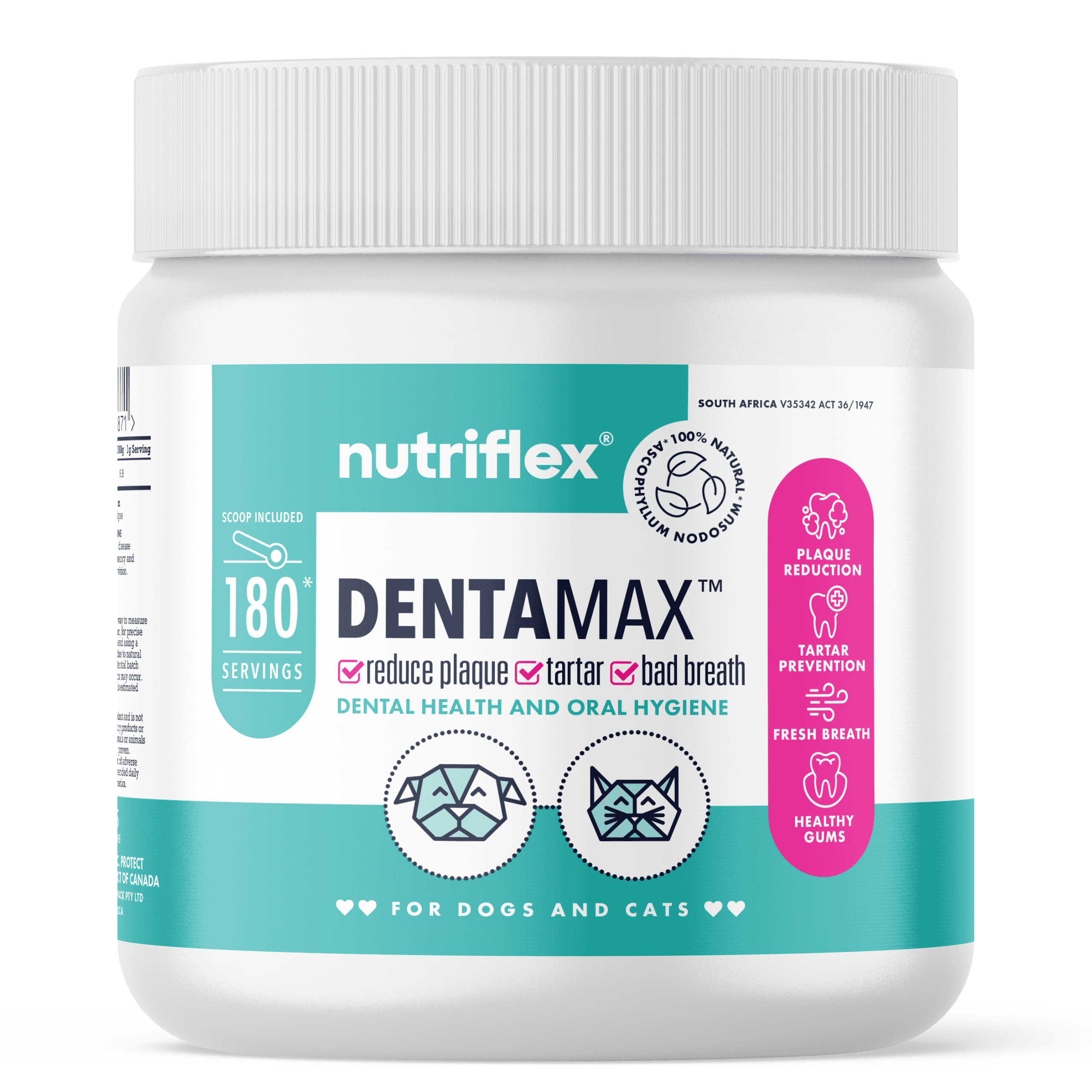
Products such as DentaMax dental powder are designed to be sprinkled onto food daily, helping to reduce plaque accumulation and support healthier gums over time.
This approach can be particularly useful for dogs that do not tolerate tooth brushing.
Why Early Prevention Matters
Dental disease does not only affect the mouth.
Advanced periodontal infection can allow bacteria to enter the bloodstream and potentially affect organs such as the heart, liver and kidneys.
Maintaining good oral health is therefore an important part of supporting overall health and longevity in dogs.
Featured Snippet Opportunity
How do you stop dogs from losing teeth?
The most effective way to prevent tooth loss in dogs is to control plaque before it turns into tartar. This can include daily tooth brushing, regular veterinary dental checkups, and consistent plaque management strategies such as dental supplements added to food. Preventing plaque buildup helps protect the gums and bone that hold teeth in place.
Frequently Asked Questions
Can dogs live normally after losing teeth?
Yes. Many dogs adapt well to missing teeth, especially if they lose only a few. However, tooth loss usually signals underlying dental disease that should be addressed.
Is tooth loss painful for dogs?
Yes. Gum infection, loose teeth, and tooth root abscesses can be painful even if dogs do not show obvious signs.
At what age do dogs start losing teeth?
Puppies lose their baby teeth between 3 and 6 months of age. Adult dogs should not normally lose teeth.
The Bottom Line
When an adult dog loses a tooth, it is rarely a random event.
It is usually the final stage of a dental disease process that has been developing for months or even years.
By managing plaque early and maintaining consistent dental care, it is often possible to protect your dog’s teeth and reduce the risk of future tooth loss.