Dental disease affects the majority of dogs and cats during their lifetime.
Veterinary studies consistently show that a large percentage of pets develop signs of periodontal disease by the age of three. The process usually begins quietly with plaque accumulation, long before tartar becomes visible or bad breath becomes noticeable.
Preventing plaque formation early is therefore the most effective strategy for protecting long-term oral health.
In recent years, interest has grown in natural ingredients that help control plaque development rather than relying only on brushing, dental chews, or cosmetic breath fresheners.
Some natural compounds can influence the oral environment in ways that slow plaque accumulation. Others, despite being widely marketed, provide little meaningful dental benefit.
Understanding the difference helps pet owners choose products that support real oral health rather than temporary cosmetic improvements.
Understanding Plaque Formation
Plaque is not simply food debris stuck to teeth.
It is a living bacterial biofilm that forms on the surface of teeth.
Within minutes of eating, proteins in saliva begin forming a thin film on the tooth surface called the pellicle. Oral bacteria attach to this film and start multiplying. As bacterial colonies grow, they produce a sticky matrix that anchors the biofilm to the tooth.
This biofilm becomes dental plaque.
If plaque remains undisturbed, minerals naturally present in saliva begin depositing within it. Over time, the plaque hardens into tartar (also called dental calculus).
Tartar cannot be removed through chewing or brushing alone. Once formed, it requires professional scaling by a veterinarian.
Preventing plaque from mineralising is therefore the most effective way to manage dental health.
Why Ingredient Choice Matters in Dental Supplements
Many pet dental products rely heavily on marketing language rather than biological mechanisms.
Some products mask bad breath using herbs or flavouring agents. Others rely on abrasive chewing textures to mechanically scrape teeth.
While these approaches may provide some benefit, they often do little to influence the underlying biological processes responsible for plaque formation.
Ingredient-driven dental supplements work differently.
Rather than attempting to remove plaque mechanically after it has formed, certain ingredients aim to influence the oral environment itself, making it harder for plaque biofilm to develop.
This systemic approach is the foundation of many modern dental powders for pets.
What Makes a Natural Plaque-Control Ingredient Effective
Not all ingredients included in dental products contribute equally to plaque control.
Ingredients that have demonstrated measurable benefits typically work through one or more of the following mechanisms:
Influencing bacterial adhesion
Some compounds interfere with plaque-forming bacteria’s ability to attach to tooth surfaces.
Altering saliva chemistry
Certain bioactive compounds interact with saliva to influence plaque mineralisation.
Supporting a balanced oral microbiome
Some ingredients may help maintain a healthier balance of oral bacteria.
Reducing inflammation in the gum tissue
Ingredients that support gum health may help reduce the inflammatory response associated with plaque accumulation.
The most credible ingredients are those supported by clinical studies rather than anecdotal claims.
Ascophyllum Nodosum (Marine Kelp)
One of the most researched natural ingredients for plaque control is Ascophyllum nodosum, a brown marine algae harvested from cold North Atlantic waters.
Unlike generic kelp powders, specific preparations of this algae have been studied for their effects on plaque and tartar accumulation in dogs.
Ascophyllum nodosum contains a variety of bioactive compounds, including:
-
polyphenols
-
phlorotannins
-
marine polysaccharides
-
trace minerals
When consumed daily, these compounds appear to influence the oral environment in ways that may reduce plaque accumulation.
Researchers believe certain compounds are absorbed during digestion and subsequently influence oral biofilm behaviour through saliva.
While the exact mechanism remains under study, controlled trials have demonstrated measurable reductions in plaque and tartar in dogs receiving specific preparations of this marine algae.
Marine Polyphenols and Bioactive Compounds
Brown seaweeds contain unique compounds known as phlorotannins, a type of polyphenol found almost exclusively in marine algae.
Polyphenols have attracted interest in oral health research because they may interfere with the metabolic processes bacteria use to form plaque biofilms.
Laboratory studies have shown that certain polyphenols can reduce bacterial adhesion and disrupt biofilm development.
These compounds are believed to contribute to the plaque-control effects observed with marine algae ingredients.
Enzyme-Based Dental Ingredients
Some dental products incorporate enzymatic systems designed to interfere with plaque formation.
Common enzymes used in oral care products include:
-
glucose oxidase
-
lactoperoxidase
-
lysozyme
These enzymes help break down bacterial by-products and reduce substrates that plaque-forming bacteria rely on.
However, enzyme-based systems generally work best when applied directly to tooth surfaces, such as in toothpaste or oral gels.
When consumed as a supplement mixed into food, their effectiveness may be reduced because they have limited contact with teeth.
Herbal Ingredients Used in Dental Products
Herbal ingredients are commonly included in pet dental products.
While some provide supportive benefits, many are primarily used for flavour or breath freshening.
Parsley
Parsley contains chlorophyll, which may temporarily reduce unpleasant mouth odour.
However, its primary effect is cosmetic. Parsley does not significantly influence plaque formation.
Rosemary Extract
Rosemary contains antioxidant compounds that may offer mild antimicrobial properties.
These compounds can provide supportive benefits, but are rarely strong enough to act as primary plaque-control ingredients.
Activated Charcoal in Dental Products
Activated charcoal has become a popular ingredient in human and pet oral care products.
Its porous structure allows it to adsorb certain compounds and pigments, which may help remove surface staining.
However, charcoal does not directly disrupt plaque biofilm formation.
In powdered supplements mixed into food, charcoal is typically swallowed quickly and has little opportunity to interact with tooth surfaces.
For this reason, its role in plaque control is limited.
Probiotics and the Oral Microbiome
The mouth contains a complex microbial ecosystem comprising hundreds of bacterial species.
Some researchers are exploring whether beneficial bacteria could help compete with plaque-forming microbes.
Oral probiotics are designed to introduce bacteria that may support a healthier microbial balance within the mouth.
Although this area of research shows promise, evidence in veterinary dentistry is still limited and ongoing.
Diet and Plaque Development
Diet plays a role in plaque accumulation.
Soft foods can leave residues that encourage bacterial growth on tooth surfaces.
However, the common belief that standard dry kibble cleans teeth is largely a myth.
Most kibble shatters quickly when chewed and provides very little mechanical abrasion.
Specialised veterinary dental diets are designed differently, with textures intended to wrap around teeth and create friction. These diets may provide some mechanical plaque removal, but do not eliminate the need for preventative dental care.
Systemic Dental Powders
Systemic dental powders represent a different approach to plaque management.
Instead of relying on mechanical cleaning, these powders contain ingredients designed to influence the oral environment through daily ingestion.
When mixed into food, certain bioactive compounds are absorbed during digestion and later appear in saliva.
This systemic effect can influence the conditions that allow plaque biofilm to develop.
The goal is prevention rather than scraping plaque off teeth after it has already formed.
Daily consistency is essential for these supplements to produce measurable effects.
Ingredients That Offer Limited Plaque-Control Value
Some ingredients included in dental products contribute little to plaque prevention.
Examples include:
-
breath-freshening herbs used purely for scent
-
cosmetic colouring agents
-
filler ingredients that dilute active compounds
While these ingredients may improve flavour or appearance, they do not necessarily influence plaque biofilm formation.
Products that rely heavily on these additives may provide minimal dental benefit.
Evaluating Dental Supplement Labels
When evaluating dental products for pets, it helps to look beyond marketing claims.
Consider the following factors:
-
whether the ingredient has credible clinical research
-
transparency about ingredient sourcing
-
clear explanation of how the ingredient works
-
absence of unnecessary fillers or additives
Products that clearly explain their mechanism of action are generally more credible than those relying on vague marketing language.
Natural Plaque Control and Mechanical Cleaning
Brushing remains one of the most effective ways to physically remove plaque.
However, many pets resist tooth brushing, making daily compliance difficult for many owners.
Ingredient-driven dental supplements are designed to support oral health between mechanical cleanings.
When used alongside occasional brushing or professional veterinary care, they can contribute to a more comprehensive preventative strategy.
A Practical Example of an Ingredient-Focused Dental Powder
Some modern dental supplements are formulated around a single clinically studied ingredient rather than complex blends of additives.
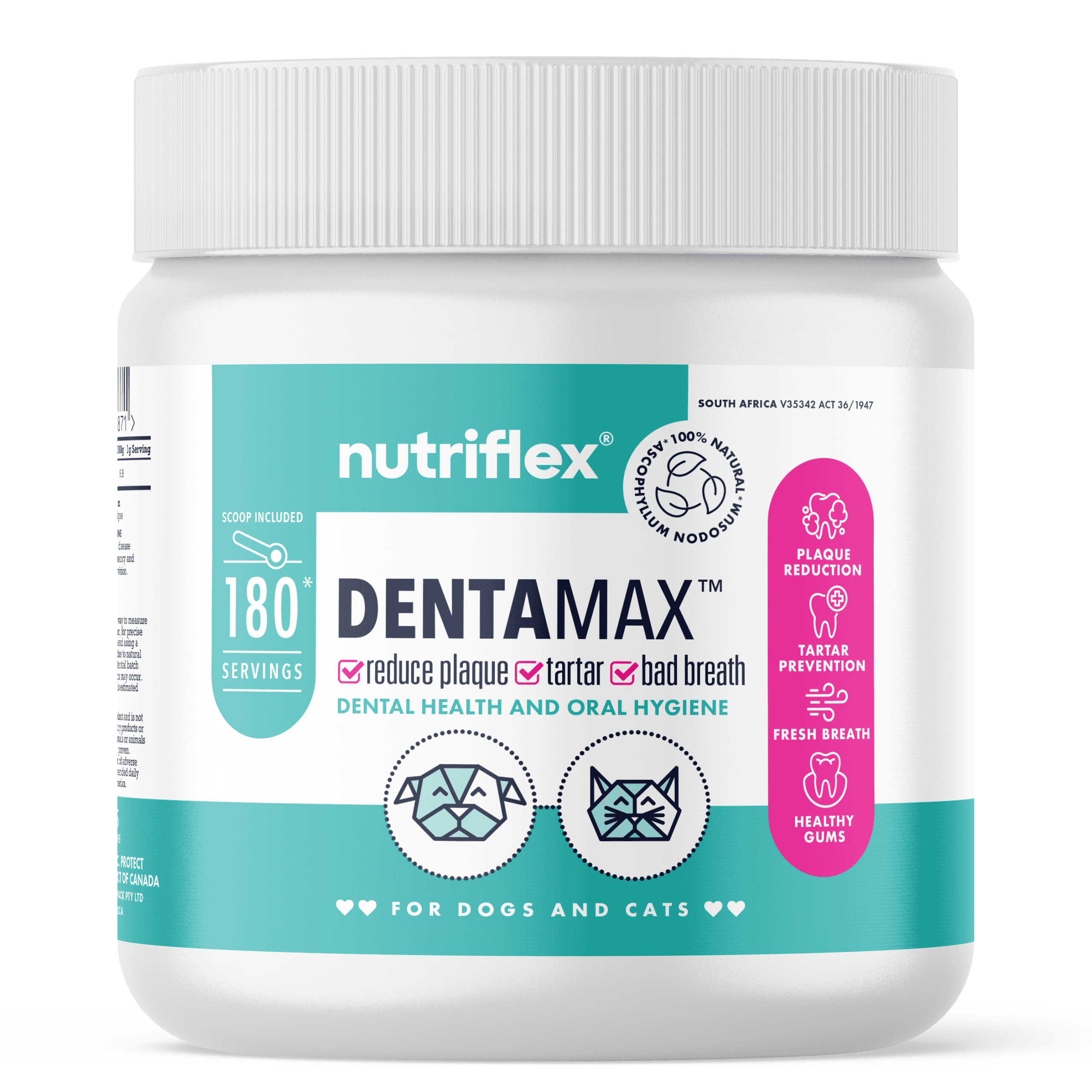
One example is NutriFlex® DentaMax™ dental powder, which uses Ascophyllum nodosum as its primary active component.
Instead of combining numerous herbs, flavourings or mineral binders, the formulation focuses on the marine algae ingredient, which has been evaluated for its role in plaque and tartar management.
This ingredient-driven approach aims to support the oral environment to inhibit plaque accumulation over time.
For pet owners who prefer a minimal-ingredient dental powder built around a clinically studied compound, this type of formulation offers a more focused alternative to heavily blended dental supplements. sodium hexametaphosphate benefits for dogs include promoting oral health by reducing plaque and tartar buildup, which can lead to fresher breath and improved overall dental hygiene. Additionally, this ingredient is known for its ability to bind minerals, helping to prevent the formation of harmful deposits in your pet’s mouth. By choosing products with this beneficial compound, pet owners can support their dog’s dental care regimen effectively.
The Future of Natural Dental Health Solutions
Interest in natural dental health solutions continues to grow.
Researchers are exploring new marine bioactive compounds, plant polyphenols and microbiome-based strategies that may influence oral biofilm formation.
As research expands, the focus is shifting toward evidence-based ingredients rather than marketing-driven formulations. Interest in natural plaque-control ingredients for dogs and cats continues to grow as veterinary dentistry shifts toward preventative care rather than reactive treatment.
Researchers are increasingly studying bioactive compounds that influence oral biofilm formation, including marine algae polyphenols, plant-derived compounds and other naturally occurring substances that interact with saliva and oral bacteria.
This research is helping identify which ingredients genuinely influence plaque accumulation and which ones are simply added for marketing appeal.
As the science advances, greater attention is also being placed on ingredient sourcing, preparation methods and compound standardisation, since these factors determine whether an ingredient delivers consistent results.
For pet owners evaluating dental supplements, understanding the science behind these ingredients is essential. Examining the individual compounds used in dental powders provides a clearer picture of how different formulations work and what level of evidence supports them.
You can explore detailed breakdowns of commonly used dental powder ingredients in the ingredient analysis section.
For pet owners, understanding how natural plaque-control ingredients work makes it easier to choose preventative dental care strategies that support long-term oral health rather than temporary cosmetic improvements.