Evidence-Based Guide to Plaque and Tartar Prevention
Dental disease is one of the most common health conditions affecting dogs and cats in South Africa.
Studies suggest that up to 80% of dogs and 70% of cats show signs of dental disease before the age of three.
Yet many pet owners only recognise the problem when bad breath becomes persistent, tartar is clearly visible, or a costly veterinary dental procedure becomes necessary.
This guide explains:
- Why plaque and tartar develop
- Why brushing alone is often not enough
- How dental powders work
- What makes a clinically studied ingredient different
- How to choose the best dental powder for dogs and cats in South Africa
If you’re looking for a smarter preventative approach to your pet’s oral health, this is where to start.
Types of Dental Powders for Dogs and Cats in South Africa
Not all dental powders function the same way. Most fall into three distinct categories:
1. Systemic Seaweed-Based Powders
These use clinically studied Ascophyllum nodosum and are absorbed after digestion. Active compounds are later secreted into saliva, influencing the oral environment from within.
→ Read more: How systemic dental powders work
2. Surface Mineral Binders
Some formulas include sodium hexametaphosphate (SHMP), which must physically contact the tooth surface to slow mineralisation.
→ Learn more: SHMP in dog dental powders explained
3. Charcoal-Based Blends
Activated charcoal is sometimes included for cosmetic effect rather than biological plaque control.
→ See our analysis: Activated charcoal in dog dental powders
Why Dental Disease Is So Common in Dogs and Cats
Dental disease rarely begins dramatically. It starts with plaque, a sticky biofilm made up of bacteria, food particles and saliva that forms on teeth daily. If not managed, plaque hardens into tartar (calculus). Once tartar forms:
- It cannot be removed by brushing alone
- It traps bacteria beneath the gumline
- It contributes to gum inflammation (gingivitis)
- It may progress to periodontal disease
Learn more in our detailed guide on plaque vs tartar in dogs and cats.
Left unchecked, advanced dental disease can lead to:
- Tooth loss
- Chronic oral pain
- Gum recession
- Systemic health concerns involving the heart, kidneys and liver
Prevention is always more effective and more affordable than correction.
Signs of Plaque and Tartar Buildup in Pets
Early signs are subtle:
- Mild bad breath
- Slight yellowing near the gumline
- Increased chewing sensitivity
If you’re noticing odour issues, read our breakdown of what causes bad breath in dogs.
Moderate progression may include:
- Visible tartar deposits
- Red or inflamed gum margins
- Reluctance to chew harder foods
Advanced disease can present as:
- Bleeding gums
- Loose teeth
- Oral discomfort
- Significant halitosis
By the time symptoms are obvious, intervention may require professional cleaning under anaesthesia.
Is Brushing Enough to Prevent Dental Disease?
Brushing is considered the gold standard of mechanical plaque removal. However, in practice:
- Many dogs resist brushing
- Cats often will not tolerate it
- Consistency is difficult
- Hard-to-reach areas are missed
Even well-intentioned owners struggle to brush daily. That’s why many veterinarians recommend combining brushing with daily systemic plaque support.
How Dental Powders Work
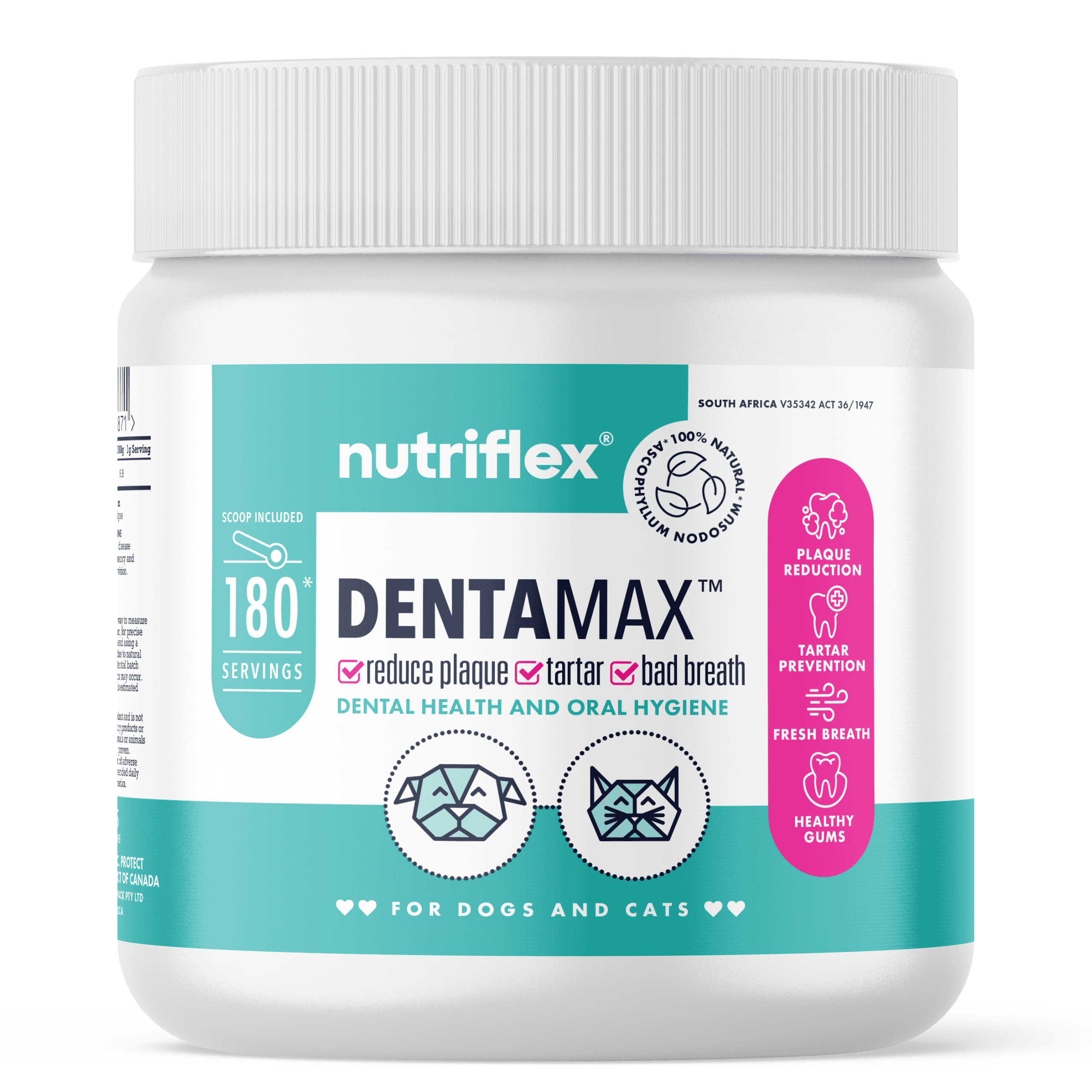
Unlike chews that rely on mechanical scraping, certain dental powders work systemically. Clinically studied ingredients such as Ascophyllum nodosum for dogs and cats are absorbed after digestion and influence the oral environment through saliva. For a full breakdown, read: How DentaMax Works.
When used consistently, they may help:
- Reduce plaque accumulation
- Limit tartar formation
- Support healthier gums
- Improve breath freshness
Single-Ingredient vs Multi-Ingredient Dental Powders
Many dental powders contain questionable additives, artificial flavourings and unwanted mineral binders. Some include activated charcoal. → Why charcoal is misaligned with daily plaque support. Others include Sodium hexametaphosphate, more closely associated with industrial use than a daily pet supplement → Why SHMP is poorly suited to powdered delivery. When one clinically studied ingredient already delivers the core oral health benefits, adding more ingredients does not improve performance; it often just adds ingredients that feel hard to justify in a health-first dental powder meant for long-term daily use.
Can Dental Powder Remove Existing Tartar?
Clinically studied Ascophyllum nodosum preparations may help soften and reduce tartar over time. However, heavily mineralised calculus may still require professional cleaning to restore a clean baseline. Dental powders are most effective when used preventively and consistently.
DentaMax™ vs PlaqueOff®: Key Differences
Both products are made exclusively with Ascophyllum nodosum. The difference lies in branding, distribution model, import versus local packing, and pricing structure. For a full comparison, read: DentaMax vs PlaqueOff.
How to Choose the Right Dental Powder for Dogs and Cats in South Africa
- Is the active ingredient clinically studied?
- Is the formula transparent?
- Is it free from harsh chemicals and questionable additives?
- Is it suitable for both dogs and cats?
- Is it easy to use daily?
If you prefer to view the product details directly, you can visit the official DentaMax™ Dog & Cat Dental Powder.
The Bottom Line
Dental disease is common. Prevention is more cost-effective than treatment. When choosing a dog and cat dental powder in South Africa, focus on clinical validation, ingredient transparency and consistent daily use.
Frequently Asked Questions About Dog and Cat Dental Powder
What is the best dog dental powder in South Africa?
The best dog dental powder in South Africa is one built around a clinically studied ingredient such as Ascophyllum nodosum. Look for documented plaque reduction, tartar management and suitability for daily, long-term use rather than questionable or chemical additives.
Does dental powder really work for dogs?
Yes. Systemic dental powders formulated with clinically studied Ascophyllum nodosum have demonstrated measurable reductions in plaque and tartar when used consistently. Results depend on daily use and baseline oral health.
Can dental powder remove existing tartar?
Dental powder may help soften and gradually reduce tartar over time. However, heavily mineralised calculus often requires professional cleaning under anaesthesia before maintenance support begins.
How long does dog dental powder take to work?
Breath freshness may improve within days. Plaque reduction and tartar control develop gradually over several weeks with consistent daily administration.
Is dental powder safe for cats?
Yes, when formulated appropriately for multi-species use. Always follow recommended dosing guidelines and consult your veterinarian if your pet has underlying medical conditions.
Is Ascophyllum nodosum safe for long-term use?
Clinically studied preparations of Ascophyllum nodosum have demonstrated safety when used as directed. Consistency and correct dosing are essential for long-term oral health support.
What is better: brushing or dental powder?
Brushing remains effective where tolerated. However, many pets resist daily brushing. Systemic dental powders provide a practical daily support option, especially when brushing is inconsistent.