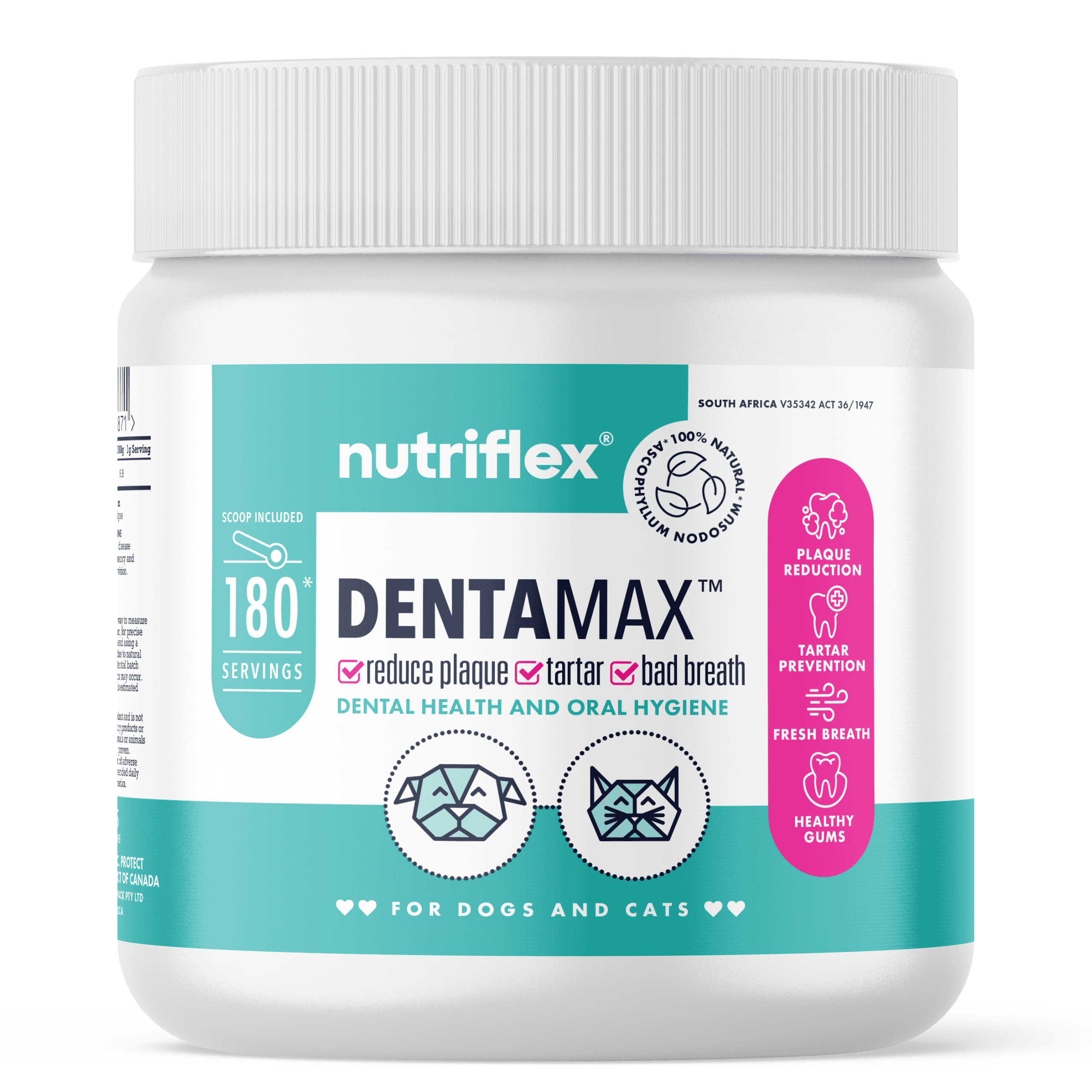
Bad breath in dogs is not just unpleasant.
It is usually the first sign of plaque-driven periodontal disease.
Most dog breath products only mask odour.
They do not address the biological cause.
This article explains:
• why dog breath smells
• how plaque bacteria create odour
• why many dental products fail
• what actually reduces plaque and tartar
What Causes Dog Bad Breath
The Real Cause: Oral Biofilm
Dog breath smells because of volatile sulphur compounds (VSCs) produced by bacteria in dental plaque.
These bacteria digest proteins in the mouth and release gases such as:
• hydrogen sulphide
• methyl mercaptan
• dimethyl sulphide
These sulphur gases create the characteristic rotten smell associated with dog halitosis.
Plaque Buildup on Dog Teeth
Dental plaque is a sticky microbial biofilm made up of:
• bacteria
• saliva proteins
• food debris
Once plaque attaches to the tooth surface, it begins multiplying rapidly.
Within 24–48 hours, plaque becomes dense enough to produce odour-causing bacteria.
How Plaque Becomes Tartar
When plaque remains on the teeth, it mineralises with calcium in saliva.
This creates tartar (dental calculus).
Tartar provides an even rougher surface for bacteria to colonise.
More bacteria = more sulphur gas = worse breath.
Gum Disease and Dog Halitosis
As plaque accumulates along the gumline, it triggers inflammation.
This leads to:
• gingivitis
• periodontal disease
• gum infection
• tissue breakdown
Infected gum pockets produce some of the strongest odours associated with dog bad breath.
Signs Dog Bad Breath Is a Dental Disease Problem
Pet owners should check for:
• persistent foul breath
• yellow or brown tartar on teeth
• red swollen gums
• bleeding during chewing
• pawing at the mouth
• difficulty eating
Studies estimate that over 80% of dogs show signs of periodontal disease by age three.
Dog Bad Breath Cure: What Actually Works
Most dog breath products treat the symptom, not the cause.
Effective solutions must reduce plaque bacteria.
Some pet owners turn to dental powders to control plaque bacteria that cause bad breath. A detailed Zest and Pep dental powder review explains how these supplements work and whether the ingredients are clinically supported.
Veterinary Dental Cleaning
Professional scaling removes hardened tartar above and below the gumline.
However plaque begins reforming within hours after cleaning.
Without ongoing plaque control the problem quickly returns.
Tooth Brushing
Brushing mechanically removes plaque from tooth surfaces.
The limitation:
Dogs rarely allow thorough brushing across every tooth.
Molars and gumline areas are usually missed.
Dental Chews
Dental chews attempt to scrape plaque from teeth through chewing friction.
Problems include:
• limited tooth contact
• high starch content
• added sugars or glycerin
These ingredients may actually feed oral bacteria.
Systemic Plaque Control Supplements
Systemic dental powders work differently.
Rather than scraping plaque from teeth, they influence the oral environment through saliva.
When consumed daily, certain natural ingredients circulate in saliva and interfere with plaque formation.
This helps reduce:
• plaque accumulation
• tartar formation
• bacterial odour compounds
Natural Ways to Improve Dog Breath
Natural plaque-control ingredients studied for oral health include marine algae species such as Ascophyllum nodosum.
Compounds in this seaweed appear to:
• alter bacterial adhesion
• reduce plaque biofilm formation
• slow tartar mineralisation
Clinical trials have demonstrated measurable reductions in plaque and tartar with daily use.
How to Prevent Dog Bad Breath
Long-term prevention requires consistent plaque management.
Key strategies include:
• daily plaque-control supplements
• regular tooth brushing when possible
• veterinary dental checks
• avoiding high-starch dental treats
Prevention works because plaque begins forming again within hours of cleaning.
When Dog Bad Breath Needs Veterinary Care
Persistent halitosis may indicate:
• advanced periodontal disease
• tooth root infection
• oral injury
• systemic illness
If breath remains severe despite plaque control, a veterinary dental examination is recommended.
Dog bad breath is rarely just a cosmetic problem.
It is usually a sign of plaque bacteria and early periodontal disease.
Products that simply mask odour do not solve the issue.
Effective dog bad breath cures focus on controlling plaque biofilm before it becomes tartar and gum infection.
Consistent daily plaque management is the key to long-term oral health in dogs.
Frequently Asked Questions
What causes bad breath in dogs?
The most common cause of bad breath in dogs is bacterial plaque on the teeth and along the gumline. Plaque is a biofilm made up of bacteria, saliva proteins and food particles that attaches to tooth surfaces. As these bacteria break down proteins in the mouth, they release sulphur-containing gases. These gases create the characteristic foul odour associated with dog halitosis.
If plaque is not controlled, it mineralises into tartar and begins irritating the gums. This leads to gingivitis and periodontal disease, both of which significantly worsen bad breath. In rare cases, halitosis may also be linked to digestive disease, kidney disease or oral infections, but dental plaque remains the primary cause in most dogs.
What bacteria cause dog halitosis?
Common bacteria associated with canine oral disease include:
• Porphyromonas gingivalis
• Porphyromonas gulae
• Fusobacterium nucleatum
• Prevotella intermedia
• Treponema denticola
These microorganisms break down proteins and release volatile sulphur compounds, including hydrogen sulphide and methyl mercaptan. These gases produce the strong “rotten” smell typical of dog bad breath.
How do you cure dog bad breath permanently?
There is rarely a single permanent cure for a dog’s bad breath because plaque bacteria constantly reform on the teeth. The key to controlling halitosis is consistent plaque management.
Effective long-term strategies include:
• regular veterinary dental examinations
• daily plaque control through brushing or supplements
• limiting high-starch dental treats
• using clinically studied plaque-control ingredients
By reducing the bacterial biofilm that produces sulphur gases, bad breath can be significantly improved and maintained over time.
Does plaque cause bad breath in dogs?
Yes. Dental plaque is the primary cause of bad breath in dogs.
Plaque is a sticky layer of bacteria that forms on teeth within hours after eating. As plaque bacteria metabolise proteins in saliva and food particles, they release sulphur compounds responsible for unpleasant odours.
If plaque is not removed, it hardens into tartar and spreads below the gumline. This creates deeper bacterial pockets that produce even stronger smells and contribute to periodontal disease.
How do you remove plaque from dog teeth?
Plaque can be managed through both mechanical and biological approaches.
Mechanical plaque removal includes:
• tooth brushing with dog-safe toothpaste
• professional veterinary dental scaling
• certain dental toys or chews that create friction
Biological plaque control focuses on reducing bacterial adhesion and biofilm formation. Some natural dental supplements influence the oral environment through saliva, helping reduce plaque accumulation and tartar formation over time.
The most effective dental routines combine both approaches.
Are dental chews effective for bad breath?
Dental chews can help reduce plaque on the teeth that experience chewing friction, but their effectiveness is limited.
Most dogs chew unevenly, meaning only a few teeth actually receive abrasive contact. Areas such as the gumline and back molars often remain untouched, allowing plaque to continue accumulating.
Additionally, many dental chews contain starch, glycerin or sweeteners, which can feed oral bacteria. While some chews may provide mild mechanical cleaning, they rarely address the underlying bacterial biofilm responsible for halitosis.
Do seaweed dental powders work for dogs?
Certain seaweed species used in dental powders have been studied for their ability to support oral health in dogs. The most researched species is Ascophyllum nodosum, a marine algae rich in bioactive compounds.
When consumed daily, compounds from this seaweed circulate in saliva and appear to influence the oral environment. Research suggests this may help:
• reduce plaque biofilm formation
• slow tartar mineralisation
• decrease bacterial odour compounds
Because these powders work through saliva rather than surface abrasion, they may support plaque control across the entire mouth rather than only the teeth that experience chewing friction.
How often should dog teeth be cleaned?
Ideally, plaque should be disrupted daily. Plaque bacteria begin forming on tooth surfaces within hours after eating, and the biofilm can mature rapidly if left untreated.
Most veterinarians recommend:
• daily tooth brushing when possible
• routine plaque-control supplements
• veterinary dental check-ups at least once per year
Consistent daily prevention is far more effective than occasional cleaning.
Can bad breath mean gum disease in dogs?
Yes. Persistent bad breath is often an early warning sign of gingivitis or periodontal disease.
As plaque bacteria accumulate along the gumline, they trigger inflammation and infection in the surrounding tissues. This leads to gum redness, swelling and eventual destruction of supporting tooth structures.
The deeper these bacterial pockets become, the stronger the odour tends to be. Chronic halitosis should therefore always be investigated as a potential dental disease problem.
What prevents dog bad breath long term?
Long-term prevention focuses on controlling plaque before it becomes tartar and gum disease.
Effective strategies include:
• daily plaque management
• maintaining a consistent oral hygiene routine
• avoiding sugar-rich dental treats
• supporting the oral microbiome with clinically studied ingredients
• regular veterinary dental assessments
By limiting the bacterial biofilm that produces sulphur gases, pet owners can maintain healthier teeth, gums and fresher breath for their dogs over the long term.