Dental chews are heavily marketed as a simple way to clean a dog’s teeth. Many products claim to reduce plaque, control tartar, and freshen breath without brushing.
For busy households, the idea is appealing. Give a daily chew and dental care is handled.
But convenience and biological effectiveness are not the same thing.
While chewing can provide some mechanical friction on certain tooth surfaces, most dental chews provide far less dental benefit than their marketing suggests. Their ingredients, structure, and the way dogs actually chew create limitations that many pet owners are unaware of.
Understanding how dental chews really work helps put them into proper perspective.
Are Dental Chews Actually Effective for Dogs?
Dental chews can reduce small amounts of plaque on certain tooth surfaces, but they are not a complete dental care solution for dogs.
While chewing creates some friction against the teeth, several factors limit their effectiveness.
Key limitations include:
-
Most chewing occurs on back molars, leaving front teeth largely untouched
-
Plaque along the gumline is rarely disturbed
-
Many dogs swallow chews quickly, reducing cleaning time
-
Dental chews cannot remove hardened tartar
-
Most products rely on starch-based ingredients rather than dental-active compounds
Because plaque forms continuously, effective dental care usually requires consistent daily plaque management, not occasional chewing treats.
Why Dental Disease Is So Common in Dogs
Dental disease is one of the most common health conditions affecting dogs.
Veterinary studies consistently show that a large proportion of dogs develop signs of periodontal disease by the age of three.
The process begins with plaque.
Plaque is a bacterial biofilm that forms continuously on the surface of teeth. Within hours after eating, bacteria attach to enamel and begin building a microscopic colony.
If plaque is not regularly disrupted, it gradually thickens and eventually mineralises into tartar (also known as calculus).
Once tartar accumulates along the gumline, it can trigger gum inflammation, bacterial infection, and damage to the structures supporting the teeth.
Because plaque forms quickly, dental care must be consistent to control accumulation.
How Dental Chews Are Supposed to Work
Dental chews rely on mechanical abrasion.
When a dog chews a firm object, friction occurs between the chew and the tooth surface. This friction may remove some loose plaque before it hardens into tartar.
Manufacturers often design dental chews with:
-
Grooves and ridges
-
Fibrous textures
-
Firm structures that encourage chewing
Some products also aim to stimulate saliva production, which can help rinse away food particles.
In theory, regular chewing could help maintain cleaner teeth.
In practice, the results are often inconsistent.
What Most Dental Chews Are Made Of
Many pet owners assume dental chews are designed around dental science or canine nutrition.
In reality, most are engineered primarily for manufacturing convenience.
Typical ingredient lists include:
-
Cornstarch
-
Wheat starch
-
Potato starch
-
Rice flour
-
Glycerine
-
Gelatin or binding agents
-
Artificial flavourings or colourants
These ingredients help create a chew that holds its shape, remains shelf-stable, and can be produced cheaply at scale.
But nutritionally, they offer little value for dogs.
In many cases, dental chews are essentially compressed starch-based treats.
Why Starch-Based Chews Are Problematic
Dogs evolved as carnivores and are biologically adapted to diets dominated by animal protein and fat.
Refined starches like cornstarch and wheat starch provide minimal biological value.
High-starch dental chews introduce several problems.
Nutritional mismatch
These ingredients contribute little to canine nutrition.
Rapid softening
Starch-based chews often soften quickly in saliva, reducing their ability to create meaningful tooth abrasion.
Unnecessary calories
Daily dental treats can add significant calories, particularly for small dogs.
Ingredient quality concerns
Many products rely on highly processed plant carbohydrates rather than species-appropriate ingredients.
From a nutritional standpoint, many dental chews prioritise manufacturability over canine health.
The Mechanical Reality of Chewing
Even when a chew has the right texture, chewing behaviour limits its cleaning ability.
Dogs do not chew evenly across all teeth.
Most chewing pressure occurs on the back molars and premolars. As a result:
-
Front teeth receive little contact
-
Gumline plaque remains largely untouched
-
Spaces between teeth are rarely cleaned
Ironically, the areas where periodontal disease most often begins are the areas chewing rarely reaches.
Can Dental Chews Remove Tartar?
Dental chews may help remove some soft plaque, but they cannot remove tartar.
Once plaque mineralises into tartar, it becomes a hard deposit tightly bonded to the tooth surface.
At that stage, mechanical chewing is unlikely to remove it.
Professional veterinary dental cleaning is usually required to remove established tartar deposits.
Dental chews may slow further accumulation slightly, but they cannot reverse existing dental disease.
The Problem of Fast Consumption
Another limitation is how quickly many dogs consume dental chews.
Some dogs chew thoroughly, but many swallow them within seconds.
If a dental chew disappears after a few bites, there is almost no opportunity for mechanical cleaning to occur.
A chew that is swallowed quickly provides little dental benefit.
Marketing Claims vs Biological Reality
The marketing surrounding dental chews often suggests they provide significant dental protection.
In reality, most function more like flavoured chew treats with minor mechanical side effects.
They may provide some friction on certain teeth when chewed slowly, but their impact on overall oral health is limited.
The ingredient composition of many products also reveals the priority: creating a stable, inexpensive chew rather than delivering targeted dental support.
Alternative Approaches to Plaque Control
Because of the limitations of chewing-based products, veterinarians often recommend combining multiple strategies for dental care.
These may include:
-
Tooth brushing
-
Veterinary dental cleanings
-
Daily oral supplements
-
Dental powders added to food
Each approach targets plaque differently.
Combining strategies tends to provide more reliable plaque control than relying on one method alone.
Ingredient-Driven Plaque Management
Some modern dental supplements focus on influencing plaque formation through specific ingredients.
One ingredient that has been studied for this purpose is Ascophyllum nodosum, a North Atlantic marine algae.
Certain preparations of this algae have been investigated for their influence on plaque accumulation and gum health when consumed daily by dogs.
Rather than physically scraping plaque away, this approach aims to influence the oral environment and slow plaque formation over time.
Dental Powders as a Daily Oral Care Strategy
Dental powders deliver these ingredients through a dog’s regular diet.
They are typically mixed into food once per day.
Unlike dental chews, dental powders do not rely on:
-
chewing behaviour
-
abrasive textures
-
starch-based binding agents
Instead, the active ingredients are delivered consistently with the dog’s daily meal.
This makes them useful for dogs that:
-
swallow chews quickly
-
resist tooth brushing
-
cannot tolerate dental treats
-
require consistent daily plaque management.
A Simpler Ingredient-Focused Alternative
Some pet owners prefer dental products built around targeted ingredients rather than highly processed starch-based treats.
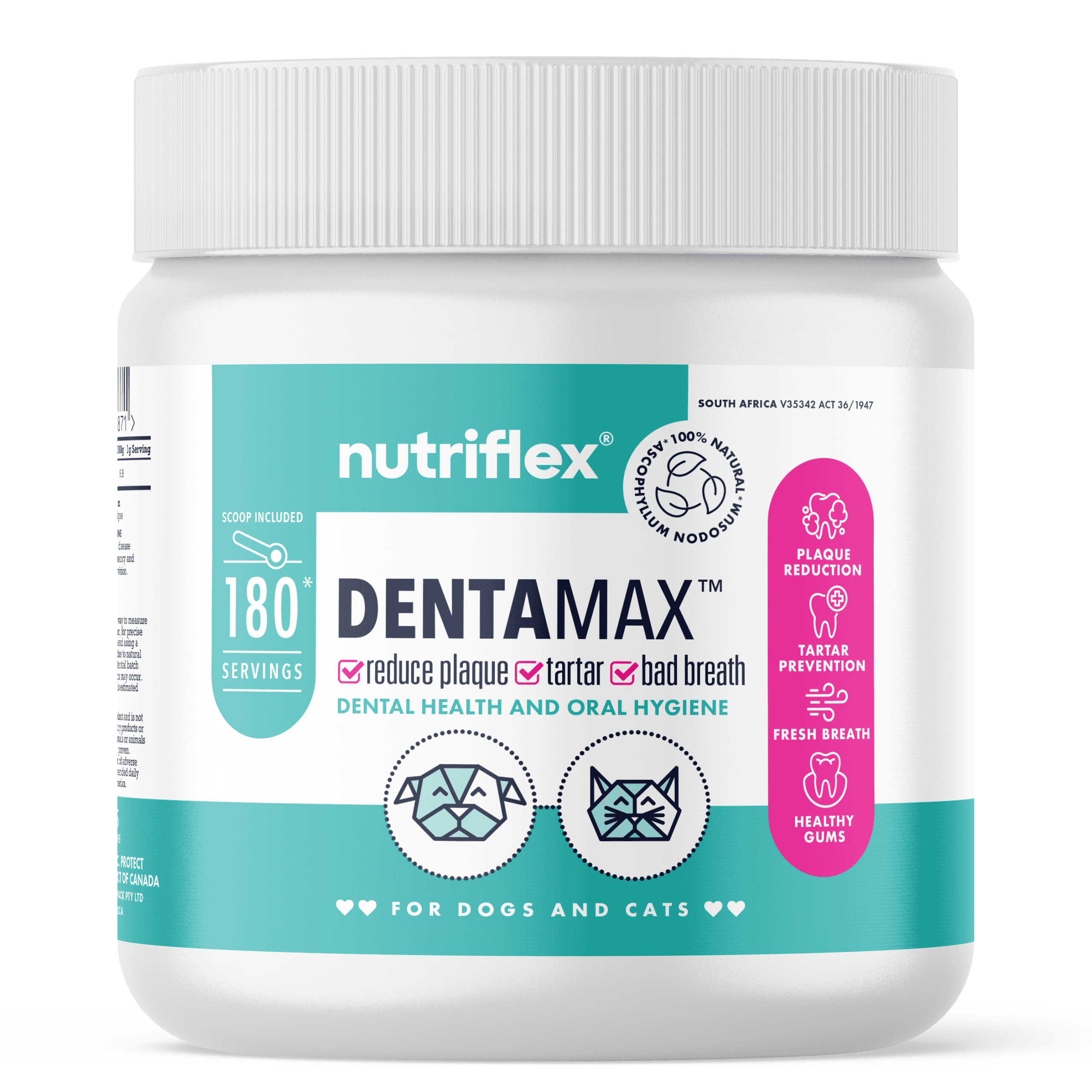
For example, DentaMax™ dental powder is formulated as a daily food supplement designed to support plaque management through consistent ingredient exposure.
Because it is mixed directly with food, it avoids the starch fillers, artificial binders, and unnecessary additives commonly found in dental chews.
For households seeking a more ingredient-driven approach to oral care, this type of supplement can provide a practical addition to a dog’s routine.
Signs Your Dog May Have Dental Disease
Even dogs that receive dental chews regularly can develop dental disease.
Common warning signs include:
-
Persistent bad breath
-
Yellow or brown tartar deposits
-
Red or swollen gums
-
Bleeding gums
-
Difficulty chewing
-
Loose teeth
If these symptoms appear, veterinary evaluation is recommended.
Professional Veterinary Dental Care
When tartar has already accumulated, professional dental cleaning may be necessary.
Veterinary dental procedures typically include:
-
Scaling to remove tartar
-
Polishing the tooth surface
-
Assessing gum health and tooth stability
These procedures allow veterinarians to remove plaque and tartar both above and below the gumline.
Building a More Effective Dental Care Routine
The most effective dental care strategy is usually layered.
Rather than relying on a single product, many veterinarians recommend combining several approaches.
A practical routine may include:
-
Regular plaque disruption where possible
-
Daily oral supplements or dental powders
-
Chewing aids used for enrichment
-
Periodic veterinary dental assessments
Each layer contributes to controlling plaque formation over time.
The Bottom Line: Do Dental Chews Work?
Dental chews can provide limited mechanical plaque reduction on certain tooth surfaces.
However, they are not a complete dental care solution.
Most commercial dental chews are built primarily from starch-based ingredients that provide little nutritional value and inconsistent dental benefits.
While they may contribute slightly when used regularly and chewed thoroughly, relying on dental chews alone is unlikely to prevent plaque accumulation or periodontal disease.
Understanding their limitations helps pet owners make better decisions about protecting their dog’s long-term oral health.