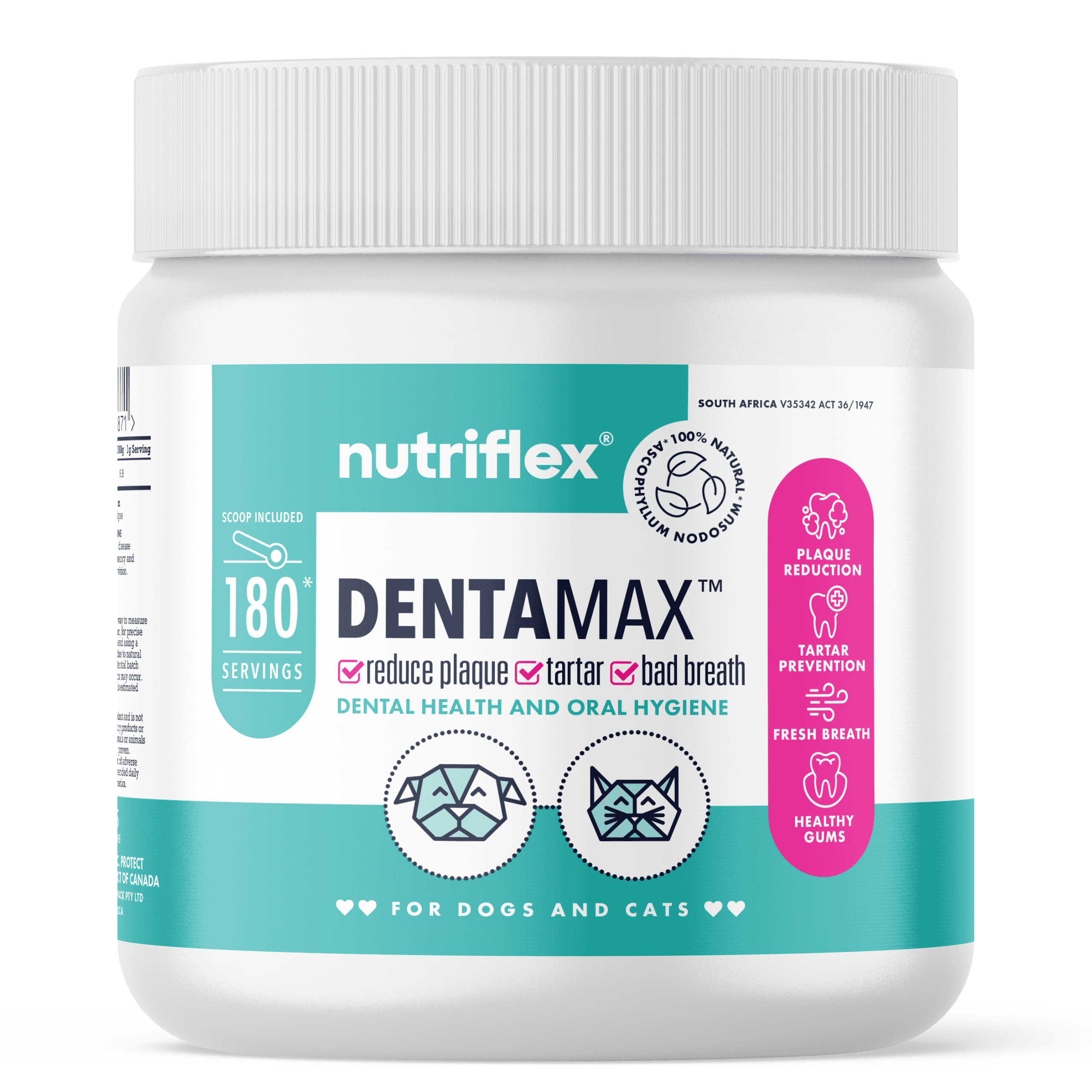
Most people approach dental care by comparing products, chews versus powders, brands against brands, hoping to find the one that makes a difference. But this product-first mindset misses the real issue. choosing effective dental chews often focuses on ingredient quality and formulation, but their impact is limited to the surfaces they physically contact. Many prioritise palatability over function. They may freshen breath and reduce loose debris, but do not reliably control plaque at the gumline, where disease begins.
Dental disease is not a product problem. It’s a biofilm control problem.
Plaque forms continuously. Every day. Every meal.
If not addressed early, plaque hardens into tartar, making intervention less effective. One effective way to maintain your dog’s dental health is to explore the benefits of dental powder for dogs, which can help reduce plaque buildup. These powders often contain natural ingredients that promote oral hygiene, making it easier to manage your pet’s dental care routine. Regular use can lead to fresher breath and healthier gums, contributing to their overall well-being.
So the real question is not “chew or powder?”
It’s which approach disrupts plaque formation consistently, daily and across the whole mouth?
Quick Answer
Dental powder offers an advantage over chews: it relies on saliva to distribute active compounds throughout your dog’s mouth, even in areas missed by chewing or brushing. This means plaque-disrupting action occurs throughout the day, providing consistent, whole-mouth support without relying on perfect routines or dog behaviour.
What Dental Chews Actually Do
Dental chews mostly work by using friction. When your dog chews on them, the friction can remove some plaque from the surface of their teeth. That’s the basic idea:
Dog chews → surface abrasion → some plaque removed.
But here’s the problem:
Most dental chews contain starches, fillers and artificial chemicals that can feed the bacteria that cause plaque and bad breath. Chewing affects only the teeth that are actually chewed and provides short-lived benefits.
Dental chews may briefly clean teeth, yet do little for long-term oral health and added chemicals and starches can worsen problems.
Where does this help?
- Removing visible debris from easy-to-reach teeth
- For the rare dog who chews thoroughly and consistently
Where does it fail?
- Gumline (where dental disease begins)
- Back teeth and between teeth (hard-to-reach areas)
- Dogs that don’t really chew or just swallow treats whole
- Any home where daily, thorough chewing isn’t guaranteed
Because chewing is behaviour-driven, it’s unpredictable and difficult to control. In practice, this approach depends on your dog’s mood rather than a consistent, effective routine, leaving the real problem of daily, whole-mouth plaque control unsolved.
The Structural Problem With Dental Chews
There’s a basic flaw in how most dental chews are made: they aren’t created with your dog’s biology or long-term health in mind. Instead, they’re built to taste good, last a long time on the shelf, and look appealing to both dogs and owners.
To achieve this, manufacturers use:
- Lots of starch: Starch helps hold the chew together and makes it chewy, but it’s also a food source for the same bacteria that cause plaque and bad breath.
- Binding agents and fillers: These help keep the chew from falling apart, but they don’t offer any health benefits and can even increase its calorie content.
- Extra calories: Many chews are surprisingly high in calories, which can add up quickly if given every day.
While dental chews are designed to clean teeth, their ingredients can also feed oral bacteria, undermining their purpose.
This is the contradiction:
Dental chews aim to remove bacteria through abrasion, but their ingredients may nourish them, leading to declines in long-term oral health.
What Dental Powder Does Differently
Dental powder takes a completely different approach from chews. It doesn’t depend on your dog’s willingness to chew or on which teeth get chewed. Instead, it uses your dog’s saliva as a delivery system.
Here’s how it works:
- You simply add the powder to your dog’s food.
- After your dog eats, the active ingredients are absorbed into their body and then released into its saliva.
- Active compounds in saliva coat every tooth and hidden spot each time your dog moves its mouth.
This means the powder isn’t just working when your dog happens to be chewing. It’s working all the time, day and night, because saliva is always present.
Why is this better?
- It doesn’t matter if your dog loves to chew or not.
- Every part of the mouth, including hard-to-reach places, gets exposed to the active ingredients.
- The helpful compounds keep working between meals, not just for a few minutes during a chew.
In short: Dental powder provides ongoing, full-mouth protection, making it a reliable, effortless way to support your dog’s dental health, no matter your routine.
Quick Answer
Dental powder works by releasing active compounds into saliva, which then disrupt plaque-forming bacteria throughout the mouth, including areas that brushing and chewing often miss.
Mechanical vs Systemic: The Real Difference
Understanding how dental care products work comes down to two basic approaches:
| Dental Chews | Physically scrape teeth | Only cleans where chewed, not consistent |
| Dental Powder | Uses natural ingredients to disrupt bacteria through saliva | Needs to be used daily for best results |
- Mechanical (chews) = reacting to what’s already there
- Systemic (powder) = stopping problems before they start
Plaque isn’t just dirt—it’s a living process caused by bacteria. That means the best way to control it isn’t just scraping it away, but actually changing the environment in the mouth so bacteria can’t thrive. In other words, a biological problem needs a biological solution.
Why Plaque Control Fails in Most Homes
There’s a simple reason why good plaque control is so hard: most people don’t brush their dog’s teeth every day.
This isn’t about being a bad pet owner; it’s just how life goes. Schedules are busy, dogs squirm or hide when it’s toothbrush time and sometimes we just forget. It’s not a lack of love or effort; it’s normal.
That’s why any dental routine that relies on:
- Brushing your dog’s teeth every single day
- Being perfectly consistent, without ever missing a day
- Having a dog that patiently lets you brush their teeth every time
…is likely to break down fast.
Not because people don’t care, but because it’s simply not realistic for most families. Life gets in the way, dogs have their own opinions, and maintaining perfect routines is almost impossible. That’s why so many well-intentioned dog owners struggle with their pet’s dental health, even when they know it’s important.
Coverage: The Hidden Advantage of Powder
When it comes to cleaning your dog’s mouth, coverage is everything. Dental chews can only help where your dog actually chews, usually just the front or easy-to-reach teeth. If your dog skips certain teeth or swallows the chew too quickly, many spots get missed.
Dental powder’s active ingredients mix with saliva, which coats every part of your dog’s mouth.
This means dental powder can reach:
- The gumline (where dental disease often starts)
- The inside surfaces of teeth, next to the tongue
- The hard-to-reach back molars
- The tight spaces between teeth
No matter how your dog eats, the powder’s effects reach everywhere that saliva does.
The result:
You get full-mouth coverage, not just a few surfaces. Better coverage means more bacteria are disrupted, more plaque is prevented, and overall dental health improves. It’s a simple switch that leads to a much more complete clean, without relying on your dog’s chewing habits.
Quick Answer
Dental powder provides full-mouth coverage through saliva, while dental chews only scrape plaque on a few exposed surfaces. This makes powders more effective for controlling plaque in hard-to-reach areas.
What About Bad Breath?
Bad breath isn’t just about unpleasant smells; it’s a sign of what’s happening inside your dog’s mouth. The real problem isn’t the odour itself, but the bacteria living on your dog’s teeth and gums. These bacteria produce smelly byproducts, which is what you notice as “dog breath.”
How do chews handle it?
- Most chews only temporarily reduce bad breath. They might scrape off a little plaque or add flavours to mask odours.
- In reality, many chews just mask the problem rather than actually fix it. The smell might go away for a short while, but the bacteria are still there and the odour comes back.
How is powder different?
- Dental powders work by targeting the bacteria that cause bad breath.
- Instead of just covering up the smell, powder reduces odour at the source by disrupting the bacteria and making it harder for them to grow.
The bottom line:
If the bacteria in your dog’s mouth aren’t controlled, bad breath will always return, no matter how many chews or treats you use. Only by tackling the root cause can you keep your dog’s breath fresh for the long term. That’s where dental powder stands out: it doesn’t just hide the problem, it helps solve it.
Time Horizon: Short-Term vs Long-Term
When it comes to dental care, it’s important to think about both the immediate and lasting effects of what you use.
Chews:
- Chews can make your dog’s teeth look cleaner right after use, giving an instant “fresh” feeling and sometimes a quick improvement in breath.
- However, this impact is mostly cosmetic. The effect doesn’t last, and there’s no real build-up of benefits over time; once the chew is gone, so is its cleaning action.
Powder:
- Start your dog’s journey to better oral health today: switch to dental powder for simple, consistent, whole-mouth protection that works even if your routine is imperfect.
- However, the power of powder comes from its cumulative effect. With daily use, the benefits add up, bacteria are controlled, plaque and tartar are reduced, and your dog’s mouth stays healthier week after week.
This is the key trade-off:
Chews offer quick, surface-level results that don’t last. Powder works gradually, but with consistent use, it brings real, long-term biological control. It’s the difference between a quick cosmetic fix and building a foundation for long-term oral health.
The Hidden Downsides of Dental Chews
Most commercial dental chews aren’t just ineffective; they can actually be bad for your dog. Many are packed with starches, sugars, artificial flavours and preservatives. These ingredients can feed the bacteria that cause plaque and bad breath and they add unnecessary calories to your dog’s diet.
Although chews may help remove some surface debris, they do not address the root causes of dental disease and may give a false sense of security about your dog’s oral health. They might make teeth look a little cleaner for a short time, but if your dog swallows them quickly or doesn’t chew thoroughly, the benefits are minimal and short-lived, while the risks from all those additives remain.
So, why spend money on a product that could do more harm than good? Instead of relying on chews that may actually undermine your dog’s oral health, it’s smarter to invest in solutions with real, proven benefits, like dental powders that work with your dog’s biology, not against it.
Where Dental Powder Becomes Foundational
Dental powder is especially helpful in everyday situations that almost every dog owner faces.
It’s a great choice when:
- Brushing is inconsistent: Most people don’t manage to brush their dog’s teeth every single day. Life gets busy, dental powder fills in those gaps.
- Dogs resist handling: Some dogs just don’t let you near their mouths. If your dog hates brushing or squirms away, powder is an easy solution because you just add it to their food.
- Plaque builds quickly: If your dog seems to develop plaque or tartar even with chews or occasional brushing, dental powder provides extra support to slow down build-up.
- Long-term prevention: It’s harder to fix dental problems than to prevent them. Using dental powder every day helps keep your dog’s teeth and gums healthy in the long run.
For most households, at least one of these situations applies. That’s why dental powder isn’t just an add-on; it becomes the foundation for better dental care, making it easier to protect your dog’s mouth day after day. Dental powder is especially helpful in everyday situations that almost every dog owner faces.
The Role of Ascophyllum Nodosum
The real question isn’t just “powder vs chew” it’s about what’s inside the powder that makes a difference.
Ascophyllum nodosum is a species of marine algae that’s gained recognition in veterinary science for its powerful effects on dental health. Unlike many ingredients that simply coat the teeth or depend on physical abrasion, Ascophyllum nodosum works systemically. After it’s ingested, its bioactive compounds are absorbed, circulate in the bloodstream, and are secreted into saliva. This means its benefits extend to every corner of the mouth, reaching areas that brushing, rinses, or chews often miss.
How does Ascophyllum nodosum support oral health?
- Disrupts Bacterial Adhesion: It interferes with oral bacteria’s ability to adhere to teeth and gums, the critical first step in plaque formation.
- Weakens Plaque Matrix: By altering the structure of the plaque biofilm, it makes existing deposits less stable and easier for the body or brushing to remove.
- Reduces Calculus Build-Up: With continued use, studies show a measurable reduction in the accumulation of hardened tartar (calculus), making long-term dental upkeep more manageable.
- Freshens Breath Naturally: By addressing odour-causing bacteria at the source, it helps keep breath fresher without resorting to artificial flavours or masking agents.
Why is this significant? Most dental products claim to fight plaque and tartar, but few have published research to back up those claims. Ascophyllum nodosum stands out as one of the few natural ingredients with multiple veterinary studies supporting its effectiveness in reducing plaque, calculus, and oral malodor in both dogs and cats.
Bottom line:
It isn’t the powder format alone that matters; it’s the inclusion of Ascophyllum nodosum and its unique, science-backed mode of action. By disrupting the biological processes behind dental disease, it offers a practical, daily tool for maintaining better oral health, especially in homes where brushing isn’t routine. This is what sets a truly effective dental powder apart from both chews and generic additives.
Where DentaMax Fits In (Without the Marketing Noise)
DentaMax™ is made for reality: most people don’t brush their dog’s teeth daily.
- Add it to food once a day, no extra steps.
- Works through saliva, covering the whole mouth.
- Uses Ascophyllum nodosum, a proven marine algae.
DentaMax™ doesn’t replace vet care. It fills the gap when daily brushing isn’t happening.
- Daily powder = consistent, baseline protection
- Brushing = optional, extra support
With DentaMax™, daily dental care becomes automatic. Even if you skip brushing, your dog’s mouth still gets ongoing support against plaque and bacteria. For most households, this means better oral health with less effort and fewer gaps in protection.
Add brushing when you can; it’s a bonus. But the real advantage is knowing you have a reliable, science-backed baseline working every day, no matter what your routine looks like. DentaMax™ fits where real life happens: busy schedules, imperfect habits, and the need for practical solutions that actually work.
Can You Combine Chews and Powder?
Yes, but only if the chews are genuinely clean and free from unnecessary additives. The reality is that most commercial dental chews are a chemical minefield: loaded with processed starches, sweeteners, artificial colours, and preservatives. These ingredients aren’t just empty calories; they actually feed oral bacteria, contribute to plaque formation, and can worsen underlying dental health. What’s marketed as a dental solution often disguises the fact that the chew itself can become a source of the very problem it claims to solve. So the hierarchy matters:
- Powder = primary control layer
- Chews = optional add-on (only if beneficial)
Decision Framework
Choose dental powder for consistent, whole-mouth plaque control with minimal effort.
Use dental chews only as a supplementary tool for occasional surface cleaning or enrichment.
The Real Conclusion
Dental chews have a strong presence in pet aisles because they’re easy to market. They promise clean teeth, fresh breath, and visible results, mostly through claims about texture and chewing action. But beneath the surface, their impact is limited, depending on how often and how thoroughly a dog chews and only reaches the teeth that actually get chewed.
Dental powder takes a different approach. Instead of focusing on appearance, it works at the biological source of dental problems: the bacteria that drive plaque and tartar formation. By using saliva as a delivery system, dental powder reaches every corner of the mouth, including spots chews and brushes usually miss. It doesn’t depend on daily routines or a dog’s willingness to cooperate, making it a practical solution for most homes.
Key advantages:
- Not dependent on chewing or behaviour
- Not limited to just a few tooth surfaces
- Doesn’t just mask odour, addresses the root cause of bad breath
- Provides ongoing, full-mouth support throughout the day
In short, Dental chews sell the idea of clean teeth. Dental powder is designed to deliver it, by supporting biological control where it matters most, with minimal effort or disruption.
This isn’t about hype. It’s about choosing the tool that aligns with how dental disease really works and what actually fits real life.