Why Brown Teeth in Dogs Matter
Brown teeth in dogs are usually a visible warning sign that something is happening in the mouth. While some minor staining can occur naturally over time, brown discolouration most commonly indicates plaque buildup, tartar accumulation, or developing periodontal disease.
Dental disease is one of the most common health conditions in dogs. Veterinary studies consistently show that many dogs begin showing signs of periodontal disease by the age of three.
Understanding why teeth turn brown helps pet owners recognise early warning signs and take steps to support long-term oral health.
What Healthy Dog Teeth Should Look Like
Healthy adult dog teeth typically appear:
-
Off-white or slightly cream coloured
-
Smooth and glossy
-
Free from thick deposits along the gum line
-
Surrounded by pink, non-inflamed gums
Puppies often have brighter white teeth because they have not yet accumulated plaque deposits.
As dogs age, mild staining can occur, but heavy brown buildup is usually associated with tartar.
The Most Common Cause: Plaque and Tartar Buildup
The primary cause of brown teeth in dogs is tartar (dental calculus).
How plaque forms
After a dog eats, bacteria in the mouth combine with food particles and saliva to form a thin film on the teeth known as plaque.
Plaque begins forming within hours after eating.
If plaque is not regularly disrupted, minerals in saliva gradually harden it into tartar.
Why tartar turns brown
Tartar is porous and easily absorbs pigments from:
-
Saliva
-
Bacterial byproducts
-
Food particles
Over time, tartar thickens along the gum line and becomes yellow, brown, or even dark grey.
Once tartar forms, it cannot be removed by chewing or brushing alone and usually requires professional dental scaling.
Periodontal Disease and Tooth Discolouration
Brown teeth often appear alongside periodontal disease, an infection of the tissues supporting the teeth.
The disease progresses through several stages:
-
Plaque accumulation
-
Tartar formation
-
Gum inflammation (gingivitis)
-
Damage to the periodontal ligament and bone
As bacterial populations increase, pigments produced by bacteria can further darken tooth deposits.
Advanced periodontal disease may also cause:
-
Gum recession
-
Tooth mobility
-
Chronic bad breath
Tooth Trauma and Internal Discolouration
Not all brown teeth are caused by tartar.
Sometimes a single tooth turns brown because of trauma.
When a tooth is injured, the blood supply inside the pulp chamber may be damaged. This causes internal bleeding and breakdown of red blood cells inside the tooth.
As the internal tissue degenerates, the tooth may appear:
-
Brown
-
Purple
-
Grey
This type of discolouration usually indicates a dead or dying tooth and should be evaluated by a veterinarian.
Diet and Lifestyle Factors
Diet influences plaque accumulation.
Dogs fed soft foods or sticky diets may experience faster plaque buildup because there is little mechanical abrasion during eating.
However, dry kibble does not reliably clean teeth either. Most kibble shatters too quickly to scrape the tooth surface.
The real determinant of dental health is daily plaque management, not simply food type.
Age-Related Tooth Colour Changes
Older dogs often develop darker teeth due to several factors:
-
Long-term plaque accumulation
-
Gradual enamel wear
-
Increased exposure to pigments in saliva
While mild darkening may occur with age, thick brown deposits are usually associated with tartar rather than normal ageing.
Other Causes of Brown Teeth in Dogs
Although tartar is the most common reason, other factors can contribute to tooth discolouration.
These include:
Enamel damage
Cracked or worn enamel exposes dentin beneath the tooth surface, which is naturally darker.
Bacterial pigmentation
Certain oral bacteria produce pigmented compounds that can stain tooth surfaces.
Mineral deposits
Salivary minerals can accumulate unevenly, producing darker areas of calculus.
Signs That Brown Teeth Indicate Dental Disease
Brown teeth often appear alongside other symptoms of oral disease.
Common warning signs include:
-
Persistent bad breath
-
Red or swollen gums
-
Bleeding when chewing
-
Dropping food while eating
-
Pawing at the mouth
-
Loose teeth
If these symptoms occur, a veterinary dental evaluation is recommended.
Veterinary Diagnosis of Dental Problems
Veterinarians assess dental health using several methods.
These include:
Oral examination
The veterinarian visually inspects teeth, gums and tartar deposits.
Periodontal probing
A dental probe measures gum pocket depth around the tooth.
Dental radiographs
X-rays allow veterinarians to evaluate tooth roots and underlying bone.
Many serious dental conditions develop below the gum line, so radiographs are often required for a complete diagnosis.
Can Brown Teeth Be Cleaned?
If brown teeth are caused by tartar, the most effective treatment is professional dental cleaning.
Veterinary dental cleaning typically involves:
-
Anaesthesia to allow safe scaling
-
Ultrasonic scaling to remove tartar
-
Polishing to smooth the tooth surface
-
Dental radiographs if necessary
Polishing helps slow future plaque accumulation.
Preventing Brown Teeth in Dogs
The key to preventing brown teeth is consistent plaque management.
Because plaque forms continuously, daily oral care strategies tend to be the most effective.
Common approaches include:
-
Tooth brushing
-
Dental chews
-
Dental diets
-
Nutritional dental supplements
Each method works differently and many pet owners combine several strategies.
The Role of Daily Dental Support
Many dogs resist tooth brushing, which makes daily plaque control difficult for some households.
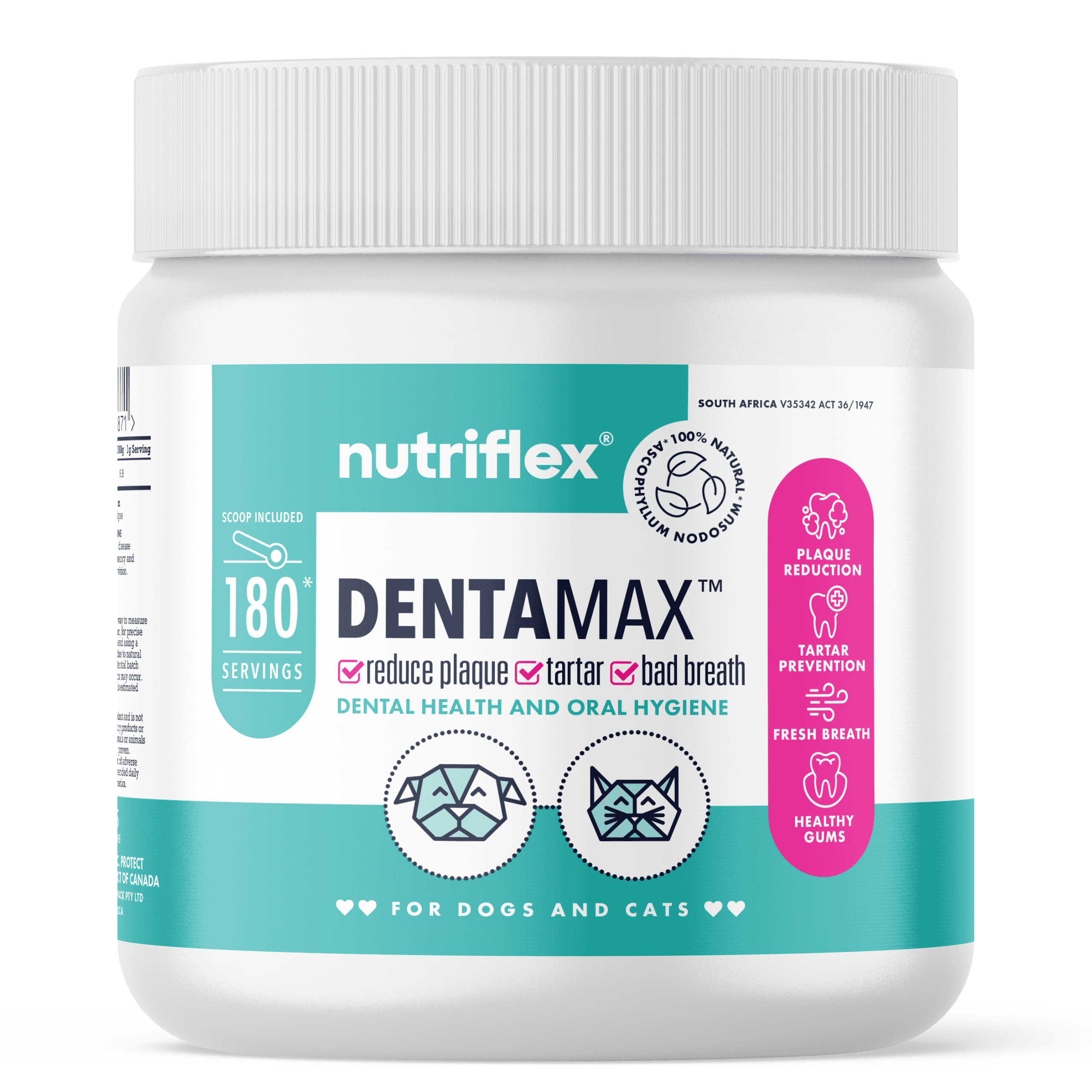
For this reason, some owners use systemic dental supplements that are added to food daily.
Certain ingredients have been studied for their ability to influence oral biofilm and plaque formation when ingested consistently.
These supplements work differently from mechanical brushing. Instead of scraping plaque off teeth, they influence the oral environment through saliva.
Long-Term Risks of Ignoring Brown Teeth
When tartar buildup is left untreated, dental disease can progress.
Potential consequences include:
-
Severe periodontal disease
-
Tooth loss
-
Chronic oral pain
-
Infection of surrounding tissues
Advanced periodontal infections may also allow bacteria to enter the bloodstream, potentially affecting organs such as the heart, liver and kidneys.
Building a Sustainable Dental Routine
Maintaining canine dental health is easier when preventive care becomes part of daily routine.
Effective long-term strategies often include:
-
Monitoring teeth regularly
-
Addressing plaque before it hardens into tartar
-
Scheduling periodic veterinary dental checks
Early intervention helps prevent the progression from simple plaque buildup to advanced periodontal disease.
Frequently Asked Questions
Are brown teeth always tartar?
Most brown deposits on dog teeth are tartar, but trauma or internal tooth damage can also cause discolouration.
Can brown teeth turn white again?
Surface stains may improve after professional dental cleaning. However, teeth that have darkened internally usually remain discoloured.
Are brown teeth painful for dogs?
Brown tartar itself is not painful, but the underlying gum disease that often accompanies it can cause significant discomfort.
How quickly does tartar form?
Plaque can begin forming within hours after eating. If not disrupted regularly, it can mineralise into tartar within days to weeks.