Why the Best Kelp Powder for Dogs Could Transform Your Pet’s Health
The best kelp powder for dogs is one sourced from clean, cold ocean waters, made from a single organic ingredient with no fillers, and dosed at around 1 gram per 15 kg of body weight daily. Here are the top things to know at a glance:
- Best species: Ascophyllum nodosum (brown seaweed, widely used and well-supported)
- Key benefits: Dental health, skin and coat, thyroid support, digestion, immune function
- Daily dose: 1 gram per 15 kg body weight, up to a maximum of 6 grams per day
- What to look for: Organic certified, single ingredient, sustainably harvested, no artificial additives
- Who to avoid it with: Dogs with hyperthyroidism or iodine sensitivity (consult your vet first)
Kelp is a type of seaweed that has been used as a nutritional supplement for centuries, and it is gaining real traction in the pet care world, and for good reason.
For dog owners dealing with bad breath, dull coats, tartar buildup or sluggish digestion, kelp powder offers a natural, chemical-free way to support their dog’s health from the inside out. It works through the saliva, helping to break down dental biofilm and reduce plaque, without the need for brushing.
And unlike many pet supplements, it is simple to use. Just sprinkle it on your dog’s food once a day.
This guide covers everything you need to know: the science behind kelp, safe dosing, what to look for on the label and the best options available to South African pet owners.
Key Health Benefits of Kelp for Canine Wellness
Kelp is often referred to as a “superfood” because it contains a dense concentration of vitamins, minerals and amino acids that are often missing from standard commercial pet foods. For us as pet owners in South Africa, ensuring our dogs get a balanced diet is a priority, and kelp serves as an excellent natural multivitamin.
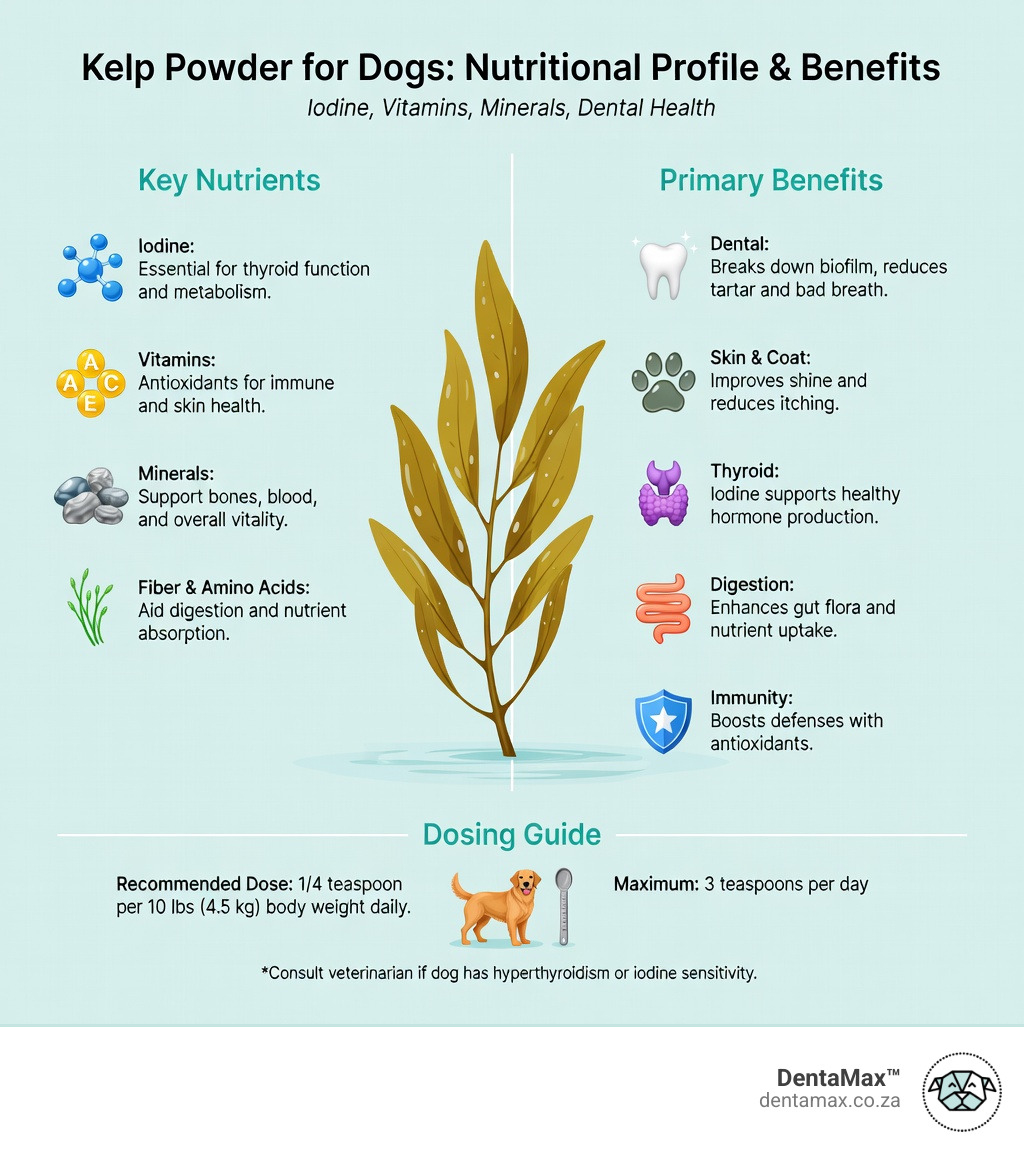
One of the most significant components of kelp is iodine. Iodine is essential for the healthy functioning of the thyroid gland, which controls your dog’s metabolism. When the thyroid is supported, it helps regulate energy levels and weight. You can learn more about natural treatments for hypothyroidism in dogs to see how iodine plays a role in metabolic health.
Beyond the thyroid, kelp is a powerhouse for skin and coat health. If your dog suffers from dry, itchy skin or a dull coat, the high mineral content in kelp helps maintain skin hydration and promotes a natural shine. It contains over 60 different minerals and vitamins, including Vitamin A for vision, Vitamin B12 for nerve function and Vitamin K for bone health. It is also rich in iron and calcium, providing more calcium than many dairy products by weight.

Why Ascophyllum Nodosum is the Best Kelp Powder for Dogs
While there are many types of seaweed, Ascophyllum nodosum is widely considered the best kelp powder for dogs, particularly when it comes to oral hygiene. This specific species of brown seaweed contains unique compounds that work systemically.
When your dog eats this kelp, the active ingredients are absorbed into the bloodstream and then released into the saliva. Once in the mouth, these compounds work to soften existing tartar and prevent new plaque from sticking to the teeth. This process targets the dental biofilm, which is the sticky layer where bacteria thrive.
Using a high quality dental powder can lead to a significant plaque reduction and tartar control without the stress of daily brushing. It also helps neutralise the bacteria that cause “doggy breath,” leading to fresher breath and healthier gums. For a deeper dive into why this specific seaweed is so effective, you can read more about Ascophyllum nodosum for dogs.
Supporting Digestion and Immune Function
Kelp is an excellent source of prebiotic fibre. Prebiotics are essential for feeding the “good” bacteria in your dog’s gut, which helps maintain a healthy microbiome. A balanced gut leads to better nutrient absorption and more consistent bowel movements.
Furthermore, kelp provides powerful antioxidant protection. These antioxidants help fight free radicals and reduce inflammation throughout the body. By supporting the immune system, kelp helps increase your dog’s resistance to disease and environmental stressors. For dogs in busy cities like Johannesburg or Cape Town, where environmental pollutants might be higher, this extra immune boost is invaluable.
Dosage and Feeding Guidelines for Your Dog
To get the most out of the best kelp powder for dogs, you must follow the correct dosage guidelines. Because kelp is high in iodine, more is not always better. The goal is to provide enough to support health without overstimulating the thyroid.
The standard recommendation is to give your dog 1 gram of kelp powder per 15kg (approximately 33 lbs) of body weight daily. Most dogs should not exceed 6 grams per day, regardless of their size.
Daily Dosage Guide by Weight
| Dog Weight (kg) | Dog Weight (lbs) | Daily Dosage (1g Scoop) |
|---|---|---|
| Up to 15 kg | Up to 33 lbs | 1 Scoop |
| 16 – 30 kg | 66 lbs | 2 Scoops |
| 30 kg+ | 66 lbs+ | 3 Scoops |
Kelp powder is incredibly versatile. You can sprinkle it directly onto dry kibble, mix it into wet canned food or stir it into a raw food diet. If you feed a raw diet, kelp is an excellent way to fill nutritional gaps, especially if you are not feeding a wide variety of organ meats or sea vegetables.
Creative Ways to Feed Kelp Powder
If you have a picky eater, simply sprinkling powder on top of dry food might not work. Here are some of our favourite ways to incorporate kelp into your dog’s routine:
- Frozen Yogurt Treats: Mix a teaspoon of kelp powder into a cup of plain, unsweetened Greek yogurt. Spoon the mixture into ice cube trays and freeze. These make refreshing summer snacks for dogs in warm climates like Durban.
- LickiMat Recipes: Spread some wet food or peanut butter (ensure it is xylitol-free) onto a LickiMat and sprinkle the kelp powder over the top. The licking action combined with the kelp is great for dental health.
- Homemade Meal Prep: If you prepare homemade meals, add the kelp powder after the food has cooled to preserve the delicate vitamins and enzymes.
- Water Mixing: For dogs that really dislike the taste, you can try mixing it into a small amount of bone broth or water to create a “gravy” for their food.
Safety Considerations and Potential Risks
While kelp is a natural product, there are some safety considerations to keep in mind. The primary concern is iodine. While iodine is necessary, an excessive amount can lead to thyroid issues. If your dog already has a diagnosed thyroid condition, such as hyperthyroidism, you should consult your veterinarian before adding kelp to their diet.
Symptoms of too much iodine or hyperthyroidism can include weight loss despite an increased appetite, anxiety, rapid heart rate and diarrhoea. Always start with a small amount and increase gradually to the recommended dose to allow your dog’s digestive system to adjust.
Another risk is heavy metal contamination. Seaweed acts like a sponge in the ocean, absorbing whatever is in the water. This is why sourcing is critical. Kelp harvested from polluted industrial waters may contain high levels of arsenic, lead or mercury. We always recommend choosing kelp from clean, cold waters like those around Iceland or Norway, where industrial pollution is minimal.
If you are unsure about your dog’s specific health needs, it is always a good idea to find a holistic veterinarian who understands the role of whole food supplements in pet health.
Choosing the Best Kelp Powder for Dogs in South Africa
When shopping for the best kelp powder for dogs in South Africa, you want a product that is pure, potent and ethically sourced. At NutriFlex®, we offer DentaMax™, which is a premium, single-ingredient Ascophyllum nodosum dental powder. It is specifically designed to target plaque and tartar while providing all the nutritional benefits of high quality kelp.
Our product is vet-recommended and contains no fillers, chemicals or artificial preservatives. We focus on sustainability and purity, ensuring that the seaweed is harvested from pristine environments. For more information on how to choose the right product, you can browse our dog dental powder guides.
How to Identify the Best Kelp Powder for Dogs
To ensure you are getting a top tier supplement, check the label for these “must-haves”:
- Single Ingredient: The only ingredient should be kelp (Ascophyllum nodosum). Avoid products with “seaweed meal” blends that do not specify the species.
- Organic Certification: This ensures the kelp was grown and harvested without synthetic fertilisers or pesticides.
- Sustainable Harvesting: Look for brands that use methods that protect the ocean’s ecosystem.
- GMP Facilities: Products should be manufactured in Good Manufacturing Practice certified facilities to ensure quality control.
- No Fillers: Your dog does not need grain, gluten, soy or corn in their kelp supplement.
- Cold Processed: High heat can destroy the beneficial enzymes and vitamins in kelp. Look for low temperature drying methods.
Frequently Asked Questions about Kelp for Dogs
Is kelp safe for dogs with thyroid issues?
This is a common concern. Because kelp is naturally high in iodine, it can affect thyroid function. For dogs with hypothyroidism (underactive thyroid), kelp can often be a beneficial natural source of iodine to help support metabolism. However, for dogs with hyperthyroidism (overactive thyroid), the extra iodine could potentially worsen the condition. Always consult your vet if your dog has a pre-existing metabolic or thyroid condition.
How long does it take to see results from kelp powder?
Patience is key with natural supplements. While some owners notice fresher breath within a week, the most significant changes usually take longer. For dental health, it typically takes 3 to 8 weeks for the compounds in the saliva to soften existing tartar enough for it to be rubbed off during chewing or play. Skin and coat improvements usually become visible after one full hair growth cycle, which is about 4 to 6 weeks of consistent feeding.
Can puppies and senior dogs have kelp?
Yes! Kelp is beneficial for dogs of all ages. For puppies, the minerals support healthy bone development and immune function. For senior dogs, kelp can help with joint inflammation and maintain metabolic energy levels. Just ensure you are dosing correctly based on their current weight, and introduce it slowly to avoid any tummy upsets.
Conclusion
Incorporating the best kelp powder for dogs into your pet’s daily routine is a simple yet powerful step toward holistic wellness. From the clinical benefits of reducing plaque and tartar to the visible improvements in coat shine and energy levels, kelp offers a comprehensive health boost that is hard to match with synthetic vitamins.
By choosing a high quality, organic product like DentaMax™, you are providing your dog with the best that nature has to offer, sourced from clean waters and backed by veterinary recommendations. Whether you are in Cape Town, Johannesburg or Durban, you can easily shop dental powder for dogs and cats to start your journey toward better pet health today.
Your dog’s health is an investment, and a little bit of kelp every day can lead to a lifetime of wagging tails, fresh breath and vibrant vitality.